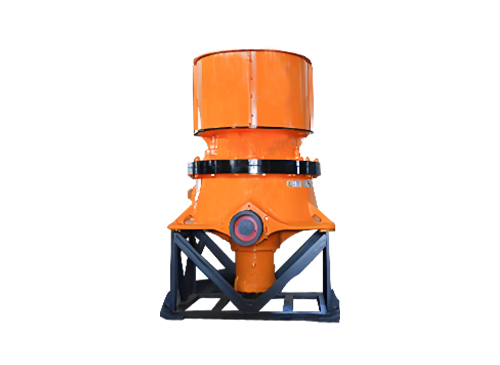
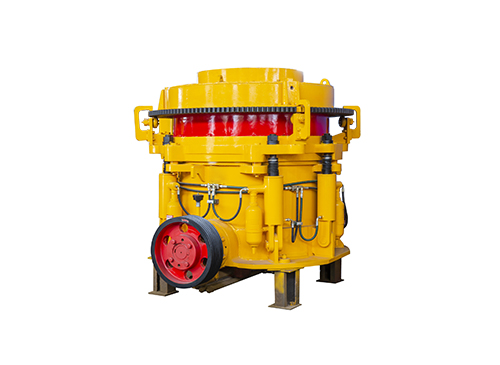
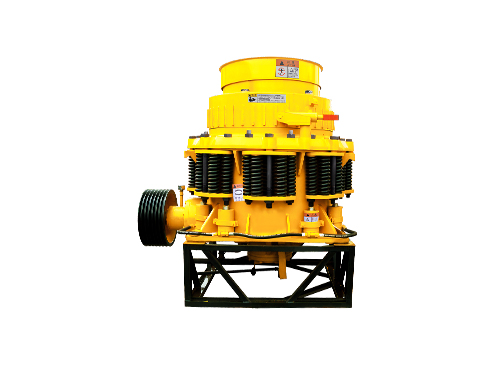
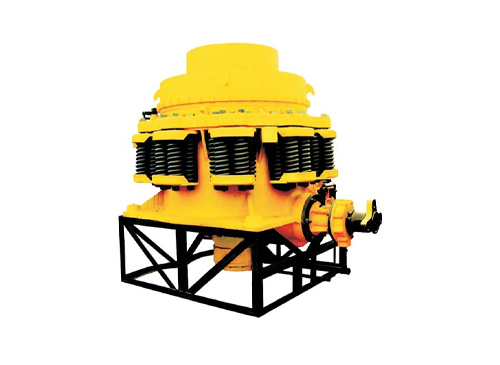
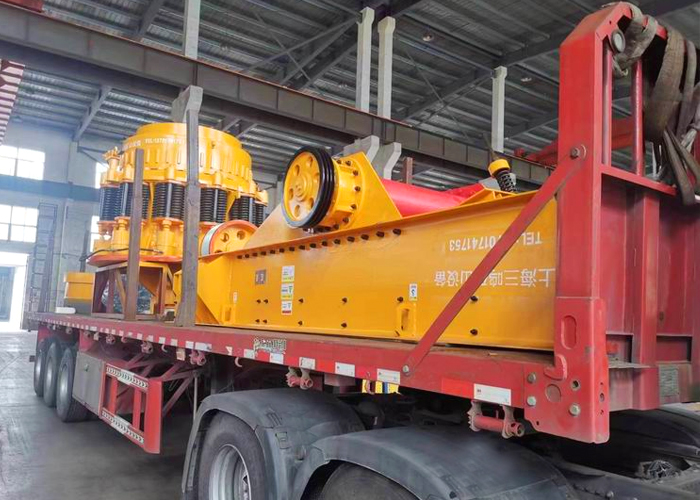
Multi-Cylinder Hydraulic Cone Crusher – Overview
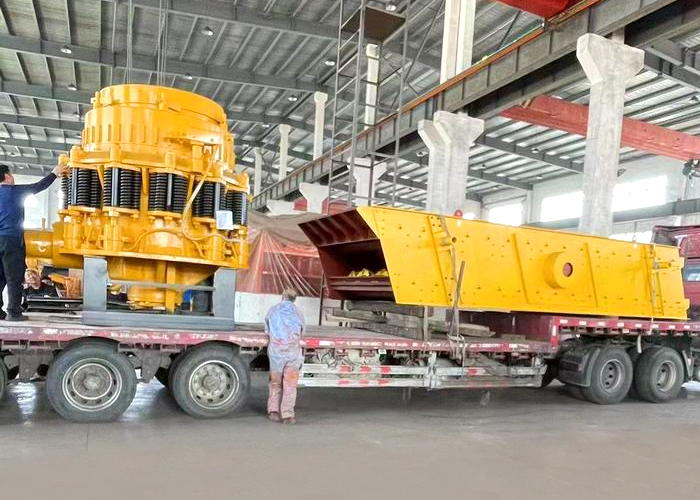
The SMC multi-cylinder hydraulic cone crusher is a next-generation crushing machine built with a laminated crushing chamber and multiple independent hydraulic cylinders that together support the main frame, adjust the closed side setting, and provide overload protection. Compared with single-cylinder designs, the additional cylinders distribute clamping force more evenly, allowing a larger crushing stroke and a significantly higher crushing ratio.
The chamber geometry follows a laminated, non-choking design in which material is repeatedly compressed between multiple layers of particles rather than crushed against a single point, producing a finer, more uniform, and more cubical product with a markedly lower flakiness index. The larger swing angle of the mantle also increases the effective crushing stroke without increasing the machine's overall footprint.
Multiple hydraulic cylinders positioned around the frame allow the crusher to achieve higher clamping force at a lower hydraulic pressure than a single large cylinder, improving reliability and reducing the load on seals and hoses. Each cylinder can be monitored independently by the control system, so uneven wear or an unbalanced feed is detected earlier than in single-cylinder machines.
The intelligent control system integrates pressure sensors on every cylinder together with a cavity-level sensor that keeps the chamber choke-fed for maximum laminated crushing effect. The PLC continuously coordinates cylinder pressure and CSS position, compensating automatically for liner wear and protecting the crusher the instant tramp iron or another uncrushable object is detected.
A key advantage of the multi-cylinder layout is fast, safe chamber clearing: instead of a single cylinder retracting the entire bowl, the cylinders release in a coordinated sequence, lowering the bowl smoothly and clearing blockages with minimal shock loading on the frame and bearings, then returning precisely to the previous setting once the obstruction has passed.
From a mechanical standpoint, the frame, mantle, and eccentric assembly are manufactured from high-strength alloy steel and supported by a large spherical bearing capable of sustaining the increased crushing forces generated by the deeper, more efficient chamber. All wear liners are available in multiple cavity profiles to match feed size and hardness for coarse, medium, or fine crushing duty.
Typical applications include secondary, tertiary, and quaternary crushing of hard rock, metal ores, and manufactured sand production, where the combination of high crushing ratio and excellent product shape reduces the load on downstream VSI crushers and screens, improving overall circuit efficiency and lowering energy consumption per ton produced.
For operations seeking the highest level of automation, product quality, and throughput from a single cone crusher, the SMC multi-cylinder hydraulic cone crusher delivers a measurable step up in performance over both spring-type and single-cylinder hydraulic designs, backed by SMC's global engineering and after-sales support network.
Frequently Asked Questions (FAQ)
1. What is laminated crushing and why does it matter?
Laminated crushing keeps the chamber choke-fed so material breaks against itself in multiple layers, producing a finer, more cubical product with fewer flat or elongated particles than single-point crushing.
2. Why use multiple cylinders instead of one large cylinder?
Multiple smaller cylinders distribute clamping force more evenly around the frame, allow a larger crushing stroke, and let the control system monitor each point independently for earlier fault detection.
3. How does the crusher maintain a choke-fed chamber?
A cavity-level sensor continuously measures material height and signals the feeder to adjust the feed rate, keeping the chamber full for optimal laminated crushing.
4. What happens if one cylinder shows abnormal pressure?
The control system flags the affected cylinder, which may indicate uneven feed distribution or liner wear on one side, allowing operators to correct the issue before damage occurs.
5. Can the CSS be adjusted during operation?
Yes, all cylinders are coordinated by the PLC to adjust CSS remotely and precisely while the crusher is running, without stopping production.
6. How is tramp iron cleared with multiple cylinders?
The cylinders lower the bowl in a coordinated sequence to release the obstruction smoothly, then return to the exact previous setting, minimizing shock to the frame.
7. What is the benefit of a deeper crushing chamber?
A deeper chamber increases the number of compression stages material passes through, raising the overall reduction ratio and improving particle shape.
8. What rock types benefit most from this crusher?
Hard, abrasive rock such as granite, basalt, and diabase benefit most, since laminated crushing significantly improves cubical shape on materials prone to flakiness.
9. How does this crusher improve manufactured sand quality?
Its well-shaped, closely graded discharge reduces the workload on downstream VSI crushers, improving sand shape and reducing wear on subsequent equipment.
10. What maintenance does the hydraulic system require?
Regular oil analysis, filter changes, and seal inspections on all cylinders are recommended, along with periodic testing of each cylinder's response time.
11. Is remote monitoring available?
Yes, an optional IoT module can transmit cylinder pressures, cavity level, and power draw to a remote control room or mobile device.
12. What is the expected liner life?
Liner life depends on feed hardness and abrasiveness, typically ranging from 800 to 2500 hours with high-chrome or manganese steel liners.
13. Can this crusher replace an existing single-cylinder unit?
In most cases yes, though foundation loads and hydraulic capacity should be reviewed by our engineers to confirm compatibility with the new footprint.
14. What safety systems are built in?
Independent pressure relief on every cylinder, emergency stop, temperature cut-off, and mechanical locks for maintenance work are all standard.
15. How energy-efficient is the multi-cylinder design?
The choke-fed laminated process improves crushing efficiency per kWh, and coordinated cylinder control avoids unnecessary hydraulic power draw.
16. What warranty and support are provided?
A 12-month warranty covers manufacturing defects, with extended coverage available on the hydraulic system and main shaft, plus global technical support.


 English
 русский