High Efficiency Spring Cone Crusher – Overview
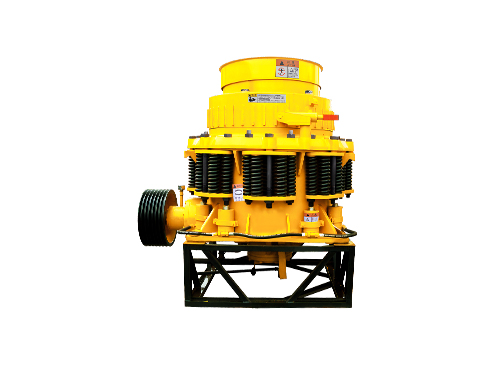
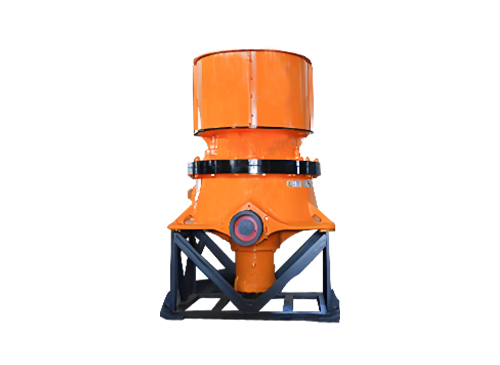
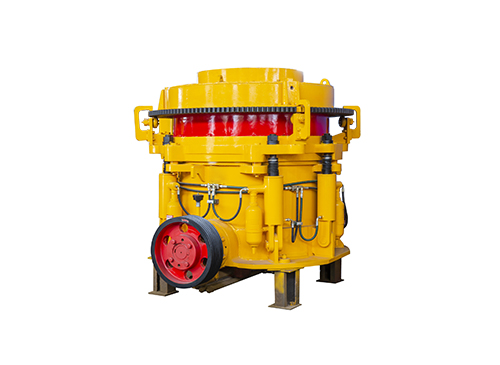
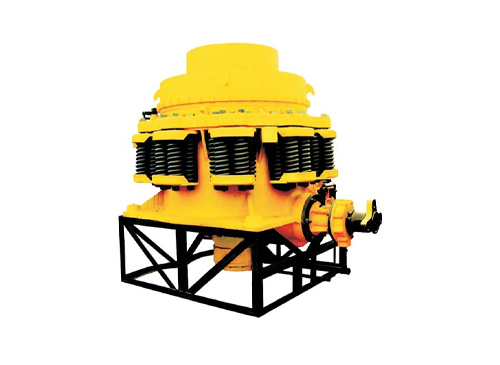
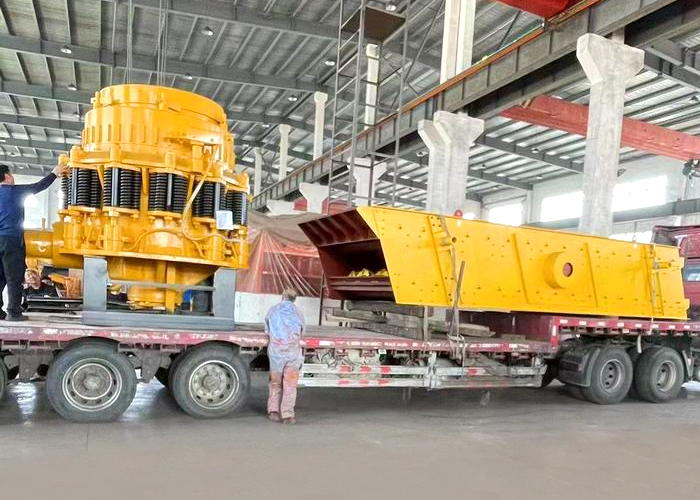
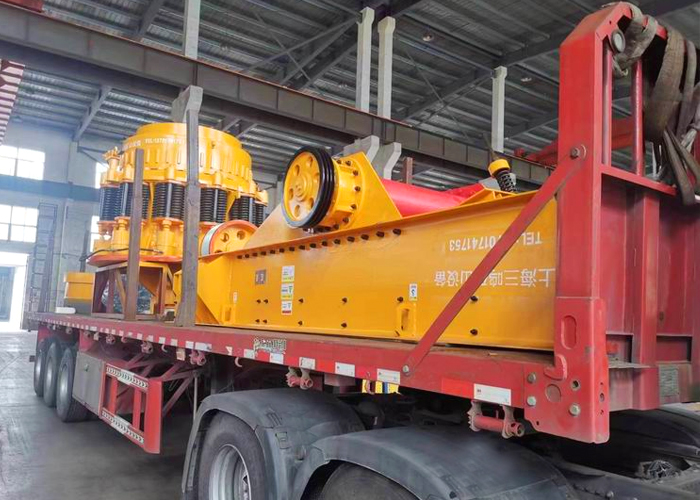
The SMC high efficiency spring cone crusher is a proven, widely used piece of secondary and tertiary crushing equipment built around a mechanical spring safety system rather than hydraulic cylinders. It combines a simple, rugged structure with a high crushing ratio and large production capacity, making it one of the most cost-effective crushers for medium-hard and hard rock processing in quarries, sand and gravel plants, and mineral beneficiation lines.
The core of the machine is a set of heavy-duty compression springs mounted around the adjustment ring. These springs hold the bowl firmly against the crushing force during normal operation, and when an uncrushable object such as tramp iron enters the chamber, the springs compress to allow the object to pass through before returning the bowl to its original position. This purely mechanical overload protection requires no hydraulic pump, valves, or electronic sensors, which keeps the machine simple to operate and inexpensive to maintain.
The crusher is available with both standard-head and short-head cavity configurations. The standard-head cavity is optimized for secondary crushing with a larger feed opening and coarser product, while the short-head cavity has a steeper crushing chamber suited to fine crushing and shaping in tertiary stages. Operators can switch cavity types by changing the mantle and concave liners without replacing the entire machine.
Discharge setting is adjusted mechanically by rotating the adjustment ring using a wrench or the optional hydraulic ring-turning device, which changes the position of the bowl relative to the mantle. Once set, shims or the adjustment ring lock the setting in place, providing a stable closed side setting (CSS) throughout the crushing cycle. Because the adjustment mechanism does not rely on continuous hydraulic pressure, the crusher holds its setting reliably even during long, unattended production runs.
From a process standpoint, the spring cone crusher applies the same inter-particle, laminated crushing principle used by higher-end cone crushers: material is squeezed between the mantle and concave liners repeatedly as it travels down through the crushing chamber, producing a well-shaped, cubical product with a controlled amount of fines. The eccentric drive assembly, supported by a large spherical bearing, gives the mantle its gyrating motion and can sustain heavy, continuous duty in abrasive applications.
Because the design has been refined over decades of field use, spare parts such as springs, bowl liners, mantles, and bearings are widely available and interchangeable across many installations, which shortens lead times and lowers the total cost of ownership. The lubrication system uses grease or thin oil depending on the model, with a simple, low-maintenance circuit that is easy for plant technicians to service without specialized training.
Typical applications include secondary and tertiary crushing of granite, basalt, limestone, river gravel, and iron ore, as well as recycled concrete aggregate. The spring cone crusher is frequently installed downstream of a jaw crusher in a two- or three-stage crushing circuit, feeding a vibrating screen for closed-circuit size control.
For plants that prioritize a lower upfront investment, straightforward maintenance, and dependable output over the fastest possible remote adjustment, the SMC high efficiency spring cone crusher remains one of the most practical and widely trusted solutions in the aggregate and mining industries today.
Frequently Asked Questions (FAQ)
1. What makes a spring cone crusher different from a hydraulic cone crusher?
A spring cone crusher uses mechanical compression springs to hold the bowl in place and release under overload, while a hydraulic cone crusher uses hydraulic cylinders for both clamping and CSS adjustment. Spring crushers are simpler and less expensive but adjust more slowly.
2. How does the spring protect the crusher from tramp iron?
When an uncrushable object enters the chamber, crushing force rises sharply and compresses the springs, allowing the bowl to lift momentarily so the object passes through, after which the springs return the bowl to its set position.
3. Can the discharge setting be adjusted while running?
The adjustment ring can be turned manually or with an optional hydraulic ring-turning motor, but for safety this is normally done with the crusher stopped or at low load, unlike hydraulic cylinder crushers which allow live adjustment.
4. What is the difference between standard-head and short-head cavities?
Standard-head cavities have a larger feed opening for coarser secondary crushing, while short-head cavities have a steeper, narrower chamber designed for fine tertiary crushing and better particle shape.
5. What rock types is this crusher suitable for?
It handles a wide range of medium-hard to hard materials including granite, basalt, limestone, river gravel, and many metal ores, with liner alloys selected according to abrasiveness.
6. How long do the springs typically last?
With proper maintenance and normal feed conditions, springs generally last several years; fatigue or breakage is usually caused by continuous overload feeding or foreign metal objects.
7. What lubrication does the crusher require?
Most models use grease lubrication for the main bearing and countershaft bushings, applied through a manual or automatic grease system; some larger models use thin circulating oil.
8. Is this crusher suitable for mobile crushing plants?
Yes, its compact, self-contained structure without a hydraulic power pack makes it a common choice for track-mounted and wheeled mobile crushing units.
9. How is the crusher started safely?
Start the crusher unloaded, allow it to reach full speed, then begin feeding material gradually while monitoring motor current and vibration.
10. What causes uneven liner wear?
Uneven wear usually results from off-center feeding, an incorrect cavity choice for the feed size, or an unbalanced feed distribution around the chamber.
11. What spare parts should be kept in stock?
Recommended spares include mantle and concave liners, springs, countershaft bushings, and drive belts, since these wear parts directly affect uptime.
12. Can the crusher run in closed circuit with a screen?
Yes, closed-circuit operation with a vibrating screen returning oversize material to the crusher is the standard configuration for tight product gradation control.
13. What is the typical noise level during operation?
Noise levels vary by model and enclosure but are generally in the range common to mechanical crushing equipment; acoustic enclosures can be added where required.
14. How does feed moisture affect performance?
Excessive moisture combined with fines can cause packing in the crushing chamber; pre-screening to remove fines is recommended for wet or sticky feed.
15. What warranty is offered?
A standard 12-month warranty against manufacturing defects is provided, with technical support available for commissioning and troubleshooting.
16. Do you provide installation guidance?
Yes, foundation drawings, assembly instructions, and commissioning checklists are provided, with remote or on-site technical support available.


 English
 русский