


 English
 русский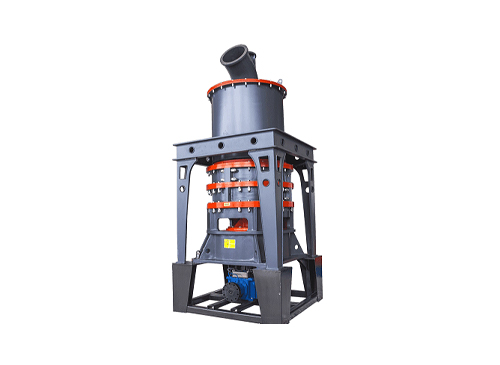
Put a jaw crusher and a cone crusher on the same granite deposit and both will break rock. Put them in the same slot of a flowsheet and one of them will fail the job. That is the practical answer behind the question "which is better, a cone crusher or a jaw crusher" — the comparison only becomes meaningful once you kn...
Mining Grinding Equipment Manufacturers
About Us
Shanghai Sanming Mining Equipment Manufacturing CO., LTD.
Sanming is an international Mining Machinery Equipment Supplier that integrates R&D, Manufacturing, and Sales of Rock Crushing&Screening equipment, as well as Sand Making, Sand Washing, and Grinding equipment. Sanming has passed ISO9001 quality system certification.
As China Mining Grinding Equipment Manufacturers and OEM Rock Stone Grinding Equipment Suppliers, our equipments are widely used in the fields of Sand and Gravel Aggregate processing, Mining, and Construction Waste Resource utilization.
"Sanming" brand equipments are not only distributed in nearly 30 provinces in China, but also exported in large quantities to multiple countries in Central Asia, the Middle East, South America and Africa, and has received unanimous praise from users. Our main production base is located in Qidong (Shanghai Pudong New Area Industrial Park). We warmly welcome your visit to our factory.
News & Blogs
-
-
When a crushing plant is being planned or upgraded, the cone crusher usually appears near the top of the equipment list. It works in the secondary, tertiary and sometimes quaternary stage, turning coarse rock into the consistent fractions that the rest of the plant depends on. But a "cone crusher" is not a single mach...
-
Shanghai Sanming Mining Equipment Manufacturing Co., Ltd. has confirmed its participation in bauma CHINA 2026 — the International Trade Fair for Construction Machinery, Building Material Machines, Mining Machines and Construction Vehicles. As one of the most influential trade fairs in the engineering machinery industry...
Grinding Equipment Industry knowledge
The Crucial Role of Mining Grinding Equipment in Modern Mineral Processing
In the modern mineral processing and beneficiation industry, Mining Grinding Equipment holds a critical positioning that bridges upstream and downstream processes. Raw ore extracted from mines, even after primary and secondary crushing, still cannot meet the particle size requirements for downstream processes such as chemical leaching, flotation, or magnetic separation. At this stage, efficient grinding systems must be relied upon to further pulverize the ore to the micron level. As an international mining machinery equipment supplier integrating R&D, manufacturing, and sales, Shanghai Sanming Mining Equipment Manufacturing CO., LTD. deeply understands this process milestone. By continuously optimizing the structural design of its Mining Grinding Mill products, the company helps global mining enterprises achieve a narrower particle size distribution (PSD), directly enhancing the recovery rate of valuable minerals and the final concentrate grade.
The grinding section is the most energy-consuming and costly part of the entire mineral processing plant. To reduce electricity consumption per ton of ore and minimize unnecessary wear on liners and grinding media, choosing high-specification mining grinding equipment is essential. By applying precise impact, compression, and attrition forces to the materials, high-quality grinding equipment can break the crystal lattice defects of the ore, liberating valuable minerals completely from the gangue. This fundamentally prevents over-grinding (where excessive pulverization leads to tailing loss) or under-grinding (where insufficient liberation causes a drop in recovery rates).
In practical industrial applications, targeted equipment parameters and configurations are strictly dictated by the hardness (evaluated by the Bond Work Index) and characteristics of different ores. The table below provides a systematic comparison of core technical parameters across different process stages in mainstream crushing and grinding sections:
| Technical Parameter / Performance Indicator | Secondary/Tertiary Crushing Equipment | Standard Primary Mining Grinding Mill (Ball/Rod Mill) | Advanced Ultra-Fine Grinding Equipment |
| Maximum Feed Size | ≤ 300 mm | ≤ 25 mm | ≤ 2 mm |
| Product Size P80 | 10 mm – 40 mm | 0.074 mm – 0.4 mm (200 mesh - 35 mesh) | ≤ 0.044 mm (above 325 mesh) |
| Grinding Mechanism | Direct compression and shear forces | Free-fall impact and attrition of steel balls/rods | Interparticle crushing and scrubbing under high density |
| Operational Circuit | Often forms open or closed circuits with vibrating screens | Commonly forms closed circuits with spiral classifiers or hydrocyclone groups | Fully automated precision closed-circuit classification control |
| Energy Consumption Ratio | Accounts for approx. 10% – 15% of total plant energy | Accounts for approx. 50% – 60% of total plant energy | Depends on fineness; high unit energy but moderate single unit scale |
Shanghai Sanming Mining Equipment Manufacturing CO., LTD. strictly implements ISO9001 quality system certification standards to ensure that every piece of Mining Grinding Equipment leaving the factory meets these high-intensity industrial operating metrics. Whether in the coarse grinding stage of hard metal mines or the deep processing fields of non-metallic minerals, standardized parameter control and robust structural component strength serve as the technical cornerstone for ensuring continuous production and reducing unscheduled downtime.
Technical Classifications and Operational Principles of Mining Grinding Mills
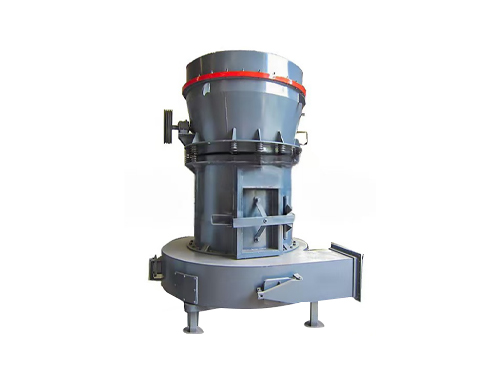
In complex mineral processing workflows, Mining Grinding Equipment is divided into several classic and modern models based on material hardness, feed size, and the specific requirements for the final particle size distribution (PSD). Each type of Mining Grinding Mill features its own distinct operational mechanism and application scenarios. To provide highly targeted process solutions in fields such as sand and gravel aggregate processing, mining plants, and construction waste resource utilization, Shanghai Sanming Mining Equipment Manufacturing CO., LTD. has long been dedicated to deep engineering R&D across various grinding equipment schools, ensuring the conversion efficiency from mechanical energy to material surface energy is fully optimized.
Tumbling Mills: The Backbones of Grinding Circuits
Horizontal tumbling mills are the most classic Mining Grinding Mill Options in industrial mineral processing. These machines utilize the rotation of the shell to lift the internal grinding media and materials. Upon reaching a certain height, the media cascades or cataracts down due to gravity, generating powerful impact and attrition forces against the ore.
Ball Mills: Ball mills are typically utilized as core equipment for secondary fine grinding or conventional single-stage grinding circuits. The shell is filled with steel balls of varying diameters (usually occupying 30% to 45% of the total mill volume). As the shell rotates, the larger balls primarily break down coarse materials, while the smaller balls further refine the material through rubbing and attrition. Ball mills offer exceptional adaptability to different materials and can stably grind ore down to under 200 mesh (0.074 mm).
Rod Mills: Rod mills utilize specially manufactured long steel rods as the grinding media. Because the contact between the steel rods is linear, coarse particles are trapped and preferentially crushed as materials pass between the rods, while finer particles are protected from over-grinding. This unique line-contact crushing mechanism results in an extremely uniform discharge particle size with minimal over-pulverization, making them widely popular in sand and gravel aggregate production where micro-powder ratios must be strictly controlled, or as the coarse grinding stage prior to secondary ball milling.
Advanced Comminution Technologies
To pursue higher hourly throughput and lower energy consumption per ton of ore, modern mines have progressively introduced advanced grinding modifications and modern compression crushing technologies.
Autogenous (AG) & Semi-Autogenous (SAG) Mills: Autogenous mills rely entirely on the mutual impact and friction between the ore chunks themselves to achieve pulverization. Semi-autogenous (SAG) mills build upon this by adding a small charge of large-diameter steel balls (typically 4% to 15% of the volume) to assist in rock breaking. SAG mills feature enormous feed openings, allowing them to directly receive raw, hundred-millimeter-scale ores discharged from primary crushers. This achieves a massive reduction ratio within a single stage, thereby eliminating intermediate tertiary crushing stages.
Vertical Roller Mills (VRM) & High-Pressure Grinding Rolls (HPGR): Representing the era of high-efficiency grinding, these machines replace the traditional free-fall impact model. For instance, High-Pressure Grinding Rolls (HPGR) utilize two counter-rotating rollers to apply extreme compressive stress (typically exceeding 150 MPa), causing materials to undergo interparticle crushing within the roller gap. This technology not only dramatically reduces steel consumption but also generates extensive micro-cracks inside the ore particles, boosting the downstream ball mill efficiency by more than 20%.
To illustrate the suitability of these core Mining Grinding Equipment options on actual industrial sites, the table below outlines a systematic comparison of operational parameters across mainstream grinding mills:
| Equipment Type | Max Feed Size | Standard Product Range | Grinding Media | Primary Energy Transfer Form | Primary Application Focus |
| Ball Mill | ≤ 25 mm | 0.074 mm - 0.4 mm | Forged / Cast steel balls | Cataracting impact force + Cascading friction force | Fine grinding in metallic/non-metallic mines, tailings recycling |
| Rod Mill | ≤ 30 mm | 0.83 mm - 4.7 mm | High-carbon steel long rods | Layered attrition and parallel compression between line-contact media | High-quality sand/gravel aggregate processing, coarse grinding of rare metals |
| SAG Mill | ≤ 350 mm | 2 mm - 10 mm | Large ore blocks + minor large steel balls | Self-impact of ore from high drop heights + high-energy steel ball impacts | Primary coarse grinding stage in large and ultra-large modern mines |
| HPGR | ≤ 60 mm | 1 mm - 5 mm (highly micro-cracked) | Carbide stud roller surface | Continuous, uniform static high-pressure interparticle bed crushing | Pre-grinding of medium-hard and extremely hard rock, construction waste resource utilization |
Relying on the manufacturing advantages provided by its primary production base located in Qidong (Shanghai Pudong New Area Industrial Park), Shanghai Sanming Mining Equipment Manufacturing CO., LTD. constructs its Mining Grinding Mill production lines strictly in accordance with international standards. By utilizing heavy-duty CNC machine tools and precision welding heat treatment processes, the fatigue strength of large shells and roller shafts is guaranteed. These rugged, standardized industrial mineral processing and grinding machines operate smoothly across sand, gravel, and mining projects in nearly 30 provinces in China. Furthermore, they are exported in large quantities to countries in Central Asia, the Middle East, South America, and Africa, earning widespread praise from overseas users in diverse and harsh multinational mining environments for their exceptional operational stability and outstanding technical indicators.
Engineering Design and Wear-Resistant Component Optimization
During prolonged, continuous, heavy-load operations, Mining Grinding Equipment must endure extreme mechanical stress and ongoing material abrasion. Consequently, high-specification engineering structure design and the material optimization of wear-resistant components are the core factors dictating the overall availability rate of the entire production line. Shanghai Sanming Mining Equipment Manufacturing CO., LTD. fully integrates its rich engineering experience across the fields of mining, sand and gravel aggregate, and construction waste resource utilization to perform high-strength anti-fatigue and wear-resistant optimization on the core wear parts and drive systems of its Mining Grinding Mill products, thereby significantly extending equipment maintenance cycles.
Mill Liners: Protecting the Shell and Driving Charge Kinematics
Mill liners act not only as a shield protecting the grinding mill shell from direct impacts by materials and grinding media, but also as the "steering wheel" controlling the motion trajectory of the load.
Material Selection and Application Matching: Liner materials must be precisely selected based on varying ore hardness and corrosive environments. High-manganese steel liners exhibit excellent work-hardening characteristics, making them suitable for coarse grinding stages that endure severe impacts. Chromium-molybdenum alloy steel offers exceptionally high hardness and abrasion resistance, making it ideal for medium and fine grinding stages. In non-metallic mines or processing stages where iron contamination is strictly restricted, heavy-duty wear-resistant rubber or composite liners are increasingly applied due to their excellent damping, acid/alkali resistance, and significant noise reduction benefits.
Liner Profile and Lifter Bar Design: The geometric profile of the liner (such as wave shapes, step designs, or lifter bars with specific inclination angles) directly determines the cascading or cataracting trajectory of the grinding media. Profiles engineered through precise fluid dynamics simulation ensure that steel balls are lifted to the ideal height before dropping, generating maximized effective impact forces while preventing the media from directly striking the opposing liners, which causes useless wear.
Grinding Media Dynamics
The sizing ratio and quality of the grinding media exert a decisive influence on the final particle size distribution (PSD).
Media Grading Optimization: Metallurgical engineers must mix and match forged or cast steel balls of varying diameters in precise proportions based on the feed size and Bond Work Index. If large balls are overrepresented, the contact surface area decreases, leading to over-grinding of certain portions and a drop in fine-grain yield. If small balls dominate, they will fail to crush the harder, larger chunks of incoming ore.
Material Chemical Properties: High-quality grinding media must possess a uniform internal matrix structure and a constant hardness gradient. This prevents the balls from breaking or losing their spherical shape under continuous high-drop impacts, thereby maintaining stable internal kinetics over long periods.
Drive Systems and Structural Integrity
The drive system and bearing assemblies comprise the "heart" of large-scale mining grinding mills.
Transmission Mode Selection: Small and medium-sized models typically employ traditional asynchronous motors paired with a pinion and a large girth gear for peripheral drive transmission. For ultra-large primary grinding mills, the industry favors advanced variable-frequency ring motors for direct-drive transmission (gearless motor drives).
Lubrication and Structural Protection: Main bearings and end liners that continuously support hundreds of tons of weight must be equipped with combined high- and low-pressure lubrication stations. During the equipment startup phase, the high-pressure system jacks up the shaft journal to establish a static oil film, eliminating dry friction. During operation, the low-pressure, high-flow system takes over to continuously circulate oil, dissipating heat and providing stable hydrodynamic support.
To assist mineral processing plant chief engineers in obtaining precise data references for equipment engineering upgrades or procurement, the table below quantifies the field performance of mainstream wear-resistant component materials and drive configurations in Mining Grinding Equipment:
| Engineering Component | Standard Option Type | Core Hardness / Technical Specs | Wear Rate & Lifespan Reference | Typical Application Scenarios |
| Shell Liners | Modified High-Manganese / Cr-Mo Steel | HB 350 – HB 550+ | 0.1 - 0.25 kg/ton ore | Coarse grinding (SAG/Ball Mills) |
| Shell Liners | Heavy-Duty Rubber Composite | Shore A 65 – 75 | 1.5-2x lifespan of metal | Fine grinding, tailings, acid/alkali |
| Grinding Media | High-Cr Cast Iron / Forged Steel | HRC 58 – HRC 65 | 0.4 - 0.8 kg/ton ore | Hard metallic rock |
| Grinding Media | High-Carbon Steel Rods | HRC 45 – HRC 55 | Periodic removal required | Sand/Aggregate (Uniformity) |
| Main Drive | Pinion & Girth Gear | Alloy Cast Steel (94-96% eff) | Requires gear lubricant | Standard mills |
| Main Drive | Gearless Ring Motor | Synchronous (99% availability) | Low maintenance | Ultra-large primary mills |
As a professional manufacturer certified under the ISO9001 quality management system, Shanghai Sanming Mining Equipment Manufacturing CO., LTD. utilizes stringent raw material physical and chemical testing alongside precision heat treatment processes at its primary production base in Qidong (Shanghai Pudong New Area Industrial Park). This ensures that every wear-resistant liner, heavy-duty main shaft, and drive gear leaving the factory possesses an outstanding metallurgical structure. This strict control over engineering quality and manufacturing details allows its brand equipment to operate long-term across the sand, gravel, and mining markets of nearly 30 domestic provinces, and to be exported on a large scale to international markets in Central Asia, the Middle East, South America, and Africa, helping numerous overseas users significantly reduce maintenance expenditures and unscheduled downtime caused by rapid component wear.
Circuit Configurations and Process Automation in Industrial Mining
In achieving efficient industrial-scale mineral processing, no single Mining Grinding Mill operates in isolation. Instead, it must be deeply integrated with classification machinery, conveying systems, and precision sensors to form an organic open- or closed-circuit control loop. To maximize the production potential of Mining Grinding Equipment under varying geological conditions and production requirements, Shanghai Sanming Mining Equipment Manufacturing CO., LTD. provides highly targeted process loop configurations and digital automated control systems tailored to sand and gravel aggregate processing, metal beneficiation, and construction waste resource utilization sites worldwide.
Open-Circuit vs. Closed-Circuit Grinding Systems
The architectural design of the grinding circuit directly determines the overall energy consumption and final product quality of the mining workshop.
Open-Circuit Grinding: Materials pass through the grinding shell only once, discharging directly into the next process stage. This configuration omits classification and return systems, resulting in low initial investment and simple operation. However, to ensure all discharged material reaches the qualified particle size, the retention time of materials inside the mill must often be extended. This easily leads to secondary over-grinding of already qualified fine particles, causing severe waste of electrical energy and wear parts.
Closed-Circuit Grinding: This is the standard, most widely adopted configuration in modern large-scale mines. The slurry or material discharged from the mill is sent to classification equipment, such as a hydrocyclone group or a high-frequency vibrating screen. The classification machinery routes qualified micro-particles (overflow) to downstream flotation or concentration stages, while unqualified coarse particles (underflow/circulating load) are redirected back to the mill inlet for re-grinding. The circulating load ratio in closed-circuit systems is typically controlled between 150% and 350%, allowing the mill to focus on breaking down coarse particles, thereby substantially boosting hourly throughput.
Slurry Rheology and Density Control
In wet grinding circuits, slurry rheology characteristics (viscosity, fluidity) and the solids-to-liquid ratio (pulp density) directly impact the motion trajectory of the grinding media and its impact energy efficiency. If too little water is added, the slurry becomes overly viscous, creating a "cushioning effect" on the surfaces of the steel balls and liners. This drastically cushions the impact force of falling steel balls, causing grinding efficiency to plummet. Conversely, if too much water is added, the slurry flows too quickly, preventing materials from remaining in the mill long enough for effective reduction. Furthermore, thin slurry fails to adhere properly to the steel ball surfaces, intensifying direct steel-on-liner impacts and causing wear part consumption to surge.
Smart Automation and Digital Control Systems
With the heightened demands of modern industry for refined operations, digital automation systems have become an indispensable component of smart mines.
Smart Feeding and Variable Frequency Control (VFD): Through the linkage of online belt scales and feeding frequency inverters, the feed volume is adjusted in real time according to the mill's current power draw or bearing pressure, ensuring the mill consistently runs at its optimal filling rate.
Acoustic Monitoring and Sensor Integration: Utilizing acoustic sensors installed on the exterior of the shell allows the system to precisely "listen" to the internal sounds of the mill. A crisp, loud sound indicates a severe material shortage inside, meaning steel balls are directly striking the liners, prompting the system to automatically increase the feed rate. A dull, muffled sound indicates an overfilled mill, prompting the system to reduce feed or adjust water addition. Additionally, online particle size analyzers (PSI) monitor the particle size distribution of the classifier overflow in real time, feeding data back to the main control center to dynamically adjust the feeding pressure of the hydrocyclones.
To help process engineers integrate circuits and upgrade automation systems more scientifically, the table below compares the core performance of different circuit configurations and control modes in modern Mining Grinding Equipment production lines:
| Process Control Dimension | Conventional Mode | Advanced Automated Mode | Key Parameters |
| Circuit Layout | Open-circuit | Cyclone/Screen Closed-circuit | Circulating load 200-300% |
| Density Control | Manual sampling | Automatic nuclear density meters | 65-75% solids by weight |
| Load Monitoring | Experience-based | Belt scale + VFD feedback | 35-42% filling rate |
| Size Control | Manual Sieve | Online PSI Monitoring | Stable +/-2% tolerance |
To ensure that these complex circuit configurations and high-precision control instruments remain stable over long periods in harsh mining environments filled with dust and moisture, Shanghai Sanming Mining Equipment Manufacturing CO., LTD. subjects every Mining Grinding Mill electrical control cabinet and hydraulic station to rigorous industrial-grade dustproof, waterproof, and anti-electromagnetic interference tests before leaving its primary production base in Qidong (Shanghai Pudong New Area Industrial Park). Due to its strict adherence to the ISO9001 international quality system, its complete sets of mining grinding and classification control equipment not only perform exceptionally well in heavy projects across nearly 30 domestic provinces but are also exported on a large scale to regions such as Central Asia, the Middle East, South America, and Africa. In these international mining projects, Sanming equipment has won high trust from multinational mining users through its excellent data sampling accuracy and robust mechanical circuit integration.
Critical Maintenance Protocols and Operational Safety
In heavy industries, ensuring long-term high availability for Mining Grinding Equipment depends not only on the initial manufacturing quality but also on scientific post-purchase daily maintenance protocols and strict on-site operational safety standards. As heavy machinery carrying hundreds of tons of steel balls and materials rotating at high speeds, every unscheduled shutdown of a Mining Grinding Mill brings massive production losses to the processing plant. Therefore, establishing standardized preventative maintenance plans and emergency safety interlock mechanisms is of paramount importance in modern mine management.
Preventative Maintenance Schedules for High-Throughput Mills
The core of preventative maintenance lies in transforming "reactive emergency repairs" into "proactive prevention." This requires on-site engineers to establish rigorous daily, weekly, and monthly inspection checklists.
Liner Wear Monitoring: Periodically use ultrasonic thickness gauges or laser scanners to conduct non-destructive testing on the remaining thickness of the liners inside the shell. Establish a liner wear rate curve to accurately forecast replacement cycles, allowing maintenance to arrange procurement and shutdown schedules in advance, preventing liner wear-through from damaging the steel shell directly.
Daily Grinding Media Replenishment: As grinding progresses, steel balls gradually wear down, lose their roundness, or break. On-site teams must establish a daily fixed replenishment routine for new balls based on energy-and-tonnage steel consumption indicators. They must also regularly shut down the mill to clear out undersized fragments and broken rods that fail to provide useful impacts, maintaining a constant dynamic grading balance inside the mill.
Temperature Tracking: Rely on platinum resistance temperature sensors installed on the main bearings and pinion/girth gearboxes to record operating temperatures 24 hours a day. Any abnormal temperature spike typically forecasts oil deterioration, pipeline blockage, or localized stress concentration inside the bearing.
Safe Mill Relining Procedures
Replacing mill liners (relining) is the most labor-intensive and safety-critical maintenance task in the grinding workshop.
Mechanized Maintenance Operations: Traditional manual handling for liner replacement is not only inefficient but also carries high risks of crushing injuries. Modern large mill maintenance must be equipped with specialized hydraulic liner handlers and high-pressure liner bolt impact wrenches. The liner handler accurately positions multi-ton liners inside the shell, drastically reducing the physical labor strain on frontline workers.
Shell Safety Locking: Before entering the shell for maintenance, mechanical barring gear and heavy-duty locking pins must be engaged to physically lock the mill shell, preventing accidental self-rotation caused by an unbalanced center of gravity. Furthermore, because wet mills can accumulate hazardous gases or experience oxygen deficiency internally, forced ventilation and multi-gas detection must be performed prior to entry.
Emergency Interlocks and Fault Diagnostics
To minimize damage during sudden mechanical faults, mining grinding equipment must integrate comprehensive electrical emergency linkage and protection systems.
Low Oil Pressure Protection: If the low-pressure circulating lubrication system fails or a pipeline bursts, causing oil pressure to drop instantly, the system must trigger an emergency interlocking shutdown within milliseconds to prevent the burning of expensive main bearing liners due to dry friction.
Overload Locking: When severe "overfilling" occurs or a foreign object accidentally jams into the transmission gears, the main motor current will surge instantly. At this point, the overload protector and triaxial vibration sensors installed on the bearing housings will simultaneously issue a top-level alarm to the control room and force-cut the main power supply.
To provide mining plant daily safety management and equipment maintenance with clear guidelines, the table below compiles the core inspection technical parameters and safety control indicators for modern Mining Grinding Equipment:
| Monitoring Dimension | Standard Parameter | Alarm Threshold | Interlock Action |
| Main Bearing Temp | 35-50C | 60C | 65C - Emergency Stop |
| Oil Pressure | 0.15-0.4 MPa | <0.1 MPa | <0.06 MPa - Interlock |
| Vibration RMS | ≤ 2.8 mm/s | > 4.5 mm/s | > 7.1 mm/s - Disconnect |
| Liner Thickness | Initial | ≤ 25-30% remaining | Forced replacement |
| Oxygen | 19.5-23.5% | < 19.5% | Strict no-entry |
As a comprehensive multinational supplier long-rooted in the fields of sand and gravel aggregate processing, mining plants, and construction waste resource utilization, Shanghai Sanming Mining Equipment Manufacturing CO., LTD. focuses not only on elevating the mechanical strength of its Mining Grinding Mill products at its primary production base in Qidong (Shanghai Pudong New Area Industrial Park), but also invests heavily in the industrial safety design of its entire equipment lineups. The company strictly implements ISO9001 quality management system certification requirements, equipping every factory-bound heavy grinding mill with complete sets of standardized digital microprocessor bus control cabinets and high/low-pressure emergency hydraulic stations. These highly reliable software and hardware protection systems ensure that "Sanming" brand equipment operates safely and smoothly year-round across nearly 30 domestic provinces and throughout massive export installations across international mines in Central Asia, the Middle East, South America, and Africa, significantly simplifying maintenance workflows while firmly securing the production safety redline for mining enterprises.
Technical FAQs: Operational Engineering & Procurement Insights
When building or upgrading a modern mineral processing plant, scientifically selecting, operating, and maintaining Mining Grinding Equipment according to specific material attributes and throughput indicators represents a core interest for corporate decision-makers and chief engineers. Drawing from actual engineering feedback across industrial sites, the section below provides comprehensive, standardized answers addressing core process technologies, procurement evaluation criteria, and common operational challenges for Mining Grinding Mill systems.
Q1: What is the primary operational difference between a SAG mill and a traditional Ball Mill in mining grinding equipment circuits?
Answer: The fundamental differences lie in feed size tolerance, grinding media composition, and their respective process stages within the crushing and grinding circuit.
Semi-Autogenous (SAG) Mills: Classified as "coarse grinding" equipment. They tolerate enormous feed sizes, receiving raw ore directly from primary jaw or gyratory crushers. Their grinding media consists mostly of large raw ore chunks colliding with each other (autogenous grinding), supplemented by a small charge of large-diameter steel balls to assist in rock fragmentation. SAG mills aim to bypass traditional secondary and tertiary crushing stages.
Ball Mills: Classified as "medium-to-fine grinding" equipment. They cannot directly handle large chunks of raw ore; their feed size must generally be limited to under 25 mm. Their shells are heavily charged with forged or cast steel balls as the sole grinding media. They rely on high-density cataracts of steel balls providing impact and attrition to grind materials down to micron-level finished products.
Q2: How does the Bond Ball Mill Work Index (Wi) influence the sizing of a Mining Grinding Mill?
Answer: The Bond Ball Mill Work Index (Wi) is an international standardized quantitative metric used to evaluate a rock's resistance to grinding, expressed in kWh/t. It directly dictates the theoretical net mechanical power required to grind a specific ore from a given feed size to a target product size. During the engineering design phase, process engineers utilize the classic Bond equation to calculate specific energy consumption. A higher Wi value indicates harder, more competent rock, which translates to larger mill specifications, shell volumes, and motor horsepower requirements to achieve the same throughput targets.
Q3: Why is wet grinding preferred over dry grinding in most large-scale metallic mineral processing plants?
Answer: In large metallic mineral processing plants, more than 90% of primary grinding operations utilize wet grinding due to the following benefits:
Superior Energy Efficiency: In a wet state, water acts as a natural carrier, effectively facilitating material flow inside the mill. This prevents the "adhesion cushion layer" common in dry grinding, boosting efficiency by 20-30%.
Streamlined Classification: The discharge from wet grinding exists as a pumpable slurry, which can be effortlessly transported directly to hydrocyclone groups for high-precision, closed-circuit classification.
Improved Environments: Wet circuits eliminate massive dust pollution at the source and dissipate frictional heat.
To provide global procurement managers and engineering, procurement, and construction (EPC) contractors with clear decision-making guidance, the table below systematically compiles core FAQ procurement and selection metrics:
| Dimension | Dry Grinding System | Wet Grinding System | Key Parameters |
| Matching | Air Classifiers/Dust Collectors | Hydrocyclones/Screens | 0.06-0.12 MPa Pressure |
| Wear | Low ball, high liner edge wear | Combined abrasion/corrosion | 0.5-1.2 kg/ton steel usage |
| Moisture | Strict <1-2% limit | Insensitive (Standard) | 65-75% Solids ratio |
| Capex/Opex | Requires Drying Bins | Integrated Loop | 20-30% Energy savings |
Q4: What are the primary indicators that a mining grinding mill's liners need immediate replacement?
Answer: Mastering the precise timing of liner replacement bears directly on production safety and comprehensive operating costs:
Severe Profile Flattening: When lifter bars disappear due to abrasion, the mill loses impact force, shifting to a sliding motion, causing throughput collapse.
Remaining Thickness Limits: Testing reveals the liner has reached 25-30% of its initial thickness, threatening to expose and damage the steel shell.
Cracking or Bolt Breakage: Thinning liners lose impact toughness, causing fragmentation or repeated failure of fastening bolts, risking slurry leaks.
Vibration/Noise: Loose or unevenly worn liners produce non-symmetrical harmonic vibrations and abnormal knocking sounds detected by sensors.
Q5: How do modern grinding circuits optimize water consumption while maintaining efficient slurry flow?
Answer: Modern smart mines utilize "high-concentration grinding, low-concentration classification, and efficient thickening." At the mill inlet, slurry is locked into a highly viscous range (68-73% solids) to ensure maximum rock-breaking efficiency. At the discharge, secondary water is added to dilute the slurry to 40-48% solids, providing optimal flow for hydrocyclone classification. The overflow is then processed via high-efficiency thickeners, where clarified water is captured and recirculated, achieving water recycling rates above 85%.
To ensure that these complex multi-stage circuit parameters, strict power calculations based on the Bond Index, and engineered wear lifespans can be successfully realized across variable mining environments, Shanghai Sanming Mining Equipment Manufacturing CO., LTD. equips its primary production base in Qidong (Shanghai Pudong New Area Industrial Park) with an entire suite of high-precision CNC machining equipment, heavy-duty shell rolling machines, and standardized physical/chemical testing instruments. As a heavy machinery supplier certified under the ISO9001 international quality system, the company provides global users not only with rugged Mining Grinding Mill hardware components but also with end-to-end circuit selection layouts and standardized daily inspection safety protocols. Today, "Sanming" brand complete sets of mining grinding, crushing, and screening equipment serve not only landmark aggregate and milling projects across nearly 30 domestic provinces but are also exported long-term and in bulk to diversified international mining markets in Central Asia, the Middle East, South America, and Africa. They have earned widespread recognition from global mining engineers for their precise parameter matching, robust engineering service lifespans, and highly standardized overseas technical support.
Contact Us
Contact Us .
-

-

+ 86 - 15221838076
+ 86 - 18817756097
-

+ 86 - 021-38682089
-

No.18 Jiangzhou Road, Qidong (Pudong Industrial Park), Nantong City, Jiangsu Province, China
Product Categories .
-
0
Factory Area
-
0+
Number Of Products
