


 English
 русский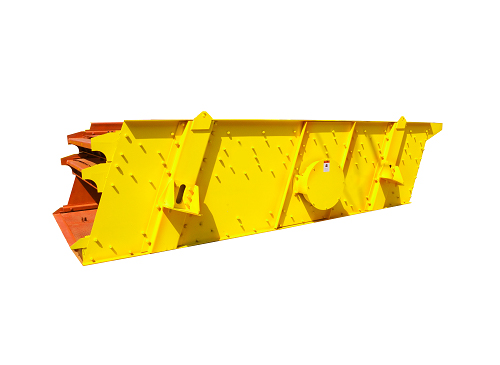
Put a jaw crusher and a cone crusher on the same granite deposit and both will break rock. Put them in the same slot of a flowsheet and one of them will fail the job. That is the practical answer behind the question "which is better, a cone crusher or a jaw crusher" — the comparison only becomes meaningful once you kn...
Mining Screening Equipment Manufacturers
About Us
Shanghai Sanming Mining Equipment Manufacturing CO., LTD.
Sanming is an international Mining Machinery Equipment Supplier that integrates R&D, Manufacturing, and Sales of Rock Crushing&Screening equipment, as well as Sand Making, Sand Washing, and Grinding equipment. Sanming has passed ISO9001 quality system certification.
As China Mining Screening Equipment Manufacturers and OEM Rock Stone Screening Equipment Suppliers, our equipments are widely used in the fields of Sand and Gravel Aggregate processing, Mining, and Construction Waste Resource utilization.
"Sanming" brand equipments are not only distributed in nearly 30 provinces in China, but also exported in large quantities to multiple countries in Central Asia, the Middle East, South America and Africa, and has received unanimous praise from users. Our main production base is located in Qidong (Shanghai Pudong New Area Industrial Park). We warmly welcome your visit to our factory.
News & Blogs
-
-
When a crushing plant is being planned or upgraded, the cone crusher usually appears near the top of the equipment list. It works in the secondary, tertiary and sometimes quaternary stage, turning coarse rock into the consistent fractions that the rest of the plant depends on. But a "cone crusher" is not a single mach...
-
Shanghai Sanming Mining Equipment Manufacturing Co., Ltd. has confirmed its participation in bauma CHINA 2026 — the International Trade Fair for Construction Machinery, Building Material Machines, Mining Machines and Construction Vehicles. As one of the most influential trade fairs in the engineering machinery industry...
Screening Equipment Industry knowledge
The Critical Role of Mining Screening Equipment in Modern Mineral Processing
In modern mineral processing, the processing of raw ore is a continuous and highly demanding pipeline. Mining screening equipment serves as the foundational gatekeeper within this system, directly determining the efficiency of both upstream extraction and downstream refining. Whether dealing with metallic ores, industrial minerals, or construction aggregates, materials extracted from the blast site exhibit high non-uniformity in size. Industrial mining screening equipment is deployed to categorize these bulk materials into specific size fractions, ensuring that each subsequent stage of production receives a properly calibrated feed.
Within the crushing, grinding, and concentration circuits, the performance of mining screening equipment directly impacts overall plant metallurgy and operational costs. For instance, placing heavy-duty screening machinery ahead of a primary crusher—a process known as scalping—removes fines that are already below the crusher’s discharge setting. By preventing these pre-sized fines from entering the crushing chamber, operators can eliminate unnecessary energy consumption, minimize over-crushing (which creates unsalable ultra-fines), and significantly reduce internal component wear. As a globally recognized supplier, Shanghai Sanming Mining Equipment Manufacturing CO., LTD. integrates heavy-duty structural engineering into its standard product R&D to ensure that its mining screening equipment seamlessly matches high-capacity crushing circuits, ultimately driving down the total cost per ton for mine operators.
The operational success of a processing plant is evaluated through strict engineering metrics, primarily screening efficiency, throughput capacity, and deck wear life. Screening efficiency measures the percentage of undersize material that successfully passes through the screen apertures versus what is mistakenly carried over into the oversize stream. Achieving high screening efficiency at a massive throughput capacity requires a precise balance of mechanical force, deck inclination, and optimized material travel speed. If the material moves too quickly, the retention time is insufficient, leading to product cross-contamination; if it moves too slowly, a thick material bed forms, blinding the screen openings and choking the circuit.
Furthermore, because ore particles are highly abrasive and frequently carry substantial impact kinetic energy, the wear life of the screen media and the underlying structural frame dictates the plant's operational availability. Premature failure of a single screen deck leads to unscheduled downtime, halting the entire processing line. To address these extreme industrial demands, Shanghai Sanming Mining Equipment Manufacturing CO., LTD. manufactures its equipment under strict ISO9001 quality system certification, ensuring that every chassis, crossbeam, and exciter assembly is built to withstand prolonged cyclic stress and high-impact loading.
To optimize these processing lines, engineers must evaluate the mechanical design parameters of the screening units. The table below outlines the core operational parameters that define the performance and application boundaries of heavy-duty mining screening equipment:
Core Operational Parameters of Mining Screening Equipment
| Parameter | Specification Range | Operational Impact & Engineering Significance |
| Throughput Capacity | 50 – 800+ Tons per Hour (TPH) | Determines the bulk handling volume; must match the hourly output of primary/secondary crushing circuits to prevent circuit bottlenecks. |
| Screening Efficiency | 85% – 95% | Specifies the accuracy of particle separation; higher efficiency reduces circulating loads and prevents product cross-contamination. |
| Vibration Frequency | 700 – 3000 Revolutions per Minute (RPM) | Higher frequencies (1500–3000 RPM) are critical for breaking surface tension in fine/wet materials; lower frequencies (700–1000 RPM) suit coarse scalping. |
| Vibration Amplitude | 2.0 – 12.0 mm | Dictates the throwing force applied to the material bed; large amplitudes (8–12mm) lift heavy, oversized rocks, while small amplitudes (2–4mm) stratify fine particles. |
| Deck Inclination Angle | 0° (Horizontal) – 25° (Inclined) | Controls material travel speed across the deck. Inclined decks utilize gravity for high throughput; horizontal decks rely purely on linear force for high-precision sizing. |
| Maximum Feed Size | Up to 1000 mm | Defines the physical limit of the intake material; primary scalping units accept run-of-mine (ROM) boulders, whereas fine screens are restricted to less than 10 mm feeds. |
| Screen Media Options | Polyurethane (PU), Manganese Alloy Steel, Rubber | Impacts wear life and noise levels; PU offers extreme abrasion resistance for wet screening, manganese wire mesh maximizes open area for dry sizing. |
By precisely adjusting these parameters, mining screening equipment can be tailored to handle diverse geological profiles—from damp, sticky clay-heavy ores to highly abrasive granites. Implementing heavily reinforced, certified machinery allows operations across aggregate processing, hard-rock mining, and construction waste recycling to maintain continuous high-capacity production with predictable, elongated maintenance cycles.
Technical Classification and Core Technologies of Industrial Mining Screening Equipment
The technical efficiency of mining screening equipment relies heavily on the mechanical motion profiles engineered into the machine's frame. Industrial screens do not simply shake materials; they subject the bulk ore bed to calculated mathematical trajectories designed to induce particle stratification. Stratification is the process where fine particles migrate downward through the material bed to contact the screen media, while larger particles rise to the top. To achieve this, modern mining screening equipment utilizes three primary motion profiles: circular, linear, and elliptical.
Circular motion screening equipment typically operates at an incline of 15° to 20° and is driven by a single eccentric shaft mechanism. This profile creates a uniform circular throwing path that constantly rolls the material, making it highly effective for high-capacity primary and secondary classification of coarse ores. Linear motion equipment uses two synchronized, counter-rotating eccentric shafts. The lateral forces cancel each other out, leaving a directional, linear stroke usually angled at 45° to the screen surface. This linear profile allows the mining screening equipment to operate completely horizontally or even at a slight upward incline, making it the industry standard for precision sizing, washing, and dewatering applications. Elliptical motion combines the advantages of both profiles; its variable angle of throw changes along the length of the deck, accelerating material at the feed end to thin the bed and slowing it at the discharge end to ensure accurate final sizing.
Structural Anatomy of High-Performance Mining Screening Equipment
The structural frame of any mining screening equipment operating in heavy-duty mineral circuits must withstand continuous destructive cyclic forces, often between 4g and 6g of acceleration. Achieving structural longevity under these conditions requires specialized mechanical engineering and high-precision manufacturing.
- Side Plates and Cross Beams: The side plates handle the structural load, while the cross beams connect them and support the screen media. Welding these components creates internal residual stresses that quickly lead to fatigue cracking under high-vibration conditions. High-performance mining screening equipment avoids welding entirely in high-stress zones, utilizing huck-bolting (cold-swaged mechanical fasteners) to secure the cross beams to the side plates. This design provides uniform clamping force and flexibility under load.
- Exciter Mechanisms: The exciter is the mechanical heart of the screening unit. It uses adjustable eccentric counterweights mounted on a heavy-duty shaft to generate the required centrifugal force. These shafts run on specialized spherical roller bearings designed with reinforced brass cages to endure continuous impact loading and high operating temperatures.
- Screen Media Selection: The boundary where the machinery interacts with the ore is the screen media. The choice of media directly affects both screening efficiency and operational downtime.
To meet these demanding structural standards, Shanghai Sanming Mining Equipment Manufacturing CO., LTD. applies advanced finite element analysis (FEA) during its R&D phase to simulate structural stress and eliminate potential fatigue points before manufacturing begins. Operating from its main production base located in Qidong (Shanghai Pudong New Area Industrial Park), the company builds its industrial mining screening equipment with heavy-wall side plates and precision-machined exciter housings. This high-standard manufacturing process ensures structural reliability for heavy-duty aggregate and mineral processing plants worldwide.
To guide the engineering selection process, the structural and performance differences between standard screen media materials used in heavy-duty mining screening equipment are contrasted below:
Technical Comparison of Screen Media Materials
| Engineering Property | Manganese Alloy Steel Wire Mesh | Polyurethane (PU) Panels | Rubber Screen Mats |
| Open Area Ratio (%) | High (65% – 85%) | Medium (35% – 55%) | Low to Medium (30% – 45%) |
| Relative Wear Life | Baseline (1x Baseline) | High (8x – 10x longer than steel) | Extreme (10x – 12x longer than steel) |
| Primary Application | Dry, non-sticky coarse to medium sizing where maximum throughput is required. | Wet screening, slurry classification, dewatering, and highly abrasive fine materials. | Heavy-impact primary scalping, run-of-mine (ROM) handling, and large-boulder feeding. |
| Blinding & Pegging Resistance | Moderate; prone to pegging with near-size particles. | High; natural elasticity allows flex to self-clean apertures. | High; flexibility prevents damp material accumulation. |
| Impact Resistance | Low; brittle under high kinetic energy impacts. | Moderate; handles medium-scale aggregate drop heights. | High; dampens severe impacts from heavy, oversized boulders. |
| Noise Attenuation | Low; generates high-frequency metallic resonance. | High; significantly reduces environmental noise levels. | Maximum; excellent dampening properties for quiet operation. |
Understanding these technical distinctions allows mine operators to properly configure their mining screening equipment for their specific geological challenges. Matching the right motion profile with robust structural huck-bolting and optimized screen media minimizes unscheduled downtime and ensures stable, long-term processing capacity.
Industrial Classifications: Selecting the Right Mining Screening Equipment for Specific Ore Applications
Mining screening equipment is classified into distinct categories based on its design, positioning within the production line, and physical response to varying material types. Selecting the correct classification depends on the feed material's characteristics, such as particle size distribution, moisture levels, and overall abrasiveness.
Heavy-Duty Grizzly Screen for Primary Scalping
The Grizzly Screen is positioned at the absolute front end of the mineral processing circuit, directly receiving run-of-mine (ROM) materials from haul trucks, excavators, or dump hoppers. Its primary engineering function is to handle massive, heavy boulders and scalp out the undersized fines before the material enters a primary crusher.
- Design Focus: These machines utilize heavy-duty, tapered, step-deck steel bars instead of traditional woven mesh. The bars are wider at the feed end and narrower at the discharge end, a deliberate design feature that prevents large rocks from jamming (pegging) between the gaps.
- Application Impact: By removing particles that are already smaller than the primary crusher's discharge setting, the Grizzly Screen protects downstream crushers from packing, minimizes wear liner consumption, and optimizes overall circuit throughput. Driven by heavy eccentric shafts and supported by heavy-duty steel isolation springs, these units absorb intense kinetic energy impacts from falling rock without sustaining structural damage.
High-Frequency Screen for Fine Particle Classification and Dewatering
When processing fine mineral slurries, silica sand, or iron ore fines under 2 mm, standard vibrating screens become ineffective due to surface tension and material blinding. The High-Frequency Screen solves this by focusing mechanical energy directly onto the material bed rather than vibrating the entire machine frame.
- Design Focus: Operating at speeds up to 3000 RPM with a low stroke amplitude, this category of mining screening equipment delivers intense acceleration forces directly to the screen cloth.
- Application Impact: This high-frequency motion disrupts the surface tension of wet slurries, disperses agglomerated fine particles, and forces fluid rapidly through the mesh openings. This makes it an ideal solution for both precision fine classification and wet dewatering circuits.
Advanced Flip-Flow Screen for Blind-Prone and Sticky Materials
Damp coal, bauxite, iron ore with high clay content, and moist construction waste present significant processing challenges. Standard screening media quickly blinds over when handling these materials, causing the system to clog. The Flip-Flow Screen utilizes a dual-frame driving system to overcome this issue.
- Design Focus: A resonant drive mechanism causes flexible polyurethane (PU) screen mats to alternately tension and relax in a continuous, rapid cycle.
- Application Impact: This movement generates acceleration forces up to 50g on the screen surface. This intense, snapping motion forces sticky clays and damp materials out of the apertures, preventing blinding and ensuring continuous operation without manual cleaning downtime.
Versatile Vibrating Screen for Multi-Deck Material Grading
The Vibrating Screen serves as the primary multi-deck grading workhorse for secondary and tertiary sizing within mineral processing and aggregate circuits. Available in both circular and linear motion profiles, these units can be configured with up to four stacked decks to separate bulk material into multiple precise product sizes simultaneously.
- Design Focus: These systems feature an adjustable structural design that allows operators to fine-tune the stroke length, vibration frequency, and deck inclination angle.
- Application Impact: This versatility makes them highly adaptable to changing ore geology and market requirements for aggregate sizes. Shanghai Sanming Mining Equipment Manufacturing CO., LTD. incorporates this multi-deck adaptability into its core product lines. Built to meet strict quality control standards, their vibrating screen units provide stable, continuous material grading in demanding sand and gravel aggregate processing installations.
Rotary Drum Screen (Trommel) for Alluvial Mining and Washing
The Rotary Drum Screen, or trommel, operates on a rotational principle rather than utilizing high-frequency vibrations. It is designed primarily for alluvial gold mining, topsoil processing, and handling heavily contaminated or clay-bound materials.
- Design Focus: The machine consists of a large, inclined cylindrical drum frame wrapped in perforated screen plates, featuring internal mechanical lifters and an integrated high-pressure spray pipe system.
- Application Impact: As the drum rotates, the material lifts and tumbles through a high-pressure water wash. This mechanical tumbling action breaks down heavy clay balls and scrubs target minerals clean, allowing the undersized materials to pass through the screen openings into downstream concentration circuits.
To assist project engineers in selecting the correct system configuration, the technical parameters and primary applications for these five categories of industrial mining screening equipment are contrasted below:
Technical Performance Matrix of Mining Screening Equipment Classifications
| Screen Classification | Operating Frequency (RPM) | Stroke Amplitude (mm) | Acceleration Force | Typical Deck Inclination | Primary Application Field |
| Grizzly Screen | 700 – 1000 | 8.0 – 12.0 | 3.5g – 4.5g | 10° – 20° (Inclined) | Run-of-mine (ROM) scalping, coarse boulder diversion ahead of primary crushers. |
| High-Frequency Screen | 1500 – 3000 | 1.5 – 3.0 | 5.0g – 8.0g | 0° – 5° (Flat) or 25° (Wet) | Fine slurry dewatering, iron ore fines classification, silica sand washing. |
| Flip-Flow Screen | 800 – 1200 | Variable Mat Flex | Up to 50g on mats | 15° – 22° (Inclined) | Damp coal screening, sticky clay-rich ore processing, construction waste recycling. |
| Vibrating Screen | 800 – 1500 | 4.0 – 8.0 | 4.0g – 5.5g | 0° (Horizontal) to 20° | Multi-deck grading for sand/gravel aggregates, secondary circuit mineral sizing. |
| Rotary Drum Screen | 10 – 30 (Rotation) | N/A (Rotational) | N/A | 3° – 7° (Inclined Drum) | Alluvial gold washing, clay disintegration, heavily contaminated aggregate scrubbing. |
By analyzing these application criteria, mining operations can match their material properties with the correct equipment type. Shanghai Sanming Mining Equipment Manufacturing CO., LTD. supplies these diverse machinery configurations to major mineral projects globally, ensuring that their rock crushing and screening equipment delivers reliable performance across mining, aggregate production, and construction waste resource utilization fields.
Engineering Parameters That Define Mining Screening Equipment Efficiency
The operating efficiency of any heavy-duty mining screening equipment depends on a balance between the physical properties of the incoming feed material and the mechanical settings of the machine itself. Achieving high separation accuracy while maximizing throughput requires project engineers to closely manage both material behavior and machine performance variables.
Feed Characteristics and Their Impact on Screen Performance
The physical profile of the raw feed material dictates how it behaves when subjected to mechanical vibration on the screen deck. Variations in the material's moisture and particle sizing can significantly alter processing throughput.
- Moisture Content (Surface Moisture vs. Inherent Moisture): Inherent moisture bound within the stone's molecular structure does not affect material flow. However, surface moisture (typically between 4% and 10%) causes fine particles to stick together and adhere to the screen media. This leads to rapid blinding of the screen openings. When clay-rich minerals are present, damp fines form a dense, sticky paste that can completely seal off screen apertures, halting production.
- Particle Size Distribution (PSD) and "Near-Size" Particles: The percentage of particles whose dimensions closely match the screen openings—specifically those between 75% and 115% of the aperture size—is a primary cause of mechanical pegging. These "near-size" particles become wedged directly into the openings, reducing the available open area and lowering screening efficiency.
Operational Optimization Variables
To manage varying feed conditions, operators can adjust key mechanical parameters on industrial mining screening equipment to maintain stable separation performance.
- Stroke Length and Vibration Frequency: The stroke length (amplitude) determines the height to which particles are lifted off the deck, while the vibration frequency (RPM) dictates how many times per minute the material is accelerated. Coarse, heavy materials require a longer stroke length and lower frequency to lift large rocks and prevent bed compaction. Fine materials require a short stroke length combined with a high vibration frequency to break surface tension and allow fines to migrate down to the screen deck.
- Screen Deck Inclination Angle: The deck angle directly controls the material's travel speed down the screen. Steeper inclination angles increase material velocity, which thins the material bed and allows for high-capacity throughput. However, this reduces the material's retention time on the deck, which can lower overall separation accuracy. Horizontal setups keep the material on the deck longer, allowing for highly precise sizing, but operate at a lower throughput capacity.
To balance these operating variables, Shanghai Sanming Mining Equipment Manufacturing CO., LTD. incorporates fully adjustable eccentric counterweights and variable-angle motor mounts into its equipment designs. This engineering flexibility allows operators to fine-tune their mining screening equipment to match shifting material profiles in sand and gravel aggregate production, mining, and construction waste recycling applications.
The table below contrasts how these core mechanical adjustments alter material behavior and overall processing performance on the screen deck:
Operational Trade-offs in Mining Screening Equipment Calibration
| Mechanical Variable | Setting Modification | Direct Effect on Material Bed | Impact on Capacity & Efficiency | Ideal Application Scenario |
| Vibration Amplitude (Stroke) | High Setting (8.0 – 12.0 mm) | Increases particle lift height; breaks up deep material beds. | Increases bulk capacity; reduces efficiency on fine separations. | Handling large-scale feed sizes; primary scalping circuits. |
| Low Setting (1.5 – 3.5 mm) | Keeps material closer to the media; accelerates stratification. | Decreases coarse capacity; increases precision for fine particles. | Wet slurry processing; fine sand and iron ore classification. | |
| Vibration Frequency (Speed) | High Speed (1500 – 3000 RPM) | Delivers high-frequency impacts to break surface tension. | Prevents fine particle blinding; accelerates liquid drainage. | Dewatering circuits; damp, sticky, or fine-particle screening. |
| Low Speed (700 – 1000 RPM) | Delivers heavy structural forces to move large, heavy masses. | Protects structural components from premature fatigue wear. | High-tonnage primary rock processing; heavy grizzly feeding. | |
| Deck Inclination Angle | Steep Angle (18° – 25° Inclined) | Elevates material velocity; thins the material bed quickly. | Maximizes volume throughput; reduces material retention time. | High-volume aggregate sizing where speed is a priority. |
| Flat Angle (0° – 5° Horizontal) | Retains material longer; relies on linear force to advance bed. | Minimizes volume throughput; maximizes sizing accuracy. | Final product grading; critical specification stone washing. |
By managing these engineering parameters, operators can maximize the performance of their mining screening equipment. This ensures consistent product sizing and dependable output volumes, even when processing highly abrasive materials or dealing with challenging seasonal moisture variations.
Heavy-Duty Maintenance and Wear Protection Strategies for Mining Screening Equipment
Operating heavy-duty mining screening equipment in high-tonnage processing plants subjects the machine to continuous mechanical fatigue and severe abrasive wear. Because screening units utilize intense dynamic forces to classify abrasive materials, maintaining high plant availability requires a structured, preventative maintenance program. Failure to manage these mechanical stresses leads to premature structural cracking, bearing failure, and unplanned circuit downtime.
Managing Structural Fatigue and Vibration Stress
The structural frame of a vibrating screen operates under continuous acceleration forces, often reaching up to 6g. This constant cycling makes the equipment highly vulnerable to structural fatigue.
- Huck-Bolted Construction vs. Welding: Traditional welded connections are highly susceptible to heat-affected zone (HAZ) cracking when subjected to continuous high-frequency vibration. Modern heavy-duty mining screening equipment minimizes or eliminates welding on major structural side plates and crossbeams. Instead, structural components are joined using huck-bolts (cold-swaged mechanical fasteners). These fasteners provide permanent, high-tensile clamping force and allow for slight structural flexing without the risk of stress cracking.
- Exciter Lubrication Protocols: The eccentric exciter bearings endure high dynamic loads and high operational temperatures. Maintaining proper lubrication is critical to prevent premature bearing failure. Operators must choose between oil bath lubrication (ideal for continuous, high-speed, high-temperature operations) and grease lubrication (suited for standard setups and simpler maintenance schedules). Contamination from fine mineral dust must be prevented by utilizing multi-labyrinth sealing arrangements.
Wear Liner and Screen Media Replacement Protocols
The zones where raw material impacts and flows across the screening machine experience continuous abrasive wear. Protecting these areas is critical to extending the operational life of the underlying steel structure.
- High-Impact Zone Protection: The feed box, where raw ore drops onto the machine, and the discharge lips experience high impact and velocity wear. These zones should be lined with sacrificial wear plates, such as manganese steel, heavy rubber liners, or polyurethane blocks. These liners absorb the kinetic energy of falling rock and are designed for quick replacement during scheduled maintenance turnarounds.
- Predictive Screen Media Inspection: Worn, torn, or improperly tensioned screen media allows oversized rocks to bypass the deck, contaminating the final product or causing downstream packing issues in fine-grinding circuits. Implementing a standard inspection routine ensures that screen panels, tension bars, and rubber buffer strips (stringer rubbers) are replaced before a structural failure occurs.
To ensure long-term durability in these harsh operating conditions, Shanghai Sanming Mining Equipment Manufacturing CO., LTD. designs its mining screening equipment with robust, huck-bolted frames and precision-machined exciter assemblies. Operating under a certified ISO9001 quality system, the company builds its machinery to withstand severe industrial conditions. This robust construction helps operators across Central Asia, the Middle East, South America, and Africa maintain high plant availability and predictable maintenance cycles.
To assist maintenance teams in scheduling service intervals, the table below outlines the core preventive maintenance requirements for industrial mining screening equipment:
Preventive Maintenance Framework for Mining Screening Equipment
| Maintenance Frequency | Target Component / Assembly | Action Required & Engineering Focus | Operational Goal |
| Every Shift (Daily) | Screen Media & Tension Wedges | Inspect for loose tension bolts, worn panels, and holes; check for localized material blinding. | Prevents product cross-contamination and protects underlying crossbeams from direct wear. |
| Side Plates & Hanger Springs | Visual inspection for abnormal structural sway; check for cracked, broken, or bottomed-out isolation springs. | Ensures uniform vibration distribution and prevents structural damage to the plant framework. | |
| Weekly | Exciter Bearings & Lubrication | Check for oil leaks or grease purge; monitor operational bearing temperatures and listen for abnormal noise. | Prevents catastrophic bearing seizure, which can score the eccentric shaft. |
| Huck-Bolted Joints | Inspect high-stress side plate connections for visible loosening or fretting corrosion (rust bleeding). | Maintains structural rigidity and prevents fatigue failure of the main side plates. | |
| Monthly | Feed Box & Discharge Liners | Measure wear liner thickness; replace liners that have worn down to the underlying structural steel. | Prevents abrasive wear from cutting through the machine's steel shell. |
| Drive Belts & Cardan Shafts | Check V-belt tension and alignment; grease the universal joints on the cardan drive shaft. | Ensures efficient power transmission from the electric motor to the vibrating exciter. | |
| Annually (Major Overhaul) | Exciter Assembly & Spherical Bearings | Complete flush and replacement of oil; full replacement of specialized spherical roller bearings and internal seals. | Restores the core drive mechanism to original factory tolerances, preventing mid-season failures. |
By adhering to a structured maintenance program and utilizing durable, factory-engineered wear components, mine operators can significantly extend the operational life of their mining screening equipment. This systematic approach reduces unscheduled maintenance downtime and lowers the total cost per ton across high-capacity aggregate and mineral processing operations.
Technical FAQ: Operational Insights and Troubleshooting for Mining Screening Equipment
Navigating the operational complexities of heavy-duty material classification requires a deep understanding of both mechanical principles and material dynamics. Below are the technical explanations and troubleshooting protocols addressing the primary questions encountered by plant engineers regarding industrial mining screening equipment.
Q1: What causes blinding and pegging in mining screening equipment, and how can it be resolved?
Answer: Blinding and pegging are two distinct mechanical failures that restrict material flow by blocking the screen openings, but they are triggered by different material characteristics:
- Blinding occurs when moisture causes fine, sticky clay particles to adhere to the surface of the screen wires, gradually bridging across the openings until the aperture is completely sealed.
- Pegging occurs when "near-size" hard particles (those roughly 75% to 115% of the aperture size) become physically wedged directly inside the openings, blocking the passage of undersized material.
To resolve blinding, operators can implement heated screen decks, install polyurethane panels with self-cleaning flexible strips, or deploy ball trays underneath the deck to knock stuck particles loose. For severe clay-rich or damp feeds, upgrading to a specialized flip-flow screen deck provides the intense acceleration forces needed to throw sticky materials clear of the openings. For severe pegging, switching from square apertures to elongated, rectangular slots or utilizing thin, self-cleaning wire mesh allows the screen wires to flex slightly, releasing trapped rock fragments.
Q2: How do you calculate the required screening area for high-tonnage iron ore processing?
Answer: Determining the required deck surface area for industrial operations relies on the standard formulas established by the Vibrating Screen Manufacturers Association (VSMA). The calculation determines the total area (A) based on the design capacity and a series of material correction factors:
A = T / (C x Fo x Fu x Fm x Fd)
Where T represents the total feed rate to the screen in tons per hour, C represents the base capacity per square foot, Fo represents the percentage of oversize material factor, Fu represents the percentage of undersize material factor, Fm represents the moisture factor, and Fd represents the deck location factor.
For high-tonnage iron ore setups, this calculation ensures the machine frame is wide enough to maintain a thin material bed height (allowing fines to migrate down to the media) and long enough to provide sufficient retention time for clean separation.
Q3: When should a mining operation choose a Grizzly Screen over a standard Vibrating Screen?
Answer: The choice between these two units depends on where they are positioned in the circuit and the maximum particle size of the incoming feed material. A Grizzly Screen is designed specifically for primary scalping ahead of a primary jaw or gyratory crusher. It features heavy-duty, tapered steel bars capable of handling run-of-mine (ROM) boulders up to 1000 mm, absorbing intense direct impacts from haul trucks.
A standard Vibrating Screen utilizes woven wire mesh or polyurethane panels, which would bend or fracture under direct ROM impacts. Standard vibrating units are deployed in secondary, tertiary, and final product grading circuits where the feed size has already been reduced to below 200 mm and multi-deck configurations are needed to separate materials into multiple precise, commercial stone or ore fractions simultaneously.
Q4: Why is wet screening more efficient than dry screening for fine mineral classification?
Answer: When fine material drops below 5 mm, dry screening efficiency decreases due to electrostatic attraction and surface moisture, which cause fine particles to stick to larger rocks or clump together into agglomerates. Wet screening introduces high-pressure water sprays across the feed and deck surface, which provides distinct technical advantages:
- Disrupts Surface Adhesion: Water washes fine particles off the surfaces of larger rocks, ensuring they enter the stratification layer.
- Eliminates Clumping: The fluid medium disperses fine particles into a consistent slurry, preventing agglomeration.
- Accelerates Stratification: Liquid carries fines through the material bed rapidly, allowing high-frequency wet screens to achieve sharp separation cuts down to 45 microns.
Q5: How does the inclination angle of mining screening equipment affect the retention time and product grade?
Answer: The deck inclination angle creates a direct trade-off between bulk processing capacity and final product sizing precision:
| Deck Angle Configuration | Material Travel Velocity | Material Bed Depth | Retention Time & Sizing Precision | Primary Plant Function |
| High Inclination (18° – 25° Steeper) | Fast (Up to 0.4 m/s) | Thin bed; material advances rapidly via gravity. | Short retention time; lower sizing precision; potential for undersize carryover. | High-tonnage coarse scalping and high-volume open aggregate loops. |
| Horizontal / Low Angle (0° – 5° Flat) | Slow (Relies entirely on mechanical linear force) | Deep bed; slow, controlled material advance. | Long retention time; high sizing precision; allows near-size particles time to pass. | Final product grading; critical specification industrial sand washing. |
To assist global mine operators in balancing these trade-offs, Shanghai Sanming Mining Equipment Manufacturing CO., LTD. engineers its versatile vibrating screen lines with adjustable pitch mechanisms and variable eccentric weights. This design flexibility allows field technicians to easily adjust the screen angle and stroke profile to match changing aggregate specifications or shifting ore characteristics.
Q6: What are the primary indicators that the exciter or eccentric shaft of a vibrating screen requires immediate overhaul?
Answer: Because the exciter mechanism drives the dynamic forces of the machine, keeping it in good working order is essential for protecting the screen from structural damage. Operating teams should monitor for three primary warning indicators:
- Bearing Temperature Spikes: Monitoring bearing housings via infrared thermography or integrated PT100 sensors that reveal operational temperatures exceeding 85°C indicates localized friction, grease degradation, or internal race scoring.
- Abnormal Structural Noise: Rhythmic metallic knocking, high-pitched grinding, or severe rumbling sounds during operation indicate internal roller element damage or cage failure within the spherical roller bearings.
- Uneven Orbital Motion Paths: If visual stroke gauges (vibration cards) mounted on the four corners of the machine show unequal amplitude paths, it indicates the eccentric shafts are out of synchronization. This imbalance creates torsional stresses that can twist and crack the main side plates if not corrected immediately.
By monitoring these operational indicators and adhering to factory maintenance guidelines, processing plants can maximize the service life of their mining screening equipment. Shanghai Sanming Mining Equipment Manufacturing CO., LTD. supports its international client base across nearly 30 provinces in China and export markets in Central Asia, the Middle East, South America, and Africa with heavy-duty rock crushing and screening systems manufactured to strict ISO9001 quality standards, ensuring reliable, long-term operation under the most demanding field conditions.
Contact Us
Contact Us .
-

-

+ 86 - 15221838076
+ 86 - 18817756097
-

+ 86 - 021-38682089
-

No.18 Jiangzhou Road, Qidong (Pudong Industrial Park), Nantong City, Jiangsu Province, China
Product Categories .
-
0
Factory Area
-
0+
Number Of Products
