


 English
 русский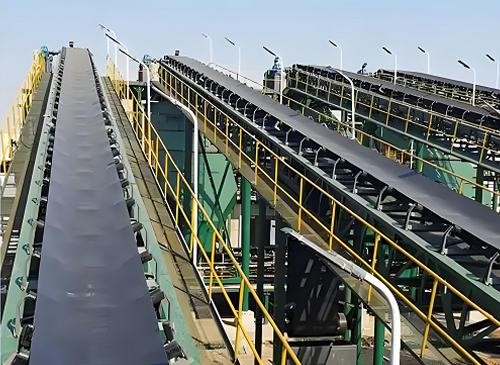
Put a jaw crusher and a cone crusher on the same granite deposit and both will break rock. Put them in the same slot of a flowsheet and one of them will fail the job. That is the practical answer behind the question "which is better, a cone crusher or a jaw crusher" — the comparison only becomes meaningful once you kn...
Mining Conveying Equipment Manufacturers
About Us
Shanghai Sanming Mining Equipment Manufacturing CO., LTD.
Sanming is an international Mining Machinery Equipment Supplier that integrates R&D, Manufacturing, and Sales of Rock Crushing&Screening equipment, as well as Sand Making, Sand Washing, and Grinding equipment. Sanming has passed ISO9001 quality system certification.
As China Mining Conveying Equipment Manufacturers and OEM Rock Stone Conveying Equipment Suppliers, our equipments are widely used in the fields of Sand and Gravel Aggregate processing, Mining, and Construction Waste Resource utilization.
"Sanming" brand equipments are not only distributed in nearly 30 provinces in China, but also exported in large quantities to multiple countries in Central Asia, the Middle East, South America and Africa, and has received unanimous praise from users. Our main production base is located in Qidong (Shanghai Pudong New Area Industrial Park). We warmly welcome your visit to our factory.
News & Blogs
-
-
When a crushing plant is being planned or upgraded, the cone crusher usually appears near the top of the equipment list. It works in the secondary, tertiary and sometimes quaternary stage, turning coarse rock into the consistent fractions that the rest of the plant depends on. But a "cone crusher" is not a single mach...
-
Shanghai Sanming Mining Equipment Manufacturing Co., Ltd. has confirmed its participation in bauma CHINA 2026 — the International Trade Fair for Construction Machinery, Building Material Machines, Mining Machines and Construction Vehicles. As one of the most influential trade fairs in the engineering machinery industry...
Conveying Equipment Industry knowledge
Architectural Foundations of Heavy-Duty Mining Conveying Equipment
The Role of Conveying Systems in Modern Mining Operations
In modern mining extraction and mineral processing workflows, efficient material conveying systems serve as the vital lifeline connecting every production stage. From overburden stripping in surface mining and vertical hoisting in underground shafts to final stockyard logistics and vessel loading or unloading, the performance of Mining Conveying Equipment directly dictates the throughput, operational costs, and continuous handling capacity of the entire production line. As an international mining machinery supplier integrating R&D, manufacturing, and sales, Shanghai Sanming Mining Equipment Manufacturing CO., LTD. relies on its deep technical heritage to fuse advanced conveying engineering technologies with high-standard manufacturing craftsmanship. Its independently developed high-strength mining conveying systems seamlessly interface with various hard rock crushing and screening setups while demonstrating immense technical integration advantages in bulk material handling, manufactured sand processing, and construction waste resource utilization, achieving fully automated material transport from extraction to aggregate processing.
Classification by Operational Environment and Material Characteristics
Topographical conditions, climatic environments, and material properties vary drastically across different mining sites, placing strict requirements on the structural selection of Mining Conveying Equipment. Based on operational environments and bulk material characteristics, mining conveying equipment is categorized into three core technical classifications:
High-Capacity Overland Conveyor Systems: Mainly used in large surface mines or manufactured sand production bases, these systems connect extraction fields to crushing stations or bridge crushing stations and long-distance stockyards. This equipment features long single-machine transport distances, large capacities, and exceptional adaptability to varied terrain. The system design focuses on minimizing belt running resistance, optimizing tension control, and maintaining dynamic balance across undulating landscapes.
Underground Belt Conveyors: Specifically designed for harsh, confined underground spaces, these systems must be highly integrated and possess exceptional safety defense capabilities. Beyond adopting compact, low-profile structures, all supporting components must comply with stringent explosion-proof and fire-retardant standards to withstand damp, dusty, narrow, and explosive underground conditions.
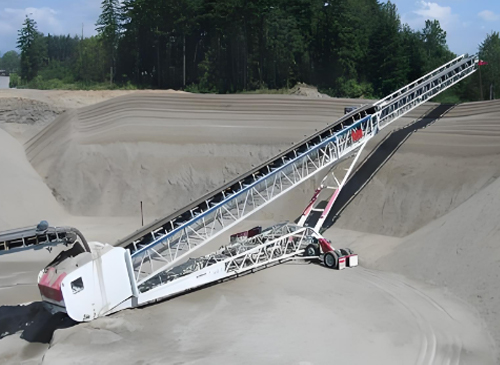
Heavy-Duty Feeder Conveyors & Stacker Linkages: Operating as quantitative feeding devices upstream of primary crushers or as screening, diverting, and stacking equipment post-crushing. These conveyors directly bear the violent impact of large, high-hardness blasted ores and are typically equipped with heavy-duty apron feeding structures or high-density impact roller groups.
To assist mining engineers and project procurement managers in precise technical selection, the following table lists the core technical parameter comparisons of Mining Conveying Equipment across different mining operational environments:
Core Technical Parameter Comparison Table of Mining Conveying Equipment (by Operational Environment)
| Technical Parameter / Performance Indicator | Overland Conveyor | Underground Conveyor | Feeder/Discharge Conveyor |
| Primary Application Scenario | Long-distance surface bulk transport | Underground roadways, incline shaft hoisting | Upstream crusher feeding, diversion |
| Max Designed Capacity | 3,000 - 8,000 t/h | 1,000 - 4,500 t/h | 500 - 3,500 t/h |
| Max Single-Machine Distance | 2,000 - 15,000 m | 500 - 3,000 m | 20 - 150 m |
| Max Designed Belt Speed | 4.0 - 6.5 m/s | 2.5 - 4.5 m/s | 0.5 - 2.2 m/s |
| Max Permissible Inclination | Less than or equal to 16 degrees | Less than or equal to 18 degrees | Less than or equal to 25 degrees |
| Primary Material Particle Size | Less than or equal to 200 mm | Less than or equal to 300 mm | 0 - 800 mm |
| Explosion-Proof / Flame-Retardant | Standard industrial dustproof | Must hold Mining Safety (MA) certification | Standard industrial grade |
| Core Drive Type | High-power AC motor + VFD | Flameproof motor + Fluid coupling | Heavy-duty reducer with VFD |
When designing these systems, Shanghai Sanming Mining Equipment Manufacturing CO., LTD. not only strictly adheres to industry specifications but has also passed ISO9001 quality system certification. Its main production base in Qidong, Shanghai, is equipped with high-precision heavy steel structure processing centers and automated testing apparatus. Whether distributed across aggregate stone yards in China or exported to major mining projects in Central Asia, the Middle East, South America, and Africa, Sanming delivers customized Mining Conveying Equipment configurations tailored to specific hard rock indices and ambient temperatures, ensuring the entire processing line maintains excellent stability and long-term return on investment.
Engineering Excellence: Core Components and Structural Reliability
Heavy-Duty Steel Framework and Structural Design
Intricate external field environments and non-stop continuous operation modes pose severe trials for the mechanical framework of Mining Conveying Equipment. The overall chassis and intermediate frames of the conveyor must possess exceptionally high bending and torsional stiffness to sustain thousands of tons of heavy-load ore per hour.
To guarantee structural integrity under severe impact, Shanghai Sanming Mining Equipment Manufacturing CO., LTD. implements digital processing and unitized heavy-duty steel structure design across its manufacturing bases. The main frame utilizes high-strength low-alloy structural steel (such as Q355B), and all critical structural weldments pass rigorous Non-Destructive Testing (NDT). To cope with volatile climates and acidic corrosive environments, structural components undergo shot blasting to achieve Sa2.5 cleanliness standards before receiving hot-dip galvanization or multi-layer heavy-duty anti-corrosion applications, significantly extending the infrastructural lifespan of the long-distance bulk conveying line.
High-Tensile Belting and Idler Technologies
The conveyor belt and idler sets represent the daily consumables with the highest friction resistance and maintenance frequency in Mining Conveying Equipment. Technical parameters of the conveyor belt must be precisely verified according to transport distance, material tension, and drop height:
High-Tensile Conveyor Belts: For long-distance or high-lift transport lines extending over several kilometers, high-strength steel-cord composite rubber conveyor belts must be deployed, boasting tensile strengths up to ST5400 N/mm or higher with minimal elongation, effectively neutralizing belt snapping risks.
Low-Resistance Precision Idler Groups: The rotational resistance of idler sets directly influences drive motor power consumption. Utilizing precision idlers equipped with triple labyrinth seals and high-precision deep groove ball bearings seals out mine dust and water vapor ingress, dropping the rolling resistance coefficient below 0.02 and drastically saving overall system friction power.
Structural Optimization Design for Harsh Conditions
In actual operating conditions at hard rock crushing points, several tons of material crashing down from high levels impose intense localized mechanical shocks. For these complex conditions, industrial engineering design carries out deep structural optimizations across several dimensions:
Structural Optimization vs. Traditional Design for Critical Components
| Structural Component | Traditional Conventional Design | Optimized Structural Design (Sanming Standard) | Reliability Elevation |
| Material Cushion System | Standard rubber impact idler sets | Integrated Impact Beds (High-elastic rubber + UHMW-PE) | Absorbs impact energy, prevents belt puncture |
| Frame Stress Control | Empirical section selection | FEA simulation + Thermal stress relief | Prevents fatigue cracking under heavy loads |
| Transfer Chute | Straight-through carbon steel | 3D Curved Controlled Chutes | Minimizes shearing velocity, reduces dust |
| Drive Base | Separate rigid motor base | Integrated suspended high-torque base | Absorbs starting shocks, protects reducers |
Through this matrix of structural optimizations, conveying systems manufactured by Shanghai Sanming Mining Equipment Manufacturing CO., LTD. exhibit outstanding process operational stability, earning the Sanming brand widespread acclaim in high-abrasion material processing sectors such as manufactured sand production and construction waste recycling.
Drive Systems and Intelligent Control
High-Efficiency Motor and Gearbox Configurations
Heavy-load starting and variable load operation represent the two primary technical hallmarks of mining transport. In large-capacity, long-distance Mining Conveying Equipment, the configuration of the drive system directly governs the equipment's energy efficiency. As an international mining machinery manufacturer certified under ISO9001, Shanghai Sanming Mining Equipment Manufacturing CO., LTD. extensively implements high-power AC electric motors paired with heavy-duty Variable Frequency Drive (VFD) systems.
Safety Interlocks and Operational Protection Systems
Across expansive mining extraction grounds, a mature intelligent control system must feature comprehensive mechanical and electrical safety interlocking devices to execute second-level automated fault shutdown and protection under unmanned conditions. The standard core protection safety apparatus includes:
Pull-Cord Switches: Staggered and installed along both sides, allowing operators to execute an instantaneous emergency stop during critical situations.
Misalignment Sensors: Automatically cut motor power if belt deflection exceeds 10% to prevent edge abrasion and spillage.
Slip & Rip Detectors: Monitor speed differentials; immediately command a shutdown if roller slippage or belt punctures are detected.
Preventative Misalignment & Ripping Technical Solution
| Dimension | Conventional Design | Targeted Optimization (Sanming) | Effect |
| Line Alignment | Fixed idlers | Automatic Self-Aligning Idlers | Forced belt centering via lateral force |
| Pulley Traction | Light rubber lagging | Diamond/Ceramic hot-vulcanized lagging | Increases friction coefficient to over 0.45 |
| Rip Control | None | Mesh reinforced belts + IR Scanners | Physical rip arrest and automated detection |
| Cleaning System | Single rubber blade | Multi-stage matrix: H-type + P-type cleaners | Exceeds 95% cleaning efficiency |
Bulk Material Management: Wear Resistance and Flow Optimization
Chute Design and Material Flow Dynamics
At massive material transfer hubs, the chute engineering of Mining Conveying Equipment directly dictates the continuous operational efficiency. Modern mining engineering addresses this by utilizing Discrete Element Method (DEM) three-dimensional material flow modeling to perform deep trajectory optimization, reducing fugitive dust generation by over 70%.
Wear-Resistant Material Selection
As a globally oriented equipment manufacturer backed by ISO9001, Shanghai Sanming Mining Equipment Manufacturing CO., LTD. incorporates modular wear-resistant liner technologies engineered around specific material abrasiveness profiles.
Technical Comparison of Mainstream Wear Liners
| Material Type | Hardness | Impact Toughness | Applicable Condition |
| High-Manganese Steel | Initial 200-250 HBW (Work-hardens) | High | Primary crusher receiving hoppers (>300 mm) |
| High-Chromium Cast Iron | 60 - 65 HRC | Low | Fine-grained minerals (<= 60 mm) |
| Wear-Resistant Steel Plate | 480 - 530 HBW | Medium-High | General aggregate processing |
| Ceramic Rubber Composite | > 88 HRA | High (Rubber backed) | Acidic moisture or high-viscosity minerals |
Precise Quantitative Feeding Technology
Shanghai Sanming Mining Equipment Manufacturing CO., LTD. has implemented extensive digital upgrades across its quantitative control systems. To satisfy fluctuating feed demands, the quantitative feeding assembly incorporates high-precision digital electronic belt scales. By using closed-loop variable frequency regulation, the system maintains instantaneous feeding precision fluctuations within plus or minus 0.5%, providing a solid automation foundation for unmanned mining plants globally.
Stringent Manufacturing and Quality Assurance
Quality Management and Testing
Every piece of Mining Conveying Equipment produced by Shanghai Sanming Mining Equipment Manufacturing CO., LTD. is backed by an uncompromising quality assurance chain. Every batch of steel plates undergoes chemical composition verification, and all heavy structural load-bearing elements undergo 100% Ultrasonic Testing (UT) and Magnetic Particle Testing (MT) to root out internal defects.
Quality Inspection Standards for Core Components
| Component | Testing Items | Acceptance Standard |
| Steel Frame | NDT Flaw Detection | ISO 5817 Class B |
| Drive Pulley | Dynamic Balancing | G6.3 Grade |
| Precision Idlers | Rotational Resistance | <= 2.5 N |
| Protective Coating | Dry Film Thickness | >= 150 microns |
| Electrical Control | IP Rating & Latency | IP65, <= 0.2s response |
Technical Support and Maintenance
Shanghai Sanming Mining Equipment Manufacturing CO., LTD. provides all-round installation guidance, regular maintenance training, and rapid-response spare parts logistics. Whether domestically in China or across Africa, the Middle East, and South America, Sanming despatches senior engineers directly to sites for foundation commissioning and electrical integration, ensuring Mining Conveying Equipment operates at peak performance throughout its lifecycle.
Mining Conveying Equipment Technical Knowledge & FAQ
Q1: What are the primary factors when calculating the capacity (TPH) requirements for mining conveying equipment?
Answer: Calculating the design throughput capacity per hour (TPH - Tons Per Hour) for mining conveying equipment involves a rigorous blend of fluid mechanics and mechanical engineering principles, dictated primarily by four core physical and geometric parameters:
Material Cross-Sectional Area: Determined by the width of the conveyor belt, the idler trough angle, and the material's natural surcharge angle.
Belt Speed: The linear velocity of the conveyor belt (m/s).
Material Bulk Density: The mass per unit volume of the bulk material in its loose state (t/m³).
Inclination Factor: When a conveyor moves material uphill, gravity causes the material to settle backward slightly, reducing the effective cross-sectional area.
Q2: How does the choice of idler sealing mechanism affect the lifespan of conveyors in high-dust environments?
Answer: In high-dust environments, fine stone dust easily breaches conventional bearing gaps. Premium mining idlers must utilize a Multi-Stage Labyrinth Seal layout. This creates a tortuous pathway that forces incoming dust to pivot and drop velocity, while high-performance grease inside forms an absolute physical barrier, extending bearing life from 5,000-8,000 hours to over 30,000-50,000 hours.
Q3: What are the fire-retardant standards required for underground mining conveying equipment?
Answer: Underground workings have tight space constraints where slippage and friction can spark fires. Conveyor belts must satisfy stringent certifications such as the China Mining Safety Certification (MA), US MSHA Certification, and European EN 12882 Standard, ensuring intrinsic fire safety.
Q4: How do you reduce the power consumption of long-distance overland mining conveying equipment?
Answer: To curb energy consumption, industrial methods include deploying Low Rolling Resistance (LRR) Rubber Compounds, optimizing idler spacing in high-tension zones, and implementing Regenerative VFD Technology to feed gravitational potential energy back into the power grid during downhill transport.
Q5: What is the recommended frequency for ultrasonic thickness testing on transfer chute liners?
Answer: Standardized Ultrasonic Thickness Testing (UT) is crucial:
Primary Crushing Zones: Perform profiling every 7 to 14 days.
Screening Chutes: Perform surveys every 30 to 45 days.
Replacement: If the liner's initial thickness drops by more than 70%, modular replacement must be implemented immediately.
Contact Us
Contact Us .
-

-

+ 86 - 15221838076
+ 86 - 18817756097
-

+ 86 - 021-38682089
-

No.18 Jiangzhou Road, Qidong (Pudong Industrial Park), Nantong City, Jiangsu Province, China
Product Categories .
-
0
Factory Area
-
0+
Number Of Products
