


 English
 русский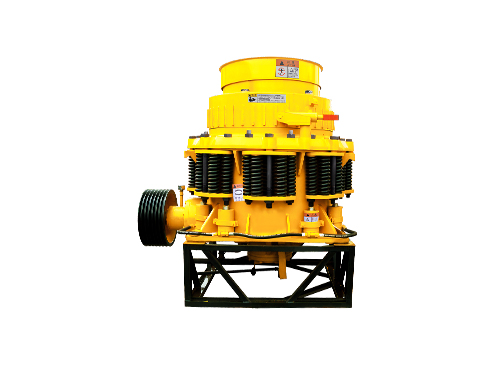
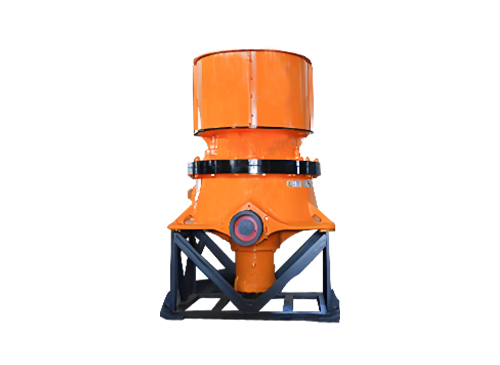
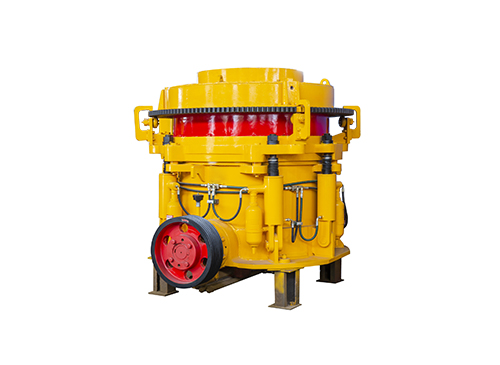
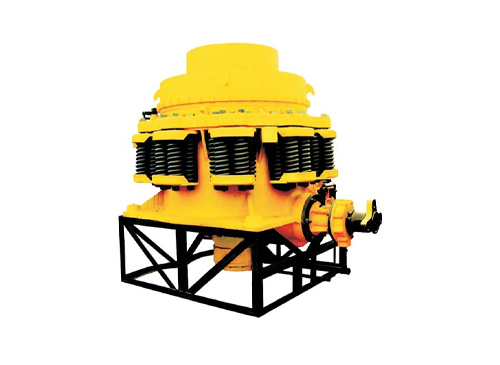
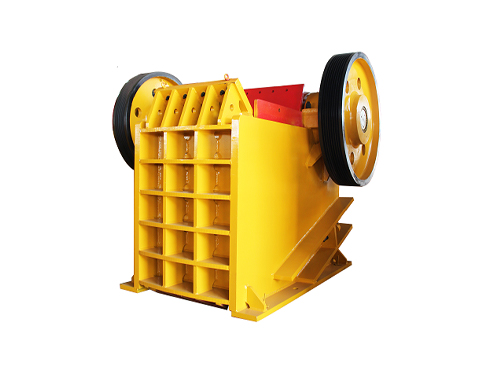
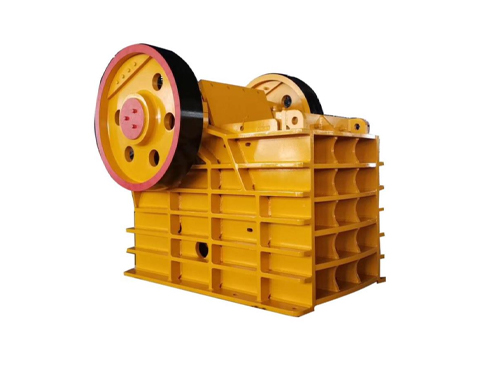
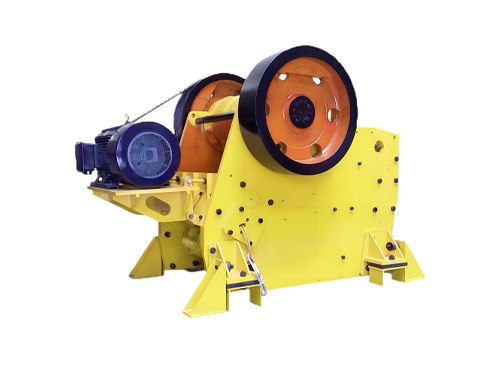
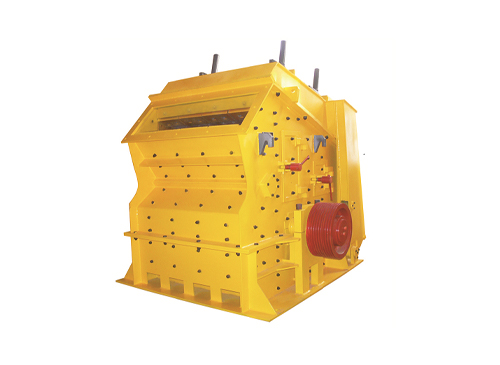
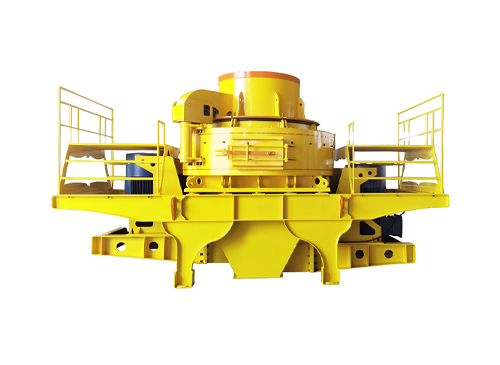
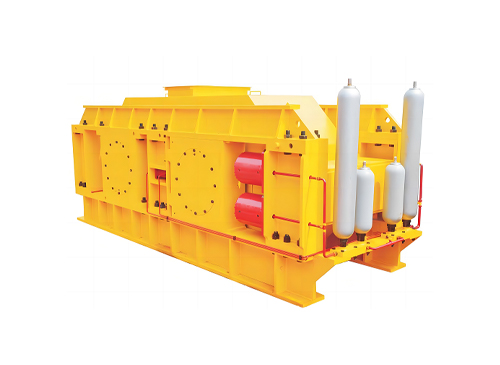
Put a jaw crusher and a cone crusher on the same granite deposit and both will break rock. Put them in the same slot of a flowsheet and one of them will fail the job. That is the practical answer behind the question "which is better, a cone crusher or a jaw crusher" — the comparison only becomes meaningful once you kn...
About Us
Shanghai Sanming Mining Equipment Manufacturing CO., LTD.
Sanming is an international Mining Machinery Equipment Supplier that integrates R&D, Manufacturing, and Sales of Rock Crushing&Screening equipment, as well as Sand Making, Sand Washing, and Grinding equipment. Sanming has passed ISO9001 quality system certification.
As China Mining Crusher Equipment Manufacturers and OEM Rock Stone Crusher Equipment Suppliers, our equipments are widely used in the fields of Sand and Gravel Aggregate processing, Mining, and Construction Waste Resource utilization.
"Sanming" brand equipments are not only distributed in nearly 30 provinces in China, but also exported in large quantities to multiple countries in Central Asia, the Middle East, South America and Africa, and has received unanimous praise from users. Our main production base is located in Qidong (Shanghai Pudong New Area Industrial Park). We warmly welcome your visit to our factory.
News & Blogs
-
-
When a crushing plant is being planned or upgraded, the cone crusher usually appears near the top of the equipment list. It works in the secondary, tertiary and sometimes quaternary stage, turning coarse rock into the consistent fractions that the rest of the plant depends on. But a "cone crusher" is not a single mach...
-
Shanghai Sanming Mining Equipment Manufacturing Co., Ltd. has confirmed its participation in bauma CHINA 2026 — the International Trade Fair for Construction Machinery, Building Material Machines, Mining Machines and Construction Vehicles. As one of the most influential trade fairs in the engineering machinery industry...
Crusher Equipment Industry knowledge
Understanding the Core Role of Mining Crusher Equipment in Modern Mineral Processing
The Technical Evolution of Crushing Technology in Heavy Industries
The extraction and processing of raw minerals require robust mechanical systems capable of reducing massive, unmanageable rock formations into precise, predictable dimensions. Historically, mineral processing relied on high-labor, low-efficiency mechanical impacts that lacked consistency, scalability, and safety. As modern industrial sectors expanded, the demand for high-volume aggregate production, metallic ore extraction, and infrastructure materials drove the rapid development of specialized mining crusher equipment.
Today, heavy industries leverage heavily optimized, mechanically driven systems designed to withstand thousands of hours of severe operational fatigue under extreme loads. Modern crushing circuits prioritize energy conservation, maximum wear-part longevity, and a highly reduction-oriented throughput. By deploying advanced mineral processing lines, operations can minimize raw material handling costs, maximize metallurgical recovery, and ensure high operational safety standards across the global mining sector. The engineering focus has shifted from mere size reduction to structural optimization, where stress distribution and kinematically controlled stroke profiles dictate the machine's efficiency.
How Advanced Mining Crusher Equipment Impacts Downstream Processing Efficiency
Within a complete mineral processing, ore beneficiation, or sand-making plant, crushing acts as the foundational gateway for all subsequent downstream operations. If the primary or secondary mining crusher equipment fails to produce a consistent, properly sized discharge, the downstream grinding mills, vibrating screens, and separation systems face severe operational imbalances. Over-crushing introduces excessive, unrecoverable ultra-fine particles (slimes) that hinder flotation or chemical leaching circuits, leading to lost mineral revenue and increased tailing waste. Conversely, under-crushing forces ball or rod mills to process over-sized feed materials, which exponentially increases power consumption and accelerates wear on grinding liners and media.
By engineering integrated rock crushing and screening plant systems, heavy machinery suppliers optimize the entire size-reduction circuit. As an international Mining Machinery Equipment Supplier that integrates R&D, Manufacturing, and Sales of Rock Crushing & Screening equipment, as well as Sand Making, Sand Washing, and Grinding equipment, Shanghai Sanming Mining Equipment Manufacturing CO., LTD. focuses heavily on this systemic balance. Their engineered systems ensure that each stage of crushing prepares the material precisely for subsequent processing. This synchronized reduction lowers total kWh-per-ton power costs, stabilizes feed rates, and prevents structural bottlenecks across the plant layout, whether processing hard iron ores or soft sedimentary formations.
Key Parameters Defining Crusher Performance
Selecting and sizing the correct industrial machinery requires an explicit engineering assessment of three critical raw material properties and mechanical parameters:
- Material Hardness (Mohs Scale): Hardness determines the structural resistance of the rock against mechanical deformation and structural failure. Highly hard materials like granite, basalt, quartzite, and iron ore require high-tonnage compression or specialized hydraulic crushing mechanisms, whereas soft materials like limestone can be processed via direct impact velocity.
- Throughput Capacity (Tons Per Hour - TPH): Throughput measures the volumetric or mass processing rate of the station. It dictates the physical sizing of the crusher's feed opening (gape) and the necessary horsepower rating of the main drive motor to maintain steady performance under choke-fed conditions without stalling.
- Reduction Ratio: This parameter defines the ratio of the maximum feed size entering the crushing chamber to the product size exiting it. Primary crushers typically achieve ratios between 4:1 and 6:1, while secondary and tertiary systems can extend this ratio further through precise cavity geometries and high-speed eccentric kinematics.
To quantify how these core parameters interact with different geological conditions, engineering teams utilize standardized benchmarks to categorize raw materials before finalizing the selection of mining crusher equipment:
| Material Type | Mohs Hardness Range | Average Compressive Strength (MPa) | Bond Abrasion Index (Ai) | Recommended Crushing Mechanism |
|---|---|---|---|---|
| Highly Abrasive (e.g., Quartzite, Granite) | 6.0 - 7.5 | 180 - 300+ | > 0.45 | High-Pressure Compression (Jaw / Cone) |
| Medium Hardness (e.g., Basalt, Iron Ore) | 5.0 - 6.0 | 120 - 180 | 0.25 - 0.45 | Heavy-Duty Compression or Composite Impact |
| Soft & Friable (e.g., Limestone, Gypsum) | 2.0 - 4.5 | 30 - 120 | < 0.15 | High-Velocity Impact / Attrition (Impact / Hammer) |
Understanding these baseline thresholds prevents premature component failure and allows plant managers to balance initial capital expenditure with long-term wear part operational costs.
Classifications and Working Principles of Industrial Mining Crusher Equipment
Primary Crushing Solutions for Run-of-Mine (ROM) Materials
Primary crushing stage serves as the initial point of structural reduction for blasted or excavated raw materials directly sourced from open-pit or underground mine faces. The primary engineering goal at this station is to accept massive raw material volumes and quickly break them down into manageable sizes suitable for downstream belt conveyor transportation or secondary crushing blocks.
- Jaw Crusher: Operating on a straightforward mechanical compression principle, jaw crushers utilize a combination of a stationary fixed jaw plate and a reciprocating swing jaw plate driven by a heavy-duty eccentric shaft. As the eccentric shaft rotates, it forces the swing jaw to describe an elliptical motion path, applying high compressive and shearing forces against the trapped minerals. This configuration handles extreme feed block sizes and high-hardness materials efficiently, which is why engineering teams rely on it to establish a stable, non-clogging primary reduction stage.
- Gyratory Crusher: Engineered for high-tonnage mining plants, a gyratory crusher features a heavy, conical main shaft assembly fitted with a manganese mantle that oscillates inside a stationary, bowl-shaped outer shell lined with concave segments. Unlike the intermittent crushing stroke of jaw systems, the gyratory head moves continuously around the entire perimeter of the crushing cavity. This uninterrupted mechanical engagement eliminates the idle stroke found in single-toggle jaw designs, providing massive throughput capacities for high-volume mining processing plants.
Secondary and Tertiary Fine Crushing Systems
Once primary systems reduce the run-of-mine materials to an intermediate size, secondary and tertiary fine mining crusher equipment is utilized to refine particle shape, achieve tight grain-size distributions, or optimize the feed layout for downstream ball mills or sand-making lines.
- Cone Crusher: Working via high-pressure compression similar to a gyratory unit, a cone crusher features a much shallower crushing chamber angle, a high rotational speed, and a precise kinematic stroke. As the crushing mantle gyrates relative to the stationary bowl liner, it compresses the shifting rock bed repeatedly as it falls through the narrowing cavity. Modern configurations rely on automated hydraulic adjustment systems to maintain a consistent Closed-Side Setting (CSS). This capability ensures precise final size control when processing hard, highly abrasive metallic ores or volcanic rocks like basalt and granite.
- Impact Crusher: Shifting away from compression mechanics, impact crushers utilize high-velocity kinetic energy transfer to achieve particle size reduction. A balanced, high-inertia rotor equipped with rigid alloy blow bars spins at high speeds, striking incoming rocks directly and throwing them violently against heavy-duty apron liner plates mounted inside the upper housing. This high-speed impact causes the minerals to fracture cleanly along their natural internal geological fault lines. This specialized action delivers a highly cubical product shape with minimal internal micro-cracks, making it the preferred choice for producing high-grade concrete aggregates, asphalt stone, and premium sand materials.
To ensure long-term mechanical reliability across these varied mechanical actions, precision manufacturing must meet rigid quality standards. Shanghai Sanming Mining Equipment Manufacturing CO., LTD. engineers and manufactures its full portfolio of primary, secondary, and tertiary mining crusher equipment under a strict ISO9001 quality system certification framework. This systematic quality control ensures that structural steel castings, alignment tolerances, and high-load hydraulic assemblies successfully withstand the intense physical stress encountered in demanding sand and gravel aggregate processing, metal mining, and heavy construction waste resource utilization projects across global markets.
Engineering Parameter Comparison Matrix
Selecting the right configuration of mining crusher equipment requires balancing raw feed parameters with specific final product goals. The matrix below outlines the critical mechanical and engineering boundaries that distinguish these primary categories of industrial crushing machinery:
| Technical Parameter | Jaw Crusher | Gyratory Crusher | Cone Crusher | Impact Crusher |
|---|---|---|---|---|
| Reduction Mechanism | Discontinuous Compression | Continuous Perimeter Compression | High-Speed Choke Compression | High-Velocity Dynamic Impact |
| Material Hardness Suitability | Hard, Medium, Highly Abrasive | Hard, Medium, Highly Abrasive | Hard, Medium, Highly Abrasive | Soft, Medium-Hard, Non-Abrasive |
| Maximum Feed Size Limit | Up to 1,200 mm | Up to 1,500 mm | Up to 350 mm | Up to 500 mm |
| Reduction Ratio Range | 4:1 to 7:1 | 4:1 to 7:1 | 3:1 to 5:1 | 10:1 to 20:1 |
| Discharge Particle Shape | Elongated / Angular | Angular / Mixed | Sub-Angular / Cubical | Premium Cubical Grade |
| Relative Wear Part Life Cost | Low (Work-hardening Mn plates) | Medium (Distributed wear liners) | Low to Medium (Choke-fed mantle) | High if applied to high-silica rock |
| Circuit Position | Primary Stage Only | Primary Stage Only | Secondary / Tertiary Stages | Primary / Secondary Stages |
Engineering Excellence: A Deep Dive into Key Mining Crusher Equipment Components
Jaw Crusher Wear Parts and Mechanical Optimization
The primary wear boundary of a jaw crusher consists of the fixed and movable jaw plates, which directly endure extreme compressive forces and severe sliding abrasion. To maximize operational life, metallurgical engineering dictates the use of austenitic manganese steel alloys (ranging from Mn13Cr2 to Mn22Cr2 depending on rock silica content). Manganese steel possesses a unique work-hardening property: under continuous mechanical impact, its surface hardness increases from an initial 200 HB up to 500+ HB, while the underlying core remains ductile and shock-absorbent to prevent structural cracking.
The fixed and movable plates feature optimized corrugated teeth profiles. These profiles focus high point-loads across irregular rock surfaces to initiate immediate tensile failure. The mechanical stroke is driven by a forged alloy steel eccentric shaft mounted inside heavy-duty spherical roller bearings. This shaft transmits mechanical force to the movable jaw via a precision-machined toggle plate. The toggle plate serves a critical dual purpose: it acts as a kinematic guide and functions as a sacrificial mechanical fuse that buckles if an uncrushable object (tramp iron) enters the chamber, protecting the main shaft and casting frame from catastrophic failure.
Cone Crusher Mantle & Bowl Liner Engineering
In a cone crusher, size reduction occurs within the variable gap between the gyrating mantle and the stationary bowl liner. Because these components experience high cyclic fatigue and grinding abrasion, they are cast from modified high-manganese steels enhanced with chromium or molybdenum to stabilize the grain matrix.
Advanced cone crusher configurations incorporate an automated hydraulic adjustment system that alters the vertical position of the bowl liner relative to the mantle. This allows operators to compensate for progressive liner wear in real-time without interrupting production. Furthermore, if uncrushable material enters the chamber, heavy hydraulic tramp release cylinders compress instantly, allowing the entire upper bowl structure to lift and discharge the non-crushable item safely. Once cleared, the cylinders automatically return to the pre-set closed-side setting (CSS), protecting downstream circuits from oversized material.
Impact Crusher Blow Bars and Rotor Assemblies
The rotor assembly of an impact crusher is a high-mass component engineered to store and transfer massive kinetic energy directly to incoming material. This assembly requires precise dynamic balancing to eliminate high-frequency shaft vibrations that can damage pillow block bearings. Fixed securely onto the perimeter of this solid structural steel rotor are the heavy wear elements known as blow bars.
Depending on the targeted application, blow bars are cast from high-chromium alloys (20% to 27% Cr content) or custom ceramic-matrix composites (MMC). High-chrome bars offer extreme hardness, making them highly effective at resisting abrasive scouring when crushing medium-hard rocks. However, because they lack the high impact toughness of manganese, heavy-duty applications involving large feed sizes utilize composite blow bars. These combine a ductile steel base with high-hardness ceramic inserts embedded directly into primary wear zones, resisting cracking while maintaining a sharp, efficient impact edge.
Hammer Crusher Components and Forging Standards
Unlike rigid blow-bar impact systems, a hammer crusher features a series of articulated, free-swinging hammer heads attached to central rotor discs via heavy pin-shaft connections. These hammer heads strike incoming materials at high velocities, forcing them against adjustable breaker plates and across an underlying curved grate plate assembly.
To prevent catastrophic failure caused by hydrogen embrittlement or internal casting voids, premium hammer heads undergo strict closed-die forging or multi-alloy bimetallic casting processes. The working head is cast from extra-hard chromium-molybdenum steel, while the mounting arm consists of tough carbon steel. The underlying grate plate configurations dictate the maximum final particle size; material remains in the chamber until it is fine enough to pass through the specific garter slot dimensions, making it an efficient single-pass machine for processing non-abrasive materials.
Roll Crusher Shells and Drive Trains
Roll crushers utilize two counter-rotating heavy steel cylinders to capture and compress rock between their outer faces. The exterior surface of these cylinders is fitted with replaceable roll shells, which can be configured as smooth, grooved, or heavily toothed surfaces depending on material sizing requirements.
Toothed configurations are ideal for sticky, ductile clays or cohesive shales because the teeth tear and slice the material rather than relying purely on compression. The drive train must accommodate the independent movement of at least one adjustable roll, which is backed by a heavy-duty spring-loaded relief system. Power distribution is managed through dual-motor synchronous drives or specialized flexible couplings that maintain reliable torque delivery even when the adjustable roll moves laterally to let a momentary surge of uncrushable material pass through safely.
To ensure these complex components operate reliably under extreme loads, proper material sourcing and manufacturing precision are critical. As a specialized manufacturer operating a primary production base located in Qidong (Shanghai Pudong New Area Industrial Park), Shanghai Sanming Mining Equipment Manufacturing CO., LTD. focuses on these strict engineering standards for all its proprietary wear components and assemblies. By controlling the metallurgy of its jaw plates, mantles, and blow bars under certified processes, the company ensures its entire line of mining crusher equipment delivers high wear efficiency and structural durability for global infrastructure and mining installations.
Wear Component Material & Performance Matrix
To optimize the lifetime of mining crusher equipment, the following engineering parameters guide the selection of alloy materials for specific wear parts:
| Wear Component Type | Core Material Alloy | Hardness Range (HRC / HB) | Primary Failure Risk | Optimal Feed Material Application |
|---|---|---|---|---|
| Jaw Crusher Plates | Mn18Cr2 / Mn22Cr2 | 200 - 500 HB (After work-hardening) | Rapid abrasive wear if impact is insufficient | Hard rock, granite, iron ore, basalt |
| Cone Crusher Mantles | Modified Manganese | 220 - 520 HB (After work-hardening) | Plastic deformation / Bell-mouthing | Abrasive metallic ores, quartzite |
| Impact Blow Bars | High-Chromium Steel | 58 - 62 HRC | Brittle fracture under heavy structural impact | Limestone, concrete recycling, medium asphalt |
| Composite Blow Bars | Ceramic Matrix (MMC) | 60 - 65 HRC | Thermal shock / Excessive localized impact | High-silica gravel, asphalt aggregates |
| Hammer Crusher Heads | Bimetallic Cr-Mo / Carbon | 55 - 60 HRC (Head tip) | Pin-hole ovalization / Arm snapping | Soft coal, gypsum, shale, clean limestone |
| Roll Crusher Shells | Forged Cr-Mn Alloy | 45 - 52 HRC | Shell surface pitting / Tooth shearing | Sticky clay, wet shale, bauxite |
Material Adaptability and Application Frameworks for Mining Crusher Equipment
Hard and Highly Abrasive Rocks
Processing highly abrasive geological formations - such as granite, basalt, quartzite, diorite, and high-grade iron ore - requires equipment selections that minimize high wear-part replacement costs. These rock types possess high compressive strength (often exceeding 200 MPa) and a high Bond Abrasion Index (Ai).
For these challenging applications, compression-based crushing circuits are the standard engineering recommendation. A typical high-performance circuit deploys a heavy-duty jaw crusher for the primary reduction stage, followed by a series of high-pressure hydraulic cone crushers for the secondary and tertiary reduction steps. Attempting to process high-abrasion, high-silica materials using high-velocity impact machinery results in severe financial penalties due to rapid blow bar degradation and frequent maintenance shutdowns.
Medium-Hard to Soft Minerals
For softer sedimentary materials - including limestone, gypsum, clean coal, calcite, and soft phosphate rock - the engineering focus shifts from wear mitigation to maximizing reduction ratios and optimizing particle shape per stage.
In these applications, impact crushers and hammer crushers are highly effective. A single high-capacity impact crusher can often achieve a reduction ratio up to 20:1, allowing it to replace both a primary jaw and a secondary cone crusher in a single production line. This setup reduces the total structural footprint of the processing plant and significantly lowers the initial capital investment. Furthermore, dynamic impact forces break the material along its natural geological fault lines, yielding a highly cubical aggregate profile with minimal internal micro-cracks - a critical requirement for high-strength concrete and asphalt manufacturing.
Open-Pit Mining vs. Underground Crushing Stations
The physical location of the installation introduces specific structural, logistical, and layout engineering constraints:
In large-scale open-pit mining operations, flexibility and mobility are essential for minimizing haul truck fuel consumption and carbon footprints. Mobile crushing plants - mounted on heavy-duty tracked crawler frames or multi-axle wheeled chassis - allow operators to move the entire crushing station directly alongside the advancing mine face. These mobile units integrate structural feed hoppers, vibrating grizzly feeders, and onboard discharge conveyors.
Conversely, stationary underground crushing stations are restricted by tight overhead space, strict ventilation limits, and demanding weight distribution requirements. Underground installations require highly compact, low-headroom jaw or horizontal impact configurations designed to be disassembled into modular components that fit inside standard mine shafts or access tunnels without structural modification.
Global Field Applications and Proven Reliability
The real-world success of these material frameworks depends heavily on matching regional geological properties with customized machinery configurations. "Sanming" brand equipments are engineered specifically to balance these diverse material demands, ensuring high efficiency whether processing hard volcanic rocks or softer minerals. These heavy-duty configurations are not only distributed in nearly 30 provinces in China, but also exported in large quantities to multiple countries in Central Asia, the Middle East, South America, and Africa, receiving unanimous praise from global users for their structural adaptability and operational uptime under varied climatic conditions.
Geological Application Boundaries & Machine Compatibility Matrix
To clarify exactly which mechanical system aligns with specific rock profiles, the matrix below details the engineering compatibility limits for modern mining crusher equipment:
| Raw Material Example | Average Compressive Strength | Mohs Hardness | Bond Abrasion Index (Ai) | Primary Circuit Choice | Secondary / Tertiary Choice |
|---|---|---|---|---|---|
| Quartzite / Quartz | 250 - 320+ MPa | 7.0 - 7.5 | 0.60 - 0.85 | Heavy-Duty Jaw Crusher | High-Pressure Hydraulic Cone Crusher |
| Granite / Basalt | 180 - 250 MPa | 6.0 - 7.0 | 0.40 - 0.55 | Heavy-Duty Jaw Crusher | Standard / Short-Head Cone Crusher |
| Iron Ore (Taconite) | 150 - 220 MPa | 5.5 - 6.5 | 0.30 - 0.45 | Heavy-Duty Jaw or Gyratory | Short-Head Cone Crusher |
| Limestone (High Calcium) | 60 - 120 MPa | 3.0 - 4.0 | 0.02 - 0.08 | Heavy-Duty Impact Crusher | Horizontal Impact Crusher or Hammer |
| Gypsum / Talc | 10 - 40 MPa | 1.5 - 2.5 | < 0.005 | Hammer Crusher or Impact | Fine Impact Crusher or Roll Crusher |
| Construction Waste (Concrete) | 30 - 80 MPa | Variable | Variable (Tramp Iron Risk) | Jaw Crusher or Specialized Impact | Impact Crusher with Magnetic Separator |
Optimizing Operational Efficiency and Lifecycle Management
Preventive Maintenance Protocols
Maximizing the return on investment for high-tonnage processing lines requires a data-driven preventive maintenance schedule. Operating heavy machinery under continuous shock loads accelerates fastener loosening, structural fatigue cracks, and component misalignment. Daily inspections must focus on verifying the tightness of jaw wedge bolts, tracking the wear profile of cone mantles, and checking the structural integrity of rotor blow bar lock mechanisms.
Measuring the closed-side setting (CSS) daily ensures that the product sizing remains consistent and prevents uneven wear patterns (bell-mouthing) within the crushing chamber. Implementing ultrasonic non-destructive testing (NDT) on major casting sections every 500 operating hours helps maintenance teams detect micro-fractures early, avoiding catastrophic structural failure and unscheduled plant downtime.
Lubrication System Engineering
Lubrication is the primary defense against catastrophic bearing failure in mining equipment. The main eccentric shaft bearings and inner eccentric bushings operate under high radial pressures and elevated operating temperatures. Main lubricating systems must deliver clean, filtered ISO VG 150 or VG 220 extreme-pressure (EP) industrial oils at consistent flow rates and controlled temperatures.
Lubrication modules must include water-cooled or air-cooled heat exchangers along with dual-chamber inline oil filters capable of capturing microscopic rock dust particles that bypass primary dust seals. Integrating automated low-flow and high-temperature alarm switches into the main control loop provides an automated safety shutdown if oil pressure drops or temperature limits are exceeded, preventing expensive bearing damage.
Automation and Control Integration
Modern mineral processing lines utilize advanced Programmable Logic Controller (PLC) networks and real-time sensor arrays to maximize throughput and reduce human error. Variable Frequency Drives (VFDs) on feed conveyors allow the control system to adjust the material flow into the crushing chamber dynamically based on the main drive motor's real-time amperage draw.
If the crusher encounters a zone of exceptionally hard rock, the motor current rises; the PLC detects this change and momentarily slows the feeder to prevent an over-current trip or a structural jam. Ultrasonic level sensors mounted directly above the crushing cavity maintain a consistent "choke-fed" condition. This rock-on-rock crushing action inside the chamber optimizes final particle shape and reduces direct wear on steel liners.
To support these rigorous efficiency goals, specialized infrastructure and advanced technical engineering must be integrated during the manufacturing phase. Shanghai Sanming Mining Equipment Manufacturing CO., LTD. incorporates these advanced automation options and lubrication monitoring loops directly into their heavy-duty equipment designs. This ensures their entire line of mining crusher equipment maintains high mechanical availability and optimal kW-per-ton efficiency across demanding aggregate processing and ore extraction environments.
Maintenance Schedule & Operational Parameter Metrics
To sustain high productivity, engineering teams implement standard operating parameters and maintenance frequencies for core mining crusher equipment assets:
| Maintenance Activity | Targeted Component | Recommended Frequency | Key Monitoring Metric | Operational Objective |
|---|---|---|---|---|
| Lubrication Filtration | Main Bearings / Bushings | Continuous / Daily Check | Oil Pressure & Differential PSI | Remove sub-micron abrasive rock dust |
| CSS Measurement | Jaw / Cone Chamber | Every 8-12 Operating Hours | Discharge Gap Width (mm) | Maintain target product sizing curve |
| Wedge Bolt Torque Check | Jaw Fixed/Movable Plates | Every 24 Operating Hours | Torque Specification (Nm) | Prevent plate flexing and backing failure |
| Rotor Balance Inspection | Impact Crusher Rotor | Weekly (Every 50 Operating Hours) | Radial Vibration Amplitude (mm/s) | Avoid bearing housing stress fatigue |
| Heat Exchanger Cleanout | Oil Cooling System | Monthly (Every 200 Operating Hours) | Temperature Delta (Inlet vs Outlet) | Prevent thermal oil degradation |
| NDT Crack Testing | Main Pitman / Casting Frame | Bi-Annuallly (Every 2000 Hours) | Ultrasonic Wave Integrity | Identify subsurface structural fatigue |
Technical FAQ: Expert Answers to Essential Mining Crusher Equipment Questions
Q1: How do I select the right mining crusher equipment based on material abrasiveness (Ai)?
The selection process relies on the Bond Abrasion Index (Ai), which quantifies how many grams of wear metal are lost from a standard coupon per unit of rock processed. When the raw material has an index value greater than 0.45 Ai (such as quartzite, chert, or high-silica granite), compression-based machinery-like a jaw crusher for primary stages and a cone crusher for secondary stages-is the correct engineering choice. These machines compress the rock until it fractures along its internal crystals, minimizing abrasive sliding wear on the steel liners. For non-abrasive materials with an index below 0.15 Ai (such as clean limestone, dolomite, or gypsum), high-velocity impact crushers are preferred because they offer higher reduction ratios and better cubical product geometry per stage without causing excessive wear costs.
Q2: What causes premature failure in jaw crusher wear parts, and how can it be prevented?
Premature failure or cracking of jaw plates is typically caused by two factors: improper feed distribution across the crushing chamber or incorrect tensioning of the structural locking wedges. If material is fed predominantly to one side of the jaw cavity, it creates localized stress concentrations that cause uneven wear and can induce structural bending forces on the movable jaw frame. To prevent this, a vibrating grizzly feeder should be installed ahead of the crusher to spread the rock evenly across the full width of the intake gape. Additionally, backing materials, such as specialized epoxy resins, should be poured behind the plates to fill any small casting voids. Regular torque checks are also necessary to ensure the side wedge plates remain perfectly tight, preventing the main liners from flexing during crushing impacts.
Q3: Why is the reduction ratio of a cone crusher critical for overall circuit efficiency?
The reduction ratio of a cone crusher directly influences the recirculating load within a closed-loop screening and crushing circuit. If an operator tries to force an excessive reduction ratio by setting the closed-side setting (CSS) too tight, the machine can experience "packing" or localized overloading within the lower portion of the cavity. This increases mechanical stress, spikes motor amperage, and causes the adjustment bowl to bounce. This bouncing allows oversized material to pass through, which increases the volume of rock that must be screened out and returned to the crusher. Maintaining a balanced reduction ratio (typically between 3:1 and 5:1) maximizes the throughput of on-spec final product, reduces overall power consumption per ton, and extends the service life of both the mantle and the bowl liner.
Q4: What are the primary differences between high-chromium and manganese steel blow bars in impact crushers?
The choice between these alloys depends on the balance between material hardness and impact energy. High-chromium blow bars are highly through-hardened (often reaching 58 to 62 HRC), providing excellent resistance to abrasive scouring. However, they are relatively brittle and can fracture if they hit large, uncrushable tramp metal or high-mass, hard boulders. Standard manganese steel blow bars are tougher and flex without breaking under high impact loads, but they require consistent mechanical impacts to work-harden effectively. For varied feeds that include concrete recycling with embedded rebar or medium-hard quarry stone, composite ceramic-matrix blow bars offer a balanced solution, embedding hard ceramic material within a tough alloy substrate to provide both wear resistance and structural durability.
Q5: How does real-time hydraulic adjustment in modern mining crusher equipment lower operational costs?
Real-time hydraulic adjustment systems lower costs by minimizing maintenance downtime and maximizing product consistency. In older mechanical, shim-adjusted crushers, changing the setting to compensate for liner wear required stopping production for several hours while workers manually added or removed steel spacers. A hydraulic cylinder setup allows the operator to adjust the setting from a control touch-screen in seconds while the machine is running. This precise control keeps the discharge size consistent throughout the entire life cycle of the wear parts. Furthermore, it protects the system against tramp iron and simplifies chamber clearing; if a power failure occurs under full load, the hydraulic cylinders can be opened to dump the trapped rock safely, eliminating the need to clear the chamber manually with hand tools.
Q6: Where can global mining operators inspect and source these advanced machinery configurations?
Selecting and optimizing heavy industrial machinery requires direct collaboration with established manufacturing engineers. To serve global engineering demands, Shanghai Sanming Mining Equipment Manufacturing CO., LTD. welcomes international buyers to evaluate their technical designs firsthand. Our main production base is located in Qidong (Shanghai Pudong New Area Industrial Park). We warmly welcome your visit to our factory, where you can inspect the high-precision machining centers, robotic welding systems, and quality control lines used to construct our entire portfolio of export-grade mining crusher equipment.
Operational Sizing & Application Bounds Matrix
To assist plant operators in identifying the right technical solutions for specific mineral problems, the parameter framework below pairs typical user issues with proper engineering choices:
| Customer Problem / Concern | Primary Root Cause | Critical Equipment Parameter | Optimal Solution Setup | Expected Operational Benefit |
|---|---|---|---|---|
| High Percentage of Elongated Aggregates | Compression along weak geological bedding | Material Reduction Mechanism | Shift to high-velocity Impact Crusher | Cubical final shape meeting international construction standards |
| Frequent Structural Shimming Downtime | Rapid wear on compression liners | CSS Adjustment Protocol | Fully Automated Hydraulic Cone Crusher | Instant wear compensation with zero manual labor costs |
| High Energy Consumption per Ton (Grinding) | Oversized or irregular feed to ball mills | Circuit Reduction Ratio | Install Tertiary Fine Cone Crusher ahead of mill | Lowers ball mill power requirements by up to 30% |
| Catastrophic Main Shaft Failures | Tramp iron entering the crushing cavity | Uncrushable Protection System | Integrate Hydraulic Tramp Release Cylinders | Automatic chamber clearing without frame damage |
| Excessive Fines / Slimes Generation | Over-crushing due to improper cavity path | Choke-Fed Cavity Level | Ultrasonic Level Sensor + VFD Feed Loop | Optimized rock-on-rock crushing with minimum waste fines |
Contact Us
Contact Us .
-

-

+ 86 - 15221838076
+ 86 - 18817756097
-

+ 86 - 021-38682089
-

No.18 Jiangzhou Road, Qidong (Pudong Industrial Park), Nantong City, Jiangsu Province, China
Product Categories .
-
0
Factory Area
-
0+
Number Of Products
