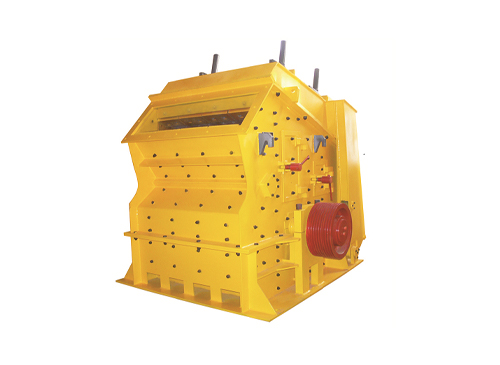
Blow Bar Rock Impact Crusher
Interchangeable blow bars · Multiple alloy options · Fast wear-part changeover
Blow bar impact crusher · quick-release rotor mounting system
Core specifications
Feed opening≤ 700 mm
Blow bar optionsManganese · high-chrome · bimetallic
Capacity40 – 650 t/h
Motor power75 – 355 kW
Wear part changeoverQuick-release wedge/bolt mounting
Blow Bar Rock Impact Crusher – Overview
The SMC blow bar rock impact crusher is built around a modular blow bar mounting system designed to make wear part changeover as fast and straightforward as possible, recognizing that blow bars are the single highest-wear component in any impact crusher and that changeover speed directly affects plant uptime and total cost of ownership.
The rotor uses a quick-release blow bar mounting system in which each bar is secured by wedge locks or bolted clamps that can be released and re-tightened without special tools, allowing a full set of blow bars to be changed by a trained crew significantly faster than on rotors using welded or press-fit mounting.
Blow bars are offered in multiple alloy grades — high-manganese steel for toughness and impact resistance on medium-hard rock, high-chrome white iron for maximum abrasion resistance on harder or more silica-rich material, and bimetallic composite bars combining a tough steel core with a hard-facing edge for applications needing both impact toughness and wear resistance in a single part.
Each blow bar can typically be reversed or rotated to expose a fresh wearing edge before requiring full replacement, extending the effective service life obtained from each set of bars and reducing the frequency of complete changeover events, which lowers both parts cost and cumulative downtime over the life of the machine.
The rotor disc design is engineered to distribute impact load evenly across all mounted blow bars, reducing the tendency for one bar position to wear significantly faster than others — a common issue on poorly designed rotors that leads to imbalance and premature bearing wear if left unaddressed.
A wear-monitoring gauge system is available as an option, allowing operators to measure remaining blow bar thickness without fully opening the crushing chamber, supporting a data-driven replacement schedule rather than relying solely on visual inspection or fixed time intervals.
Typical applications span the full range of impact crushing duties — primary, secondary, and tertiary crushing of medium-hardness rock, recycling of concrete and asphalt, and any operation where blow bar changeover speed and alloy flexibility across varying feed materials are operational priorities.
For operations that value minimizing downtime during wear part replacement and having the flexibility to match blow bar alloy precisely to changing feed conditions, the SMC blow bar rock impact crusher's modular mounting system delivers a clear operational advantage.
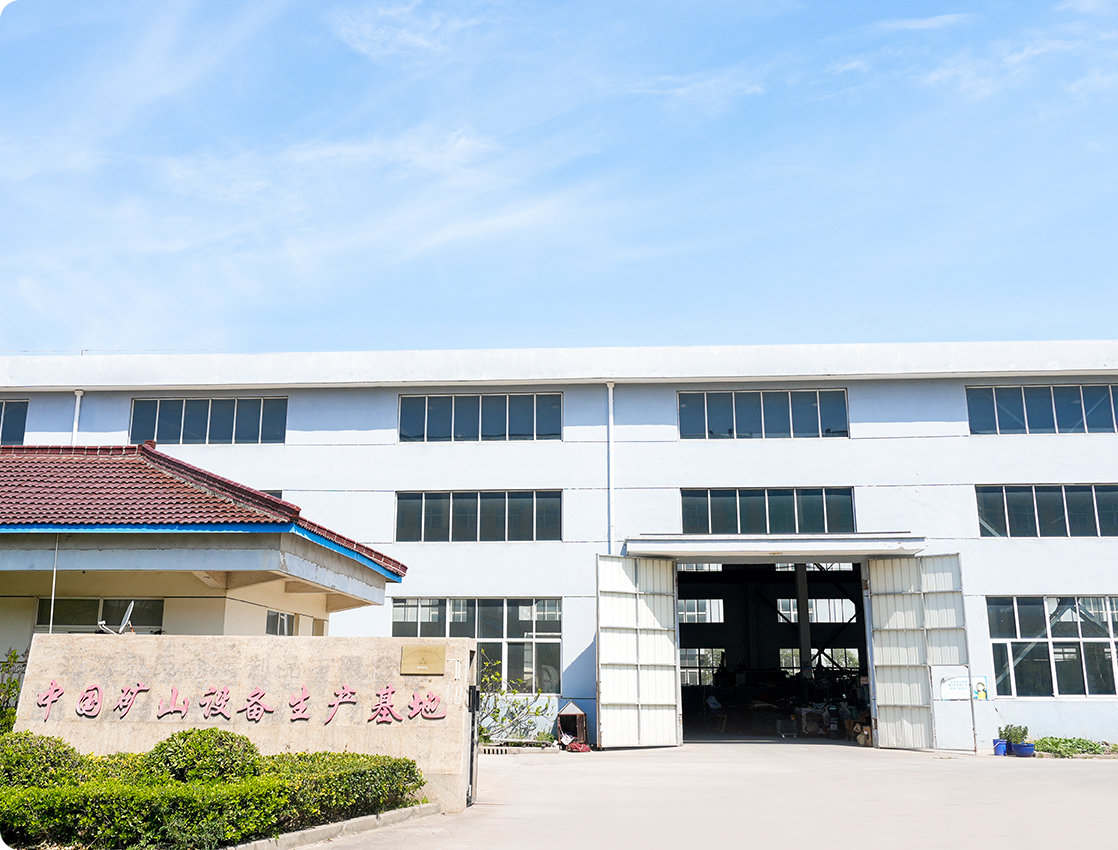
Sanming Mining - Raising Industry Standards
Company Profile
View More →
Sanming is an international Mining Machinery Equipment Supplier that integrates R&D, Manufacturing, and Sales of Rock Crushing&Screening equipment, as well as Sand Making, Sand Washing, and Grinding equipment. Sanming has passed ISO9001 quality system certification.
As
China Blow Bar Rock Impact Crusher Manufacturers and
Wholesale Blow Bar Rock Impact Crusher Factory, our equipments are widely used in the fields of Sand and Gravel Aggregate processing, Mining, and Construction Waste Resource utilization.
"Sanming" brand equipments are not only distributed in nearly 30 provinces in China, but also exported in large quantities to multiple countries in Central Asia, the Middle East, South America and Africa, and has received unanimous praise from users. Our main production base is located in Qidong (Shanghai Pudong New Area Industrial Park). We warmly welcome your visit to our factory.

- 200+
Number Of Products
- 20,000
Factory Area
- 500w
Annual Sales
- 40%
Annual Export Ratio
How It Works – Working Principle
Quick-Release Mounting
Wedge locks or bolted clamps secure blow bars without special tools.
Alloy-Matched Impact
Manganese, high-chrome, or bimetallic bars selected for feed conditions.
Reversible Wear Edges
Bars can be rotated to expose a fresh edge before full replacement.
Balanced Load Distribution
Rotor disc design spreads impact force evenly across all mounted bars.
Applications & Industries
Multi-Material Quarries
Sites processing varying rock types that benefit from alloy flexibility.
High-Uptime Recycling Plants
C&D and asphalt recycling operations prioritizing fast wear-part changeover.
Aggregate Production
General-purpose primary/secondary crushing with frequent blow bar rotation.
Contract Crushing Services
Mobile or contract crushing operations needing rapid on-site part swaps.
Suitable For Various Mining Applications
Equipment Production Line
←
→
Selection Guide – Choose the Right Model
BBI-1010
Feed: ≤400 mm · Capacity: 40–120 t/h
Compact model for smaller operations valuing fast changeover.
BBI-1214
Feed: ≤700 mm · Capacity: 160–380 t/h
Balanced model for standard-scale multi-material crushing.
BBI-1315
Feed: ≤700 mm · Capacity: 280–500 t/h
Higher-capacity option for larger, high-uptime operations.
BBI-1416
Feed: ≤700 mm · Capacity: 380–650 t/h
Top-capacity model for maximum-throughput blow bar crushing.
Comparison – Quick-Release Blow Bar System vs Welded Blow Bar Rotor
Key Performance Indicators
Changeover speed · Alloy flexibility · Initial rotor cost (relative)
Quick-Release Mounting Advantage
- Significantly faster wear-part changeover
- Easy switching between alloy grades
- No welding equipment needed on site
Welded Blow Bar Rotor
- Lower initial rotor manufacturing cost
- Fewer loose mounting components
- Simple design with fewer parts
Key Components – Built to Last
Rotor Disc
Engineered to distribute impact load evenly across all blow bar positions.
Quick-Release Wedge Locks
Tool-minimal clamping system for rapid blow bar changeover.
Manganese Blow Bars
Standard bars offering impact toughness for medium-hard rock.
High-Chrome Blow Bars
Optional bars for maximum abrasion resistance on harder feed.
Bimetallic Blow Bars
Composite bars combining a tough core with a hard-facing wear edge.
Wear-Monitoring Gauge
Optional tool for measuring remaining blow bar thickness without full teardown.
Installation & Commissioning
Foundation
Standard reinforced concrete foundation sized for rotor dynamic loads.
Initial Blow Bar Fitting
Bars mounted and torqued to specification before first start-up.
Balance Verification
Rotor balance checked after the initial blow bar set is installed.
Commissioning
No-load run to confirm mounting security, then gradual feed introduction.
Maintenance Schedule & Wear Trend
Wear/Component Life Over Time (Relative)
Rotate blow bars to the reverse edge at roughly 50% wear to maximize total service life before replacement.
Daily Checks
- Visual blow bar wear inspection
- Wedge lock tightness
- Rotor bearing temperature
Weekly Checks
- Measure remaining blow bar thickness
- Check apron wear alongside blow bars
- Inspect rotor disc for damage
Monthly
- Rotate or replace blow bars as needed
- Re-torque all wedge locks
- Check rotor balance
Yearly
- Full rotor bearing inspection
- Inspect rotor disc structural condition
- Balance-check the complete rotor assembly
Quality You Can Trust
Why choose Sanming
Sanming is a professional manufacturer of R&D, manufacturing and sales
-
01. Design & Customization
The company has an experienced and highly skilled R&D team, which is capable of providing customers with customized equipment solutions to meet the needs of different customers

-
02. Advanced Facilities
The company has invested in and introduced a series of advanced production equipment, such as high-precision CNC machine tools, automated welding equipment, etc. These equipment features high efficiency, precision and stability, which can ensure the quality of products and production efficiency

-
03. Reliable Quality
The company always gives top priority to product quality. It uses high-quality raw materials and components, and through strict screening and inspection, it ensures the quality and performance of products. At the same time, the company also conducts long-term tracking and services for products, promptly solves the problems encountered by customers during the use process, and improves customer satisfaction

-
04. Service Integrity
The company has established a complete after-sales service system to provide customers with comprehensive services. This includes equipment installation and debugging, operation training, maintenance, technical consultation, etc., to ensure that customers can use the equipment smoothly and maximize its benefits

-
05. Cost Control
The company effectively controls product costs by optimizing the production process, reducing raw material procurement costs, and improving production efficiency. On the premise of ensuring product quality, it can provide customers with competitive prices and enhance their market competitiveness

-
06. Brand Influence
After years of development, the company has established a good brand image in the mining equipment manufacturing industry and has won the trust and praise of customers

-
07. Convenient Transportation
The company is only 50 kilometers away from Shanghai Yangshan Port, making the transportation of goods and exports very convenient

Frequently Asked Questions (FAQ)
1. What makes the blow bar mounting system 'quick-release'?
Wedge locks or bolted clamps secure each blow bar without requiring welding or specialized tools, allowing a trained crew to complete a full changeover significantly faster than with welded mounting.
2. Which blow bar alloy should I choose?
High-manganese steel suits medium-hard rock, high-chrome white iron suits harder or more silica-rich material, and bimetallic bars offer a balance of toughness and abrasion resistance; our engineers can recommend based on your feed.
3. Can blow bars be reversed to extend life?
Yes, most blow bar designs can be rotated to expose a fresh wearing edge before requiring full replacement, extending total service life from each set.
4. How is rotor balance maintained after blow bar changes?
The rotor disc is engineered to distribute load evenly across all bar positions, and balance should be verified after each full changeover to prevent vibration issues.
5. What is a wear-monitoring gauge and how is it used?
It is an optional tool that measures remaining blow bar thickness through an inspection port, without fully opening the crushing chamber, supporting scheduled rather than reactive replacement.
6. How much faster is quick-release changeover than welded mounting?
Changeover time varies by rotor size and crew experience, but quick-release systems are generally substantially faster since no welding or cutting equipment is required on site.
7. Can different alloy blow bars be mixed on one rotor?
This is not recommended, as mixed alloys wear at different rates and can cause rotor imbalance; a matched set of the same alloy grade should be used at all times.
8. What causes uneven blow bar wear across the rotor?
Off-center feeding or inconsistent feed size distribution are the most common causes; the balanced rotor disc design helps minimize this but proper feeding practice remains important.
9. Is this system compatible with mobile crushing plants?
Yes, the quick-release system is particularly valuable for mobile and contract crushing operations where fast on-site part swaps minimize costly downtime.
10. How often should blow bars be fully replaced?
Replacement frequency depends on feed hardness and abrasiveness; bars are typically rotated once before full replacement, with total service life ranging from a few hundred to over a thousand hours.
11. What tools are needed for a blow bar changeover?
The quick-release system is designed to require only basic hand tools such as wrenches, without welding equipment or specialized lifting gear for smaller models.
12. Does the quick-release system reduce rotor strength?
No, the wedge lock and clamp designs are engineered to secure blow bars as rigidly as welded mounting under normal operating loads while still allowing quick release.
13. What safety precautions apply during blow bar changeover?
The rotor must be fully locked out and at a complete stop before any blow bar work begins, following standard lockout-tagout procedures.
14. What warranty applies to the blow bars themselves?
Blow bars are wear parts and are generally covered by a shorter warranty period against manufacturing defects, separate from the main crusher warranty.
15. Do you provide alloy consultation for changing feed materials?
Yes, our engineers can help you select the right blow bar alloy as your feed material or hardness profile changes over time.
After-Sales Support & Services
Alloy Selection Consultation
Guidance choosing the right blow bar material for your specific feed conditions.
Multi-Alloy Spare Stock
Manganese, high-chrome, and bimetallic blow bars kept in stock for fast supply.
Changeover Training
On-site training for your crew on efficient, safe blow bar changeover procedures.
24/7 Technical Support
Ongoing assistance for blow bar selection and rotor maintenance questions.


 English
 русский