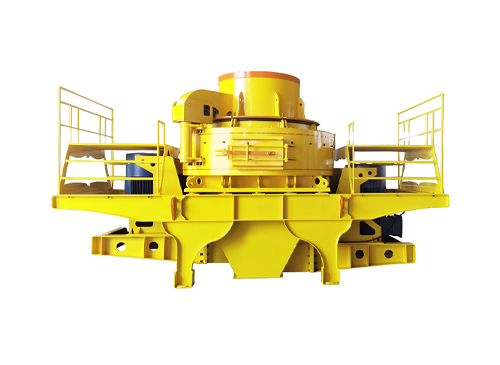
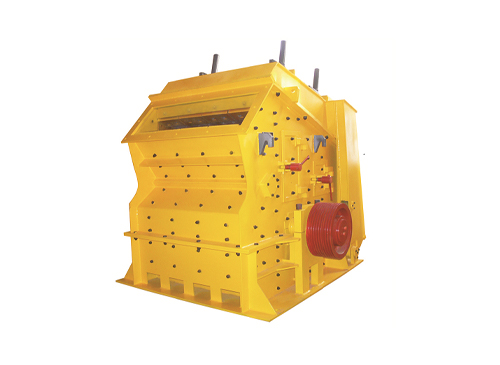
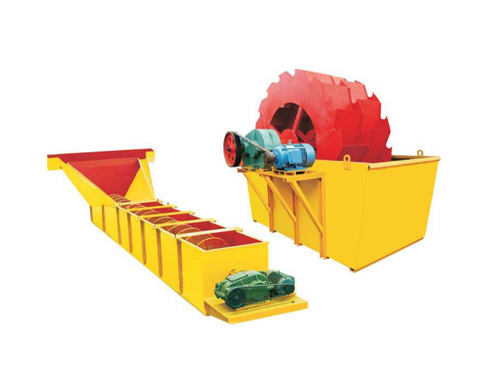
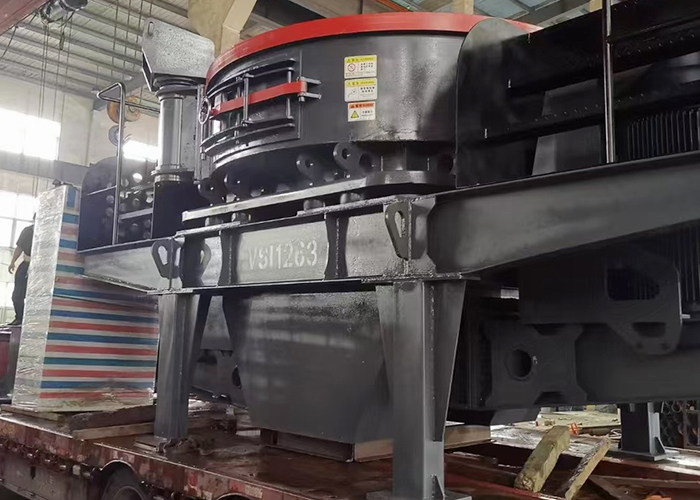
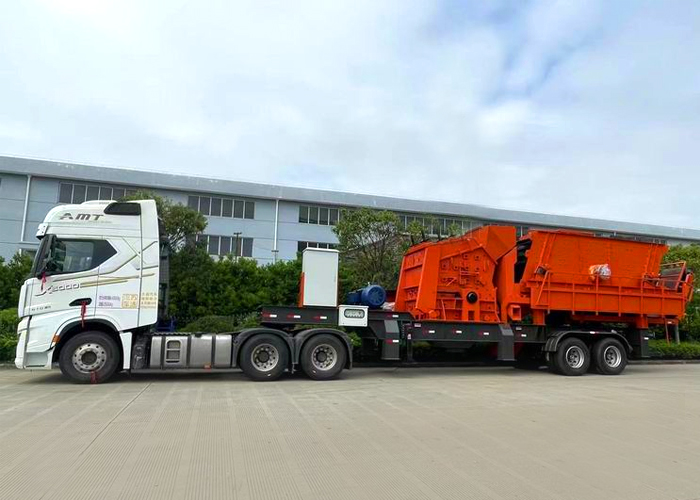
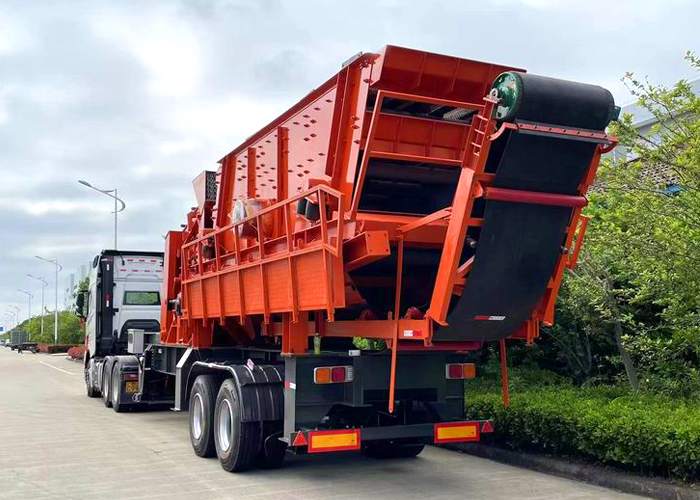
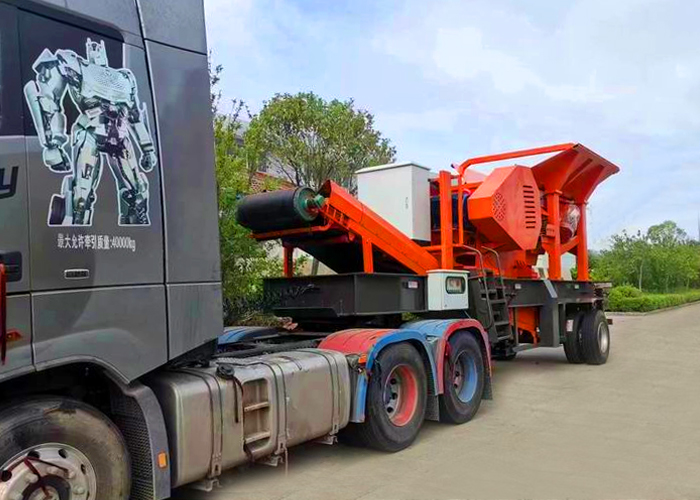
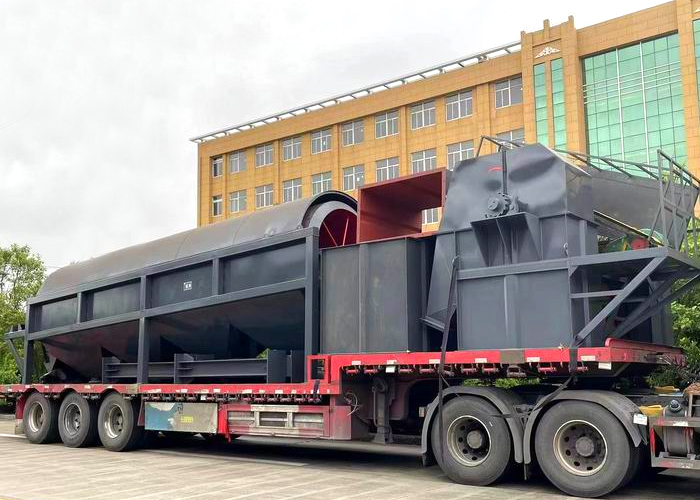
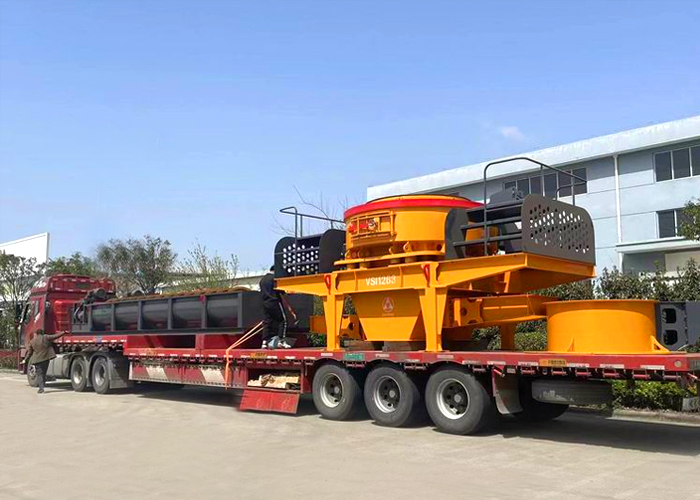
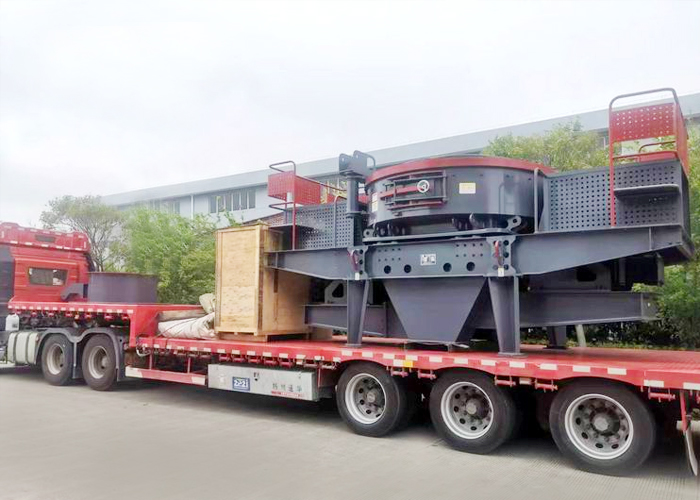
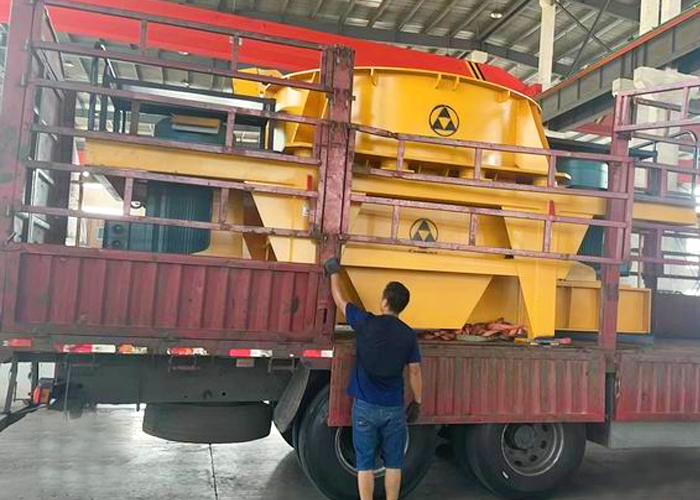
Vertical Shaft Impact Sand Maker
Rock-on-rock crushing · Dual cavity options · Superior particle shaping
Vertical shaft impact sand maker · centrifugal rotor with rock or steel cavity
Core specifications
Feed opening≤ 60 mm
Rotor speed1400 – 2600 rpm
Capacity12 – 720 t/h
Motor power2 × 45 – 2 × 280 kW
Cavity typeRock-on-rock or rock-on-steel
Vertical Shaft Impact Sand Maker – Overview
The SMC vertical shaft impact (VSI) sand maker uses a fundamentally different crushing principle from horizontal shaft impact or cone crushers: material is fed centrally into a high-speed rotor and thrown outward by centrifugal force, colliding with either a bed of accumulated rock (rock-on-rock cavity) or a set of wear-resistant anvils (rock-on-steel cavity) at extremely high velocity, shaping and sizing particles with exceptional precision.
In the rock-on-rock cavity configuration, a ring of feed material is allowed to build up around the crushing chamber wall, so that material thrown from the rotor impacts against rock rather than a wear-metal surface. This dramatically reduces wear costs since the cushioning rock layer, not machine components, absorbs most of the impact energy, while still delivering excellent shaping action.
The rock-on-steel cavity configuration replaces the accumulated rock ring with replaceable steel anvils, offering more aggressive shaping and higher reduction ratios for applications where maximum cubical shape or a specific gradation curve is the priority, at the cost of somewhat higher anvil wear compared to the rock-on-rock setup.
The rotor itself is fitted with wear-resistant tips or a full wear liner system, available in various alloy or ceramic-composite options depending on feed abrasiveness, and is precision-balanced to operate reliably at the high rotational speeds — often several thousand feet per minute at the tip — required for effective centrifugal throwing and particle shaping.
Because breakage occurs through particle-on-particle or particle-on-anvil impact rather than compression, the VSI sand maker excels at producing well-shaped, cubical manufactured sand and fine aggregate with a controlled gradation curve, correcting the flakiness that compression crushers can leave in the finer fractions of their product.
A cascade feed system splits incoming material between a portion fed directly into the rotor's eye and a portion fed around the rotor into the cascade zone, allowing operators to fine-tune the balance between shaping intensity and throughput depending on whether the priority is maximum shape correction or maximum production rate.
Typical applications include manufactured sand production for concrete and mortar, final-stage shaping of aggregate for high-specification concrete and asphalt, and glass or ceramic raw material processing where precise particle shape and gradation are critical to end-product quality.
For operations needing precisely shaped manufactured sand or fine aggregate, the SMC vertical shaft impact sand maker's centrifugal crushing principle delivers a level of shape control that compression-based crushers cannot match.
Sanming Mining - Raising Industry Standards
Company Profile
View More →
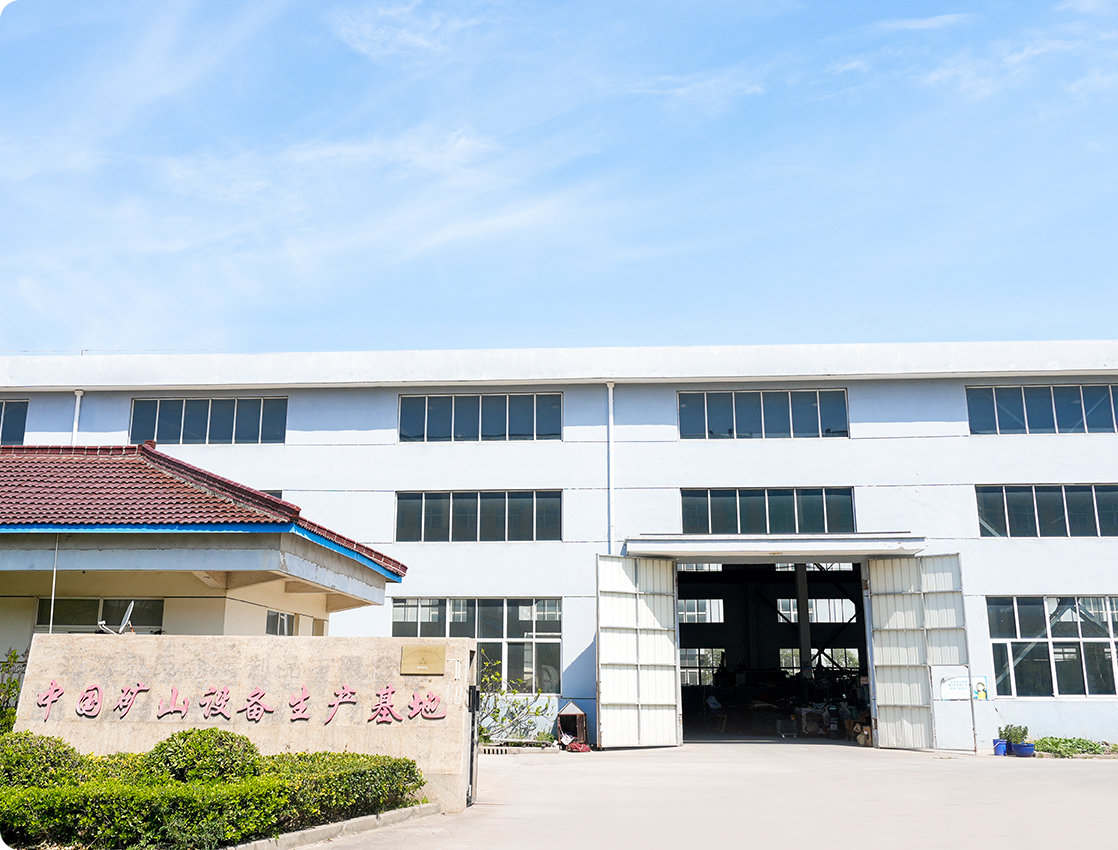
Sanming is an international Mining Machinery Equipment Supplier that integrates R&D, Manufacturing, and Sales of Rock Crushing&Screening equipment, as well as Sand Making, Sand Washing, and Grinding equipment. Sanming has passed ISO9001 quality system certification.
As
China Vertical Shaft Impact Sand Maker Manufacturers and
Wholesale Vertical Shaft Impact Sand Maker Factory, our equipments are widely used in the fields of Sand and Gravel Aggregate processing, Mining, and Construction Waste Resource utilization.
"Sanming" brand equipments are not only distributed in nearly 30 provinces in China, but also exported in large quantities to multiple countries in Central Asia, the Middle East, South America and Africa, and has received unanimous praise from users. Our main production base is located in Qidong (Shanghai Pudong New Area Industrial Park). We warmly welcome your visit to our factory.

- 200+
Number Of Products
- 20,000
Factory Area
- 500w
Annual Sales
- 40%
Annual Export Ratio
How It Works – Working Principle
Centrifugal Rotor Feed
Material enters the rotor's eye and is accelerated outward at high speed.
Rock-on-Rock Impact
A self-forming rock bed absorbs impact energy, minimizing wear cost.
Rock-on-Steel Impact
Replaceable anvils provide more aggressive shaping for higher reduction.
Cascade Feed Balance
Splits feed between direct-rotor and cascade paths to tune shaping intensity.
Applications & Industries
Manufactured Sand Production
Producing well-shaped concrete and mortar sand from crushed rock.
High-Spec Aggregate Shaping
Final-stage correction of particle shape for premium concrete and asphalt.
Glass Raw Material Processing
Precise sizing and shaping of silica sand for glass manufacturing.
Ceramic Raw Material Prep
Shaping mineral feedstock for ceramic and refractory production.
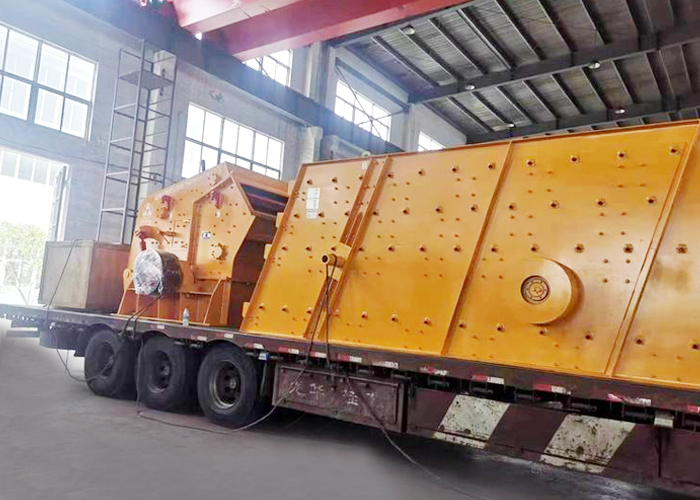
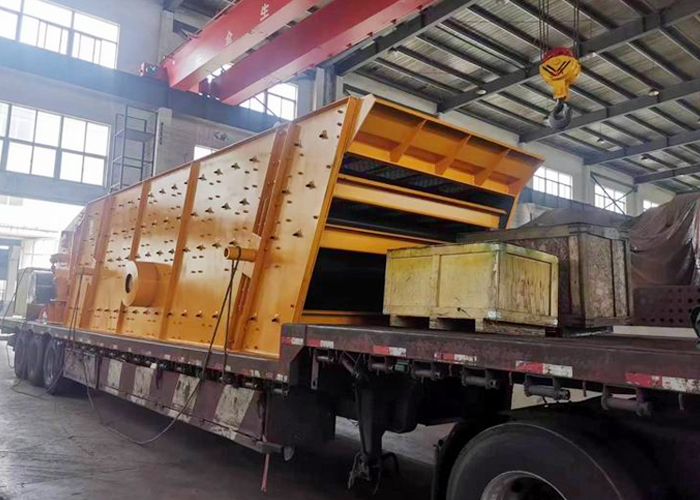
Suitable For Various Mining Applications
Equipment Production Line
←
→
Selection Guide – Choose the Right Model
VSI-750
Feed: ≤35 mm · Capacity: 12–70 t/h
Compact model for small sand production or lab-scale testing.
VSI-850
Feed: ≤40 mm · Capacity: 40–130 t/h
Popular mid-size unit for standard manufactured sand lines.
VSI-1140
Feed: ≤50 mm · Capacity: 130–380 t/h
Higher-capacity model for larger sand and aggregate operations.
VSI-1350
Feed: ≤60 mm · Capacity: 220–720 t/h
Flagship unit for maximum-throughput sand production.
Comparison – Rock-on-Rock vs Rock-on-Steel Cavity
Key Performance Indicators
Wear cost efficiency · Reduction ratio / shaping intensity · Gradation precision (relative)
Rock-on-Rock Advantage
- Lower wear part cost
- Self-cushioning impact reduces machine stress
- Ideal for high-volume sand production
Rock-on-Steel Advantage
- More aggressive particle shaping
- Higher reduction ratio per pass
- Better for precise gradation control
Key Components – Built to Last
High-Speed Rotor
Precision-balanced rotor accelerating feed material to high tip speed.
Rotor Wear Tips
Alloy or ceramic-composite tips protecting the rotor's throwing surfaces.
Rock-on-Rock Cavity Liner
Allows a self-forming rock bed to absorb crushing impact energy.
Replaceable Steel Anvils
Wear-resistant anvils for the rock-on-steel cavity configuration.
Cascade Feed Distributor
Splits incoming material between direct-rotor and cascade feed paths.
Dual-Motor Drive System
Twin motors provide balanced, high-speed rotor drive for large models.
Installation & Commissioning
Foundation
Reinforced concrete foundation designed for high-speed rotor dynamic loads.
Rotor Balancing Verification
Confirm rotor balance and wear tip mounting before first start-up.
Cavity Configuration Setup
Select and install rock-on-rock or rock-on-steel cavity components.
Commissioning
No-load run to full speed, then gradual feed introduction and shape check.
Maintenance Schedule & Wear Trend
Wear/Component Life Over Time (Relative)
Rotor wear tips and cavity liners require regular inspection given the high-speed centrifugal impact environment.
Daily Checks
- Rotor wear tip condition
- Feed distribution balance
- Rotor bearing temperature
Weekly Checks
- Inspect cavity liner/anvil wear
- Check cascade feed distributor
- Clean rotor eye of buildup
Monthly
- Replace or rotate rotor wear tips
- Inspect drive belt or coupling condition
- Check rotor balance
Yearly
- Full rotor bearing inspection
- Balance-check the complete rotor assembly
- Inspect main shaft and seal condition
Quality You Can Trust
Why choose Sanming
Sanming is a professional manufacturer of R&D, manufacturing and sales
-
01. Design & Customization
The company has an experienced and highly skilled R&D team, which is capable of providing customers with customized equipment solutions to meet the needs of different customers

-
02. Advanced Facilities
The company has invested in and introduced a series of advanced production equipment, such as high-precision CNC machine tools, automated welding equipment, etc. These equipment features high efficiency, precision and stability, which can ensure the quality of products and production efficiency

-
03. Reliable Quality
The company always gives top priority to product quality. It uses high-quality raw materials and components, and through strict screening and inspection, it ensures the quality and performance of products. At the same time, the company also conducts long-term tracking and services for products, promptly solves the problems encountered by customers during the use process, and improves customer satisfaction

-
04. Service Integrity
The company has established a complete after-sales service system to provide customers with comprehensive services. This includes equipment installation and debugging, operation training, maintenance, technical consultation, etc., to ensure that customers can use the equipment smoothly and maximize its benefits

-
05. Cost Control
The company effectively controls product costs by optimizing the production process, reducing raw material procurement costs, and improving production efficiency. On the premise of ensuring product quality, it can provide customers with competitive prices and enhance their market competitiveness

-
06. Brand Influence
After years of development, the company has established a good brand image in the mining equipment manufacturing industry and has won the trust and praise of customers

-
07. Convenient Transportation
The company is only 50 kilometers away from Shanghai Yangshan Port, making the transportation of goods and exports very convenient

Frequently Asked Questions (FAQ)
1. What is the difference between rock-on-rock and rock-on-steel cavities?
Rock-on-rock uses a self-forming bed of accumulated feed material to absorb impact energy, minimizing wear cost, while rock-on-steel uses replaceable anvils for more aggressive shaping and higher reduction ratio at the cost of faster anvil wear.
2. How does a VSI sand maker differ from a horizontal shaft impact crusher?
A VSI feeds material centrally into a high-speed rotor and throws it outward by centrifugal force for particle-on-particle or particle-on-anvil impact, while an HSI strikes material directly with rotor-mounted blow bars — VSI generally produces better shape control for fine material.
3. Which cavity type should I choose?
Rock-on-rock is typically preferred for high-volume sand production where wear cost matters most; rock-on-steel is preferred when maximum shaping intensity or a specific gradation curve is the priority.
4. What rotor speed is used and why does it matter?
Rotor tip speed typically ranges from around 1400 to 2600 rpm depending on the model; higher speeds increase shaping intensity and reduction ratio but also increase wear rate.
5. How does the cascade feed system work?
A portion of feed goes directly into the rotor's eye for maximum impact shaping, while the remainder is fed around the rotor into the cascade zone for a gentler pass, letting operators balance shape quality against throughput.
6. What feed materials work best in a VSI sand maker?
Most rock types used for aggregate and sand production work well, though extremely soft or sticky materials may require different equipment; hard, abrasive rock benefits most from the shape-correcting action.
7. How often are rotor wear tips replaced?
Wear tip life depends on feed abrasiveness and rotor speed, generally requiring inspection every few hundred hours with replacement as wear approaches the recommended limit.
8. Can the cavity type be switched on the same machine?
Many models allow switching between rock-on-rock and rock-on-steel configurations by changing the cavity liner components, offering flexibility as production needs change.
9. What gradation control is possible with this equipment?
Rotor speed, cavity type, and cascade feed ratio can all be adjusted to fine-tune the resulting particle size distribution and shape characteristics.
10. Is this equipment suitable for glass sand production?
Yes, its precise shaping and sizing capability makes it suitable for silica sand processing where particle shape and size consistency are important for glass manufacturing.
11. What maintenance access is provided for the rotor?
The upper housing typically opens for direct access to the rotor and cavity liners for inspection and wear part replacement.
12. How is rotor balance maintained over time?
Regular inspection and even wear tip replacement help maintain balance; a formal balance check is recommended after any full wear tip changeover.
13. What safety features protect operators during maintenance?
Lockout-tagout procedures, rotor brakes on larger models, and interlocked access panels are standard safety features.
14. What warranty is offered?
A standard 12-month warranty covers manufacturing defects, with technical support for cavity configuration and wear tip selection.
15. Do you provide gradation testing support?
Yes, our engineers can help analyze your target gradation curve and recommend the appropriate rotor speed and cavity configuration.
After-Sales Support & Services
Cavity Configuration Consultation
Guidance choosing between rock-on-rock and rock-on-steel for your application.
Rotor Wear Part Supply
Wear tips, liners, and anvils stocked in multiple alloy grades.
Gradation Optimization Support
Assistance fine-tuning rotor speed and feed ratio for target particle shape.
24/7 Technical Support
Ongoing assistance for VSI sand making operations worldwide.


 English
 русский