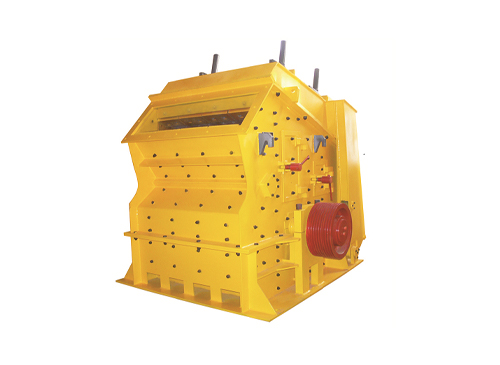
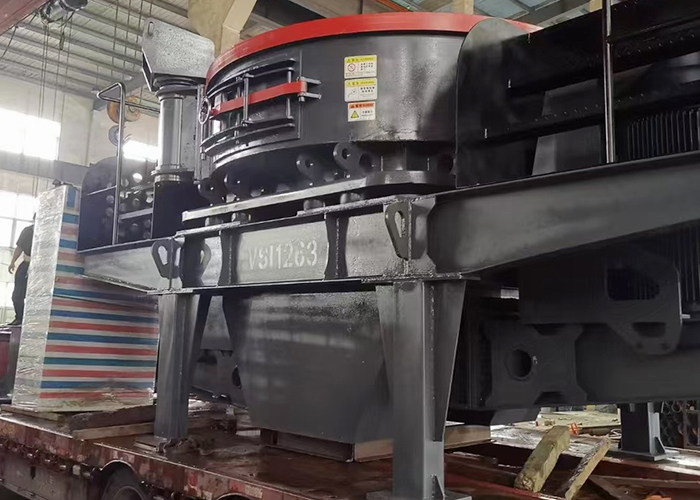
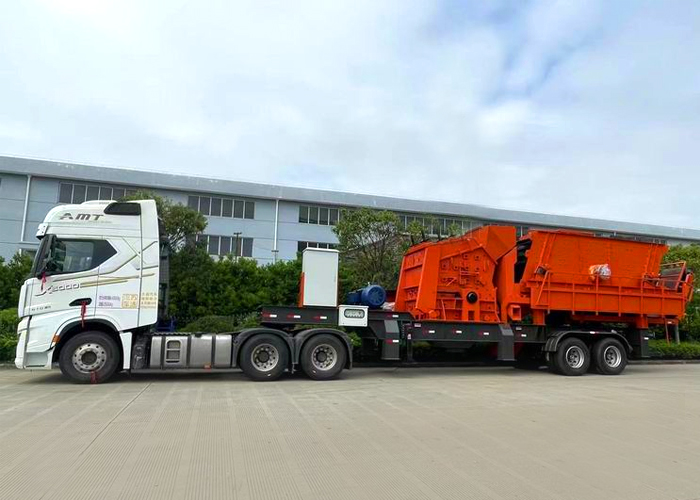
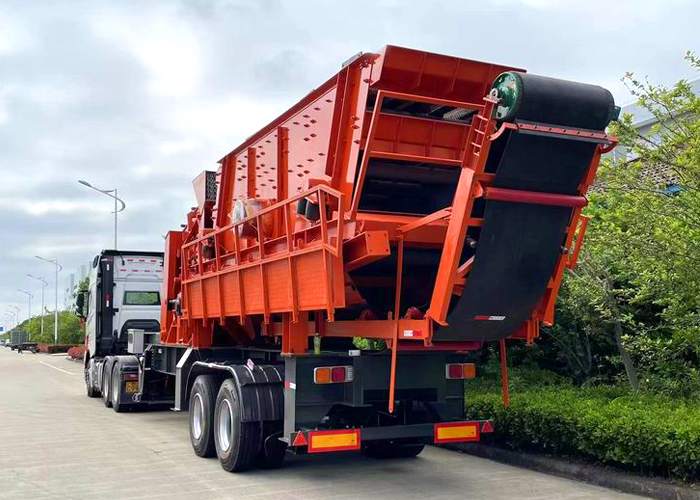
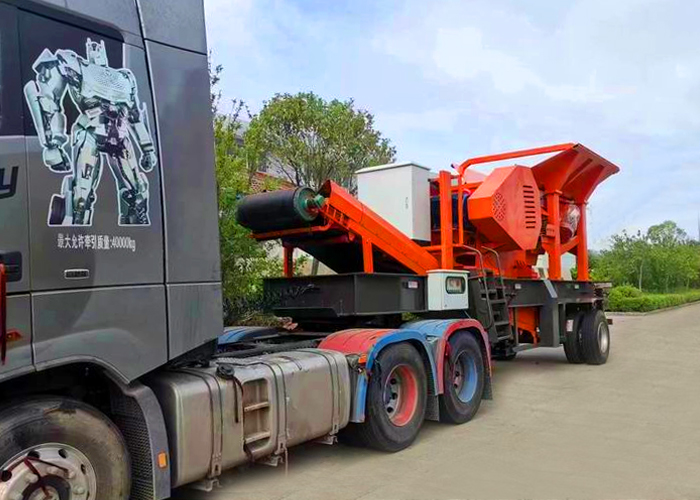
Horizontal Shaft Impact Crusher Machine
High reduction ratio · Cubical product · Versatile primary/secondary duty
Horizontal shaft impact crusher · rotor and blow bar impact chamber
Core specifications
Feed opening≤ 700 mm
Rotor speed300 – 1500 rpm
Capacity30 – 800 t/h
Motor power55 – 400 kW
Crushing principleHigh-speed rotor impact, adjustable aprons
Horizontal Shaft Impact Crusher Machine – Overview
The SMC horizontal shaft impact crusher uses high-speed rotor impact rather than compression to break rock, delivering an exceptionally high reduction ratio in a single pass along with a well-shaped, cubical product. A horizontally mounted rotor fitted with replaceable blow bars spins at high speed inside the crushing chamber, striking incoming material and hurling it against fixed impact plates for further breakage.
The crushing action relies on kinetic energy transfer: as the rotor's blow bars strike the feed rock, the impact fractures the material along its natural weak planes, and the resulting fragments are thrown outward to collide with the impact aprons, breaking again before falling toward the discharge grate. This multi-stage impact process typically achieves a higher reduction ratio per pass than compression crushers of similar size.
The impact aprons are adjustable, allowing operators to change the gap between the rotor tip and the aprons to fine-tune product size without replacing wear parts, giving the machine flexibility to switch between coarser and finer output as production needs change, all from outside the crushing chamber.
Because breakage occurs primarily along natural fracture lines rather than by brute compression, the resulting product has excellent particle shape with a high percentage of cubical grains, which is particularly valuable for concrete aggregate and asphalt applications where flaky or elongated particles reduce material strength and workability.
The rotor assembly is dynamically balanced and mounted on heavy-duty bearings to handle the high rotational speeds required for effective impact crushing, while a hydraulic or manual chamber-opening mechanism allows quick access to the rotor and aprons for blow bar inspection and replacement.
A key advantage of impact crushing is its ability to process material with lower silica or medium abrasiveness extremely efficiently and economically, since the impact mechanism produces excellent shape and high output on such materials, though it is generally less suited to extremely hard, highly abrasive rock where blow bar wear becomes excessive.
Typical applications include primary and secondary crushing of limestone, dolomite, and similar medium-hardness rock, as well as construction and demolition waste recycling and asphalt reclamation, where the combination of high reduction ratio and good product shape reduces the number of crushing stages required.
For operations processing medium-hardness rock or recycled materials where product shape and reduction ratio matter as much as throughput, the SMC horizontal shaft impact crusher offers an efficient, versatile alternative to compression-type crushers.
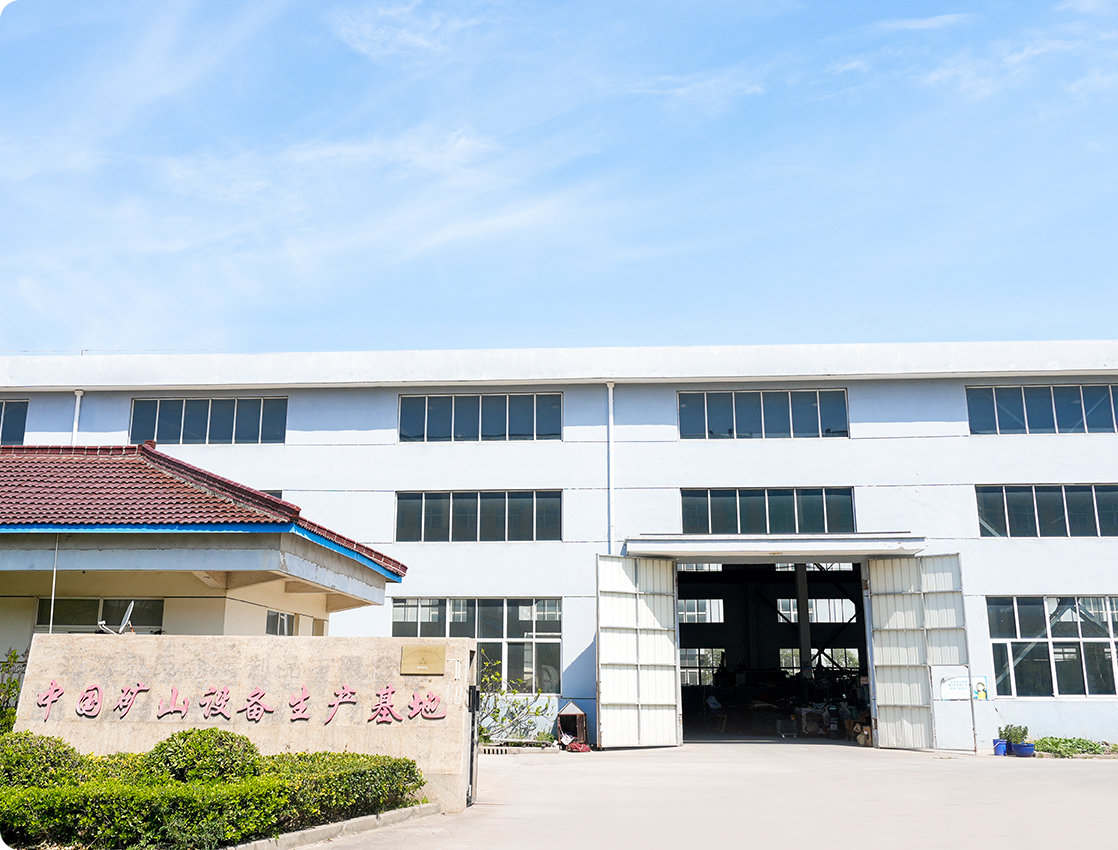
Sanming Mining - Raising Industry Standards
Company Profile
View More →
Sanming is an international Mining Machinery Equipment Supplier that integrates R&D, Manufacturing, and Sales of Rock Crushing&Screening equipment, as well as Sand Making, Sand Washing, and Grinding equipment. Sanming has passed ISO9001 quality system certification.
As
China Horizontal Shaft Impact Crusher Machine Manufacturers and
Wholesale Horizontal Shaft Impact Crusher Machine Factory, our equipments are widely used in the fields of Sand and Gravel Aggregate processing, Mining, and Construction Waste Resource utilization.
"Sanming" brand equipments are not only distributed in nearly 30 provinces in China, but also exported in large quantities to multiple countries in Central Asia, the Middle East, South America and Africa, and has received unanimous praise from users. Our main production base is located in Qidong (Shanghai Pudong New Area Industrial Park). We warmly welcome your visit to our factory.

- 200+
Number Of Products
- 20,000
Factory Area
- 500w
Annual Sales
- 40%
Annual Export Ratio
How It Works – Working Principle
High-Speed Rotor Impact
Blow bars mounted on the rotor strike incoming rock at high rotational speed.
Secondary Apron Impact
Fractured material collides with adjustable impact aprons for further breakage.
Natural Fracture Breakage
Rock breaks along inherent weak planes, producing well-shaped cubical fragments.
Adjustable Product Sizing
Apron gap adjustment fine-tunes output size without changing wear parts.
Applications & Industries
Limestone & Dolomite Quarrying
High-shape crushing of medium-hardness carbonate rock.
Asphalt Reclamation
Reprocessing reclaimed asphalt pavement into reusable aggregate.
C&D Waste Recycling
Crushing concrete and masonry rubble into recycled aggregate.
Cement Raw Material Prep
Sizing limestone and clay feed for cement plant crushing circuits.
Suitable For Various Mining Applications
Equipment Production Line
←
→
Selection Guide – Choose the Right Model
HSI-1010
Feed: ≤400 mm · Capacity: 30–110 t/h
Compact impact crusher for small to mid-size quarries.
HSI-1214
Feed: ≤700 mm · Capacity: 150–350 t/h
Balanced model for standard medium-hardness rock crushing.
HSI-1315
Feed: ≤700 mm · Capacity: 250–500 t/h
High-capacity unit for larger limestone and recycling operations.
HSI-1520
Feed: ≤700 mm · Capacity: 400–800 t/h
Flagship model for maximum-throughput impact crushing.
Comparison – Horizontal Shaft Impact Crusher vs Jaw Crusher
Key Performance Indicators
Reduction ratio per pass · Product cubical shape · Wear part life on hard rock (relative)
Impact Crusher Advantage
- Higher reduction ratio in a single pass
- Excellent cubical product shape
- Fewer crushing stages needed
Jaw Crusher
- Lower wear cost on hard, abrasive rock
- Simpler, lower-maintenance mechanism
- Better suited to very hard material
Key Components – Built to Last
Rotor Assembly
Dynamically balanced rotor with replaceable blow bar mounting slots.
Blow Bars
High-manganese or high-chrome bars available in multiple profiles for feed hardness.
Impact Aprons
Adjustable wear-resistant plates that provide secondary impact breakage.
Discharge Grate
Optional grate for controlling maximum product size in fine-crushing duty.
Hydraulic Chamber Opening
Allows quick access to the rotor for blow bar inspection and replacement.
Heavy-Duty Rotor Bearings
Sized for the high rotational speeds required in impact crushing.
Installation & Commissioning
Foundation
Reinforced concrete foundation designed for the dynamic loads of high-speed rotation.
Rotor Balancing Check
Verify rotor balance and blow bar mounting before first start-up.
Apron Adjustment
Set initial apron gaps to the desired product size before commissioning.
Commissioning
No-load run to confirm rotor speed and vibration, then gradual feed introduction.
Maintenance Schedule & Wear Trend
Wear/Component Life Over Time (Relative)
Blow bars wear faster than compression crusher liners — inspect and rotate/replace regularly to maintain product shape.
Daily Checks
- Blow bar wear condition
- Rotor bearing temperature
- Apron gap setting
Weekly Checks
- Inspect discharge grate for wear
- Check rotor balance
- Clean impact chamber
Monthly
- Rotate or replace blow bars
- Inspect apron mounting bolts
- Check hydraulic chamber-opening system
Yearly
- Full rotor bearing inspection
- Balance-check the rotor assembly
- Inspect drive belts and motor alignment
Quality You Can Trust
Why choose Sanming
Sanming is a professional manufacturer of R&D, manufacturing and sales
-
01. Design & Customization
The company has an experienced and highly skilled R&D team, which is capable of providing customers with customized equipment solutions to meet the needs of different customers

-
02. Advanced Facilities
The company has invested in and introduced a series of advanced production equipment, such as high-precision CNC machine tools, automated welding equipment, etc. These equipment features high efficiency, precision and stability, which can ensure the quality of products and production efficiency

-
03. Reliable Quality
The company always gives top priority to product quality. It uses high-quality raw materials and components, and through strict screening and inspection, it ensures the quality and performance of products. At the same time, the company also conducts long-term tracking and services for products, promptly solves the problems encountered by customers during the use process, and improves customer satisfaction

-
04. Service Integrity
The company has established a complete after-sales service system to provide customers with comprehensive services. This includes equipment installation and debugging, operation training, maintenance, technical consultation, etc., to ensure that customers can use the equipment smoothly and maximize its benefits

-
05. Cost Control
The company effectively controls product costs by optimizing the production process, reducing raw material procurement costs, and improving production efficiency. On the premise of ensuring product quality, it can provide customers with competitive prices and enhance their market competitiveness

-
06. Brand Influence
After years of development, the company has established a good brand image in the mining equipment manufacturing industry and has won the trust and praise of customers

-
07. Convenient Transportation
The company is only 50 kilometers away from Shanghai Yangshan Port, making the transportation of goods and exports very convenient

Frequently Asked Questions (FAQ)
1. How does an impact crusher differ from a jaw or cone crusher?
An impact crusher breaks rock using high-speed rotor impact and secondary collisions against aprons, rather than compression between two surfaces, which typically gives a higher reduction ratio and better cubical shape but faster wear on hard, abrasive rock.
2. What rock hardness is this crusher best suited for?
It performs best on medium-hardness, medium-abrasiveness materials such as limestone and dolomite; very hard, highly abrasive rock causes excessive blow bar wear.
3. How is product size adjusted?
The gap between the rotor tip and the impact aprons is adjustable, allowing operators to fine-tune output size without changing any wear parts.
4. How often do blow bars need replacement?
Blow bar life depends heavily on feed hardness and abrasiveness, generally ranging from a few hundred to over a thousand hours; they can often be rotated to extend service life.
5. Can this crusher process construction and demolition waste?
Yes, it is commonly used for C&D waste recycling and asphalt reclamation, where its high reduction ratio reduces the number of processing stages needed.
6. What causes uneven blow bar wear?
Off-center feeding, inconsistent feed size, or an incorrect blow bar profile for the material are common causes of uneven wear.
7. Is this crusher suitable for primary crushing?
Larger models can serve as primary crushers for medium-hardness rock, while smaller models are typically used in secondary or tertiary stages.
8. What safety features protect the rotor chamber?
Hydraulic or mechanical chamber-opening systems, rotor guards, and emergency stops are standard safety features.
9. How does rotor speed affect performance?
Higher rotor speed generally increases reduction ratio and improves particle shape but also increases wear rate; speed can be adjusted via pulley ratio or VFD on some models.
10. What maintenance access is provided for blow bar changes?
A hydraulic or manual chamber-opening mechanism allows the crushing chamber to be opened for blow bar inspection and replacement without full disassembly.
11. Can the discharge grate be removed?
Yes, the discharge grate is optional and can be removed for coarser product or installed for tighter control of maximum particle size.
12. What is the typical reduction ratio achieved?
Impact crushers commonly achieve higher reduction ratios per pass than compression crushers, often reducing the need for an additional crushing stage.
13. How does moisture in the feed affect operation?
Excessive moisture combined with fines can cause material to stick to the rotor or aprons; pre-screening wet feed is recommended in such conditions.
14. What warranty is provided?
A standard 12-month warranty covers manufacturing defects, with technical support for rotor balancing and blow bar selection.
15. Do you provide blow bar material recommendations?
Yes, our engineers can recommend manganese or high-chrome blow bars based on your specific feed material and abrasiveness.
After-Sales Support & Services
Blow Bar Selection Support
Engineering guidance choosing the optimal blow bar alloy for your feed material.
Wear Part Supply
Stocked blow bars, aprons, and grates for fast replacement and minimal downtime.
Rotor Balancing Service
Assistance verifying and correcting rotor balance during major maintenance.
24/7 Technical Support
Ongoing technical assistance for impact crushing operations.


 English
 русский