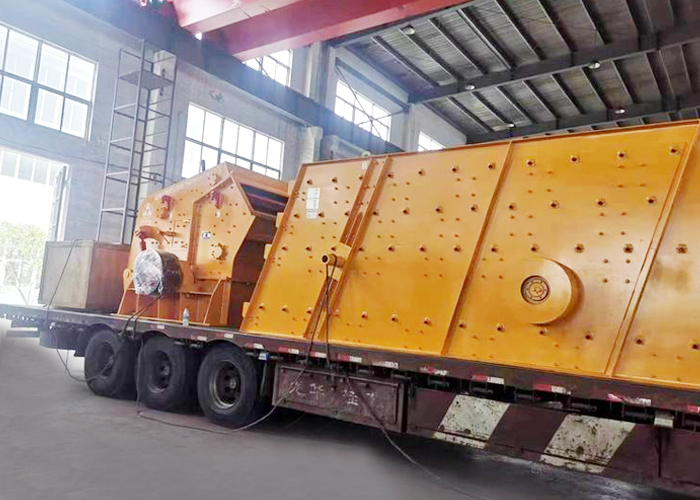
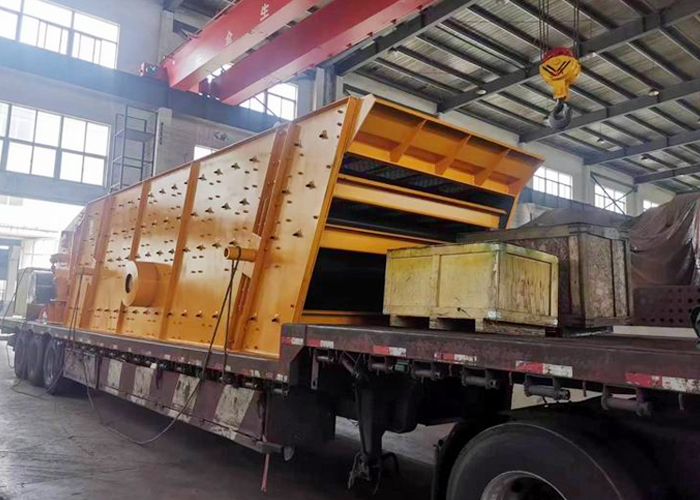
High Frequency Rotary Screening Machine
Fine particle separation · Reduced blinding · High-precision sizing
High frequency rotary screen · rapid micro-vibration for fine particle separation
Core specifications
Deck width1000 – 2000 mm
Vibration frequency1450 – 3000 rpm
Capacity10 – 150 t/h
Motor power3 – 18.5 kW
Target apertureBelow approximately 5 mm
High Frequency Rotary Screening Machine – Overview
The SMC high frequency rotary screening machine operates at a substantially higher vibration frequency than standard circular or linear screens, using a compact rotary exciter mounted directly on the screen frame to deliver rapid, small-amplitude vibration specifically effective at separating fine particles that standard low-frequency screens handle poorly.
At conventional screening frequencies, fine particles below a few millimeters tend to form a cohesive mat on the screen surface, blinding apertures and preventing near-size particles from passing through even when they are smaller than the mesh opening; the rapid micro-vibration of high-frequency screening breaks up this cohesive layer, keeping fine material in constant, loose motion.
The direct-mounted rotary exciter design, rather than a shaft running the length of the screen box, allows the high vibration frequency to be applied efficiently without the mechanical complexity and wear that would result from trying to run a conventional eccentric shaft at equivalently high speed, keeping the mechanism robust despite its higher operating frequency.
Screen decks for high-frequency service typically use tensioned polyurethane panels with self-cleaning aperture profiles, since the combination of fine material and high vibration frequency benefits from flexible panel materials that further discourage particle lodging compared to rigid woven wire or punched plate options.
Because fine-particle screening efficiency drops sharply with bed depth on any screen, high-frequency machines are typically designed with a shorter, wider deck than a standard low-frequency screen of equivalent capacity, spreading material into a thinner bed that maximizes each particle's opportunity to reach and pass through the screen surface.
The exciter and mounting system uses precision bearings and vibration-resistant fasteners specifically rated for the higher frequency and lower amplitude vibration pattern, since standard screening equipment components are not always suited to the different fatigue characteristics of high-frequency operation.
Typical applications include fine aggregate sizing, manufactured sand classification, dewatering screening for fine material, and any duty requiring precise separation at apertures below approximately 5mm where standard low-frequency screens struggle with blinding and poor efficiency.
For operations needing precise separation of fine material where standard screens underperform, the SMC high frequency rotary screening machine's rapid vibration and thin-bed design deliver significantly better fine-particle screening efficiency.
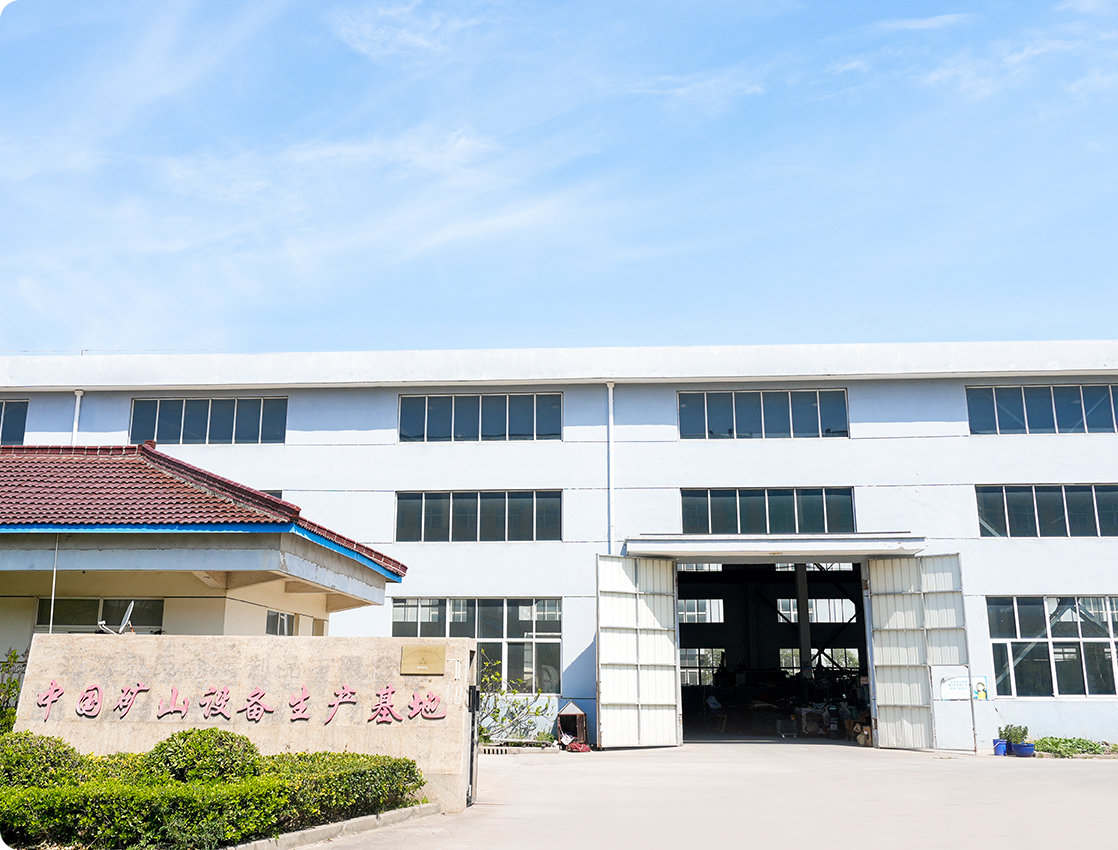
Sanming Mining - Raising Industry Standards
Company Profile
View More →
Sanming is an international Mining Machinery Equipment Supplier that integrates R&D, Manufacturing, and Sales of Rock Crushing&Screening equipment, as well as Sand Making, Sand Washing, and Grinding equipment. Sanming has passed ISO9001 quality system certification.
As
China High Frequency Rotary Screening Machine Manufacturers and
Wholesale High Frequency Rotary Screening Machine Factory, our equipments are widely used in the fields of Sand and Gravel Aggregate processing, Mining, and Construction Waste Resource utilization.
"Sanming" brand equipments are not only distributed in nearly 30 provinces in China, but also exported in large quantities to multiple countries in Central Asia, the Middle East, South America and Africa, and has received unanimous praise from users. Our main production base is located in Qidong (Shanghai Pudong New Area Industrial Park). We warmly welcome your visit to our factory.

- 200+
Number Of Products
- 20,000
Factory Area
- 500w
Annual Sales
- 40%
Annual Export Ratio
How It Works – Working Principle
Rapid Micro-Vibration
A direct-mounted rotary exciter delivers high-frequency, small-amplitude motion.
Cohesive Layer Disruption
Rapid vibration breaks up the fine-particle mat that causes screen blinding.
Thin-Bed Spreading
Shorter, wider decks spread material thin to maximize passage opportunity.
Self-Cleaning Panels
Tensioned polyurethane panels further discourage fine particle lodging.
Applications & Industries
Fine Aggregate Sizing
Precise separation of fine aggregate fractions below standard screen limits.
Manufactured Sand Classification
Sizing manufactured sand into precise fine-fraction product streams.
Dewatering Screening
Fine screening duty combined with moisture drainage from fine material.
Sub-5mm Separation Duty
Any application requiring precise separation at very fine apertures.
Suitable For Various Mining Applications
Equipment Production Line
←
→
Selection Guide – Choose the Right Model
HFS-1000
Feed: 1000mm wide · Capacity: 10–35 t/h
Compact model for smaller fine-screening applications.
HFS-1400
Feed: 1400mm wide · Capacity: 25–70 t/h
Balanced model for standard fine aggregate sizing duty.
HFS-1800
Feed: 1800mm wide · Capacity: 50–110 t/h
Higher-capacity option for larger fine screening operations.
HFS-2000
Feed: 2000mm wide · Capacity: 80–150 t/h
Top-capacity model for maximum fine screening throughput.
Comparison – High Frequency Screen vs Standard Circular Vibrating Screen
Key Performance Indicators
Fine particle screening efficiency · Blinding resistance · Coarse material throughput (relative)
High Frequency Advantage
- Significantly better fine particle efficiency
- Reduced screen blinding on fine material
- Precise separation below 5mm
Standard Circular Vibrating Screen
- Better suited to coarse material throughput
- Lower cost for general-purpose sizing
- Wider proven application range
Key Components – Built to Last
Direct-Mounted Rotary Exciter
Compact exciter delivering high-frequency vibration without a full-length shaft.
Precision Vibration Bearings
Rated specifically for high-frequency, low-amplitude fatigue conditions.
Tensioned Polyurethane Panels
Self-cleaning aperture profiles suited to fine, high-frequency screening.
Thin-Bed Deck Geometry
Shorter, wider deck design maximizing fine-particle passage opportunity.
Vibration-Resistant Fasteners
Specified for the unique fatigue demands of high-frequency operation.
Reinforced Screen Frame
Structure engineered for the higher-frequency dynamic load pattern.
Installation & Commissioning
Foundation & Isolation
Support structure and isolation designed for high-frequency vibration characteristics.
Exciter Mounting
Precise installation of the direct-mounted rotary exciter per specification.
Panel Tensioning
Correctly tension polyurethane panels for optimal self-cleaning performance.
Commissioning
No-load run to verify frequency and amplitude, then gradual fine-material feed.
Maintenance Schedule & Wear Trend
Wear/Component Life Over Time (Relative)
Monitor exciter bearing condition closely given the higher-frequency fatigue environment compared to standard screens.
Daily Checks
- Panel tension and condition
- Exciter vibration frequency reading
- Fine product blinding inspection
Weekly Checks
- Inspect exciter bearing temperature trend
- Check fastener tightness
- Clean panel apertures if blinding occurs
Monthly
- Grease or service exciter bearings per spec
- Inspect frame for high-frequency fatigue cracking
- Check panel tensioning system
Yearly
- Full exciter bearing replacement inspection
- Complete frame fatigue inspection
- Replace panels as needed
Quality You Can Trust
Why choose Sanming
Sanming is a professional manufacturer of R&D, manufacturing and sales
-
01. Design & Customization
The company has an experienced and highly skilled R&D team, which is capable of providing customers with customized equipment solutions to meet the needs of different customers

-
02. Advanced Facilities
The company has invested in and introduced a series of advanced production equipment, such as high-precision CNC machine tools, automated welding equipment, etc. These equipment features high efficiency, precision and stability, which can ensure the quality of products and production efficiency

-
03. Reliable Quality
The company always gives top priority to product quality. It uses high-quality raw materials and components, and through strict screening and inspection, it ensures the quality and performance of products. At the same time, the company also conducts long-term tracking and services for products, promptly solves the problems encountered by customers during the use process, and improves customer satisfaction

-
04. Service Integrity
The company has established a complete after-sales service system to provide customers with comprehensive services. This includes equipment installation and debugging, operation training, maintenance, technical consultation, etc., to ensure that customers can use the equipment smoothly and maximize its benefits

-
05. Cost Control
The company effectively controls product costs by optimizing the production process, reducing raw material procurement costs, and improving production efficiency. On the premise of ensuring product quality, it can provide customers with competitive prices and enhance their market competitiveness

-
06. Brand Influence
After years of development, the company has established a good brand image in the mining equipment manufacturing industry and has won the trust and praise of customers

-
07. Convenient Transportation
The company is only 50 kilometers away from Shanghai Yangshan Port, making the transportation of goods and exports very convenient

Frequently Asked Questions (FAQ)
1. Why does high frequency improve fine particle screening?
Rapid, small-amplitude vibration breaks up the cohesive mat that fine particles form on standard low-frequency screens, keeping material in constant loose motion so near-size particles can pass through apertures instead of being blinded out.
2. What particle size range benefits most from this equipment?
This equipment is specifically designed for separation duty below approximately 5mm, where standard circular or linear screens typically struggle with blinding and poor efficiency.
3. Why is a direct-mounted exciter used instead of a shaft?
Running a conventional eccentric shaft at equivalently high frequency would introduce mechanical complexity and wear; the direct-mounted rotary exciter design achieves high frequency efficiently and robustly.
4. What panel type is recommended for high-frequency screening?
Tensioned polyurethane panels with self-cleaning aperture profiles are typically recommended, since flexible panel materials further discourage fine particle lodging compared to rigid mesh or plate.
5. Why are high-frequency screen decks shorter and wider?
Screening efficiency for fine particles drops sharply with bed depth; a shorter, wider deck spreads material into a thinner bed, maximizing each particle's opportunity to reach and pass through the screen surface.
6. Is this screen suitable for coarse material?
It is optimized specifically for fine particle separation; standard circular or linear vibrating screens are generally better suited and more cost-effective for coarse material throughput.
7. What maintenance considerations apply to the exciter?
The exciter and its bearings experience a different fatigue pattern than standard low-frequency screening equipment and should be monitored and serviced according to the higher-frequency specification.
8. What capacity range is available?
Capacity ranges from 10 to 150 t/h depending on deck width, sized for fine screening duties that are typically lower-volume than general coarse aggregate screening.
9. Can this equipment be used for dewatering screening?
Yes, high-frequency screening is commonly combined with dewatering duty on fine material, since the same rapid vibration that prevents blinding also assists moisture drainage.
10. How does blinding resistance compare to a standard screen?
High-frequency screens are significantly more resistant to blinding on fine material due to their rapid vibration disrupting the cohesive particle mat that causes blinding on standard screens.
11. What causes premature panel wear on high-frequency screens?
Insufficient panel tensioning or feed material significantly more abrasive than the panel's design specification are common causes of premature wear.
12. What warranty is offered?
A standard 12-month warranty covers manufacturing defects, with the exciter and panels covered separately given their distinct high-frequency wear characteristics.
After-Sales Support & Services
Fine Screening Application Support
Guidance confirming this equipment fits your specific fine-particle separation needs.
Polyurethane Panel Supply
Tensioned panels stocked for ongoing high-frequency screening operation.
Exciter Maintenance Support
Specialized guidance for the unique maintenance needs of high-frequency exciters.
24/7 Technical Support
Ongoing assistance for high-frequency fine screening operations.


 English
 русский