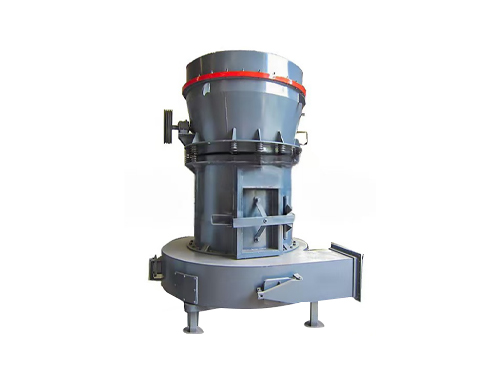
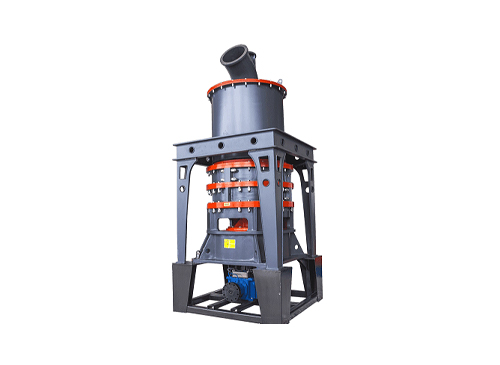
High Pressure Suspension Grinding Mill
Spring-pressurized rollers · Higher output than Raymond mills · Fine powder efficiency
High pressure suspension mill · spring-augmented rollers for increased grinding force
Core specifications
Feed size≤ 35 mm
Product fineness80 – 425 mesh (adjustable)
Capacity1.5 – 28 t/h
Motor power18.5 – 160 kW (main mill)
Grinding pressureSpring-augmented, adjustable intensity
High Pressure Suspension Grinding Mill – Overview
The SMC high pressure suspension grinding mill improves on the classic Raymond mill design by adding high-pressure springs that press each grinding roller against the ring with significantly greater force than centrifugal force alone provides, increasing grinding pressure by a meaningful margin and delivering notably higher output and finer product for a given mill size.
Each grinding roller is mounted on a pivoting roller holder assembly fitted with one or two high-pressure springs that add substantial supplementary force to the roller's contact with the grinding ring, beyond what centrifugal force generates at normal operating speed, intensifying the compression grinding action at each pass.
This increased grinding pressure allows the mill to process harder materials more effectively and achieve a given product fineness with less material recirculation through the grinding chamber, translating into meaningfully higher throughput compared to a standard Raymond mill of the same ring diameter and roller count.
The spring pressure is adjustable, allowing operators to tune grinding intensity to match the specific hardness and fineness requirements of different feed materials, with higher pressure settings suited to harder minerals or finer product targets and lower settings appropriate for softer, easier-to-grind materials.
As with the classic Raymond mill design, an integrated air classifier mounted above the grinding chamber controls final product fineness by returning oversize particles to the grinding zone, with the classifier's blade speed adjustable independently of the spring pressure setting for additional fineness fine-tuning.
The grinding ring and roller wear parts experience somewhat higher stress than in a standard Raymond mill given the additional spring force, so these components are manufactured from upgraded wear-resistant alloy compared to base Raymond mill specifications to provide adequate service life under the higher grinding pressure.
Typical applications mirror those of the standard Raymond mill — non-metallic mineral powder production for calcium carbonate, barite, dolomite, gypsum, and similar materials — but are particularly favored where higher output per unit floor space or somewhat finer product than a standard Raymond mill can achieve is the priority.
For operations wanting meaningfully higher output than a standard Raymond mill from a similar footprint, the SMC high pressure suspension grinding mill's spring-augmented grinding pressure delivers a clear productivity advantage.
Sanming Mining - Raising Industry Standards
Company Profile
View More →
Sanming is an international Mining Machinery Equipment Supplier that integrates R&D, Manufacturing, and Sales of Rock Crushing&Screening equipment, as well as Sand Making, Sand Washing, and Grinding equipment. Sanming has passed ISO9001 quality system certification.
As
China High Pressure Suspension Grinding Mill Manufacturers and
Wholesale High Pressure Suspension Grinding Mill Factory, our equipments are widely used in the fields of Sand and Gravel Aggregate processing, Mining, and Construction Waste Resource utilization.
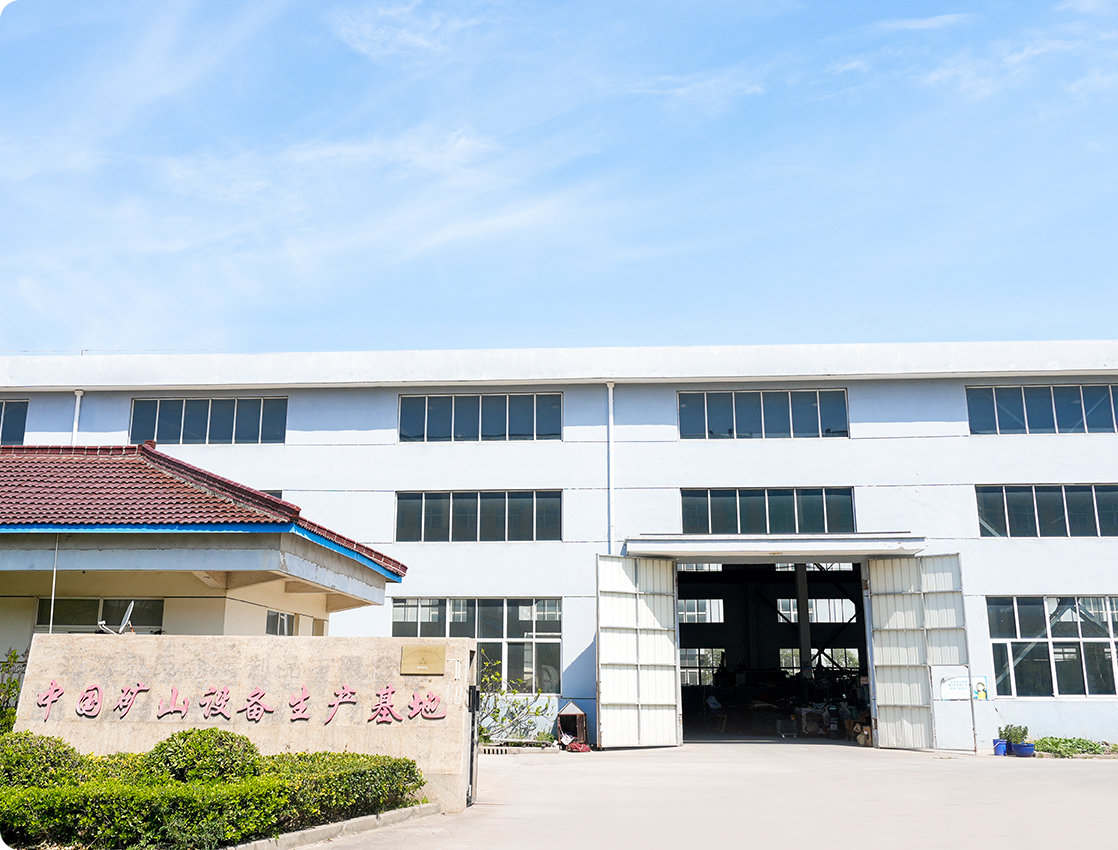
"Sanming" brand equipments are not only distributed in nearly 30 provinces in China, but also exported in large quantities to multiple countries in Central Asia, the Middle East, South America and Africa, and has received unanimous praise from users. Our main production base is located in Qidong (Shanghai Pudong New Area Industrial Park). We warmly welcome your visit to our factory.

- 200+
Number Of Products
- 20,000
Factory Area
- 500w
Annual Sales
- 40%
Annual Export Ratio
How It Works – Working Principle
Spring-Augmented Pressing
High-pressure springs add force beyond centrifugal action alone.
Intensified Compression Grinding
Greater roller-to-ring pressure increases grinding efficiency per pass.
Adjustable Pressure Setting
Spring force can be tuned to match feed hardness and fineness targets.
Air Classification
Integrated classifier controls final fineness, independent of spring pressure.
Applications & Industries
High-Output Powder Production
Non-metallic mineral grinding where throughput per footprint matters most.
Harder Mineral Processing
Materials benefiting from the increased grinding pressure over standard Raymond mills.
Construction Material Powder
Calcium carbonate and gypsum powder for building material applications.
Fine Filler Production
Mineral filler powder for plastics, rubber, and paint industries.
Suitable For Various Mining Applications
Equipment Production Line
←
→
Selection Guide – Choose the Right Model
HPS-3016
Feed: 3000mm ring · Capacity: 1.5–5 t/h
Entry model offering a capacity boost over standard Raymond mills.
HPS-3216
Feed: 3200mm ring · Capacity: 4–10 t/h
Balanced model for standard-scale high-output powder production.
HPS-3416
Feed: 3400mm ring · Capacity: 7–18 t/h
Higher-capacity option for larger high-pressure grinding operations.
HPS-4119
Feed: 4100mm ring · Capacity: 14–28 t/h
Top-capacity model for major high-output powder facilities.
Comparison – High Pressure Suspension Mill vs Standard Raymond Mill
Key Performance Indicators
Output throughput at same ring size · Achievable fineness · Purchase cost-effectiveness (relative)
High Pressure Suspension Advantage
- Meaningfully higher output than standard Raymond mill
- Better performance on harder materials
- Adjustable pressure for process flexibility
Standard Raymond Mill
- Lower purchase cost
- Simpler mechanism without spring system
- Sufficient for softer, easier-to-grind materials
Key Components – Built to Last
Spring-Loaded Roller Holders
Pivoting assemblies with high-pressure springs augmenting roller force.
Upgraded Grinding Ring
Wear-resistant alloy rated for the higher grinding pressure.
Upgraded Rollers
Reinforced rollers matched to the increased contact stress.
Adjustable Spring Tensioning
Allows operators to tune grinding pressure for different materials.
Air Classifier
Controls product fineness independently of the spring pressure setting.
Main Shaft & Spider Assembly
Reinforced to handle the combined centrifugal and spring-driven forces.
Installation & Commissioning
Foundation
Reinforced foundation accounting for the higher dynamic forces of spring loading.
Spring Pressure Calibration
Set initial spring tension appropriate for your target feed material.
System Ductwork
Connect mill, classifier, cyclone, and dust collector as an integrated system.
Commissioning
No-load run to verify spring-assisted roller action, then gradual feed introduction.
Maintenance Schedule & Wear Trend
Wear/Component Life Over Time (Relative)
Grinding ring and rollers wear somewhat faster than standard Raymond mills given the higher grinding pressure — inspect accordingly.
Daily Checks
- Product fineness spot-check
- Spring tension indicator
- Classifier motor temperature
Weekly Checks
- Inspect roller and ring wear
- Check spring condition for fatigue
- Clean dust collector filters
Monthly
- Grease main shaft bearings
- Inspect spring pressure calibration
- Check classifier blade wear
Yearly
- Full bearing inspection
- Replace springs, ring segments, and rollers as needed
- Complete system airflow audit
Quality You Can Trust
Why choose Sanming
Sanming is a professional manufacturer of R&D, manufacturing and sales
-
01. Design & Customization
The company has an experienced and highly skilled R&D team, which is capable of providing customers with customized equipment solutions to meet the needs of different customers

-
02. Advanced Facilities
The company has invested in and introduced a series of advanced production equipment, such as high-precision CNC machine tools, automated welding equipment, etc. These equipment features high efficiency, precision and stability, which can ensure the quality of products and production efficiency

-
03. Reliable Quality
The company always gives top priority to product quality. It uses high-quality raw materials and components, and through strict screening and inspection, it ensures the quality and performance of products. At the same time, the company also conducts long-term tracking and services for products, promptly solves the problems encountered by customers during the use process, and improves customer satisfaction

-
04. Service Integrity
The company has established a complete after-sales service system to provide customers with comprehensive services. This includes equipment installation and debugging, operation training, maintenance, technical consultation, etc., to ensure that customers can use the equipment smoothly and maximize its benefits

-
05. Cost Control
The company effectively controls product costs by optimizing the production process, reducing raw material procurement costs, and improving production efficiency. On the premise of ensuring product quality, it can provide customers with competitive prices and enhance their market competitiveness

-
06. Brand Influence
After years of development, the company has established a good brand image in the mining equipment manufacturing industry and has won the trust and praise of customers

-
07. Convenient Transportation
The company is only 50 kilometers away from Shanghai Yangshan Port, making the transportation of goods and exports very convenient

Frequently Asked Questions (FAQ)
1. How does the spring system increase grinding output?
High-pressure springs add substantial supplementary force pressing each roller against the grinding ring beyond what centrifugal force alone provides at normal operating speed, intensifying compression grinding and increasing throughput.
2. How much higher is the output compared to a standard Raymond mill?
Output improvement varies by material and settings, but this design typically delivers meaningfully higher throughput than a standard Raymond mill of the same ring diameter and roller count.
3. Can the spring pressure be adjusted?
Yes, spring pressure is adjustable, allowing operators to tune grinding intensity to match different feed material hardness and fineness targets.
4. What materials benefit most from the higher grinding pressure?
Harder non-metallic minerals and applications targeting finer product benefit most from the increased grinding pressure this design provides over a standard Raymond mill.
5. Does the spring system increase wear part cost?
Grinding ring and rollers experience somewhat higher stress and are manufactured from upgraded wear-resistant alloy compared to standard Raymond mill specifications, which can mean a modest increase in wear part cost offset by higher output.
6. How is product fineness controlled?
The integrated air classifier controls fineness independently of the spring pressure setting, giving operators two separate variables to optimize both throughput and product specification.
7. What maintenance does the spring system require?
Springs should be inspected periodically for fatigue or loss of tension, since spring condition directly affects the grinding pressure and therefore output and fineness consistency.
8. What capacity range does this mill family cover?
Capacity ranges from 1.5 to 28 t/h depending on the model, generally higher than an equivalent-size standard Raymond mill due to the increased grinding pressure.
9. Is this mill more complex to operate than a standard Raymond mill?
The additional spring pressure adjustment adds one more variable to manage, but day-to-day operation remains similar to a standard Raymond mill with the classifier as the primary fineness control.
10. What industries typically use this equipment?
Construction materials, plastics and rubber filler, and other non-metallic mineral powder industries commonly use this equipment where higher output per footprint is valued.
11. How does maintenance frequency compare to a standard Raymond mill?
Given the higher grinding pressure, ring and roller wear parts may require somewhat more frequent inspection and replacement compared to a standard Raymond mill.
12. What warranty is offered?
A standard 12-month warranty covers manufacturing defects, with springs, ring segments, and rollers covered separately as wear items given their accelerated wear under higher pressure.
After-Sales Support & Services
Pressure Setting Consultation
Guidance calibrating spring pressure for your specific feed material.
Upgraded Wear Part Supply
Reinforced rings, rollers, and springs stocked for high-pressure service.
Output Optimization Support
Assistance balancing spring pressure and classifier settings for maximum output.
24/7 Technical Support
Ongoing assistance for high-pressure suspension grinding operations.


 English
 русский