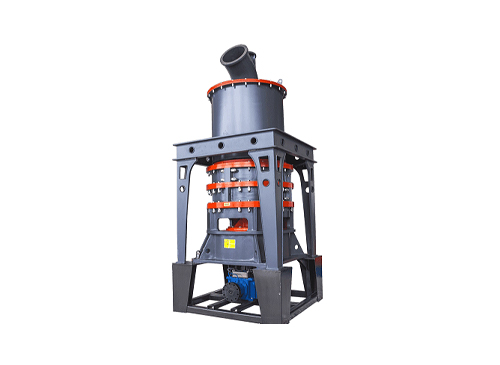
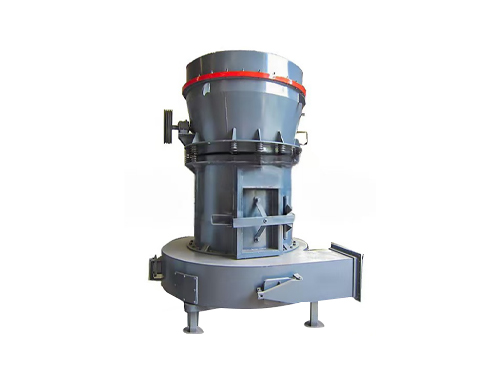
Industrial Powder Raymond Grinding Mill Custom

Industrial Powder Raymond Grinding Mill

Industrial Powder Raymond Grinding Mill

Classic ring-roller design · Non-metallic mineral powder · Proven reliability
Raymond grinding mill · ring-roller grinding with integrated air classification
Core specifications
Feed size≤ 30 mm
Product fineness80 – 425 mesh (adjustable)
Capacity1 – 22 t/h
Motor power15 – 132 kW (main mill)
Feed hardnessUp to Mohs 7 (non-metallic minerals)

Industrial Powder Raymond Grinding Mill – Overview

The SMC industrial powder Raymond grinding mill uses the classic ring-roller grinding principle — a set of rollers suspended from a rotating spider assembly press outward against a stationary grinding ring under centrifugal force, crushing material caught between roller and ring into fine powder, with an integrated air classification system controlling final product fineness.

As the spider assembly rotates, centrifugal force swings the rollers outward against the ring while a plow blade beneath each roller continuously feeds a layer of material into the grinding gap, producing a continuous grinding action that has proven reliable across decades of use in non-metallic mineral powder production worldwide.

The integrated air classifier mounted above the grinding chamber separates finished powder from coarser, insufficiently ground particles, returning oversize material to the grinding chamber for further processing while allowing correctly sized powder to be carried by the air stream to the cyclone collector, giving the system continuous closed-circuit size control.

Grinding ring and roller assemblies are manufactured from wear-resistant alloy steel, with the ring typically replaceable in segments to reduce the cost and labor of a full changeover, and roller sleeves designed for straightforward removal and replacement as they wear from continuous grinding contact.

The mill's fineness adjustment is achieved primarily through the classifier's blade angle and rotation speed, allowing operators to target a wide range of final product finenesses from relatively coarse industrial powders through much finer specifications, without requiring mechanical changes to the grinding chamber itself.

A complete grinding system typically includes the mill body, classifier, cyclone collector, pulse-jet dust collector, blower, and connecting ductwork, engineered together as an integrated production line rather than a standalone grinding chamber, simplifying installation and ensuring the components are properly matched for balanced airflow and capacity.

Typical applications include grinding calcium carbonate, barite, dolomite, gypsum, talc, and similar non-metallic minerals with Mohs hardness up to around 7, for industries including construction materials, plastics filler, paint, rubber, and various chemical and agricultural applications requiring fine mineral powder.

For non-metallic mineral powder production requiring proven, cost-effective grinding across a wide fineness range, the SMC industrial powder Raymond grinding mill remains a widely trusted workhorse solution.

Technical specifications

ModelRing diameter (mm)Roller countCapacity (t/h)Power (kW)
RM-3016300041–455
RM-3216320053–875
RM-3416340055–14110
RM-41194100610–22132
Sanming Mining - Raising Industry Standards
Company Profile
View More →
Sanming is an international Mining Machinery Equipment Supplier that integrates R&D, Manufacturing, and Sales of Rock Crushing&Screening equipment, as well as Sand Making, Sand Washing, and Grinding equipment. Sanming has passed ISO9001 quality system certification.
As China Industrial Powder Raymond Grinding Mill Manufacturers and Wholesale Industrial Powder Raymond Grinding Mill Factory, our equipments are widely used in the fields of Sand and Gravel Aggregate processing, Mining, and Construction Waste Resource utilization.
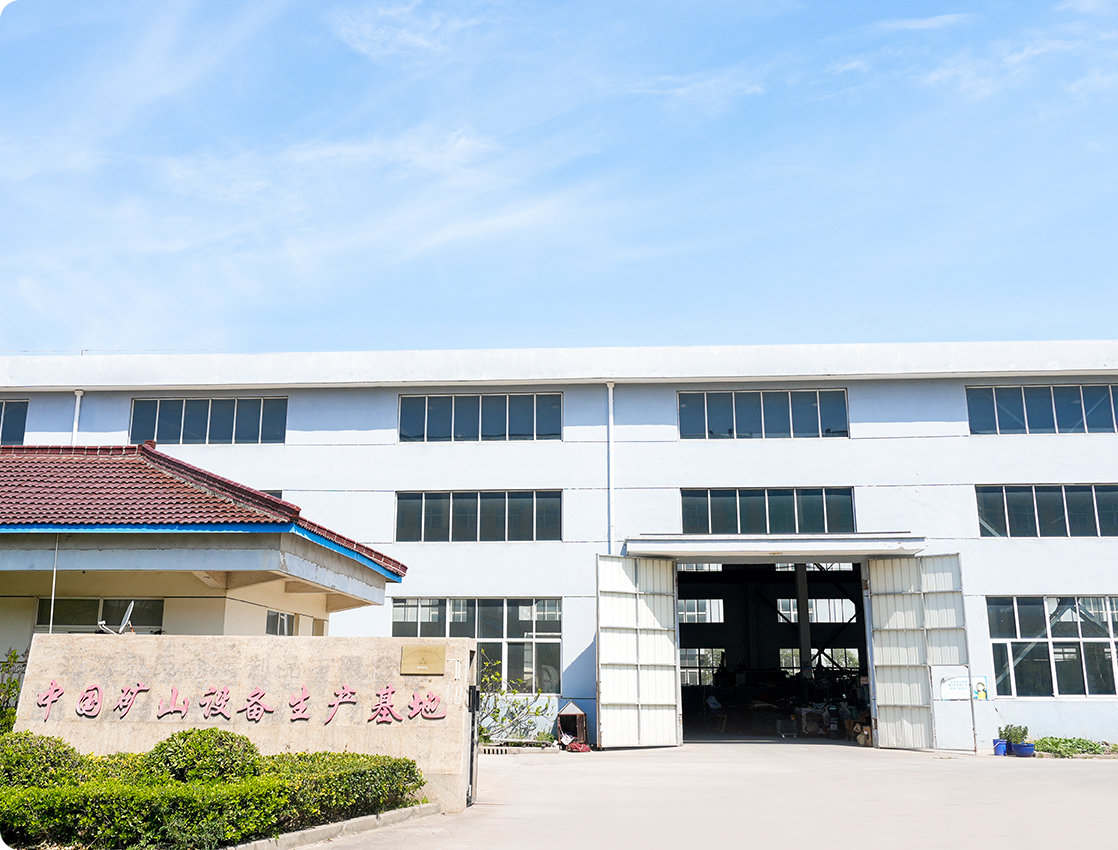
"Sanming" brand equipments are not only distributed in nearly 30 provinces in China, but also exported in large quantities to multiple countries in Central Asia, the Middle East, South America and Africa, and has received unanimous praise from users. Our main production base is located in Qidong (Shanghai Pudong New Area Industrial Park). We warmly welcome your visit to our factory.
Shanghai Sanming Mining Equipment Manufacturing CO., LTD.
  • 200+

    Number Of Products

  • 20,000

    Factory Area

  • 500w

    Annual Sales

  • 40%

    Annual Export Ratio

How It Works – Working Principle

Centrifugal Roller Pressing

Rollers swing outward against the grinding ring under rotational force.

Continuous Feed Plowing

Blades feed a controlled material layer into the grinding gap continuously.

Air Classification

Integrated classifier separates finished powder from oversize particles.

Closed-Circuit Fineness Control

Oversize returns to grinding while correct-size product exits to collection.

Applications & Industries

Construction Materials

Grinding calcium carbonate and gypsum for building material production.

Plastics & Rubber Filler

Producing fine mineral filler powder for polymer compounding.

Paint & Coatings Industry

Fine barite and talc powder for paint and coating formulations.

Agricultural & Chemical Uses

Dolomite and limestone powder for soil amendment and chemical processes.

Selection Guide – Choose the Right Model

RM-3016

Feed: 3000mm ring · Capacity: 1–4 t/h
Compact mill for small-scale specialty powder production.

RM-3216

Feed: 3200mm ring · Capacity: 3–8 t/h
Popular mid-size model for standard mineral powder lines.

RM-3416

Feed: 3400mm ring · Capacity: 5–14 t/h
Higher-capacity option for larger powder production operations.

RM-4119

Feed: 4100mm ring · Capacity: 10–22 t/h
Top-capacity model for major industrial powder facilities.

Comparison – Raymond Mill vs Vertical Roller Mill
Key Performance Indicators
Raymond Mill
85%
Vertical Roller Mill
60%
Raymond Mill
55%
Vertical Roller Mill
90%
Raymond Mill
88%
Vertical Roller Mill
65%

Purchase cost-effectiveness · Energy efficiency at high capacity · Long-term reliability track record (relative)

Raymond Mill Advantage

  • Lower purchase and maintenance cost
  • Simple, well-understood mechanism
  • Widely available spare parts globally

Vertical Roller Mill

  • Higher energy efficiency at large scale
  • Greater single-unit capacity
  • Better suited to ultrafine specifications
Key Components – Built to Last

Spider Assembly

Rotating structure carrying the grinding rollers around the mill's grinding ring.

Grinding Ring

Segmented, replaceable wear-resistant ring the rollers press against.

Grinding Rollers

Alloy steel rollers that crush material against the ring under centrifugal force.

Air Classifier

Adjustable-speed unit controlling final product fineness.

Cyclone Collector

Separates finished powder from the air stream for collection.

Pulse-Jet Dust Collector

Captures residual fine dust to protect air quality and recover product.

Installation & Commissioning

Foundation

Reinforced foundation supporting the mill body and classifier assembly.

System Ductwork

Connect mill, classifier, cyclone, and dust collector with sealed ductwork.

Classifier Calibration

Set blade angle and speed for the target product fineness.

Commissioning

No-load run to verify airflow balance, then gradual feed introduction.

Maintenance Schedule & Wear Trend
Wear/Component Life Over Time (Relative)
100%
Start
80%
400h
62%
900h
40%
1500h
20%
2200h
6%
2900h

Replace grinding ring segments and roller sleeves once wear affects product fineness consistency.

Daily Checks

  • Product fineness spot-check
  • Classifier motor temperature
  • Feed plow blade condition

Weekly Checks

  • Inspect roller and ring wear
  • Check dust collector filter condition
  • Clean ductwork of buildup

Monthly

  • Grease main shaft bearings
  • Inspect classifier blade wear
  • Check blower belt tension

Yearly

  • Full bearing inspection
  • Replace ring segments/roller sleeves as needed
  • Complete dust collection system service
Quality You Can Trust
Why choose Sanming

Sanming is a professional manufacturer of R&D, manufacturing and sales

Shanghai Sanming Mining Equipment Manufacturing CO., LTD. Shanghai Sanming Mining Equipment Manufacturing CO., LTD.

Frequently Asked Questions (FAQ)

1. How does a Raymond mill grind material into powder?
Rollers suspended from a rotating spider assembly are pressed outward against a stationary grinding ring by centrifugal force, crushing material caught between roller and ring, with a plow blade continuously feeding material into the grinding gap.
2. How is product fineness controlled?
The integrated air classifier's blade angle and rotation speed determine final product fineness, allowing a wide range of targets without mechanical changes to the grinding chamber.
3. What minerals can this mill process?
It handles non-metallic minerals with Mohs hardness up to approximately 7, including calcium carbonate, barite, dolomite, gypsum, and talc.
4. What fineness range can this mill achieve?
Product fineness is typically adjustable from around 80 mesh through 425 mesh, covering a wide range of industrial powder specifications.
5. How does a Raymond mill compare to a vertical roller mill?
Raymond mills generally offer lower purchase and maintenance cost with a simpler, well-understood mechanism, while vertical roller mills offer higher energy efficiency and greater capacity at large scale.
6. What does a complete Raymond mill system include?
A complete system typically includes the mill body, classifier, cyclone collector, pulse-jet dust collector, blower, and connecting ductwork, engineered together for balanced airflow and capacity.
7. How often are grinding ring and rollers replaced?
Replacement frequency depends on feed hardness and abrasiveness, with ring segments and roller sleeves designed for individual replacement rather than requiring a full mill teardown.
8. What causes inconsistent product fineness?
Worn grinding ring or rollers, incorrect classifier settings, or feed material harder than the mill's rated specification are common causes of fineness inconsistency.
9. What capacity range is available?
Capacity ranges from 1 to 22 t/h depending on the model, covering small specialty powder operations through major industrial mineral processing facilities.
10. What industries use Raymond mill powder products?
Construction materials, plastics and rubber filler, paint and coatings, and various agricultural and chemical applications all commonly use powder produced by Raymond mills.
11. How is dust managed in the grinding process?
A pulse-jet dust collector captures residual fine dust after the cyclone collector, protecting air quality around the plant while recovering additional product.
12. What warranty is offered?
A standard 12-month warranty covers manufacturing defects, with the grinding ring and rollers covered separately as wear items.
After-Sales Support & Services

Fineness Optimization Support

Guidance calibrating the classifier for your target product specification.

Ring & Roller Spare Parts

Segmented rings and roller sleeves stocked for fast replacement.

System Integration Assistance

Support connecting mill, classifier, and dust collection into one balanced system.

24/7 Technical Support

Ongoing assistance for industrial mineral powder production.

Message Us If You Have Any Questions
Contact Us