English
 русский

The most direct answer is that a spring cone crusher uses a set of heavy coil springs around the upper frame to absorb overload and hold the crushing chamber closed, while a hydraulic cone crusher uses hydraulic cylinders, accumulators, and valves to do the same with far more precision. Spring cone crushers are simpler, less expensive to purchase, and easier for a general maintenance team to repair, but their discharge opening can only be adjusted manually with the machine stopped. Hydraulic cone crushers cost more at the initial purchase stage, yet they allow the operator to change the discharge setting under load, release tramp iron automatically, and reset the crusher in seconds. In daily production, that difference translates into more uptime, a more consistent product curve, and a higher level of automation, which is why major aggregate projects tend to prefer the hydraulic design. However, for a small or medium plant with stable feed conditions and a limited budget, the spring cone crusher remains a dependable and highly cost-effective choice.
Content
- 1 Core Structural Difference: Spring Assemblies vs Hydraulic Cylinders
- 2 Overload Protection: How Each Crusher Handles Unexpected Impact
- 3 Discharge Opening Adjustment: Stopped Machine vs Under-Load Control
- 4 Performance Comparison: Capacity, Power, and Product Shape
- 5 Maintenance, Wear Parts, and Long-Term Operating Cost
- 6 How to Choose: Application-Based Selection Guide
- 7 Common Misconceptions Buyers Often Believe
- 8 Investment Angle: Initial Price, Downtime, and Return on Investment
- 9 Where Each Crusher Fits in the Crushing Circuit
- 10 Frequently Asked Questions
- 10.1 What is the core difference between a spring and a hydraulic cone crusher?
- 10.2 Can a spring cone crusher crush basalt or granite?
- 10.3 Is a hydraulic cone crusher more expensive to maintain?
- 10.4 Does a spring cone crusher need to be stopped to change the discharge opening?
- 10.5 Can a hydraulic cone crusher change its discharge opening while operating?
- 10.6 How can I decide between the two types for my aggregate plant?
Core Structural Difference: Spring Assemblies vs Hydraulic Cylinders
Both crusher types share the same fundamental crushing principle. A motor turns a horizontal shaft, which drives an eccentric bushing. The eccentric bushing makes the main shaft wobble, and the mantle fixed on the main shaft moves in a circular pattern toward and away from the concave mounted on the upper frame. That rocking motion compresses the rock between the two wearing surfaces and forces the crushed material to fall through the opening at the bottom.
The real difference appears in the upper supporting structure. A spring cone crusher uses a heavy cast adjustment ring supported by multiple compression springs. The springs press down on the upper body and keep the adjustment ring in position while the crusher runs normally. When an unbreakable object such as a steel bar or bucket tooth enters the crushing chamber, the concave assembly lifts, the springs compress, and the gap opens just enough to let the object pass. Once the object falls through, the springs push the adjustment ring back to its original position.
A hydraulic cone crusher replaces the mechanical spring pack with a hydraulic cylinder system. In the multi-cylinder design, hydraulic cylinders hold the upper frame and adjustment ring down against the main body. In the single-cylinder design, a hydraulic cylinder supports the main shaft from below and controls both the height of the crushing head and the overload release movement. When the hydraulic system senses a pressure spike, oil flows into an accumulator, the piston or cylinder moves back, and the crushing chamber opens. After the unbreakable object has passed, the system automatically returns to normal pressure and reserves its original clearance.
This structural difference is the reason why the two machines feel very different to operate. A spring cone crusher is basically a mechanical device with no electronic feedback. A hydraulic cone crusher is a controlled system where the operator can monitor pressure, oil temperature, and discharge opening size from a control panel. For new operators, the cone crusher working principle is the same in both cases, but the operating procedure is not.
Overload Protection: How Each Crusher Handles Unexpected Impact
Feeding a cone crusher with clean, screened material is always the goal, but in practice steel bars, bucket teeth, drill bits, and oversized rock fragments find their way into the feed. When that happens, the two designs react very differently, and the reaction time directly affects plant uptime.
Spring Cone Crusher Protection
In a spring cone crusher, the coil springs are pre-tensioned to a fixed compression force. The force is calculated according to the crushing duty and the hardness of the raw material. When an unbreakable object enters the chamber, the crushing force exceeds the spring pre-load, so the adjustment ring lifts and the concave moves upward. The object drops out, and the springs push the ring back down.
There is a limitation to note. The amount of lift that the springs can provide is normally only a few centimeters. If the steel object is larger than the available stroke, the crusher can still jam. The operator then has to stop the entire crushing line, lock the main shaft, and manually remove the object from the chamber. In large plants, that procedure can cost one or two hours of lost production.
Hydraulic Cone Crusher Protection
A hydraulic cone crusher handles tramp iron through a completely different path. The crushing force is controlled by the hydraulic pressure in the accumulator system. When the pressure in the crushing chamber exceeds the preset value, the hydraulic piston moves downward, and the oil flows into the accumulator, which absorbs the shock. Once the unbreakable material has passed, the accumulated oil flows back and returns the piston to its normal position.
The advantage is speed and consistency. The hydraulic reaction is faster than a mechanical spring reaction, and the reset movement is much more stable. In many hydraulic models, the operator can also clear a fully blocked chamber by pressing a button to raise the crushing head, discharge the material, and then reset the clearance. This operation does not require a worker to enter the crusher, which is both faster and safer.
Practical impact: A spring cone crusher is acceptable when the feed is well controlled by a magnet separator, a metal detector, and a grizzly screen. A hydraulic cone crusher provides much better protection when the feed contains larger unreduced lumps or when the upstream equipment is old and unreliable.
Discharge Opening Adjustment: Stopped Machine vs Under-Load Control
Discharge opening setting is not a one-time adjustment. As the mantle and concave wear, the opening gradually becomes larger, so the operator needs to compensate periodically to maintain the target product size. In a spring cone crusher, this compensation is a manual process. The operator stops the crusher, releases the clamping mechanism, rotates the adjustment sleeve to a new position, re-clamps the sleeve, and starts the crusher again. Skilled workers can do it quickly, but the machine still needs to be stopped, and the result depends on the worker's experience and the condition of the threads. Under normal working conditions, the adjustment threads need to be clean, well lubricated, and free of damage, or the adjustment ring will not rotate evenly.
A hydraulic cone crusher changes the discharge setting by using hydraulic cylinders or a hydraulic motor to raise or lower the crushing head. In the single-cylinder design, the cylinder lifts the main shaft, which raises the mantle and enlarges the discharge open-ing. In the multi-cylinder design, the hydraulic motor rotates the adjustment ring while the support cylinders remain pressurized. Some models are equipped with a sensor that shows the actual discharge opening size on the operator panel, so the operator can adjust precisely without measuring inside the crushing chamber.
The biggest practical difference is that a hydraulic cone crusher can change its discharge setting while the machine is running. This allows the plant to react quickly to changes in feed hardness or product demand without stopping the main conveyor. In a quarry producing multiple aggregate sizes, that is a substantial production advantage.
Performance Comparison: Capacity, Power, and Product Shape
Capacity is not determined simply by whether the machine uses springs or cylinders. The specific throughput depends on the crushing cavity design, the eccentric throw, the closed side setting, the motor power, and the physical properties of the feed. However, in general terms, the hydraulic cone crusher architecture allows a larger motor, a stronger main shaft, and a more aggressive eccentric stroke, so the largest hydraulic models reach higher throughput values than the largest spring models.
Product shape is another meaningful comparison. The shape of the crushed aggregates is affected mainly by the crushing cavity design, the stroke length, and the closed side setting. A spring cone crusher with a standard cavity can produce a good cubical product when it is correctly set and well fed. The problem is that the setting drifts as the liners wear, and the manual adjustment process is not always performed frequently enough. As a result, the product becomes coarser or more elongated between adjustments. A hydraulic cone crusher with an automated setting control maintains the same closed side setting throughout the liner lifespan, so the product curve remains more stable week after week.
| Comparison Item | Spring Cone Crusher | Hydraulic Cone Crusher |
|---|---|---|
| Overload protection | Mechanical coil springs | Hydraulic accumulators and cylinders |
| Discharge opening adjustment | Manual rotation of adjustment sleeve, machine stopped | Hydraulic motor or cylinder, can run under load |
| Automation level | Low, manually controlled | High, optional PLC and automatic setting control |
| Typical capacity range | 45–600 t/h | 60–1000 t/h |
| Product shape stability | Good if adjusted regularly | Stable, due to automatic gap compensation |
| Spare part complexity | Mechanical parts only | Hydraulic pumps, valves, seals, accumulators |
| Maintenance skill requirement | General mechanical team | Mechanical team plus basic hydraulic knowledge |
| Initial purchase cost | Lower | Higher by approximately 20–40 percent |
| Suitable operation scale | Small and medium stationary plants | Medium and large plants, automated lines |
For a plant that needs a stable product curve without constant operator attention, the hydraulic cone crusher is the better long-term choice. For a small plant with simple crushed-stone production and no automation requirement, the spring cone crusher offers the lowest investment and a shorter payback period. The key is to compare the two types using the same crushing cavity and the same feed material, not to compare a small spring machine with a much larger hydraulic machine.
Maintenance, Wear Parts, and Long-Term Operating Cost
Maintenance cost is often the deciding factor between a spring and a hydraulic cone crusher. A spring cone crusher has no hydraulic pump, no accumulator, and no valve block, so there are fewer components that can fail unexpectedly. The daily maintenance routine mainly includes checking the lubricating oil, inspecting the springs, and keeping the adjustment threads clean. When a spring breaks, it can be replaced individually, and the spare part cost is modest. The maintenance team does not need special hydraulic training, which matters in remote project sites where experienced hydraulic technicians are not available.
On the other hand, a spring cone crusher requires more physical labor. Replacing the mantle and concave is a heavy job in both types, but the spring machine also needs frequent adjustment thread lubrication, and the clamping process after each adjustment step takes time. If the adjustment threads become worn or dirty, the ring can seize, and repairing that damage is a long and expensive operation.
The hydraulic cone crusher reduces the physical labor but introduces more sophisticated components. The hydraulic system must operate with clean oil at the correct pressure. The oil filter, breather, and seals need regular attention, and the operator should check the pressure settings from time to time. When a hydraulic component fails, the repair requires trained personnel and sometimes a specialized tool. However, the increased maintenance complexity is offset by the time saved in daily operation, especially for plants that adjust the discharge opening frequently.
Spring cone crusher maintenance profile
- Simple mechanical structure
- Low spare part cost
- No hydraulic technicians required
- More manual labor for adjustment
- Longer downtime after a stall
Hydraulic cone crusher maintenance profile
- Clean hydraulic oil required
- Higher spare part cost for valve blocks and seals
- Basic hydraulic skill preferred
- Faster discharge adjustment and clearance
- Shorter downtime after overload events
How to Choose: Application-Based Selection Guide
Selection should be based on the actual duty, the expected feed, and the level of automation needed. A fixed stationary crushing plant processing limestone at 100 to 200 tons per hour can run very well with a spring cone crusher. The operator can adjust the discharge opening once or twice per shift, and the relatively low hardness of the limestone does not create frequent overload events. The lower initial price and simple maintenance structure make the spring machine an attractive investment.
A large aggregate plant producing 500 tons per hour of high-quality crushed rock from granite or basalt needs a different approach. In that scenario, downtime is expensive, and the product must meet strict grading requirements. The hydraulic cone crusher allows the plant to maintain the same setting while producing continuously, and when the feed contains steel or oversized lumps, the machine clears itself quickly without stopping the entire production line. For these operations, the hydraulic type generates a higher return over the life of the equipment.
If the raw material is hard and abrasive, the multi-cylinder hydraulic cone crusher is normally the more reliable choice. Its independent hydraulic stations for clamping and adjustment can handle the high crushing forces and maintain a stable setting. If the material is relatively soft, such as limestone, dolomite, or gypsum, a spring cone crusher is sufficient and gives a lower cost per ton. If the plant is mobile and needs to be relocated frequently, the hydraulic cone crusher is usually preferred because its adjustment and overload release systems can be operated quickly without dismantling the upper frame.
Sanming offers several cone crusher configurations to match these working conditions. The product range includes the spring type and the single and multi-cylinder hydraulic types, all designed and manufactured in the same factory, with interchangeability of common wear parts across certain cavity designs.
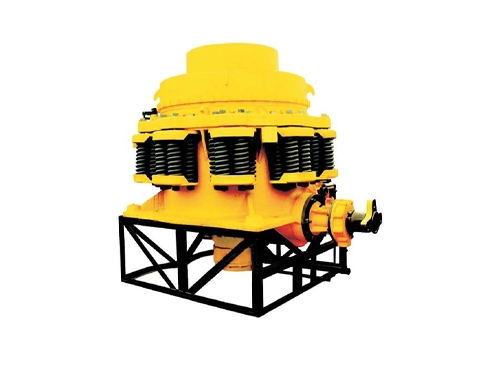
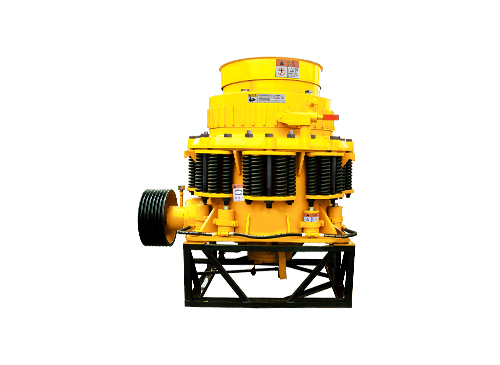
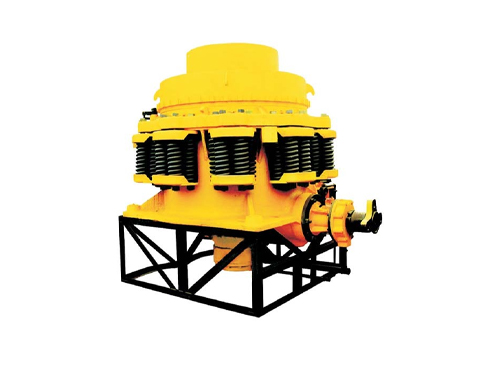 Spring Cone Crusher PYT Series for Reliable Medium-Scale CrushingThis spring-type crusher offers simple structure, low operating cost, and proven reliability, making it a practical choice for small and medium aggregate plants needing easy troubleshooting.View Product →
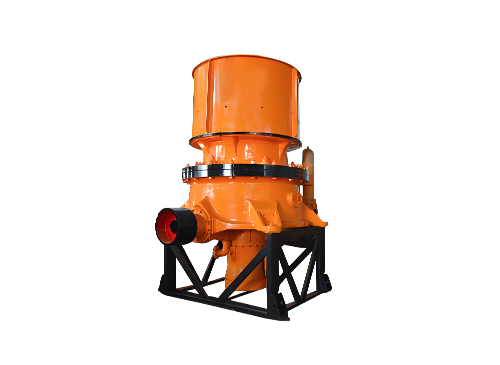 Single-Cylinder Hydraulic Cone Crusher CS and CH SeriesFeaturing all-hydraulic operation and high reduction efficiency, this crusher handles hard stone and aggregates with robust construction, suitable for mining and construction waste recycling.View Product →
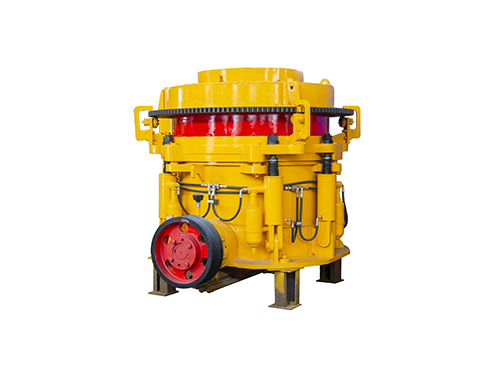
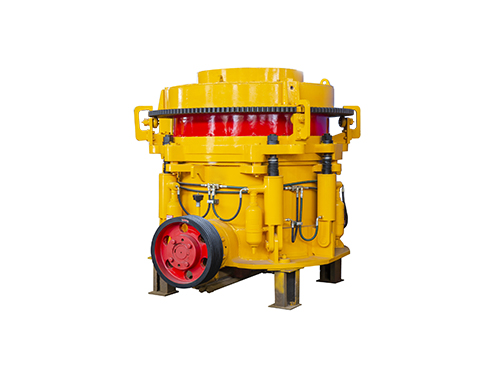 Multi-Cylinder Hydraulic Cone Crusher HPT Series for High CapacityWith advanced design and strong crushing force for hard stone, this crusher delivers up to 790 t/h while maintaining easy operation, ideal for large mining and aggregate projects.View Product →
Common Misconceptions Buyers Often Believe
One common misconception is that the spring cone crusher is an outdated machine that cannot match modern production requirements. This is not accurate. The spring cone crusher is still widely used in small and medium aggregate plants, sand plants, and many overseas projects where the operation requires simple machinery and readily available spare parts. Its popularity is based on proven reliability, low initial cost, and the ease of troubleshooting in the field.
Another misconception is that a hydraulic cone crusher is always expensive to repair. In reality, the basic components of the hydraulic machine, such as the main shaft, eccentric bushing, and wearing liners, are similar to those of the spring machine. The hydraulic system itself consists of pumps, valves, accumulators, and seals, all of which can be fully inspected and replaced. The repair cost is higher only when the hydraulic system has been neglected, for example when the oil is not changed regularly or when a component has failed and caused more severe damage. In a well-maintained plant, the hydraulic cone crusher often has a lower total maintenance cost per ton than a spring machine, because the machine does not need to be stopped as often.
Many buyers also assume that a spring cone crusher cannot crush hard rock. That is not true. A spring cone crusher with a proper crushing cavity and sufficient motor power can handle granite, basalt, quartzite, and other hard rocks. The difference is that when the discharge setting needs to be changed frequently, the spring machine requires more operator time and a complete stop. The hard rock itself is not the limiting factor; the production process and the frequency of adjustment are the real limiting factors.
A further misconception is that a spring cone crusher and a hydraulic cone crusher are essentially the same machine, with the hydraulic version simply adding cylinders. The differences reach deeper than that. The frame structure, the adjustment mechanism, the overload release path, the oil supply system, and even the sealing arrangement are different. Choosing the correct type is not just a question of adding a hydraulic kit to an existing structure, so the decision should be made at the planning stage of the project, not after the equipment has been purchased.
Investment Angle: Initial Price, Downtime, and Return on Investment
From a purely financial view, the starting position is simple. A spring cone crusher costs less at the purchase stage, and its spare parts are cheaper. A hydraulic cone crusher has a higher purchase price but can produce more revenue by reducing downtime and maintaining a uniform product. The correct choice depends on how the plant values availability and how much production the crusher handles per hour.
Consider a medium plant producing 200 tons per hour. If the spring machine requires a 30-minute stop for each discharge adjustment and the operator adjusts it twice per day, the plant loses one hour of production daily. If that plant operates for 300 days per year, the loss reaches 300 hours, equal to around 60,000 tons of unproduced material. Whether that loss actually occurs depends on how often the setting is changed and whether the feed size remains stable, but the calculation shows why hydraulic machines pay for themselves in plants that process multiple aggregate specifications.
For a small plant running one shift with only one or two product sizes, the spring cone crusher is often the more economical choice. The initial saving of 20 to 40 percent can be used for other equipment, and the simpler structure avoids any risk of hydraulic failure in remote locations. For a large plant with strict quality controls and continuous production, the hydraulic cone crusher is normally the lower-risk investment over a five-year horizon, because the machine is designed to handle sudden load changes and adjust itself under load.
Where Each Crusher Fits in the Crushing Circuit
The position of the cone crusher in the overall flow also affects the choice. In a typical stationary plant, a jaw crusher handles the primary crushing stage and produces a coarse product of 150 to 300 millimeters. The secondary crushing stage then reduces the material to 30 to 80 millimeters, and the tertiary stage further down to 10 to 30 millimeters. Spring cone crushers are often installed in the secondary stage, where the feed size is large and the discharge opening can be set to a relatively coarse value. The manual adjustment cycle matches the operation of many small and medium plants that change the setting only a few times per week.
Hydraulic cone crushers are commonly used in the tertiary and quaternary stages, especially when the plant wants to produce fine aggregates or manufactured sand. In these stages, the closed side setting is smaller, and the product shape matters more because the material has to meet concrete and asphalt specifications. The automatic setting compensation of a hydraulic machine keeps the product gradation stable over the full lifetime of the wearing liners. For a granite or basalt project, a primary jaw crusher followed by a hydraulic cone crusher is a proven combination. The jaw crusher takes the brute force of the feed, and the cone crusher produces the final cubical shape. This layout is described in more detail for hard rock crushing cone machine applications.
When the plant also needs to produce fine crushed sand, the cone crusher is normally followed by a vertical shaft impact crusher, which shapes the particles further. In that circuit, stable output from the cone crusher is critical, because the VSI works best with a consistent feed size. The hydraulic cone crusher, with its automated setting control and under-load adjustment, gives the VSI a more consistent feed, which improves the quality of the final sand and reduces wear on the VSI parts.
Frequently Asked Questions
What is the core difference between a spring and a hydraulic cone crusher?
The core difference lies in the overload protection and discharge adjustment systems. A spring cone crusher uses mechanical coil springs to protect the machine from unbreakable material, and the discharge opening is adjusted manually with the machine stopped. A hydraulic cone crusher uses hydraulic cylinders and accumulators for protection, and the discharge opening can be adjusted under load by pumping oil into the hydraulic system.
Can a spring cone crusher crush basalt or granite?
Yes. A spring cone crusher can crush basalt, granite, diorite, and other hard rocks if it has the correct crushing cavity, sufficient motor power, and a sturdy frame. The limitation is not the capacity to crush hard rock, but the need to stop the machine for discharge adjustment. If the operation demands frequent changes in the product size, the hydraulic type is more convenient.
Is a hydraulic cone crusher more expensive to maintain?
The hourly maintenance cost of a hydraulic machine can be slightly higher because of the hydraulic oil, filters, and seals. However, a hydraulic machine requires fewer scheduled stops for discharge adjustment, and it clears overload events much faster. Over a full year, the total maintenance cost per ton is often lower for the hydraulic machine in a high-capacity plant.
Does a spring cone crusher need to be stopped to change the discharge opening?
Yes. In a spring cone crusher, the operator must stop the crusher, release the clamping force, rotate the adjustment sleeve to the new position, and then restart the machine. The whole process can take 15 to 30 minutes for a medium-sized crusher, depending on the skill of the operator and the condition of the threads.
Can a hydraulic cone crusher change its discharge opening while operating?
Yes. In most single-cylinder and multi-cylinder hydraulic cone crushers, the operator can adjust the discharge opening while the crusher is running. The hydraulic system moves the main shaft or the adjustment ring to the required position, and the sensor confirms the new opening size without stopping the production line.
How can I decide between the two types for my aggregate plant?
Compare the initial purchase cost, the availability of a trained maintenance team, the hardness of the raw material, the number of product specifications, and the cost of downtime in your specific site. If the plant is small and the budget is limited, a spring cone crusher provides a fast payback. If the plant is large and the product must meet strict specifications, a hydraulic cone crusher gives better production stability and a lower life-cycle cost.
When the comparison is made honestly, the result depends on the specific site conditions more than on any general rule. A spring cone crusher is a proven, straightforward machine that continues to serve many small and medium plants well. A hydraulic cone crusher is a more capable and more automated machine, designed for plants that need continuous production, precise gradation control, and fast response to changing feed conditions. Asking the manufacturer to quote both options with the same crushing cavity and the same wearing parts will give you a clear picture of the price gap, the delivery time, and the daily operating procedure. That direct comparison, based on your real material and your real production target, is the best way to decide which cone crusher matches the long-term plan of your project.