English
 русский

Content
- 1 Mining Jaw Crusher: What It Does and Why It Matters
- 2 How a Mining Jaw Crusher Crushes Rock
- 3 Core Components That Decide Crusher Reliability
- 4 PE, HJ and SC Eurostyle: Three Mining Jaw Crusher Series
- 5 Feed Size and Capacity Reference Charts
- 6 How to Select a Mining Jaw Crusher for Your Site
- 7 Applications Across Mining and Aggregate Projects
- 8 What to Check Before You Buy a Mining Jaw Crusher
- 9 Maintenance Checklist for Mining Jaw Crushers
- 10 Mining Jaw Crusher FAQ
- 10.1 What size rock can a mining jaw crusher handle?
- 10.2 How is jaw crusher capacity calculated?
- 10.3 Which series is right for very hard granite or basalt?
- 10.4 How often do jaw plates need replacement?
- 10.5 What is the difference between a jaw crusher and a cone crusher?
- 10.6 Can a mining jaw crusher handle wet or sticky ore?
- 11 Get a Mining Jaw Crusher Matched to Your Site Conditions
Mining Jaw Crusher: What It Does and Why It Matters
A mining jaw crusher is the primary reduction machine in most hard-rock processing plants. It accepts run-of-mine rock directly from a dump truck or grizzly feeder and compresses it between two manganese steel plates until the material falls through the discharge opening. In a typical mining or aggregate circuit, the jaw crusher handles the coarsest feed, often 500 to 1,000 mm in edge length, and reduces it to a product size between 75 and 250 mm, making the material suitable for downstream cone crushers, impact crushers, grinding mills, or screening plants.
Mining teams choose a jaw crusher over other primary options because the concept is simple, the structure is all steel, and the machine can absorb severe shock from large boulders without losing performance. Compared with a gyratory crusher, which needs a deep foundation and a carefully matched feed arrangement, a jaw crusher tolerates intermittent feeding, occasional oversize pieces, and tramp metal, so it is more forgiving in real mine conditions. This is why jaw crushers remain the first-stage workhorse for gold, copper, iron ore, granite, basalt, and construction-waste operations worldwide.
For an international mine operator, the decision usually comes down to three things: the largest rock that must be accepted, the throughput required in tonnes per hour, and the cost per tonne of wear parts. The right mining jaw crusher balances these three factors while fitting the available power and foundation. The sections below explain the working principle, compare the PE, HJ and SC Eurostyle series, give typical capacity curves, and provide a practical selection and maintenance framework, so the final choice is based on site data rather than a catalogue page.
How a Mining Jaw Crusher Crushes Rock
A jaw crusher has two vertical crushing faces. The fixed jaw is bolted to the front frame, while the movable jaw hangs from a heavy eccentric shaft. When the shaft rotates, the movable jaw swings in an elliptical pattern: the stroke at the top of the chamber is small, the stroke at the discharge end is larger, and the angle between the two plates narrows and opens with every revolution.
- Rock enters the top opening, called the feed opening, and lands between the fixed and movable jaw plates.
- The eccentric shaft drives the movable jaw toward the fixed jaw, compressing the rock under high pressure.
- Fragments are pushed downward; pieces smaller than the discharge gap drop out, while larger pieces are trapped and crushed again.
- When the movable jaw moves back, the compressed material falls freely and the chamber opens for the next cycle.
- The cycle repeats at 250 to 350 revolutions per minute, producing a continuous stream of crushed rock.
The closed side setting (CSS) is the narrowest gap between the two jaw plates at the discharge end. It defines the top size of the final product. A 100 mm CSS produces a product with a nominal top size near 100 mm and a practical amount of fines; a tighter 60 mm CSS increases crushing pressure and produces a finer product at a lower throughput. Operators adjust CSS with mechanical wedges or hydraulic systems. Many mining jaw crushers use a deep cavity toggle design that improves the reduction ratio, reduces choking on slabby rock, and keeps the toggle mechanism protected from overload.
Energy storage is the role of the flywheels. During the power stroke the flywheels release stored rotational energy to drive the crushing action; during the return stroke they are re-accelerated by the motor. A correctly sized flywheel smooths the load on the electric motor and prevents voltage dips on remote mine sites with weak power networks. On diesel-driven units, the same flywheel effect lets the engine run at a stable speed instead of surging on every crushing load.
The toggle plate is both a force-transmission element and a safety device. It pushes the movable jaw forward during the crushing stroke, but it is designed to break first if uncrushable material enters the chamber, protecting the frame, the eccentric shaft, and the pitman from catastrophic damage. Inspecting the toggle seats and checking the plate for hairline cracks should be part of every weekly maintenance routine, because a cracked toggle plate that is ignored can fail under load and stop the whole plant for a full day.
Core Components That Decide Crusher Reliability
Reliability in a mining jaw crusher is decided by a handful of components. When you evaluate a machine, look at these parts and ask how they are manufactured, heat-treated, and protected. Weaknesses in any one of them will show up as downtime within the first two years of operation.
Welded Frame
Heavy steel plate with internal box ribs. Stress-relieving after welding keeps the jaw alignment stable under full load for years.
Fixed Jaw and Movable Jaw
The fixed jaw is bolted to the front frame; the movable jaw assembly uses a forged pitman that transfers the eccentric motion into a strong compression stroke.
Manganese Jaw Plates
Wear liners made of high-manganese steel, which work-hardens under impact. Plates are flipped or replaced when wear reaches 50 to 80 percent of the tooth depth.
Eccentric Shaft and Bearings
A forged alloy shaft running in heavy-duty spherical roller bearings. Bearing housing design and shaft diameter determine the machine's long-term rating.
Toggle Plate and Seats
The toggle plate transmits the crushing force and acts as the machine's fuse. Replaceable seats make repair faster when tramp metal damages the plate.
Flywheels
Large-diameter flywheels store rotational inertia and smooth the peak load on the motor, reducing energy cost and mechanical stress.
Wedge or Hydraulic CSS Adjustment
A wedge adjustment changes the discharge setting in steps; a hydraulic system lets the operator change the CSS in minutes without disassembling the toggle area.
Lubrication and Seal System
Centralized grease routes and labyrinth seals protect the bearings from dust. On underground or dusty sites, the quality of these seals controls the bearing life.
PE, HJ and SC Eurostyle: Three Mining Jaw Crusher Series
Shanghai Sanming builds mining jaw crushers in three series. They share the same compression principle but differ in frame weight, stroke shape, adjustment method, and target duty cycle. Choosing the correct series is as important as choosing the correct size, because a cheaper machine forced into continuous heavy duty will cost more in maintenance than the price difference on the order.
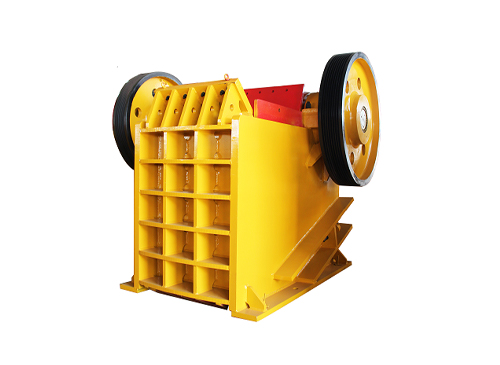
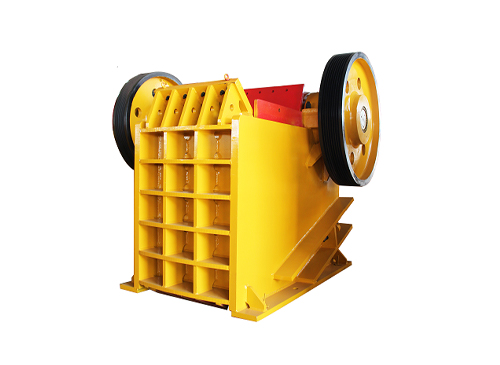 PE Jaw Crusher Series for Budget-Friendly Primary CrushingA classic deep-cavity jaw crusher with rugged all-steel frame and simple wedge adjustment, suited for medium-hard rock and intermittent operation in cost-sensitive projects.View Product →
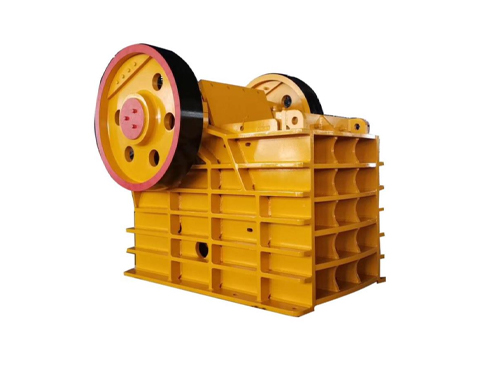
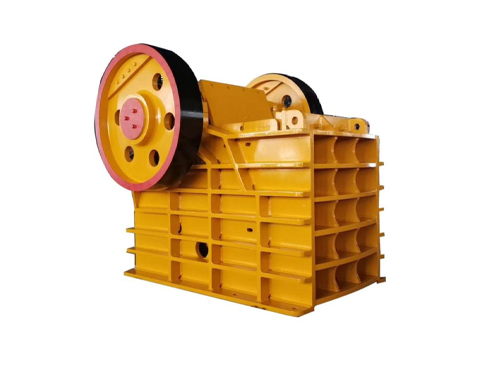 HJ High-Energy Jaw Crusher for Hard Rock ApplicationsA high-performance jaw crusher with optimized motion path and cavity shape, delivering higher efficiency and lower operating costs, ideal for hard materials like basalt.View Product →
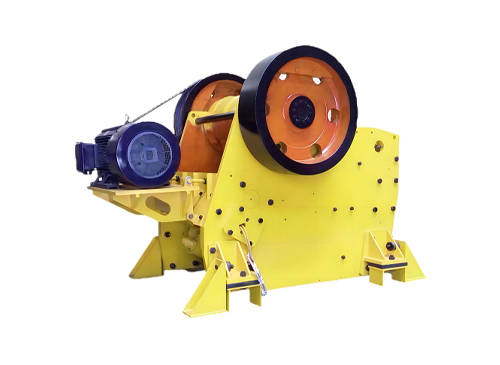
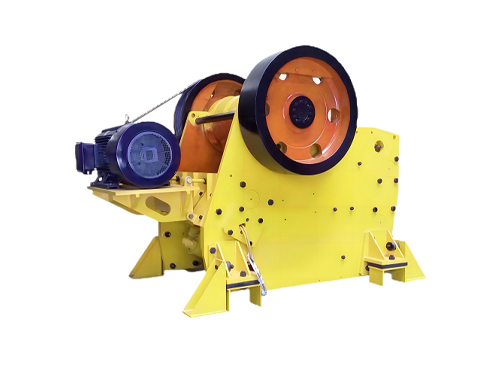 SC Euro-Style Jaw Crusher for High-Capacity Aggregate ProcessingA modern euro-style jaw crusher with sharp nip angle and low build height, offering high productivity and easy maintenance for sand, gravel, and construction waste.View Product →
The PE series is the classic mining jaw crusher with a deep crushing cavity, a rugged all-steel frame, and simple wedge adjustment. It is available in a wide range of feed openings, from a small laboratory unit to a 1,200 x 1,500 mm primary unit, and it suits medium-hard rock, intermittent operation, and projects where the budget has to stay under control. The deep cavity geometry helps push slabby fragments through the chamber instead of letting them bounce at the top.
The HJ series is designed for harder rock and higher utilization. A longer crushing stroke, stronger bearing housings, and an optimized cavity geometry give it a higher reduction ratio and a more consistent product shape. The HJ series also accepts hydraulic setting adjustment on larger models, which shortens the time needed to manage wear or change the product specification. For a granite quarry planning to run 12-hour shifts, the HJ series is often the best operating cost choice.
The SC Eurostyle series is a heavy-duty European-type jaw crusher built for permanent mine installations and 24-hour operation. It uses an extra-heavy welded frame, a bigger eccentric shaft, replaceable toggle seats, and an optimized motion profile that reduces the risk of jamming on slabby or freshly blasted rock. It is the preferred machine when the plant cannot afford any unplanned downtime, such as a large copper or iron ore operation feeding a fixed secondary crushing line.
Exact specifications must be matched to site conditions. The table below is a planning reference for the three series; the factory provides model-specific data for your material and feed grain size. Note that the PE series covers a very wide range, from small pilot plants to large stationary installations, so the practical duty rating of a particular model depends on the frame section and motor power chosen.
| Parameter | PE Series | HJ Series | SC Eurostyle |
|---|---|---|---|
| Typical feed opening | 150 x 250 mm up to 1,200 x 1,500 mm | 400 x 600 mm up to 1,050 x 750 mm | 400 x 600 mm up to 1,200 x 1,000 mm |
| Maximum feed size | 125 to 1,000 mm | 350 to 850 mm | 400 to 900 mm |
| Capacity range | 1 to 650 t/h | 30 to 600 t/h | 40 to 750 t/h |
| Discharge CSS adjustment | Wedge and shim | Mechanical with hydraulic assist option | Wedge or hydraulic option |
| Frame structure | Welded steel, standard section | Reinforced welded steel | Extra-heavy welded steel |
| Best suited for | Medium hardness, simple operation | Hard rock with continuous feed | Permanent mining plants, non-stop duty |
Feed Size and Capacity Reference Charts
Capacity figures in a brochure are planning references, not guarantees. The actual throughput of a mining jaw crusher is influenced by bulk density, moisture content, fines percentage, crushability of the rock, and whether the feed is delivered continuously or in batches. Use the following charts to compare the three series and to understand how the discharge setting changes the output of a typical mid-size crusher.
Largest rock edge length the crusher can accept under standard feeding conditions. Oversize boulders must be reduced or scalped before the crusher.
Typical curve for granite with a bulk density of 1.6 t/m3 and continuous feeding. Each 10 mm increase in CSS raises throughput by roughly 4 to 7 percent while increasing the product top size.
These two charts work together when you plan a plant. The bar chart tells you whether a given crusher series can physically accept the largest rock your mine produces. The line chart tells you what output to expect at different discharge settings. If the required CSS for the downstream cone crusher is 100 mm, the mid-size PE crusher in the example produces about 200 t/h; opening the CSS to 125 mm wins around 25 t/h more but passes larger fragments to the secondary stage. During the life of the jaw plates, the CSS naturally widens as the plates wear, so the operator should re-check the setting at least once per shift and compensate with the adjustment system to keep the product top size stable.
How to Select a Mining Jaw Crusher for Your Site
Selecting a mining jaw crusher is a six-step process. The steps below prevent the two most common mistakes: buying a crusher that is too small for the feed, and buying a crusher that is too large for the available budget and duty cycle. Both mistakes show up within the first months of operation and are expensive to correct.
- Measure the largest feed rock. Check the edge length of the biggest boulder that normally reaches the crusher. The feed opening should be 15 to 20 percent larger than this dimension. If a 900 mm boulder is common, the opening should be at least 1,050 mm wide.
- Define the target throughput in tonnes per hour. Use the maximum hourly feed, not the daily average. A mining jaw crusher should handle the plant surge without choking, because a choked crusher stops the entire line and the downstream equipment keeps running empty or blocks in sequence.
- Test the material properties. Unconfined compressive strength, crushability, abrasiveness, moisture, and clay content all affect production. Wet ore with more than 6 to 8 percent moisture and sticky fines can blind the crushing chamber and reduce capacity by 20 to 30 percent compared with dry rock of the same hardness.
- Select the smallest crusher that accepts the feed and does the job. Oversizing raises the purchase price, the foundation cost, the motor size, and the cost per tonne of spare parts. Undersizing forces high wear, frequent breakdowns, and a bottleneck that limits the whole quarry or mine.
- Match the discharge setting to the downstream stage. Confirm that the required CSS sits inside the crusher's adjustment range with margin for jaw plate wear. As the plates wear, the CSS widens, and the operator needs enough stroke left to compensate until the next plate change.
- Verify power and foundation. Check installed motor power, starting torque, flywheel inertia, and the weight that the foundation must carry. Large flywheels create high dynamic forces during start-up, and a poorly designed foundation transmits vibration into the nearby screening and conveying equipment.
Do not size a mining jaw crusher from catalogue capacity alone. Two crushers with the same feed opening can differ by 20 to 30 percent in practical throughput because of stroke length, rotational speed, and cavity geometry. Ask the manufacturer for a capacity curve based on your feed conditions, not just a single number.
Applications Across Mining and Aggregate Projects
Mining jaw crushers appear wherever coarse rock must be reduced in the first processing stage. In hard-rock gold, copper, iron and zinc mines, a primary jaw crusher for hard rock is normally installed ahead of a secondary cone crusher. The jaw crusher is set to 100 to 150 mm CSS so that the cone crusher receives a consistent feed and is protected from oversize boulders that could damage its crushing chamber.
In aggregate and sand-and-gravel plants, the jaw crusher feeds a secondary impact crusher or cone crusher, and the final products are screened into road base, railway ballast, concrete aggregate, and manufactured sand. Because aggregate plants often process multiple rock types, the jaw crusher must tolerate changes in hardness and moisture while keeping the product top size stable so that the downstream setting does not need constant adjustment.
Construction-waste recycling lines use jaw crushers to process reinforced concrete, brick, and demolition debris. A mobile jaw crusher with an electromagnetic separator and a screening attachment can work directly at demolition sites, producing recycled aggregate that meets local road base specifications. Stationary recycling plants use the same jaw crusher as a first stage, followed by an impact crusher for secondary shaping and a vibrating screen to close the circuit.
Underground mines install compact jaw crushers in the extraction chamber, reducing the ore before it is hoisted or conveyed. These units are selected for low height, easily replaceable wear parts, and maintenance-friendly layouts, because access to the chamber is limited and every hoisting cycle involves the crusher output.
Remote sites with weak power networks often choose a diesel-driven jaw crusher or a diesel-electric hybrid unit. The flywheel system stores the mechanical energy needed for the crushing stroke, so a standard diesel engine can pull the crusher through its peak load. This arrangement keeps a crushing plant working in areas where grid power is unreliable or not yet installed.
What to Check Before You Buy a Mining Jaw Crusher
A mining jaw crusher is a long-term investment, often running for 10 years in harsh conditions. The following checks will help you avoid the most common procurement problems and separate a well-built machine from a cheap copy.
- Frame steel and welding quality. Ask about the steel grade, plate thickness, and whether the frame is stress-relieved after welding. A frame without stress relief can distort, causing premature bearing failure and uneven jaw plate wear.
- Bearing size and type. Spherical roller bearings with a sufficient dynamic rating are essential. Check whether the bearing housings are sealed against dust and whether grease routes allow fresh grease to reach both sides of the bearing.
- Jaw plate metallurgy. High-manganese steel is standard. Ask for the manganese content and the hardness curve, and confirm that spare jaw plates are available before you sign the order.
- Toggle plate protection. The toggle plate must break at the designed overload point. Ask about the material and the testing procedure; a cheap toggle plate made from mild steel can destroy the frame when tramp metal enters the chamber.
- CSS adjustment convenience. Find out how long it takes to change the discharge setting. On a mechanical wedge system it can take an hour; on a hydraulic system it takes minutes. For plants that change product specifications often, this time is real money.
- Spare parts and wear parts logistics. Ask where the spare parts warehouse is, what the average lead time is for jaw plates, toggle plates, and bearings, and whether the supplier offers an annual spare parts kit that covers the main wear items.
- After-sales technical support. Confirm the response time for remote troubleshooting, whether field engineers are available, and whether the supplier provides an operation and maintenance manual in your language.
It also pays to verify the manufacturer itself. ISO 9001 certification, a physical production base, and export experience are useful signals because they show that quality management procedures exist and that the supplier is used to dealing with different power grids, climates, and rock types. Shanghai Sanming has manufactured mining crushing equipment since 2012, operates from a production base in Qidong close to the Shanghai Pudong industrial zone, and exports roughly 40 percent of its output to Central Asia, the Middle East, South America, and Africa. The average delivery time for a standard jaw crusher order is around 20 days, and the factory welcomes on-site visits so that customers can inspect the frame welding, machining, and assembly process before payment.
Maintenance Checklist for Mining Jaw Crushers
A jaw crusher rewards a disciplined maintenance program. The schedule below is a practical framework for medium-duty mining operations; adjust the intervals for hard rock and high utilization. Keeping a simple logbook of oil temperature, CSS readings, and jaw plate wear measurements helps the maintenance team see trends before they become failures.
- Daily checks. Check the oil level and temperature, inspect the jaw plates for visible movement or breakage, listen for unusual noises around the toggle area, and verify that the CSS has not drifted.
- Weekly checks. Measure and re-torque the jaw plate bolts, inspect belt tension and alignment, grease the toggle seats, and remove any fines that have accumulated around the main bearing seals.
- Monthly checks. Measure the wear profile of the jaw plates, flip or replace them when the teeth are 50 percent worn, inspect the toggle plate for cracks, and check the flywheel keys and coupling bolts.
- Quarterly checks. Take oil samples from the lubrication system, inspect the eccentric shaft and bearing seat clearances, and check the foundation bolts for loosening from dynamic loads.
| Symptom | Probable cause | Corrective action |
|---|---|---|
| Bearing temperature above 70 degrees C | Insufficient grease, wrong grease grade, or overloaded cavity | Stop the crusher, inspect the grease lines, correct the lubrication interval, and review feed rate |
| Jaw plate slipping or loose | Bolts not torqued, wedge worn, or plate seating surface dirty | Clean the seating, re-torque to specification, replace worn wedges |
| Gradual drop in capacity | Jaw plate wear or CSS widened by wear | Measure the CSS, re-set the discharge opening, and evaluate plate condition |
| Hammering or knocking noise | Broken toggle spring, worn toggle seat, or slack in the pitman connection | Stop immediately, inspect the toggle assembly, replace damaged parts |
| Product top size too coarse | CSS set too wide or discharge liner worn | Reset the CSS and check the wear profile of the discharge area |
| Crusher stalls under load | Feed rate too high, plugging in the cavity, or belt slippage | Clear the cavity, balance the feeder, re-tension the belts |
Mining Jaw Crusher FAQ
What size rock can a mining jaw crusher handle?
The largest rock a jaw crusher can accept is decided by the feed opening. A small PE 250 x 400 unit accepts rocks up to 210 mm, a mid-size PE 600 x 900 handles rocks up to 500 mm, and a large PE 1200 x 1500 machine can accept boulders of up to 1,000 mm in edge length. Always keep a margin of 15 to 20 percent below the nominal opening size, because slabby or elongated boulders may present a corner dimension larger than the opening width.
How is jaw crusher capacity calculated?
Capacity is not calculated from a single formula. It depends on the feed opening, the closed side setting, the speed and stroke of the eccentric shaft, the bulk density of the material, the moisture content, the proportion of fines in the feed, and the crushability of the rock. When a manufacturer publishes a capacity range, it is based on standard granite or limestone with a bulk density around 1.6 t/m3 and continuous, evenly distributed feeding. For your own planning, request a capacity curve based on your material and CSS.
Which series is right for very hard granite or basalt?
For granite and basalt with high compressive strength, choose the HJ or SC Eurostyle series. Both use a heavier frame, larger bearings, and a stronger stroke. The SC series is recommended for permanent plants that run around the clock; the HJ series is a good balance of performance and investment cost. The PE series can handle hard rock too, but it will wear faster and may need a wider CSS to protect the frame components.
How often do jaw plates need replacement?
Jaw plate life depends on the abrasiveness of the rock and the running conditions. In hard granite, a set of plates may last 1,500 to 3,000 hours; in soft limestone, the same plates can last twice as long. Operators should measure wear periodically, flip the plates when the teeth are about 50 percent worn, and replace them before the liner thickness drops below the safety line at around 80 percent wear. Running worn plates overstretches the CSS and increases the stress on the toggle and the frame.
What is the difference between a jaw crusher and a cone crusher?
A jaw crusher is a primary crusher that accepts very coarse feed, typically up to 1,000 mm, and reduces it to 75 to 250 mm. A cone crusher is a secondary or tertiary crusher that accepts feed in the range of 50 to 300 mm and reduces it to 10 to 50 mm. The two machines work in sequence in most mines: the jaw crusher rough-crushes the rock, and the cone crusher finishes the reduction to the required final size. Using a cone crusher as a primary unit would block its chamber; using a jaw crusher as a fine crusher would waste its strength and energy.
Can a mining jaw crusher handle wet or sticky ore?
Jaw crushers tolerate moderately wet and sticky material better than cone crushers, but they have limits. When moisture exceeds 6 to 8 percent and the ore contains clay, the fines can compact in the lower part of the crushing chamber, reducing throughput and increasing power draw. The practical solution is a vibrating grizzly feeder ahead of the crusher to scalp the minus-80 mm fraction, or the use of a deep cavity design that keeps the discharge area open and lets fine material pass quickly.
Get a Mining Jaw Crusher Matched to Your Site Conditions
The right starting point is to send a set of site basics to the factory: the largest rock dimension, the rock type and hardness, moisture content, the required throughput in tonnes per hour, and the available voltage and frequency. From that data, the engineering team at Shanghai Sanming will recommend a series, a model, a CSS setting, and a motor power selection. The recommendation comes with a capacity curve for your conditions instead of a generic catalogue number, which is what a real mine needs for budgeting and plant design.
Sanming's production base is certified under the ISO 9001 quality management system, and every jaw crusher is assembled in the Qidong factory with documentation of the frame welding, heat treatment, bearing clearances, and test run results. The company maintains a full spare parts program for jaw plates, toggle plates, bearings, and other wear parts for all three jaw crusher series, including the PE, HJ, and SC Eurostyle models.
For mine owners and project teams working to a schedule, the average delivery time of about 20 days makes it possible to match the crusher delivery with the civil construction of the plant. The factory also supports overseas customers with commissioning guidance and remote troubleshooting, ensuring the mining jaw crusher reaches full capacity quickly and stays in production for the life of the project.