English
 русский

Content
- 1 The short answer: tracked or wheeled depends on four variables
- 2 Undercarriage and ground pressure: where the real difference starts
- 3 Moving between sites: self-propelled tracks versus towed wheels
- 4 Site preparation and floor conditions
- 5 Power, fuel and electricity
- 6 Output, feed size and plant layout
- 7 Cost structure: purchase price is only the first number
- 8 Transport permits, road rules and load limits
- 9 Maintenance: tracks, tyres and uptime
- 10 Matching the machine to the job
- 11 When a mobile plant beats a fixed production line
- 12 A selection checklist buyers can use on site
- 13 Procurement risks and acceptance checks
- 14 Cost trend with move frequency: a simple planning chart
- 15 FAQ: tracked and wheeled mobile crushers
- 15.1 Is a tracked mobile crusher more productive than a wheeled one?
- 15.2 Can a wheeled mobile crusher work on soft ground?
- 15.3 Does a tracked crusher need a permit to move?
- 15.4 Which type is better for construction waste recycling?
- 15.5 How often should tracks or tyres be replaced?
- 15.6 Can a wheeled plant be converted to electric power?
- 16 A practical next step: test the site before the specification
The short answer: tracked or wheeled depends on four variables
A tracked mobile crusher carries its crushing chamber on a crawler undercarriage. A wheeled mobile crusher carries the same duty on a trailer-style chassis with tyres, often moved by a tractor unit or low-bed trailer. The practical difference is not the crusher itself. It is how the plant reaches the feed, how often it moves, what ground it stands on, and how the owner pays for transport and site preparation.
For a quarry with a stable bench and a long campaign, a wheeled plant can be the lower-cost choice because the machine stays in one place and the haul road is already compacted. For a demolition project where the plant must follow the rubble, a tracked plant usually wins because it can crawl over broken concrete, soft ground and uneven stockpiles without a crane or a heavy tow vehicle. The decision becomes clear when four variables are scored together: ground pressure, move frequency, power availability and permitted transport width.
| Selection point | Tracked mobile crusher | Wheeled mobile crusher |
|---|---|---|
| Undercarriage | Crawler tracks with low ground pressure and self-propelled travel | Tyres on a trailer chassis, towed or carried between sites |
| Best ground | Soft, uneven, broken or sloping ground with prepared access | Compacted haul roads, concrete pads and flat recycling yards |
| Site moves | Short moves under its own power; long moves on a low-bed trailer | Road travel with a tractor or low-bed, subject to permits and axle limits |
| Typical power | Diesel-hydraulic or diesel-generator sets, with optional electric drives | Electric motor or diesel generator, often with a more open layout |
| Layout | Compact, integrated chassis with limited site assembly | Modular frames and conveyors, faster access for larger components |
| Cost pattern | Higher purchase price, lower site preparation cost on poor ground | Lower entry price, higher road and pad preparation cost in soft ground |
Undercarriage and ground pressure: where the real difference starts
Ground pressure is the first number to check when a buyer compares a tracked unit with a wheeled unit. A crawler undercarriage spreads machine weight over a long, wide track shoe. That lowers the load per square metre and lets the plant stand on compacted fill, clay, sand and broken demolition debris with less risk of rutting. A wheeled chassis concentrates load on four or more tyre contact patches. It needs a firm, level surface, and the tyre pressure must be matched to the axle load and road speed.
This is why a wheeled plant can look cheaper on the quotation sheet and still cost more on a soft site. If the yard needs 300 mm of crushed stone, geotextile and compaction before the plant can be positioned, the saving on the chassis disappears. A tracked unit may still need a level pad, but it can often work on a prepared bench with less imported material. The trade-off is that tracks are slower on hard road surfaces and can damage thin asphalt if the operator turns sharply.
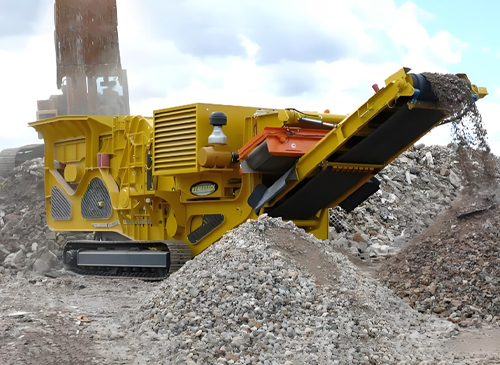
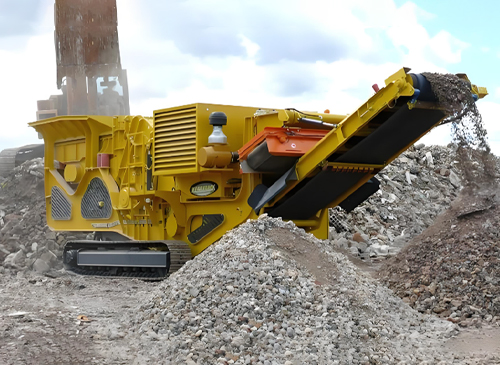 Crawler Mobile Jaw and Impact Crushing PlantTracked crushing unit integrates receiving, crushing, and transport; review track shoe width and ground-bearing data for soft-site setup.View Product →
Check the track shoe width, the number of track rollers and the ground-bearing area in the technical file. A wider shoe reduces ground pressure but increases transport width. A narrow shoe is easier to move but may sink in wet fill. For a site with a high water table, ask for a load calculation using the operating weight with a full hopper, not the shipping weight. This is a common gap in early-stage comparisons.
Moving between sites: self-propelled tracks versus towed wheels
A tracked crusher moves at walking pace. That is an advantage inside a quarry or demolition site because the operator can reposition the plant without calling a crane. It is not a road vehicle. For a move between two distant sites, the plant goes onto a low-bed trailer, and the tracks must be loaded and secured with the correct ramp angle. The preparation time is usually longer than many buyers expect, especially when the machine carries a side conveyor, magnet and screen.
A wheeled crusher is built around road transport. Depending on the design, it may be towed by a tractor unit, carried on a low-bed, or moved as a semi-trailer. That can shorten the move between a recycling yard and a road project. The limitation is that road rules control the plan: axle load, overall width, brake system, lighting, permits and escort requirements. A plant that is 2.55 m wide on the drawing may become wider once the discharge conveyor and walkways are fitted.
A useful rule is to count moves per year. If the plant moves once every two or three years, transport speed is not a major cost. If it moves every few weeks, the loading method, permit lead time and assembly hours become as important as the crusher output. For a quick overview of how a mobile plant is configured for different duties, see how a mobile crushing plant works.
Site preparation and floor conditions
Wheeled plants are often selected for concrete pads, asphalt yards and compacted hardcore. The machine can be levelled with hydraulic supports or outriggers, and the tyres stay clear of the working face. That layout suits a recycling site that receives mixed construction waste on a paved apron. It also suits a quarry that has a permanent bench and a fixed stockpile area.
Tracked plants are more tolerant of a changing face. In demolition, the floor may be broken slab, brick rubble and soil. In a quarry, the bench may be uneven after blasting. A crawler undercarriage can cross these conditions at low speed, but it is not a bulldozer. The operator still needs to avoid sharp drops, loose side slopes and buried steel. A common mistake is to assume that tracks remove the need for a working platform. They reduce the platform specification; they do not replace the operator’s judgement.
Tracked site conditions
Broken slab, clay, sand, quarry bench, demolition rubble and temporary stockpile areas. Best where the plant follows the feed and the floor changes during the project.
Wheeled site conditions
Compacted haul roads, concrete pads, asphalt yards, rail sidings and flat recycling aprons. Best where the plant stays in one zone and the road network is already built.
Before choosing, mark the proposed plant position on a site plan and check the slope in two directions. A wheeled plant may need less than 2 percent cross-fall at the pad, while a tracked plant can work on a more uneven bench if the feed arrangement allows. The discharge conveyor angle and the stockpile height often decide the final position more than the undercarriage itself.
Power, fuel and electricity
Tracked mobile crushers commonly use a diesel engine to drive the crusher, conveyors and tracks through hydraulic or electric transmission. Some units can be connected to site power for the crushing circuit while the tracks remain diesel-driven. Wheeled plants often use an electric motor as the primary drive, with a diesel generator set for sites without a reliable supply. The difference matters because energy cost can be a larger share of operating cost than the purchase price difference between the two chassis types.
Ask for the installed power, the expected fuel burn at the design throughput, and the motor efficiency at part load. A plant that is rated at 300 tonnes per hour but runs at 180 tonnes per hour for most of the shift may be inefficient if the drive is fixed-speed. Variable-speed control, load sensing and automatic feeder regulation can change the real cost per tonne. For a wheeled plant on mains power, check the cable route, transformer capacity and protection settings before the machine arrives.
Noise and dust also follow the power choice. A diesel engine adds noise at the crusher end; an electric drive can reduce engine noise but adds cable management and electrical safety requirements. Neither option removes the need for water sprays, dust covers or a controlled feed. The best choice is the one that matches the site’s power supply, operating hours and maintenance team.
Output, feed size and plant layout
Tracked plants are usually compact because the undercarriage, crusher, feeder and conveyor are integrated into one chassis. That is an advantage for tight demolition sites and quarry faces with limited access. The limitation is that the feed opening, hopper volume and discharge height are fixed by the chassis. A very large feed size or a long screen deck may not fit within the transport envelope.
Wheeled plants can be built as separate modules: a primary jaw or impact unit, a secondary cone or impact unit, and a screening module. The modules can be arranged in a line, an L shape or a compact cluster. That flexibility helps when the site needs multiple products and a larger stockpile area. It also makes maintenance access easier because the crusher and screen are not packed into one frame. The trade-off is more interconnecting conveyors, more setup points and a larger footprint.
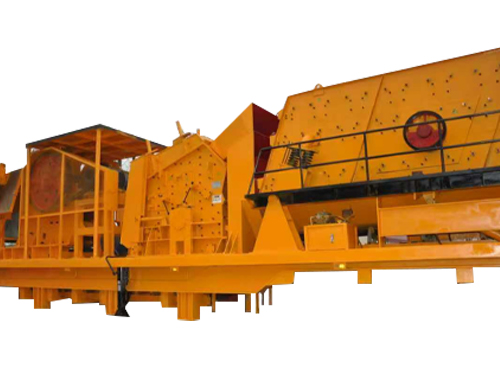
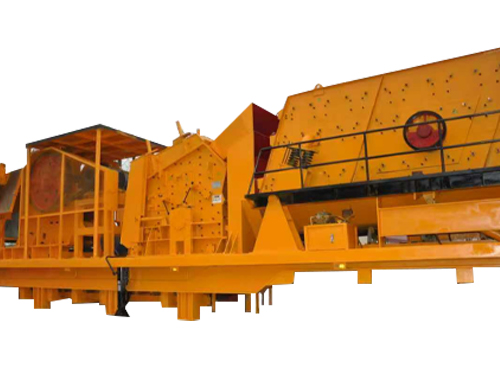 Tire Mobile Crusher Plant for Multi-Stage CrushingWheeled modular plant supports primary, secondary, and tertiary configurations; compare crusher type and feed size before arranging modules.View Product →
Match the crusher type to the feed before comparing chassis. A jaw crusher handles hard, abrasive rock and large feed; an impact crusher gives a better cubical shape in limestone and recycling; a cone crusher is better for secondary and tertiary hard-rock duty. A tracked jaw plant and a wheeled impact plant are not direct substitutes. The question is not “which chassis is better?” but “which crushing circuit can be moved and fed at this site?”
Cost structure: purchase price is only the first number
The purchase price of a wheeled plant is often lower than a tracked plant of similar nominal capacity. That does not prove it is cheaper over the project. A tracked plant carries a more expensive undercarriage, but it may save on site preparation, crane hire and production downtime caused by poor ground. A wheeled plant may save on the chassis but require a tow vehicle, permits, a compacted pad and more assembly labour at each move.
Build a five-year cost model with five lines: capital, transport, site preparation, maintenance and downtime. Transport includes the low-bed, permits and escort. Site preparation includes stone, geotextile, compaction and drainage. Maintenance includes track chains, rollers, tyres, brake systems and suspension. Downtime includes the hours lost waiting for a tow vehicle or repairing a track in the face. The lowest purchase price rarely wins all five lines.
The chart is a relative index, not a price list. It shows why a buyer must count move frequency. A tracked plant with one move per year can have a lower total cost on a soft site. A wheeled plant with one move per month can have a lower total cost on a paved site with a good haul road.
Transport permits, road rules and load limits
Wheeled plants are designed for road movement, but road movement is controlled by local authorities. The permitted axle load, overall length, overall width and braking system determine whether the plant can travel as a towed unit or must go on a low-bed. In many markets, a mobile crusher that is legal on a private haul road is not legal on a public highway without a permit. The permit lead time can be days or weeks, and the route may require an escort.
Tracked plants avoid road registration because they do not travel on public roads. That simplifies the legal position but adds a low-bed loading operation. The trailer must be rated for the operating weight, and the ramps must be long enough for the track angle. The machine should be loaded with the crusher chamber empty and the conveyors folded to the transport position. A missing transport pin or an unsecured guard can turn a routine move into a safety incident.
Check the transport drawing before the order, not after delivery. It should show the width with and without the side conveyor, the height with the feed hopper folded, and the centre of gravity. A plant that is 100 mm too wide for the permitted route can force a longer detour or a larger trailer. Those costs belong in the comparison.
Maintenance: tracks, tyres and uptime
Tracked undercarriages wear at the track chain, sprocket, idler and rollers. Wear rate depends on abrasion, turning practice and track tension. A track that is too tight wastes power and wears the pins; a track that is too loose can derail on a turn. Daily inspection should include tension, seal leakage and abnormal noise. Track replacement is a planned cost, but it is predictable when the operator avoids spinning the tracks on sharp rock.
Wheeled plants wear at the tyres, suspension, brakes and tow coupling. Tyre damage often comes from sharp debris in the yard, not from road mileage. A wheeled plant working beside a demolition pile needs tyre protection or a separate clean apron. Brake and light systems must be checked before every road move because a failure can stop the transport permit. The advantage is that tyres and brake parts are usually easier to source locally than a specialised track chain.
Both types need access to the crusher chamber, conveyor head and screen. A compact tracked unit can be harder to service because the components are close together. A modular wheeled plant can offer better access but more connection points. Ask for the service clearance around the drive motor, the discharge belt and the hydraulic tank. A plant that needs a crane to remove a guard will spend more time down.
Matching the machine to the job
Demolition and construction waste recycling rewards a tracked plant when the feed is scattered and the floor is broken. The machine can move to the pile, crush to a 0–40 mm or 0–60 mm product, and separate steel with a magnet. The same plant can be used on a road project if a low-bed is available. The weak point is the transport move, not the crushing duty.
Quarry primary crushing rewards a wheeled or modular plant when the bench is stable and the haul road is good. The plant can be placed close to the face, fed by a loader, and connected to site power. A tracked primary unit is also common in quarries, but the economic case depends on how often the face moves and whether the site has a reliable low-bed. For a long-life quarry with a fixed bench, a stationary line may be even better because the maintenance access and power supply are simpler.
Choose tracked when
The plant must follow the feed, the ground is soft or broken, moves are short and frequent, and the site can support a low-bed for longer moves.
Choose wheeled when
The plant stays on a compacted pad, road moves are regular, power is available, and the layout needs modular conveyors or a larger footprint.
Do not choose by chassis alone. A tracked impact crusher and a wheeled jaw crusher solve different problems. Start with the feed material, the required product size and the tonnage per shift. Then select the crusher. Then select the undercarriage that can carry that crusher to the feed at the lowest total cost.
When a mobile plant beats a fixed production line
A mobile plant is not automatically the right answer for every quarry. A fixed line can use larger crushers, a wider screen, a permanent conveyor network and a dedicated workshop. It usually has a lower cost per tonne at high volume and a longer service life. The mobile option wins when the deposit is small, the permit is short, the project moves, or the feed is scattered across several locations.
A useful test is the “move-to-ore” ratio. If the plant spends more time moving than crushing, a mobile chassis is adding cost. If the ore moves to the plant and the plant stays for years, a fixed or semi-fixed line may be better. The middle ground is a modular wheeled plant that can be relocated in a few days without a full civil works programme. For layout examples, see production line projects and compare the civil work, conveyor length and stockpile arrangement.
The decision should include the cost of the loader. A tracked plant that is positioned close to the face can shorten the loader cycle. A wheeled plant on a central pad may need a longer haul or a larger loader. Those hours are part of the crushing cost, even if they appear on a different budget line.
A selection checklist buyers can use on site
Use the following checklist during the site visit. It turns a broad “tracked versus wheeled” debate into a set of answers that can be compared between suppliers. A machine that scores well on paper but fails the site access check is not a lower-cost option.
- Feed material: rock type, maximum lump size, clay content, moisture and steel contamination.
- Product: required sizes, gradation, cubical shape and permitted fines.
- Throughput: tonnes per hour at the actual feed condition, not only the rated maximum.
- Ground: slope, bearing capacity, rutting risk, water table and the cost of a working pad.
- Move frequency: moves per month or year, distance, public road use and permit lead time.
- Transport: low-bed availability, ramp angle, permit width, axle load and escort rules.
- Power: diesel, mains electricity or hybrid; cable route, transformer and fuel storage.
- Layout: feed height, discharge height, stockpile capacity and access for a loader.
- Maintenance: service clearance, spare parts lead time, track or tyre replacement cost.
- Safety: emergency stops, guard access, dust control, noise and operator visibility.
Score each item as “pass”, “conditional” or “fail”. A conditional item needs a cost estimate before the comparison is valid. For example, if the site needs a 400 mm compacted pad for a wheeled plant, add the stone, compaction and drainage cost to the wheeled option. If the tracked plant needs a low-bed for every move, add the trailer and loading time to the tracked option.
Procurement risks and acceptance checks
The most common procurement risk is comparing a fully equipped plant with a bare base machine. A tracked plant may include a magnet, side conveyor, water spray, remote control and pre-screen in one quotation; a wheeled plant may list them as options. Ask for a line-by-line scope: crusher chamber, feeder, grizzly, conveyor, magnet, dust suppression, control system, walkways, guards and transport supports. A low price with missing guards is not a lower price; it is a delayed delivery.
Second, check the operating weight and the shipping weight. Transport permits are based on the loaded weight, and the difference between the two figures can be several tonnes. Third, ask for the commissioning procedure. A tracked plant needs track tension, travel speed and stability checks. A wheeled plant needs brake, light, suspension and tow-coupling checks. Fourth, confirm the spare parts list for the first year: track chain or tyres, filters, belts, wear plates and crusher liners.
Acceptance should include a loaded test with the actual feed. Record the throughput, product gradation, power draw and discharge belt tracking. Check that the emergency stops work at every station and that the guards can be removed with standard tools. A plant that performs well in a demo on clean limestone may behave differently in wet demolition waste. The test should match the first three months of real production.
Cost trend with move frequency: a simple planning chart
The chart below shows a planning concept, not a quoted price. As the number of moves per year rises, the transport and setup cost of a tracked plant rises faster because each long move needs a low-bed and loading time. The wheeled plant has a lower move cost on a good road but a higher pad cost if the ground is soft. The crossing point depends on local haulage rates and site conditions.
Use the curve to frame a question for the supplier: “At our expected move frequency, what transport and pad cost should we add to each option?” A supplier who can answer with a transport drawing, a pad specification and a service schedule is easier to compare than one who only quotes the crusher price.
FAQ: tracked and wheeled mobile crushers
Is a tracked mobile crusher more productive than a wheeled one?
Not by definition. Productivity depends on the crusher chamber, feed size, discharge setting, screen area and how well the plant is fed. A tracked plant can be more productive on a site where a wheeled plant cannot reach the face or needs a long setup. A wheeled plant can be more productive on a paved site with a large feed area and reliable power.
Can a wheeled mobile crusher work on soft ground?
It can, but the ground must be prepared. The tyres need a firm, level surface with adequate bearing capacity. In soft conditions, the pad may need geotextile, crushed stone and compaction. If the pad cost is high, a tracked plant may be the lower total cost even if its purchase price is higher.
Does a tracked crusher need a permit to move?
It usually does not need a road registration permit because it does not travel on public roads under its own power. It still needs a low-bed trailer, and the trailer route may need permits for width, height and axle load. The transport drawing should be checked before the machine is ordered.
Which type is better for construction waste recycling?
Tracked plants are often preferred when the waste pile changes and the floor is broken. Wheeled plants are often preferred when the yard is paved, the feed is brought to a central pad and the plant stays in one zone. In both cases, a magnet, dust suppression and a controlled feed are more important than the chassis alone.
How often should tracks or tyres be replaced?
There is no universal interval. Track life depends on abrasion, turning practice, tension and travel distance. Tyre life depends on floor cleanliness, load and road speed. Ask for the wear limits and the local spare parts lead time. A planned replacement budget is more useful than a single estimate from a supplier.
Can a wheeled plant be converted to electric power?
Many wheeled plants are already electric-driven or offer an electric option. The conversion depends on the motor, control panel, cable entry and protection system. Check the transformer capacity and the cable route before delivery. A plant that is designed for diesel may need a different control philosophy, not only a motor change.
A practical next step: test the site before the specification
Before asking for a final quotation, walk the site with the supplier and mark four points: the feed area, the plant position, the stockpile area and the transport access. Measure the slope, check the ground with a plate load test if the pad is uncertain, and confirm the power supply. Then ask for two layouts: one tracked and one wheeled, both using the same crusher duty. The layout that needs less civil work, fewer transport permits and fewer loader hours is usually the better starting point.
The final choice should be recorded in a short decision note: feed material, required output, ground condition, move frequency, power source and transport route. When those six facts are clear, the difference between a tracked and a wheeled mobile crusher stops being a general debate and becomes a specific cost comparison. That is the point where a buyer can negotiate on the items that actually change the cost per tonne.