English
 русский
Ask any plant manager how a cone crusher works and the short answer is simple: rocks are crushed between a fixed concave liner and a moving mantle. That answer is correct, but it does not tell you why a cone crusher is so widely used, why one machine produces good shaped aggregate while another makes flaky material, or why your electricity and wear cost can go up without any visible change in the machine. The working principle is not complicated, yet the final result depends on a chain of mechanical and operational details: eccentric throw, closed side setting, feed distribution, crushing chamber profile, speed, and liner condition.
A cone crusher compresses material in a crushing chamber. The mantle is fixed on the main shaft, and the lower end of the main shaft sits inside an eccentric bushing. When the eccentric rotates, the shaft gyrates. The mantle moves closer to the concave on one side and farther away on the opposite side, over and over. This continuous gyrating motion changes the volume in the crushing chamber, so the material is squeezed, broken, and falls downward until the particles are small enough to discharge through the bottom opening.
Content
- 1 Cone Crusher Working Principle in Plain Words
- 2 Main Components That Make the Crushing Motion Possible
- 3 Step-by-Step Breakdown of the Crushing Process
- 4 Types of Cone Crushers and How They Differ
- 5 Cone Crusher vs Jaw Crusher vs VSI Crusher
- 6 Key Operating Variables That Change Output Quality
- 7 Liner Wear and Maintenance: Protecting Your Investment
- 8 What to Check Before Buying a Cone Crusher
- 9 Frequently Asked Questions
- 9.1 How does a cone crusher work step by step?
- 9.2 What does CSS mean in a cone crusher?
- 9.3 What is the difference between standard and short-head cone crushers?
- 9.4 Why is my cone crusher making too much oversize material?
- 9.5 How do I prevent a cone crusher from blocking?
- 9.6 Which is better, single-cylinder or multi-cylinder cone crusher?
- 9.7 Can a cone crusher produce sand?
Cone Crusher Working Principle in Plain Words
In one sentence: a cone crusher is a compression crusher. It squeezes rock between two surfaces until the rock breaks. This is different from an impact crusher, which throws the rock against a steel plate or rock shelf, and different from a jaw crusher, which uses a single moving jaw against a fixed jaw plate.
The key is the word "gyrates." The mantle does not spin on its own axis. It moves in a circular path around the center of the machine. Imagine a child's top that wobbles: the top rotates, but its center traces a circle. The same kind of motion happens inside a cone crusher.
When the mantle moves toward the concave, the gap becomes smaller, and the rock is compressed between the two manganese steel liners. When the mantle moves away, the gap opens, and the crushed material can fall down. The rock is never caught in a single violent blow; it receives many small compression strokes as it travels from the top of the chamber to the bottom.
This repeated compression creates a mechanism that engineers call inter-particle breakage or layer crushing. The particles are squeezed against each other inside the crushing chamber, not just against the liners. Layer crushing is one of the reasons a cone crusher can produce a more cubical product than a jaw crusher. But layer crushing only works when the crushing chamber is kept reasonably full. If the crusher is "starved," the rocks fall onto the mantle and bounce around, which increases liner wear, increases power fluctuation, and gives a poor product shape.
The practical takeaway is this: a cone crusher works by applying continuous compressive pressure to a bed of rock. The operator controls the result by keeping the feed even, choosing the correct crushing chamber, and setting the closed side setting within the recommended range.
- Feed enters the top of the machine and spreads over the feed plate or distributor.
- The eccentric bushing rotates and makes the mantle gyrate.
- Rock is compressed in the closing side of the chamber and breaks.
- The crushed material falls into the opening gap and moves downward.
- The cycle repeats until the particle size is smaller than the discharge gap.
| Term | Meaning | Why It Matters |
|---|---|---|
| CSS (closed side setting) | The smallest distance between the mantle and the concave at the bottom of the crushing chamber. | Controls the top size of the final product and has the largest effect on capacity. |
| OSS (open side setting) | The largest distance between the mantle and the concave at the bottom of the crushing chamber. | Influences throughput and the amount of oversized material. |
| Stroke / eccentric throw | The distance that the mantle travels at the discharge end during one gyration. | Determines the crushing force and the capacity per stroke. |
| Crushing chamber | The space between the bowl liner and the mantle. | The profile controls how the material is gripped, reduced, and shaped. |
| Feed opening | The widest usable opening at the top of the chamber. | Limits the maximum size of rock that can enter without bridging. |
Because the cone crusher is a secondary or tertiary machine, the feed has usually passed through a primary jaw crusher or a similar unit. The cone crusher then takes that material and reduces it through a series of compression strokes. This is also why a cone crusher should not be treated as a direct replacement for a jaw crusher at the primary stage: it needs a smaller feed and is designed for a different part of the reduction curve.
Main Components That Make the Crushing Motion Possible
To understand how a cone crusher works, it helps to know the name and role of each major component. The machine is engineered around the eccentric assembly, the main shaft, the crushing chamber, and the support systems that keep those parts running.
The eccentric assembly deserves special attention. It is the component that creates the gyrating movement. The main shaft fits into a brass or bronze inner eccentric bushing. The eccentric bushing itself rotates inside the lower frame on a step bearing. Because the bore inside the eccentric is offset from the centerline of the gear, the shaft has no choice but to move in a circular path when the gear rotates.
This offset angle is not something the operator can change during normal operation. It is fixed at the factory and is usually described as the throw or stroke. A larger throw gives a heavier crushing stroke but also increases the load on the gear and bushings. The design of the eccentric assembly must match the motor power, the crushing chamber, and the type of material being crushed.
The mantle and concave are the parts that actually touch the rock. Their geometry is designed so that the chamber becomes narrower from the top to the bottom. The top section acts as a feed opening and briefly holds the largest lumps. The middle section is where most of the crushing work is done. The lower section, sometimes called the parallel zone, controls the final product shape.
Wear liners are not permanent parts. They are designed to be replaced, and their life depends on the abrasiveness and hardness of the feed. When the liner profile changes, the angle of bite changes, the effective CSS changes, and the crusher begins to behave differently. Checking liner wear is therefore one of the most important daily maintenance tasks.
Step-by-Step Breakdown of the Crushing Process
Let us follow one complete cycle inside the crushing chamber. This cycle repeats many times per second, depending on the eccentric speed.
| Phase | What Happens | Result |
|---|---|---|
| 1. Feed distribution | Rock enters the feed hopper and hits the distributor plate or falls directly onto the mantle. | The material spreads around the chamber, creating a uniform bed of rock. |
| 2. Compression stroke | The mantle moves toward the concave on one side and compresses the trapped material. | Pressure builds and the rock breaks along its weakest cracks and grain boundaries. |
| 3. Particle rearrangement | After the break, the finer material settles into void spaces between the larger pieces. | The chamber is ready for another compression stroke with a denser bed. |
| 4. Opening stroke | The mantle moves away from the concave on the same side. | Crushed material drops downward and moves to the next compression zone. |
The process relies on the chamber geometry and on gravity. The rock does not need to be pushed down by mechanical arms; it falls because the opening stroke creates space. The mantle and concave act like a continuous conveyor of crushing zones, each one slightly narrower than the previous one. The result is a gradual reduction from coarse feed to the desired product size.
In a standard or medium cone crusher, the chamber has a steep upper section and a short parallel zone at the outlet. This design gives a higher throughput and is often used for secondary crushing where the main goal is capacity. In a short-head or fine cone crusher, the chamber is flatter and the parallel zone is longer. The material is held in the crushing zone longer, producing a finer and more consistent product. The basic working principle is the same, but the geometry and application are different.
The speed of rotation also affects how the crushing cycle works. A faster eccentric speed means more strokes per minute, which can improve particle shape and reduce the size of the discharge. But if the speed is too high, the rock does not have enough time to fall out of the crushing zone, and capacity drops. If the speed is too low, the crusher cannot fill the chamber fast enough and the product becomes coarser. That is why modern cone crushers are designed with a specific speed range; the operator should not change it without checking the original design curve.
Types of Cone Crushers and How They Differ
Although all cone crushers share the same gyrating compression principle, the practical design differences are important for the buyer. The most common categories are spring cone crushers, compound cone crushers, single-cylinder hydraulic cone crushers, and multi-cylinder hydraulic cone crushers.
Spring cone crusher
Spring cone crushers use a set of coil springs around the bowl. When uncrushable material enters the chamber, the springs compress and the bowl lifts, allowing the object to pass. Once the object is gone, the springs return the bowl to its original position. This design has been used for many decades and is still found in many plants. It is relatively simple, but CSS adjustment usually requires mechanical shims or a heating/cooling process, and clearing a blocked chamber is not as convenient as on hydraulic machines.
Compound cone crusher
A compound cone crusher combines mechanical spring protection with hydraulic adjustment or locking. It offers a better compromise between price and convenience. In many quarry applications, a compound cone crusher is a reliable and cost-effective choice for medium-hard rock, and the hydraulic locking system holds the setting stable during operation.
Single-cylinder hydraulic cone crusher
In a single-cylinder hydraulic cone crusher, a hydraulic cylinder below the main shaft supports and lifts the shaft. By adding or releasing oil, the operator raises or lowers the mantle, which changes the CSS. This design also allows the crusher to be cleared hydraulically when the chamber is blocked. Because there is only one hydraulic cylinder, the mechanical structure is simpler and maintenance access can be easier.
Multi-cylinder hydraulic cone crusher
Multi-cylinder cone crushers use several hydraulic cylinders arranged around the bowl to adjust the bowl position. They usually provide high crushing force, stable power draw, and good control over product shape. These advantages make them popular for hard rock, high-tonnage plants and for producers that need to run with a tight setting to maximize fines or meet strict aggregate specifications.
| Type | Setting Adjustment | Overload Protection | Typical Duty |
|---|---|---|---|
| Spring type | Shims or bowl rotation | Coil springs | Secondary crushing of medium-hard rock |
| Compound | Hydraulic lock or bowl rotation | Springs plus hydraulics | Quarries and gravel plants |
| Single-cylinder | Hydraulic support under the shaft | Hydraulic relief | Automated lines, medium and fine crushing |
| Multi-cylinder | Hydraulic cylinders on the bowl | Hydraulic relief | Hard rock and high-utilization operations |
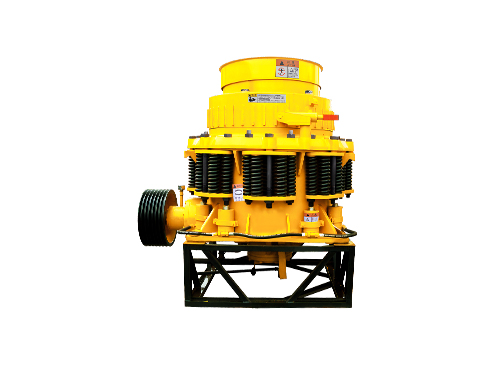
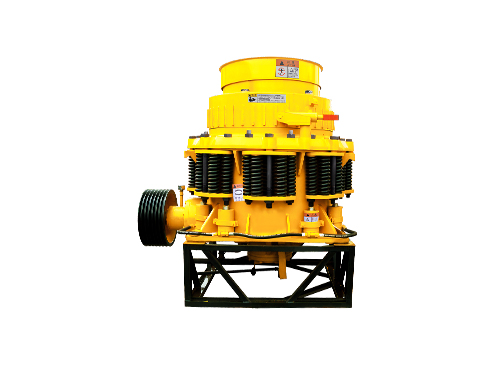 Compound Cone Crusher with Hydraulic Adjustment and CleaningThis compound cone crusher suits secondary or tertiary crushing of hard ores, offering hydraulic discharge adjustment, chamber cleaning, and spring overload protection for reliable operation.View Product →
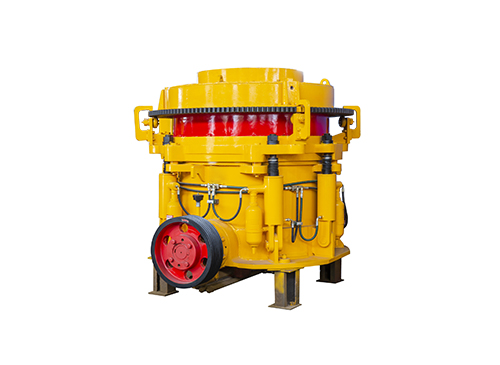
 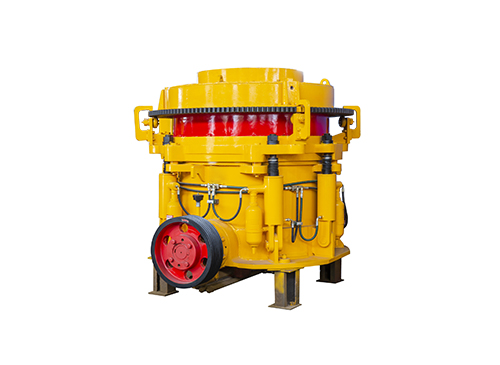 Multi-cylinder Hydraulic Cone Crusher for High-Tonnage Hard RockDesigned for hard stone and high-tonnage plants, this fully hydraulic crusher delivers high reduction efficiency, stable operation, and easy maintenance for tight setting control.View Product →
 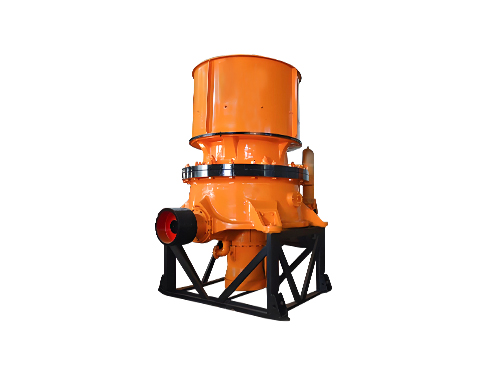 Single-cylinder Hydraulic Cone Crusher with Robust DesignThis single-cylinder cone crusher combines advanced hydraulic operation and simple maintenance, providing efficient crushing for hard rocks while minimizing downtime and energy use.View Product →
Do not choose a cone crusher type by price alone. A spring machine may have a lower purchase price, but if you need to change the CSS often or clear the chamber regularly, a hydraulic model can save many hours of labour over the life of the machine. On the other hand, a multi-cylinder machine with more parts may require more attention from the maintenance team. The best choice depends on your material, operating hours, and the skill level of your staff.
Cone Crusher vs Jaw Crusher vs VSI Crusher
Many plant owners start the selection process by comparing the cone crusher with two other common machines: the jaw crusher and the VSI crusher (vertical shaft impact). But these machines do not do the same job. Each has a natural position in the crushing process.
A jaw crusher is a primary crusher. It accepts very large feed, sometimes more than one meter across, and reduces it to a size that can be handled by the next machine. A jaw crusher uses a simple compressive action between a fixed jaw and a swinging jaw. The product from a jaw crusher is often flat or slabby, especially if the feed is hard, because the crushing stroke is short and the nip angle is not ideal for shaping.
A cone crusher is a secondary or tertiary machine. It receives the product of the jaw crusher and reduces it further. The gyrating motion and the layer crushing effect give a better particle shape than a jaw crusher can produce. The reduction ratio in a cone crusher is higher than in a jaw, typically between 4:1 and 8:1 depending on the chamber and material. But the cone crusher cannot handle very large feed; feeding it with oversize rock causes bridging and reduces capacity.
A VSI crusher is not a compression crusher. It uses a high-speed rotor that throws the material against a bed of rock or against an anvil. The impact action gives an excellent cubical shape, especially for sand and small aggregates, and it can generate more fines than a cone crusher. However, the operating cost per tonne is usually higher, and a VSI is more sensitive to moisture and sticky material. For coarse crushing stages, a VSI is rarely the best first choice.
| Crusher | Best Stage | Typical Feed Size | Main Strength | Main Limitation |
|---|---|---|---|---|
| Jaw crusher | Primary | 300 to 1200 mm | Accepts large feed, simple and reliable | Flaky product, lower reduction ratio |
| Cone crusher | Secondary / tertiary | 30 to 300 mm | Cubical product, high reduction in fine stages | Needs smaller feed, requires choke feeding |
| VSI crusher | Tertiary / quaternary | < 60 mm | Excellent particle shape, good sand production | Higher wear cost, sensitive to moisture |
For example, a granite aggregate line often uses a jaw crusher at the primary stage, a cone crusher at the secondary stage, and a VSI to make the finest product. A limestone plant may use a jaw crusher followed by an impact crusher, because limestone is less abrasive and the impact machine gives an excellent product with lower wear cost. The right flow sheet depends on rock hardness, abrasiveness, moisture content, and the target product specification.
When you compare these machines, avoid the mistake of looking only at the purchase price. The cost per tonne of finished material, the wear part cost, the energy consumption, and the availability of the machine are more important. A cheap primary crusher that is often stopped for maintenance will cost more than a higher-quality machine that runs consistently.
Key Operating Variables That Change Output Quality
Even a correctly sized cone crusher can produce poor results if it is operated incorrectly. The operator controls several variables that have a direct effect on product gradation, capacity, and liner life.
Feed Gradation
The ideal feed to a cone crusher has a wide but controlled size distribution. It should not contain only larger stones or only crusher dust. When the feed is too fine, the spaces between coarse particles are filled and the machine cannot generate enough inter-particle pressure; when the feed is too coarse, the largest pieces cannot be gripped properly. As a practical rule, the feed size should not exceed about 80 to 85 percent of the feed opening. If you are feeding a 200 mm chamber, the practical top size is roughly 160 to 170 mm. Oversize rock should be removed with a scalping screen before it reaches the cone crusher.
Choke Feeding
Choke feeding means keeping the crushing chamber full at all times. The feed hopper should contain enough rock so that the crusher draws a steady load and the power draw remains stable. Choke feeding gives the benefits of layer crushing, protects the liners from direct impact, and helps produce a more consistent product. A starved cone crusher produces more oversized material and wears the upper liners unevenly. Many operators find that the simple habit of maintaining a full feed hopper reduces wear cost and improves product quality more than any hardware change.
Closed Side Setting (CSS)
The CSS is the most common adjustment the operator makes. Reducing the CSS gives a finer product but reduces capacity and increases power draw. Increasing the CSS gives more capacity but a coarser product. The correct setting depends on the required product grading and on the next machine in the flow sheet. If the product goes to a screen, remember that the screen opening, not the crusher CSS, determines the final cut size. A good practice is to record the CSS, power draw, feed rate, and product gradation at least once per shift so you can see the effect of any change.
Moisture and Clay Content
Moisture in the feed changes the behaviour of the material inside the chamber. Wet, sticky material can cling to the liners, reduce throughput, and increase the chance of blockage. In extreme cases, the fine particles form a paste that fills the discharge opening. Screening out the fines before the cone crusher, or spraying the feed on the belt to reduce sticky clay, is often necessary for high-moisture applications.
Speed and Stroke
The eccentric speed is normally fixed within a recommended range for a given chamber. Changing the operating speed to a value outside the manufacturer's recommendation will usually reduce efficiency. The stroke, or throw, is a design characteristic of the eccentric assembly. If you need a different stroke, the eccentric bushing or shaft assembly must be changed. This is not a routine adjustment. When selecting a machine, confirm that the available stroke range matches your material and target output.
These variables interact. A crusher that is running with a wide CSS and a starved feed may not show any problem until the screen produces too much oversize. The best approach is to change one variable at a time, measure the result, and keep a simple operation log. In practice, the improvement in product quality is often achieved by fixing the feed system first and only then adjusting the crusher settings.
Liner Wear and Maintenance: Protecting Your Investment
The wear liners are the most frequently replaced parts in a cone crusher. The mantle and concave are generally cast from austenitic manganese steel, a material that becomes harder as it is impacted. This work-hardening behaviour is what gives the liner its wear resistance. The liner life depends on the abrasiveness of the feed, the crushing pressure, the feed distribution, and whether the crusher is choke fed.
Several signs indicate that the liners need to be replaced:
- The product becomes coarser even when the CSS has not been changed.
- The power draw drops because the liner profile is no longer effective.
- One side of the mantle wears more quickly than the other.
- The CSS cannot be set within the recommended range without the liners contacting.
- Visible high spots or grooves appear on the liner surface.
Replacing liners is not just a mechanical job. The new mantle must be properly seated, the concave must be carefully installed, and the liner bolts must be checked after the first few hours of operation. A loose liner can shift under load, and the machine will not perform correctly. It is also important to change both the mantle and concave at the right time; running a new mantle against a badly worn concave is wasteful and can distort the crushing geometry.
Lubrication is just as important as the liners. The eccentric bushing, main shaft, and gears rely on a continuous oil film. If the oil temperature rises above the normal range, the clearances inside the crusher change and the machine can overheat. Check the oil level, oil temperature, oil pressure, and the condition of the oil each shift. Metal particles in the oil are an early warning sign of a failing bushing or gear.
Hydraulic systems also need attention. The hydraulic tank must be clean, the oil level correct, and the pressure setting within the specified range. The relief valve is a safety device; it should not be used as an operating tool to lift the bowl repeatedly during normal production. When the relief valve opens, inspect the system for wear and confirm that the hydraulic oil is clean.
Because the list of wear and spare parts is limited, a few key parts can be kept in stock: a set of liners, a spare eccentric bushing, a V-belt set, hydraulic filters, and a complete set of seals. Keeping original replacements is safer than buying cheaper parts with different dimensions. We maintain a dedicated range of cone crusher spare parts to help operators reduce downtime and protect the original machine design.
| Item | Frequency | Critical Check |
|---|---|---|
| Liner wear profile | Weekly | Uneven wear, worn-out toothed profile, remaining thickness |
| Oil level and temperature | Daily | Stable level, normal temperature, no metal particles |
| Hydraulic pressure | Daily | Stable during start-up and load changes |
| V-belt tension | Monthly | Correct sag, no glazed or cracked belts |
| Bolts and fasteners | Monthly | Tightness on frame, concave, and feed hopper |
A cone crusher is a continuous process machine. A small increase in temperature or a slight change in liner geometry will affect the product. If the maintenance team records the key data every day, the operator will see the trend before a breakdown happens.
What to Check Before Buying a Cone Crusher
Choosing the right cone crusher is a procurement decision, not just an engineering decision. The machine will run for thousands of hours, and the difference between a good match and a poor match is measured in operating hours and cost per tonne. The following checklist helps you compare offers in a structured way.
- Define the raw feed precisely: rock type, uniaxial compressive strength, abrasiveness, moisture, and clay content.
- Confirm the feed size distribution: the top size, the percentage of fines, and the amount of oversize that are typical in your plant.
- Set the target product: required top size, product curve, flakiness limit, and maximum fines content.
- Calculate the capacity with a safety margin: the crusher should not run at 100 percent of its rated capacity all day long.
- Check the hydraulic features: how the CSS is adjusted, how the tramp iron is released, and how the chamber is cleaned after a blockage.
- Compare liner design and availability: a well-designed chamber can reduce wear cost by a substantial percentage.
- Ask about after-sales response, spare part stock, and technical support.
- Inspect the manufacturer's production capabilities: welding quality, stress-relieving treatment, machining tolerance, and testing procedures.
A useful exercise is to ask the supplier for the crusher's performance curve for your material. If the supplier cannot give a clear relationship between CSS, capacity, power draw, and product size, the quote is incomplete. The curve should include the rated motor power and the recommended operating range for the eccentric speed.
Consider the running cost over five years, not the purchase price. The wear parts, electricity, and downtime will usually cost much more than the machine itself. For this reason, many experienced producers prefer a well-supported machine with local spare parts and a simple design that their own mechanics can maintain.
Our own experience as a manufacturer has shaped the way we answer these questions. Since 2012 we have designed, tested, and delivered crushing equipment for customers in different countries. We publish our company background and production details because we believe a buyer should see where and how the machine is built. The average delivery time for our standard cone crushers is around 20 days, but we always confirm the lead time with the customer once the configuration and payment terms are clear.
Before you sign an order, ask to see the crusher running in a similar application, or at least ask for the test data from the factory. A cone crusher may look the same from the outside, but the quality of the castings, the fit of the eccentric bushing, and the accuracy of the gear alignment decide how long it will hold its setting under load.
Frequently Asked Questions
How does a cone crusher work step by step?
Feed enters through the top, spreads over the distributor plate, and falls into the crushing chamber. The eccentric bushing rotates and makes the mantle gyrate, squeezing the rock between the mantle and the concave. Crushed material falls downward and is broken again in the lower part of the chamber. The material eventually exits through the bottom when the particle size is smaller than the closed side setting.
What does CSS mean in a cone crusher?
CSS is the closed side setting. It is the smallest gap between the mantle and the concave at the bottom of the crushing chamber. It controls the maximum product size. Reducing the CSS makes the product finer but lowers capacity; increasing it does the opposite.
What is the difference between standard and short-head cone crushers?
A standard cone crusher has a steeper chamber and is intended for secondary crushing, with a larger feed and generally a coarser product. A short-head cone crusher has a flatter chamber and a longer parallel zone, so the material stays longer in the crushing zone. It is used for tertiary and quaternary crushing to produce a finer product.
Why is my cone crusher making too much oversize material?
The most common causes are an incorrect CSS, a starved feed, worn liners, an inappropriate chamber profile, or a feed that is too coarse. Check the CSS first, then look at the liner condition and the feed distribution. Change one variable at a time and record the result.
How do I prevent a cone crusher from blocking?
Keep the feed size within the chamber specification, remove fines and sticky material before the crusher if possible, and maintain choke feeding. Monitor the motor current and listen for unusual sounds. A metal detector and a magnet on the feeding belt are strongly recommended to stop tramp iron from reaching the crusher.
Which is better, single-cylinder or multi-cylinder cone crusher?
Neither type is universally better. A single-cylinder machine is simpler, hydraulic maintenance is easier, and the CSS can be adjusted by raising or lowering the main shaft. A multi-cylinder machine often provides higher crushing force and a more stable setting for hard rock and high-tonnage applications. The choice should be based on your material, your output specification, and the maintenance skills available.
Can a cone crusher produce sand?
A cone crusher can produce fine material, but it is not a substitute for a vertical shaft impact crusher when the specification for sand is strict. A short-head cone with a closed circuit can create a portion of crushed fines, but the particle shape and grading of premium manufactured sand usually require a VSI or a proper sand-making machine.
A cone crusher works by a straightforward principle of eccentric compression, but the machine only performs well when the whole system works together. Feed control, chamber selection, CSS, stroke, liner condition, lubrication, and maintenance all affect the final result. If you are planning a new crushing line or replacing an existing machine, start from the raw material and the finished product specification. Then compare the chamber geometry, hydraulic features, and spare parts support.
The right cone crusher will produce a stable product for years. The wrong one will create a long list of operating issues. When you evaluate a supplier, ask for performance data, test reports, and details of the actual machine. If you need help matching a cone crusher to your stone, send us your feed size, capacity target, and desired product grading. We can recommend a suitable configuration and explain why it is the right fit for your conditions.