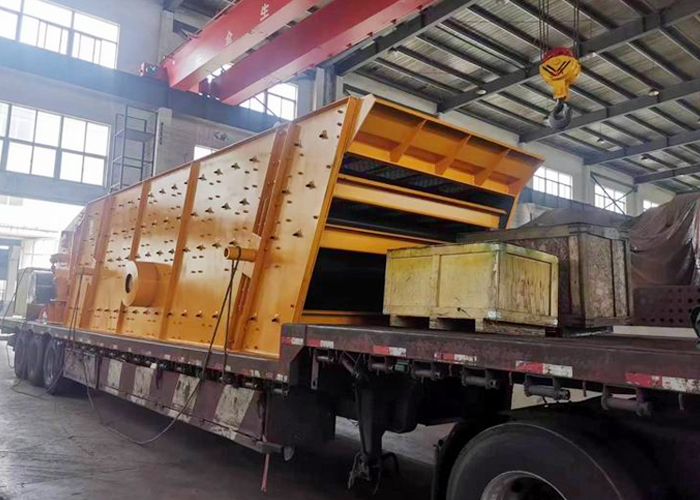
Apron Feeder for Primary Crushing
Chain-driven steel pans · Extreme boulder durability · Continuous heavy-duty duty
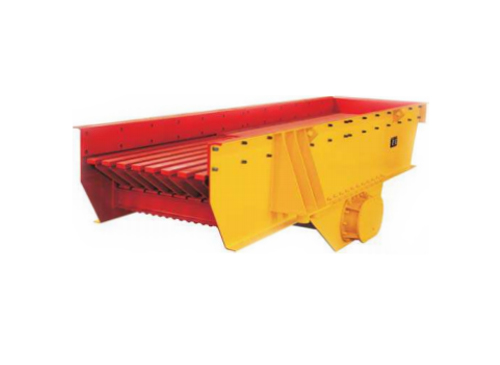
Apron feeder · overlapping steel pans on heavy-duty roller chains
Core specifications
Pan width1200 – 3000 mm
Chain pitchHeavy-duty, hardened roller chain
Capacity200 – 1500 t/h
Motor power30 – 132 kW
Suitable forExtreme boulder size and weight loading
Apron Feeder for Primary Crushing – Overview
The SMC apron feeder for primary crushing uses overlapping heavy steel pans mounted on a pair of continuous roller chains to move raw, unscreened run-of-mine material forward beneath a primary crusher feed hopper, offering a level of mechanical durability against extremely large, sharp, or heavy boulders that vibrating feeders cannot match.
Unlike vibrating feeders that rely on oscillating motion to advance material, an apron feeder physically carries material forward on a slow-moving chain of overlapping steel pans, similar in principle to a heavy-duty chain conveyor, which avoids the fatigue-related failure modes that vibration-based equipment can experience under sustained, severe impact loading.
The overlapping pan design creates a continuous, essentially gap-free carrying surface capable of supporting the weight and impact of very large boulders without material falling through gaps, while individual pans can be replaced if damaged without requiring replacement of the entire chain assembly.
Heavy-duty roller chains running on hardened sprockets carry the substantial combined weight of the pan assembly and material load, engineered with significant service life margin given the difficulty and cost of chain replacement in this demanding, high-wear application position.
Because apron feeders move at low speed compared to belt conveyors or vibrating feeders, they provide inherently gentle, controlled material advancement well suited to precisely metering feed rate to a primary crusher, while their sheer mechanical strength tolerates boulder sizes and impact forces that would damage lighter equipment.
The drive system, typically an electric motor through a gear reducer driving the head shaft sprockets, is sized with substantial reserve capacity given the high torque required to move the loaded pan assembly, particularly during starting when the full static friction of a loaded feeder must be overcome.
Typical applications include the most demanding primary crusher feeding positions in large hard-rock mines and quarries, where boulder size, weight, and the sheer volume of raw material handled justify the higher capital cost of an apron feeder over a vibrating grizzly feeder.
For the most extreme primary feeding duty involving very large, heavy boulders that could overwhelm vibrating equipment, the SMC apron feeder for primary crushing provides a level of mechanical robustness purpose-built for this demanding role.
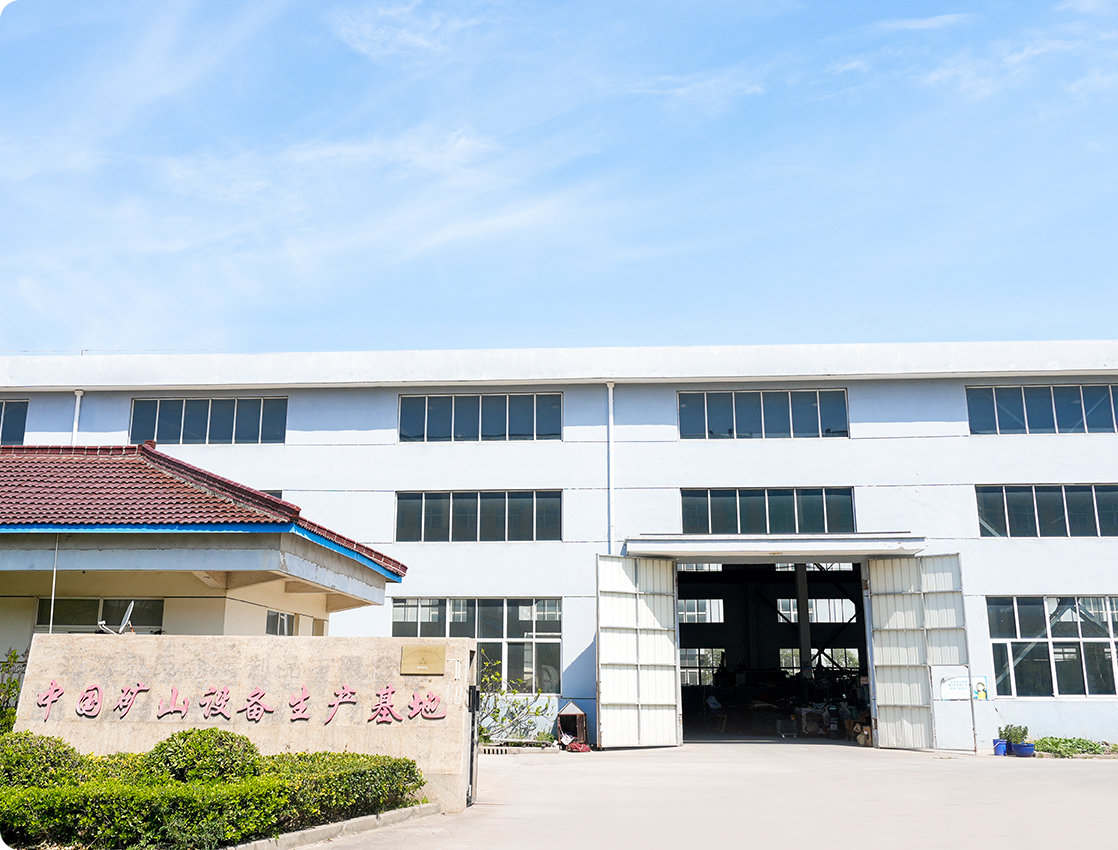
Sanming Mining - Raising Industry Standards
Company Profile
View More →
Sanming is an international Mining Machinery Equipment Supplier that integrates R&D, Manufacturing, and Sales of Rock Crushing&Screening equipment, as well as Sand Making, Sand Washing, and Grinding equipment. Sanming has passed ISO9001 quality system certification.
As
China Apron Feeder For Primary Crushing Manufacturers and
Wholesale Apron Feeder For Primary Crushing Factory, our equipments are widely used in the fields of Sand and Gravel Aggregate processing, Mining, and Construction Waste Resource utilization.
"Sanming" brand equipments are not only distributed in nearly 30 provinces in China, but also exported in large quantities to multiple countries in Central Asia, the Middle East, South America and Africa, and has received unanimous praise from users. Our main production base is located in Qidong (Shanghai Pudong New Area Industrial Park). We warmly welcome your visit to our factory.

- 200+
Number Of Products
- 20,000
Factory Area
- 500w
Annual Sales
- 40%
Annual Export Ratio
How It Works – Working Principle
Chain-Driven Advancement
Continuous roller chains physically carry material forward on steel pans.
Gap-Free Pan Surface
Overlapping pans support boulder weight without material fall-through.
Low-Speed Gentle Metering
Slow, controlled movement precisely meters feed rate to the crusher.
Individual Pan Replacement
Damaged pans replace individually without full chain assembly changeover.
Applications & Industries
Large Hard-Rock Mines
Feeding primary crushers handling the largest, heaviest boulder loads.
Extreme-Duty Quarry Operations
Sites where boulder size exceeds vibrating feeder capability.
High-Volume Primary Circuits
Continuous, high-tonnage primary crusher feeding applications.
Long-Service-Life Installations
Operations valuing the mechanical durability apron feeders provide.
Suitable For Various Mining Applications
Equipment Production Line
←
→
Selection Guide – Choose the Right Model
APF-1236
Feed: 1200mm pan · Capacity: 200–500 t/h
Entry model for smaller extreme-duty feeding applications.
APF-1642
Feed: 1600mm pan · Capacity: 400–800 t/h
Balanced model for standard large-scale primary feeding.
APF-2048
Feed: 2000mm pan · Capacity: 700–1150 t/h
Higher-capacity option for major mining operations.
APF-3054
Feed: 3000mm pan · Capacity: 1000–1500 t/h
Top-capacity model for the largest primary crushing circuits.
Comparison – Apron Feeder vs Vibrating Grizzly Feeder
Key Performance Indicators
Extreme boulder durability · Integrated scalping capability · Purchase cost-effectiveness (relative)
Apron Feeder Advantage
- Superior durability for extreme boulder sizes
- No vibration fatigue failure modes
- Individual pan replacement extends service life
Vibrating Grizzly Feeder
- Lower purchase cost
- Integrated scalping bypass function
- Lower structural and foundation requirements
Key Components – Built to Last
Overlapping Steel Pans
Heavy pans providing a continuous, gap-free carrying surface.
Heavy-Duty Roller Chains
Carry the combined weight of pans and material load reliably.
Hardened Drive Sprockets
Engage the chain at head and tail shafts for smooth power transmission.
Head Shaft Drive Assembly
Motor and gear reducer providing the high torque needed for start-up.
Tail Shaft & Tensioning System
Maintains proper chain tension for reliable, low-wear operation.
Side Skirts & Guarding
Contain material on the pan surface and protect the chain assembly.
Installation & Commissioning
Massive Foundation
Reinforced foundation supporting the feeder's substantial static and dynamic loads.
Chain & Sprocket Alignment
Precision alignment of chains and sprockets before initial operation.
Drive System Commissioning
Verify motor, reducer, and head shaft torque capacity before loading.
Commissioning
No-load run to confirm chain tracking, then gradual raw feed introduction.
Maintenance Schedule & Wear Trend
Wear/Component Life Over Time (Relative)
Apron feeders offer significantly longer service intervals than vibrating equipment — inspect chain tension and pan condition on a longer maintenance cycle.
Daily Checks
- Chain tracking and tension
- Pan condition for damage
- Drive motor temperature and current
Weekly Checks
- Inspect sprocket wear
- Check side skirt condition
- Lubricate chain per schedule
Monthly
- Full chain wear inspection
- Check tensioning system operation
- Inspect head/tail shaft bearings
Yearly
- Full drive system service
- Replace worn pans and chain sections as needed
- Complete structural inspection
Quality You Can Trust
Why choose Sanming
Sanming is a professional manufacturer of R&D, manufacturing and sales
-
01. Design & Customization
The company has an experienced and highly skilled R&D team, which is capable of providing customers with customized equipment solutions to meet the needs of different customers

-
02. Advanced Facilities
The company has invested in and introduced a series of advanced production equipment, such as high-precision CNC machine tools, automated welding equipment, etc. These equipment features high efficiency, precision and stability, which can ensure the quality of products and production efficiency

-
03. Reliable Quality
The company always gives top priority to product quality. It uses high-quality raw materials and components, and through strict screening and inspection, it ensures the quality and performance of products. At the same time, the company also conducts long-term tracking and services for products, promptly solves the problems encountered by customers during the use process, and improves customer satisfaction

-
04. Service Integrity
The company has established a complete after-sales service system to provide customers with comprehensive services. This includes equipment installation and debugging, operation training, maintenance, technical consultation, etc., to ensure that customers can use the equipment smoothly and maximize its benefits

-
05. Cost Control
The company effectively controls product costs by optimizing the production process, reducing raw material procurement costs, and improving production efficiency. On the premise of ensuring product quality, it can provide customers with competitive prices and enhance their market competitiveness

-
06. Brand Influence
After years of development, the company has established a good brand image in the mining equipment manufacturing industry and has won the trust and praise of customers

-
07. Convenient Transportation
The company is only 50 kilometers away from Shanghai Yangshan Port, making the transportation of goods and exports very convenient

Frequently Asked Questions (FAQ)
1. Why choose an apron feeder over a vibrating grizzly feeder?
Apron feeders offer superior mechanical durability for extremely large, heavy, or sharp boulders and avoid the fatigue-related failure modes possible with vibration-based equipment under the most severe, sustained impact loading.
2. How does an apron feeder move material forward?
Overlapping heavy steel pans mounted on continuous roller chains physically carry material forward at low, controlled speed, similar in principle to a heavy-duty chain conveyor.
3. What happens if a pan is damaged?
Individual pans can typically be replaced without requiring replacement of the entire chain assembly, reducing the cost and downtime of repairing localized damage.
4. How does the gap-free pan design help with large boulders?
The overlapping pan design creates an essentially continuous carrying surface capable of supporting very large boulders without material falling through gaps between pans.
5. What drive torque considerations apply to apron feeders?
The drive system is sized with substantial reserve capacity given the high torque required to move the loaded pan assembly, particularly during starting when full static friction must be overcome.
6. How does maintenance frequency compare to a vibrating feeder?
Apron feeders generally offer longer maintenance intervals than vibrating equipment given the absence of vibration fatigue, though chain tension and pan condition should still be monitored regularly.
7. What capacity range does this feeder family cover?
Capacity ranges from 200 to 1500 t/h depending on pan width and length, sized for the largest primary crushing circuits in major mining and quarry operations.
8. Does an apron feeder include a scalping function like a grizzly feeder?
Standard apron feeders do not include integrated grizzly bar scalping, though the feeder can be paired with a separate scalping screen if fine-material bypass is desired.
9. What causes chain wear over time?
The combined weight of pans and material load, along with the abrasive nature of raw run-of-mine material, gradually wears chain components, which is why regular lubrication and tension inspection are important.
10. Is this feeder more expensive than a vibrating grizzly feeder?
Yes, apron feeders generally carry a higher purchase cost, which is justified in applications where extreme boulder size or continuous heavy-duty operation exceeds the practical capability of vibrating equipment.
11. How is chain tension maintained?
A tensioning system at the tail shaft maintains proper chain tension throughout the feeder's operating life, which should be inspected and adjusted as part of routine maintenance.
12. What warranty is offered?
A standard 12-month warranty covers manufacturing defects, with pans and chain components covered separately as wear items given their exposure to continuous heavy-duty loading.
After-Sales Support & Services
Extreme-Duty Application Consultation
Guidance confirming an apron feeder fits your boulder size and volume needs.
Pan & Chain Spare Parts
Heavy-duty pans and chain sections stocked for ongoing maintenance.
Chain Tensioning Support
Assistance with tensioning system inspection and adjustment.
24/7 Technical Support
Ongoing assistance for the most demanding primary feeding operations.


 English
 русский