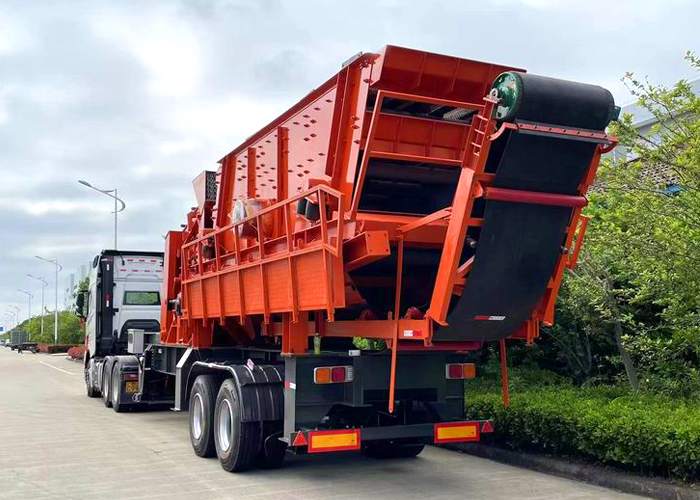
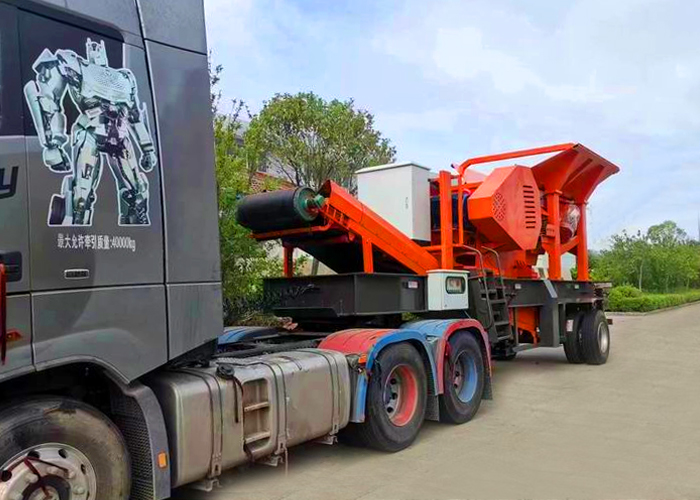
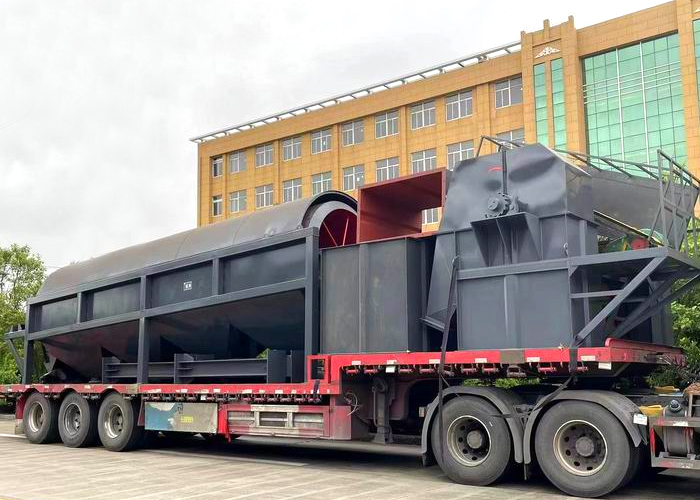
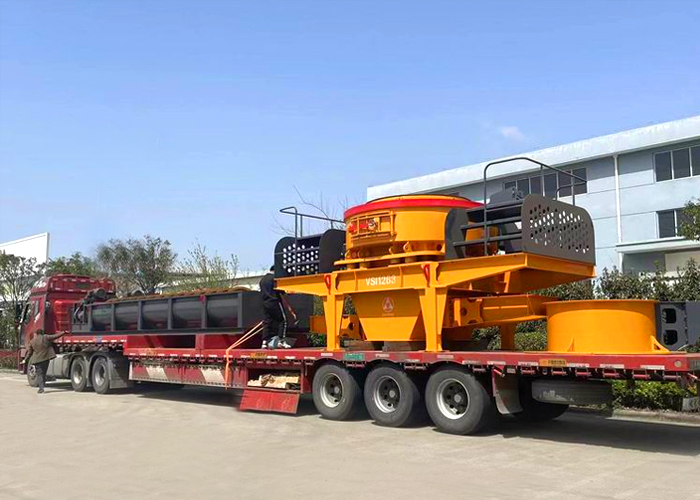
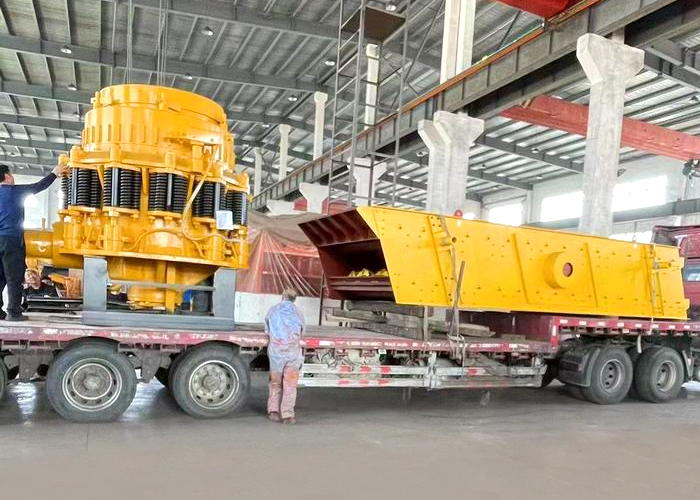
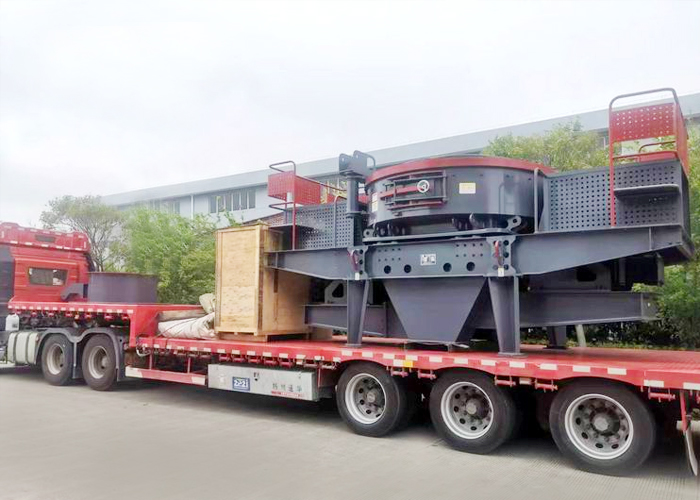
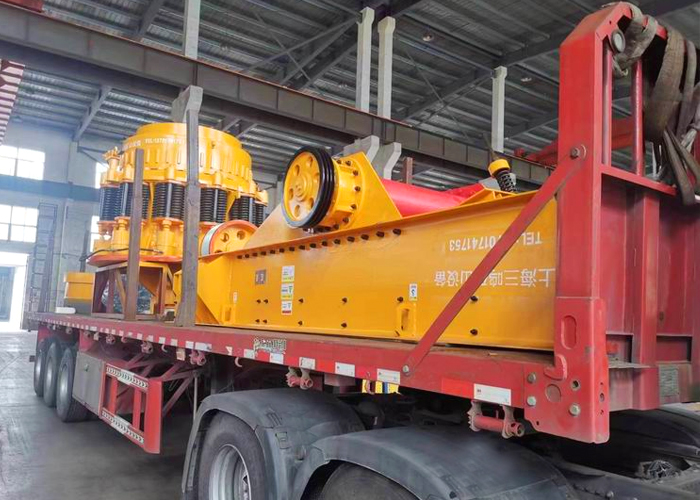
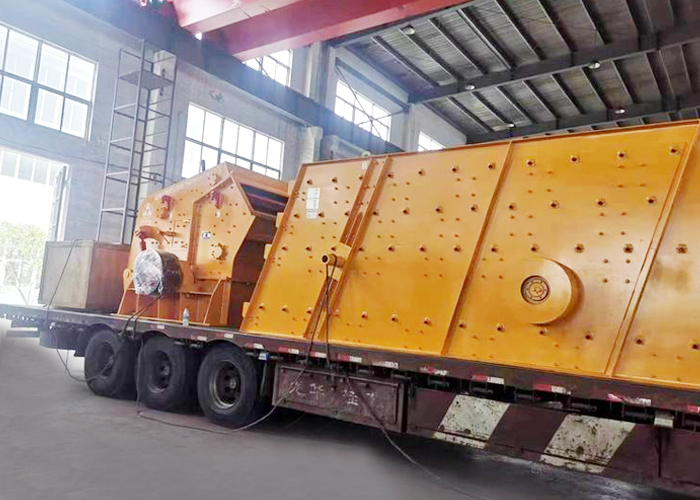
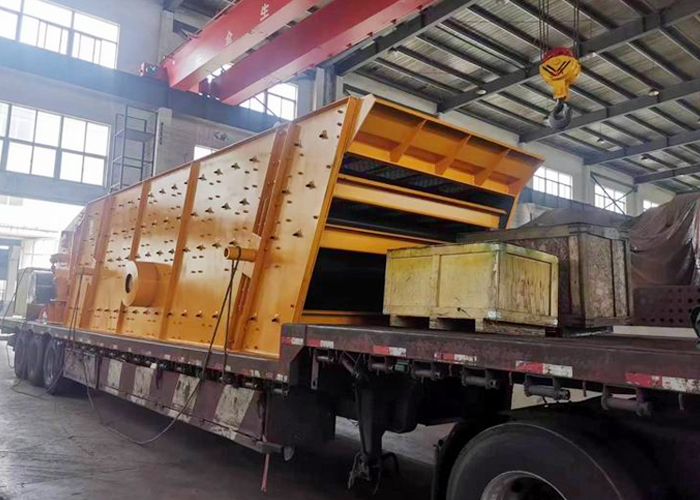
Circular Vibrating Screen for Aggregate
Circular motion trajectory · General-purpose screening · Proven reliability
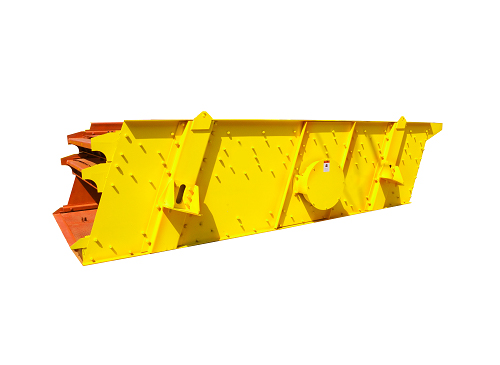
Circular vibrating screen · eccentric-driven circular motion trajectory
Core specifications
Deck width1200 – 3000 mm
Deck configuration1 – 3 decks
Capacity30 – 800 t/h
Motor power5.5 – 45 kW
Motion typeCircular trajectory via eccentric shaft
Circular Vibrating Screen for Aggregate – Overview
The SMC circular vibrating screen for aggregate uses an eccentric shaft or unbalanced exciter to generate a circular motion trajectory across the screen deck, propelling material forward and stratifying it by particle size as it travels toward the discharge end — a proven, general-purpose screening principle used throughout aggregate production for decades.
The circular motion pattern is particularly effective at moving material along a moderately inclined deck without requiring steep angles, giving flexibility in plant layout while providing consistent screening performance across a wide range of material types, from crushed stone to natural sand and gravel.
Screen decks can be fitted with woven wire mesh, punched plate, or polyurethane/rubber modular panels depending on the wear characteristics of the material being screened and the precision of size separation required, with panel selection also affecting screening efficiency, noise level, and wear part replacement cost.
The exciter and bearing system is engineered for continuous heavy-duty operation, with self-aligning spherical roller bearings supporting the eccentric shaft and grease or oil lubrication systems designed for long service intervals even under the sustained vibration loads inherent to screening equipment.
Multiple deck configurations — single, double, or triple deck — allow the same basic circular motion platform to be configured for anything from simple scalping duty to multi-fraction sizing into several product streams from a single screening pass, adapting the machine to different plant flowsheet requirements.
The screen box and support structure use reinforced steel construction with isolation springs mounting the vibrating assembly to the support frame, minimizing the transmission of vibration to the surrounding structure and reducing fatigue stress on the plant's structural steel over years of continuous operation.
Typical applications include general-purpose sizing of crushed stone and gravel in quarry and mining screening circuits, scalping oversize material ahead of crushers, and final product sizing into multiple aggregate fractions for concrete, asphalt, and road base production.
For operations needing a reliable, general-purpose screening solution across a wide range of aggregate materials and sizing duties, the SMC circular vibrating screen delivers proven performance with flexible deck and panel configuration options.
Sanming Mining - Raising Industry Standards
Company Profile
View More →
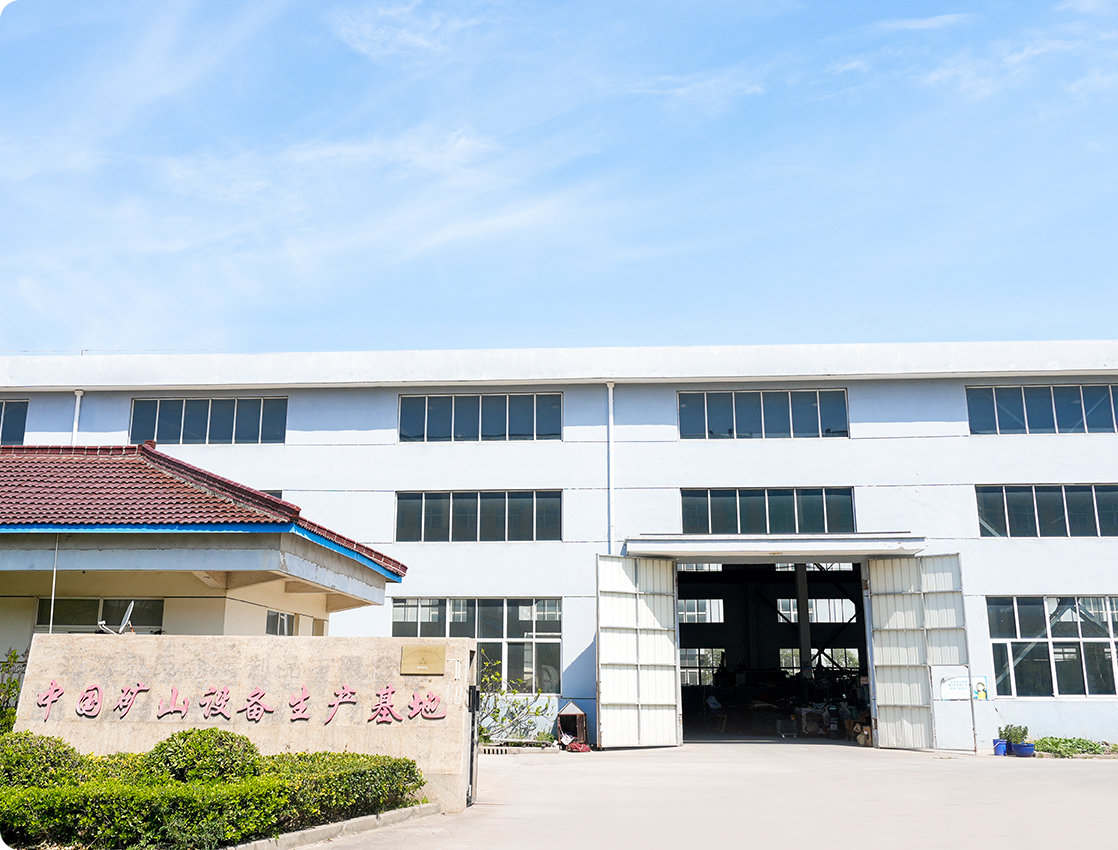
Sanming is an international Mining Machinery Equipment Supplier that integrates R&D, Manufacturing, and Sales of Rock Crushing&Screening equipment, as well as Sand Making, Sand Washing, and Grinding equipment. Sanming has passed ISO9001 quality system certification.
As
China Circular Vibrating Screen For Aggregate Manufacturers and
Wholesale Circular Vibrating Screen For Aggregate Factory, our equipments are widely used in the fields of Sand and Gravel Aggregate processing, Mining, and Construction Waste Resource utilization.
"Sanming" brand equipments are not only distributed in nearly 30 provinces in China, but also exported in large quantities to multiple countries in Central Asia, the Middle East, South America and Africa, and has received unanimous praise from users. Our main production base is located in Qidong (Shanghai Pudong New Area Industrial Park). We warmly welcome your visit to our factory.

- 200+
Number Of Products
- 20,000
Factory Area
- 500w
Annual Sales
- 40%
Annual Export Ratio
How It Works – Working Principle
Eccentric Shaft Excitation
An eccentric shaft generates consistent circular motion across the deck.
Stratification by Size
Circular motion sorts particles by size as material travels the deck.
Multi-Deck Sizing
One to three decks allow single or multi-fraction product separation.
Vibration Isolation
Isolation springs minimize vibration transmission to the support structure.
Applications & Industries
Quarry Screening Circuits
General-purpose sizing of crushed stone across multiple fractions.
Pre-Crusher Scalping
Removing oversize material ahead of secondary or tertiary crushers.
Concrete Aggregate Sizing
Producing multiple graded fractions for concrete production.
Sand & Gravel Sizing
General screening of natural sand and gravel deposits.
Suitable For Various Mining Applications
Equipment Production Line
←
→
Selection Guide – Choose the Right Model
CVS-1230
Feed: 1200mm wide · Capacity: 30–120 t/h
Compact screen for smaller quarry or plant installations.
CVS-1848
Feed: 1800mm wide · Capacity: 100–330 t/h
Popular mid-size model for standard screening circuits.
CVS-2460
Feed: 2400mm wide · Capacity: 250–600 t/h
Higher-capacity option for larger aggregate operations.
CVS-3072
Feed: 3000mm wide · Capacity: 450–800 t/h
Top-capacity model for major screening throughput needs.
Comparison – Circular Vibrating Screen vs Linear Vibrating Screen
Key Performance Indicators
Screening precision · Steep-incline conveying ability · General-purpose versatility (relative)
Circular Vibrating Advantage
- Versatile across many material types
- Flexible plant layout with moderate incline
- Proven, widely understood technology
Linear Vibrating Screen
- Higher precision for fine screening duty
- Better material spreading across deck width
- More efficient at steep conveying angles
Key Components – Built to Last
Eccentric Shaft Exciter
Generates the circular motion trajectory driving material across the deck.
Spherical Roller Bearings
Self-aligning bearings supporting the exciter shaft under vibration loads.
Screen Deck Panels
Woven mesh, punched plate, or polyurethane/rubber modular options.
Isolation Springs
Mount the vibrating screen box to the support frame, reducing vibration transfer.
Reinforced Screen Box
Steel structure housing the deck panels and supporting dynamic loads.
Drive Motor & V-Belt
Powers the eccentric shaft through a standard belt drive arrangement.
Installation & Commissioning
Foundation & Support Structure
Steel or concrete support structure sized for dynamic screening loads.
Isolation Spring Installation
Mount and level isolation springs before connecting the screen box.
Deck Panel Fitting
Install the selected mesh, plate, or modular panels for target sizing.
Commissioning
No-load run to verify motion trajectory, then gradual material feed.
Maintenance Schedule & Wear Trend
Wear/Component Life Over Time (Relative)
Inspect isolation springs and deck panels regularly — worn springs increase vibration transfer and screen fatigue.
Daily Checks
- Deck panel condition
- Isolation spring integrity
- Exciter bearing temperature
Weekly Checks
- Inspect screen box welds for fatigue cracking
- Check belt tension
- Clean blinded screen apertures
Monthly
- Grease exciter bearings
- Inspect isolation springs for cracking
- Check deck panel wear and tension
Yearly
- Full exciter bearing inspection
- Replace isolation springs as needed
- Structural inspection of the screen box
Quality You Can Trust
Why choose Sanming
Sanming is a professional manufacturer of R&D, manufacturing and sales
-
01. Design & Customization
The company has an experienced and highly skilled R&D team, which is capable of providing customers with customized equipment solutions to meet the needs of different customers

-
02. Advanced Facilities
The company has invested in and introduced a series of advanced production equipment, such as high-precision CNC machine tools, automated welding equipment, etc. These equipment features high efficiency, precision and stability, which can ensure the quality of products and production efficiency

-
03. Reliable Quality
The company always gives top priority to product quality. It uses high-quality raw materials and components, and through strict screening and inspection, it ensures the quality and performance of products. At the same time, the company also conducts long-term tracking and services for products, promptly solves the problems encountered by customers during the use process, and improves customer satisfaction

-
04. Service Integrity
The company has established a complete after-sales service system to provide customers with comprehensive services. This includes equipment installation and debugging, operation training, maintenance, technical consultation, etc., to ensure that customers can use the equipment smoothly and maximize its benefits

-
05. Cost Control
The company effectively controls product costs by optimizing the production process, reducing raw material procurement costs, and improving production efficiency. On the premise of ensuring product quality, it can provide customers with competitive prices and enhance their market competitiveness

-
06. Brand Influence
After years of development, the company has established a good brand image in the mining equipment manufacturing industry and has won the trust and praise of customers

-
07. Convenient Transportation
The company is only 50 kilometers away from Shanghai Yangshan Port, making the transportation of goods and exports very convenient

Frequently Asked Questions (FAQ)
1. How does circular motion screening work?
An eccentric shaft or unbalanced exciter generates a circular motion trajectory across the screen deck, which propels material forward while stratifying particles by size as they travel toward the discharge end.
2. How does this differ from a linear vibrating screen?
Circular motion screens use an eccentric shaft for a rotary vibration pattern, while linear screens typically use a different exciter arrangement to produce straight-line motion, generally offering different tradeoffs in conveying angle and screening precision.
3. What deck panel options are available?
Woven wire mesh, punched plate, and polyurethane or rubber modular panels are all available, selected based on wear characteristics and required screening precision for your material.
4. How many decks can this screen support?
Single, double, or triple deck configurations are available, allowing separation into two, three, or four product fractions from a single screening pass.
5. What materials is this screen suitable for?
It is a general-purpose screen suitable for crushed stone, natural sand and gravel, and most standard aggregate screening duties across quarry and mining applications.
6. What causes screen deck blinding?
Blinding occurs when near-size particles lodge in screen apertures, often due to moisture, clay content, or an improperly matched aperture size; polyurethane panels with self-cleaning profiles can help reduce this issue.
7. How is vibration isolated from the support structure?
Isolation springs mount the vibrating screen box to the support frame, absorbing dynamic loads and minimizing vibration transmission to surrounding structural steel.
8. What capacity range does this screen family cover?
Capacity ranges from 30 to 800 t/h depending on deck width and configuration, suitable for small quarries through large-scale aggregate operations.
9. How often should isolation springs be replaced?
Springs should be inspected regularly for cracking or fatigue and replaced proactively, since worn springs increase vibration transfer and accelerate screen box fatigue.
10. Can this screen handle wet, sticky material?
Wet or sticky material can be more prone to blinding; polyurethane panels and, in some cases, added spray water can help manage this compared to standard woven mesh.
11. What maintenance access is provided for deck panels?
Deck panels are typically designed for straightforward removal and replacement from above or the side of the screen box, minimizing downtime during panel changes.
12. What warranty is offered?
A standard 12-month warranty covers manufacturing defects, with deck panels and isolation springs covered separately as wear items.
After-Sales Support & Services
Deck Panel Selection Support
Guidance choosing mesh, plate, or modular panels for your material.
Isolation Spring Supply
Springs stocked for scheduled preventive replacement.
Screening Circuit Optimization
Assistance tuning deck configuration for your target product fractions.
24/7 Technical Support
Ongoing assistance for aggregate screening operations.


 English
 русский