Home / News / Industry News / How Does an Impact Crusher Work and Which Type Is Best

Industry News

How Does an Impact Crusher Work and Which Type Is Best

CRUSHING TECHNOLOGY AND EQUIPMENT SELECTION

Content

How Does an Impact Crusher Work and Which Configuration Fits Your Material?

An impact crusher uses high-speed impact energy to break stone, concrete and mineral materials into controlled particle sizes. Its ability to produce well-shaped aggregate makes it suitable for quarrying, recycling, road construction, concrete production and manufactured sand processing.

Selecting the correct machine requires more than checking the listed capacity. Feed size, material hardness, abrasiveness, moisture content, final product size, required particle shape and operating conditions all influence the appropriate rotor design, crushing chamber, blow bar material and drive power.

Project Data to Confirm
01 Raw Material

Limestone, concrete, granite, construction waste or other minerals

02 Maximum Feed Size

The largest individual block entering the crushing chamber

03 Required Capacity

Expected hourly output under actual feeding conditions

04 Final Product

Required grading, particle size and cubic shape

EQUIPMENT BASICS

What Is an Impact Crusher?

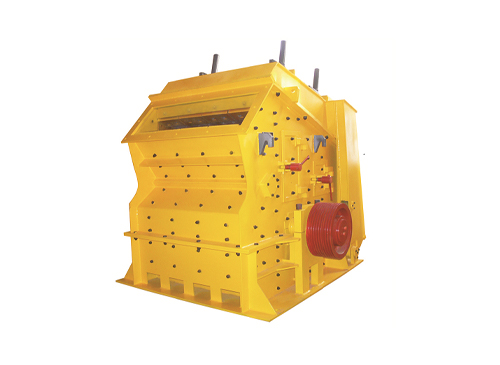
The question “what is an impact crusher” refers not only to a machine category but also to a particular crushing principle. Unlike compression crushers, which squeeze material between two surfaces, an impact crusher accelerates material and forces it to collide with blow bars, impact plates and other particles.

A typical machine includes a feed opening, rotor, main shaft, blow bars, impact aprons, side liners, adjustment system, bearings, drive assembly and discharge opening. The rotor rotates at high speed, creating the kinetic energy required to fracture incoming material along natural cracks and weak structural points.

This crushing method often produces a more cubical finished product than compression-based crushing. The machine is commonly positioned in secondary or tertiary crushing stages, although some configurations can process recycled concrete and medium-sized feed material directly.

Typical Processing Objectives

Secondary Crushing

Reducing material discharged from a primary jaw crusher.

Aggregate Shaping

Improving cubic shape and reducing elongated particles.

Concrete Recycling

Processing demolition concrete after steel removal and presorting.

Fine Material Production

Producing controlled aggregate sizes through chamber and gap adjustment.

CRUSHING PROCESS

How Does an Impact Crusher Work?

Understanding how does an impact crusher work helps operators control output size, wear rate, production capacity and product shape. The crushing cycle takes place continuously inside the chamber.

01

Controlled Feeding

Material enters through the feed opening. A steady and evenly distributed feed prevents rotor overload, one-sided blow bar wear and unstable product grading.

02

Primary Impact

High-speed blow bars strike the incoming material. The impact transfers kinetic energy into the stone or concrete, creating the first stage of fragmentation.

03

Impact Plate Collision

Accelerated particles are thrown toward the impact apron. A second collision further reduces the material and helps improve particle shape.

04

Inter-Particle Crushing

Material particles collide with each other inside the chamber. This additional action can reduce weak and flaky particles without relying only on metal contact.

05

Size-Controlled Discharge

Particles leave the crusher after reaching a size that can pass through the adjusted discharge area. Oversized particles remain in the crushing cycle.

Operating factor:

Higher rotor speed generally increases impact energy and the proportion of fine particles. A smaller apron gap can produce finer material, but it may also reduce capacity and accelerate wear. The setting should be adjusted according to the required product rather than reduced without calculation.

MACHINE CONFIGURATIONS

Fixed, Mobile and Vertical Shaft Impact Crushing

Different crusher structures are designed for different production stages. A machine that performs well in a fixed limestone plant may not be the most efficient choice for a demolition site or a manufactured sand line.

HORIZONTAL SHAFT

Standard Impact Crusher

A horizontal rotor equipped with blow bars accelerates material toward adjustable impact plates. This configuration is commonly used for secondary crushing, concrete recycling and aggregate shape improvement.

  • Suitable for medium-hard and brittle materials
  • Adjustable final product size
  • Good cubic aggregate production
  • Commonly installed after primary crushing
MOBILE PROCESSING

Mobile Impact Crusher

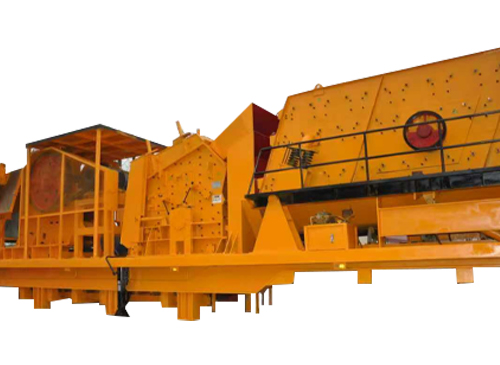
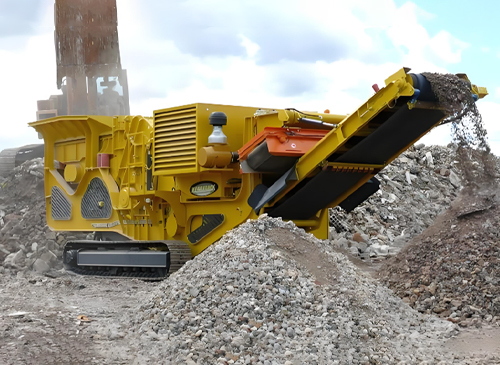
A mobile impact crusher combines feeding, impact crushing, conveying and optional screening on a movable chassis. Tracked and wheeled versions can be selected according to site mobility, transportation limits and ground conditions.

  • Suitable for demolition and recycling sites
  • Reduces raw material transportation distance
  • Can operate with a mobile screening plant
  • Supports frequent relocation between projects
FINE CRUSHING

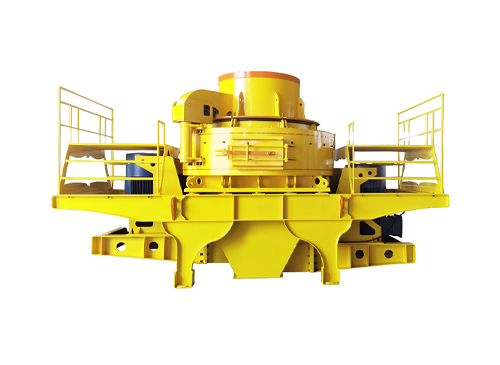
Vertical Shaft Impact Crusher

A vertical shaft impact crusher accelerates material through a vertically arranged rotor. The material is discharged toward a surrounding rock bed or wear-resistant surface to complete fine crushing and particle shaping.

  • Suitable for manufactured sand production
  • Used for aggregate reshaping
  • Supports rock-on-rock or rock-on-anvil operation
  • Produces a high proportion of fine material

CONFIGURATION COMPARISON

Impact Crusher Type Comparison

Comparison Item Fixed Impact Crusher Mobile Impact Crusher Vertical Shaft Impact Crusher
Primary Function Secondary crushing and shaping On-site crushing and recycling Fine crushing and manufactured sand
Installation Fixed foundation or steel structure Tracked or wheeled chassis Fixed production line
Typical Feed Pre-crushed stone and concrete Concrete waste, stone and demolition material Controlled fine aggregate feed
Product Characteristic Cubical aggregate with adjustable grading Recycled aggregate with flexible site processing Fine particles and improved aggregate shape
Site Mobility Low High Low
Recommended Application Quarry and aggregate production Construction waste and temporary projects Sand making and final-stage shaping

WEAR COMPONENTS

Which Impact Crusher Parts Require Regular Inspection?

The condition of impact crusher parts affects capacity, vibration, discharge grading and operating cost. Wear parts should be inspected according to actual material conditions rather than replaced only according to calendar time.

Blow Bars

Blow bars transfer rotor energy directly to the feed material. Their wear profile should remain reasonably even across the rotor width.

Check for: Uneven wear, edge loss, cracks, loosened wedges and abnormal weight difference.
Impact Plates

Impact plates receive high-speed material and control the repeated crushing path inside the chamber.

Check for: Surface wear, deformation, cracks and inconsistent apron gaps.
Side Liners

Side liners protect the crusher housing from direct material abrasion and impact.

Check for: Reduced thickness, missing fasteners and localized wear near the feed area.
Rotor and Main Shaft

The rotor and shaft carry the rotating load and must maintain balance at operating speed.

Check for: Abnormal vibration, material buildup, damaged mounting areas and shaft movement.
Bearings

Bearings support the rotor and operate under impact load, vibration and changing temperature.

Check for: High temperature, lubricant contamination, unusual noise and damaged seals.

BLOW BAR SELECTION

How Choose a Impact Crusher Blow Bar for Different Materials?

The search phrase “how choose a impact crusher blow bar” represents one of the most important maintenance and operating questions. Blow bar selection must balance impact resistance, abrasion resistance, feed size and the risk of uncrushable material entering the chamber.

High Manganese Steel

High manganese steel can absorb strong impact loads and develop surface hardening under suitable crushing conditions.

Suitable for Large feed, strong impact and applications requiring toughness
Consideration Insufficient impact may prevent effective work hardening

High Chromium Material

High chromium blow bars provide strong abrasion resistance when processing relatively uniform, medium-hard and non-metallic feed.

Suitable for Limestone and abrasive material with controlled feed size
Consideration Lower tolerance for oversized feed and severe metal impact

Martensitic Steel

Martensitic steel offers a balance between wear resistance and impact toughness for mixed or variable feed conditions.

Suitable for Recycled concrete and applications with moderate impact risk
Consideration Feed preparation remains necessary to control metal contamination

Composite Blow Bar

Composite structures combine a tough supporting body with wear-resistant zones in areas exposed to concentrated abrasion.

Suitable for Stable production requiring a balance of wear life and impact strength
Consideration The design must match the rotor and actual feed characteristics
Material Hardness

Higher hardness generally increases blow bar and liner wear.

Maximum Feed Size

Oversized blocks create excessive impact load and fracture risk.

Metal Contamination

Steel and uncrushable objects require tougher wear materials and removal systems.

Required Product Size

Finer settings increase material recirculation and wear exposure.

PRIMARY AND SECONDARY CRUSHING

What Is the Difference Between a Jaw Crusher and an Impact Crusher?

The difference between a jaw crusher and an impact crusher begins with the crushing force. A jaw crusher uses compression, while an impact crusher uses high-speed collision. Their positions in a production line and their finished products are also different.

Comparison Item Jaw Crusher Impact Crusher
Crushing Principle Compression between moving and fixed jaw plates Impact from blow bars, aprons and particle collision
Typical Crushing Stage Primary crushing Secondary or tertiary crushing
Feed Size Suitable for larger feed blocks Usually requires controlled feed size
Material Range Suitable for hard and medium-hard materials Best suited to medium-hard, brittle and recyclable materials
Finished Particle Shape May contain more elongated and flaky particles Generally produces more cubical particles
Main Wear Parts Fixed jaw plate and moving jaw plate Blow bars, impact plates and side liners
Fine Material Production Relatively limited Usually produces a higher proportion of fines
Typical Production Line Role Reduces large raw material before secondary crushing Controls final grading and improves aggregate shape

When Are Both Machines Used in One Production Line?

A jaw crusher can reduce large quarry stone or demolition concrete to a manageable size. The discharged material can then enter an impact crusher for further reduction, grading control and shape improvement. This combination is commonly selected when the raw feed is large but the final aggregate requires a more cubical form.

OPERATING LIMITATIONS

What Are the Downsides of Using an Impact Crusher?

The question “What are the downsides of using an impact crusher” should be answered according to material properties and operating targets. Impact crushing offers strong shaping performance, but it is not suitable for every application.

01

Wear in Abrasive Material

Quartz-rich granite, river stone and other abrasive materials can shorten the service life of blow bars, impact plates and liners.

02

Sensitivity to Metal Objects

Steel bars, excavator teeth and other uncrushable objects can damage blow bars, rotor mounting areas and internal components.

03

Higher Fine Particle Ratio

High rotor speed, small apron gaps and repeated circulation may create more fines than required for certain aggregate specifications.

04

Difficulty with Wet Sticky Feed

Clay-rich or high-moisture material may adhere to the chamber, reduce discharge efficiency and cause material buildup.

05

Need for Balanced Wear Parts

Blow bars with significantly different weights can create rotor imbalance, vibration, bearing stress and fastener loosening.

06

Feed Size Restrictions

Excessively large blocks increase impact load and may cause blow bar breakage, chamber blockage or unstable production.

PROJECT MATCHING

How to Select an Impact Crusher for a Production Line

1. Identify the Material Characteristics

Confirm material type, compressive strength, silica content, bulk density, moisture and clay content. These factors determine whether impact crushing is appropriate and which wear material should be used.

2. Measure the Actual Maximum Feed Size

Selection should be based on the largest individual block, not only the average feed size. Oversized feed must be reduced or removed before entering the chamber.

3. Define the Required Finished Product

Specify all final product sizes, grading requirements, acceptable fine content and particle shape. A screening system may be required to create a closed crushing circuit.

4. Calculate Capacity Under Real Conditions

Listed capacity ranges may change with feed size, moisture, hardness, discharge setting and screening efficiency. Required output should include a reasonable operating margin.

5. Select Fixed or Mobile Installation

Fixed machines are suitable for long-term production sites. A mobile impact crusher is more appropriate when the crushing point changes frequently or transportation distances need to be reduced.

6. Plan Wear Part Availability

Blow bars, impact plates, liners and fastening components should be selected according to the material and expected operating hours. Spare part planning reduces unplanned downtime.

Recommended Inquiry Information

Material name Including mineral or recycled material type
Feed size Maximum and typical particle dimensions
Capacity Required tons per hour
Output sizes Each required final aggregate fraction
Operating hours Hours per shift and shifts per day
Installation site Fixed plant, quarry, recycling site or temporary project
Special conditions Moisture, clay, steel contamination or limited space

APPLICATION MATCHING

Impact Crushing Solutions for Different Materials

Limestone Aggregate

Limestone is generally suitable for impact crushing because of its brittle structure and moderate hardness. Rotor speed and apron gaps can be adjusted to control grading and fine content.

Selection focus Capacity, product grading and blow bar wear resistance

Recycled Concrete

Concrete recycling requires controlled feeding, steel removal and presorting. A mobile impact crusher can process material near the demolition site and reduce hauling requirements.

Selection focus Reinforcement removal, feed opening and impact-resistant blow bars

Road Base Material

Road construction aggregate requires stable grading and controlled particle shape. Closed-circuit screening can return oversized material to the crusher.

Selection focus Screening efficiency, grading stability and production capacity

Manufactured Sand

A vertical shaft impact crusher can perform fine crushing and particle reshaping before screening and classification.

Selection focus Rotor speed, feed grading, moisture and fine powder control

TECHNICAL QUESTIONS

Impact Crusher Frequently Asked Questions

Can an impact crusher process hard stone?

It can process some hard materials, but high hardness and high silica content may result in rapid wear. Wear cost should be evaluated before selecting impact crushing for abrasive stone.

Why does the crusher produce too much fine material?

Common causes include excessive rotor speed, narrow apron settings, repeated closed-circuit crushing, worn internal components or a high percentage of fine material in the feed.

Why do blow bars wear unevenly?

Uneven feeding, one-sided material flow, incorrect apron adjustment, rotor imbalance or mixed blow bar weights can create an uneven wear pattern.

Can a mobile impact crusher include screening?

Mobile configurations can include an integrated screen or work with a separate mobile screening unit. The arrangement depends on the required product fractions and site space.

When should blow bars be turned or replaced?

Blow bars should be inspected when wear changes the rotor striking profile, product size becomes unstable or the remaining material thickness approaches the allowable limit.

Does a smaller discharge gap always improve crushing?

A smaller gap can produce finer output, but it may reduce throughput, increase recirculation, raise motor load and accelerate wear. The setting must match the final product requirement.

CONFIGURE THE CRUSHING SYSTEM

Match the Crusher to Your Material and Required Output

Accurate equipment selection begins with actual project data. Provide the raw material, maximum feed size, required capacity, final product sizes, moisture condition and installation method to determine the suitable crusher chamber, rotor configuration, blow bar material and screening arrangement.

Material Type, hardness and abrasiveness
Feed Maximum block size and grading
Output Capacity and final particle sizes
Site Fixed or mobile operating conditions
Message Us If You Have Any Questions
Contact Us