English
 русский
Content
- 1 Why This Comparison Matters for Your Crushing Operation
- 2 How VSI Crushers and Impact Crushers Work: The Basic Difference
- 3 Crushing Stage and Circuit Position: Where Does Each Machine Fit?
- 4 Material Compatibility: Which Crusher Handles Your Rock Type Better?
- 5 Product Shape and Gradation: VSI vs Impact Crusher Output Quality
- 6 Operating Costs, Wear Parts and Maintenance: A Practical Comparison
- 7 VSI or Impact Crusher: A Practical Decision Checklist
- 8 Get the Right Crusher Solution for Your Aggregate Production Line
Why This Comparison Matters for Your Crushing Operation
Two plant managers, same question: "Which is better VSI crusher or impact crusher?" One crushes limestone for road base and general construction aggregate. The other processes river pebble and must supply manufactured sand to a ready-mix concrete plant. Swap their machines and both operations suffer. That is the reality behind this comparison.
The VSI (vertical shaft impact) crusher and the HSI (horizontal shaft impact) crusher both break rock with impact energy, but their designs produce different strengths. The better machine for you depends on four variables: material hardness and abrasiveness, the crusher's position in your flow sheet, the product shape and grading your market requires, and the total cost per finished ton. Choosing the wrong type can mean lower throughput, rejected product, rapid wear, and costly downtime. This guide compares both machines across those four dimensions and ends with a practical decision route.
How VSI Crushers and Impact Crushers Work: The Basic Difference
Vertical Shaft Impact (VSI) Crusher Working Principle
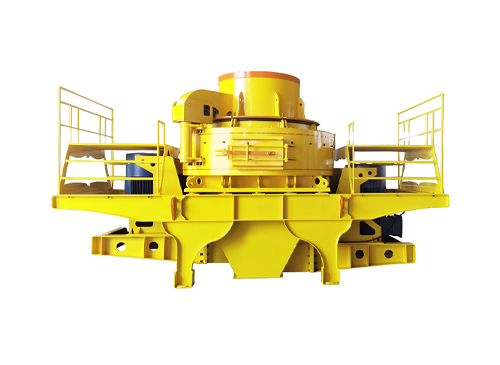
A VSI crusher has a vertically mounted rotor inside a central feed assembly. Material drops into the rotor, accelerates outward, and is ejected at high speed toward a stationary rock lining or a ring of metal anvils. Two crushing modes exist: rock-on-rock, where ejected particles hit material built up on the chamber walls, and rock-on-anvil, where particles strike metal elements. Rock-on-rock protects wear surfaces and is preferred for abrasive feed. Rotor speeds are extreme; some designs approach 3,500 RPM, though exact figures vary by model and material.
Horizontal Shaft Impact (HSI) Crusher Working Principle
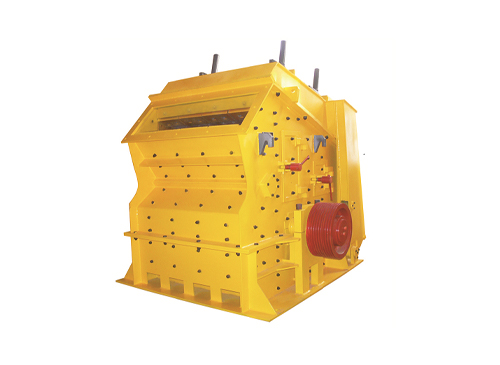
An HSI crusher uses a horizontal rotor fitted with blow bars. Feed enters from the top, is struck by the bars, and is hurled against adjustable impact aprons. Material bounces back into the rotor path and is struck again until particles are small enough to pass through the discharge gap. Rotor speed, apron count, and apron gap setting control final particle size. In industry language, "impact crusher" without qualification almost always means this horizontal shaft design.
The practical difference is simple. The HSI breaks rock by direct metal impact, while the VSI breaks rock by hurling it against rock or anvils. That single distinction drives nearly every difference in wear, output shape, and application.
Crushing Stage and Circuit Position: Where Does Each Machine Fit?
The first filter in any selection is circuit position. The HSI is the more flexible machine. It can operate as a primary crusher on moderately soft feed and is a common secondary crusher behind a jaw crusher. A plant processing limestone or recycled concrete can often run a single HSI from feed to saleable aggregate, which keeps the flow sheet short and the civil works small. To review the available configurations for this role, see the PF impact crusher for aggregate production.
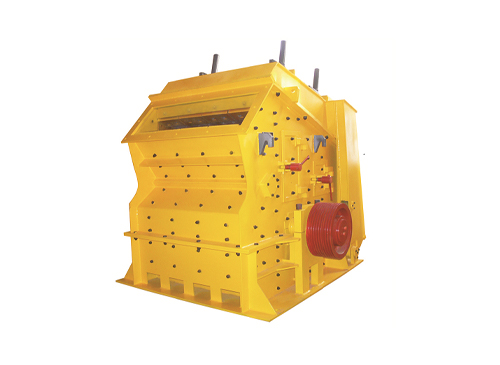 Mining PF Impact Crusher Manufacturers, Custom SuppliersSanming Mining Equipment Manufacturing CO., LTD. is China PF Impact Crusher Manufacturers and Suppliers, PF series impact crushers for mi...View Product →
The VSI sits at a different point in the process. It is almost always a tertiary or quaternary machine, placed after the jaw and cone (or jaw and HSI) stages. Its feed must be small and consistent. In return, it does two jobs that earlier stages cannot: producing high-quality manufactured sand and reshaping flaky or oversized particles. Ask a VSI to accept feed it was not designed for, and you will see blockages, uneven rotor load, and premature wear.
The first decision is therefore simple. If you need a direct route from medium-hard feed to final aggregate, the HSI is usually the most efficient answer. If you already have coarse crushing capacity and need a finishing machine, the VSI is the natural fit.
Material Compatibility: Which Crusher Handles Your Rock Type Better?
Material hardness is the first variable that separates these two machines. The same rock that is easy feed for one crusher can be a wear-cost disaster for the other.
Soft and Medium-Hard Materials (Limestone, Gypsum, Concrete, Asphalt)
Soft to medium-hard feed is the home ground of the HSI. Limestone, dolomite, gypsum, concrete rubble, and asphalt millings do not aggressively erode blow bars, so wear costs stay predictable. The HSI also copes better with rebar and other contaminants in demolition material. In this feed category, an HSI usually delivers higher throughput and a lower cost per ton than a VSI in the same duty.
Hard and Abrasive Materials (Granite, Basalt, River Pebble)
Hard, high-silica rocks change the economics. Every ton of granite or river pebble strips metal from HSI blow bars, and replacement becomes the dominant cost. This is the application where a VSI vertical shaft impact crusher earns its place. In rock-on-rock mode the material crushes itself, and the wear parts, mainly rotor tips, distributor plates, and chamber lining, are consumed much more slowly. For manufactured sand and high-specification aggregate from hard rock, the VSI is the industry standard for economic reasons, not tradition.
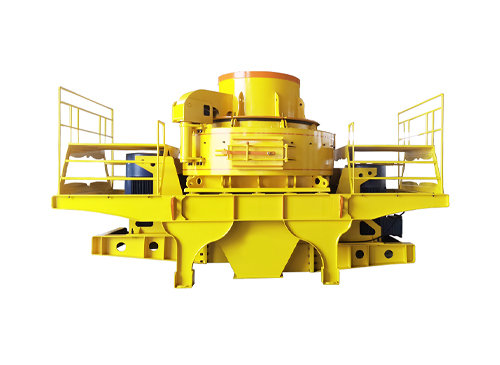 Custom Vsi Sand Making Machine Manufacturers, SuppliersSanming Mining Equipment Manufacturing CO., LTD. is China VSI Sand Making Machine Manufacturers and Custom Suppliers, supply VSI Sand Mak...View Product →
A practical rule: measure the silica content or abrasion value before comparing machine prices. High abrasion points to a VSI in the final stage. Low to medium abrasion points to an HSI for primary or secondary work.
Product Shape and Gradation: VSI vs Impact Crusher Output Quality
The third variable is the product your customers will accept. The VSI produces the best particle shape of any impact machine family. Its output is cubic, well-rounded, and low in flaky and elongated content. That shape has measurable downstream value. Cubic aggregate packs better in concrete, needs less cement and water to reach a given workability, and improves the strength and durability of the final element. Asphalt producers also prefer angular, well-formed fine aggregate because it creates stronger interlock and reduces binder demand.
The HSI also produces a generally cubical product, and with careful apron settings it is acceptable for many base, sub-base, and general aggregate applications. Its particles tend to have a rougher, more fractured surface, which is not a problem for most jobs. However, at the fine end of the size range, gradation control is less precise than a VSI can hold, and flakiness can rise when the machine is pushed for maximum capacity.
For manufactured sand, the difference is decisive. The VSI is the standard tool because rotor speed and chamber configuration keep the gradation curve and fines content within a tight band. Ready-mix producers can design their mixes confidently around VSI sand; with HSI sand, they often see more daily variation. When your sales contract depends on particle shape, the VSI's product quality is a pricing advantage, not just a technical detail.
Operating Costs, Wear Parts and Maintenance: A Practical Comparison
Purchase price is only the first number in the equation. Three cost categories matter over the machine's working life.
Wear Parts and Replacement Frequency
Wear parts determine long-term cost more than the purchase price. HSI blow bars and impact aprons wear continuously. In abrasive feed, blow bars may need rotation within a shift and replacement within weeks. These parts are heavy, expensive, and labor-intensive to change. VSI wear items, mainly rotor tips and chamber lining, last longer in hard rock because rock-on-rock crushing shields the metal. Some industry comparisons report that a VSI has fewer wear surfaces and more predictable replacement intervals than an HSI of comparable size, although actual results depend on feed and settings.
Maintenance Complexity and Downtime
The HSI has an open design that makes daily visual inspection easy, but blow bar changeout is a physical job requiring access space and lifting equipment. The VSI is more compact, and rotor maintenance needs trained personnel. The trade-off is predictability. VSI wear progresses steadily, so you can plan maintenance windows. HSI wear can accelerate quickly when feed conditions change, which leads to reactive downtime.
Energy Consumption and Throughput
In coarse and medium crushing, the HSI generally produces more tons per kilowatt-hour because it does less work per ton. The VSI consumes more energy per ton in fine crushing and shaping, but that energy produces the exact result the machine exists for. When comparing HSI vs VSI in the same finishing duty, some industry observations suggest a VSI can reach up to twice the capacity of an HSI of similar size in sand-making, though the ratio shifts with feed type and target grading.
The only fair comparison is total cost of ownership: purchase price, freight, installation, wear parts, energy, maintenance labor, and downtime losses, balanced against the selling price your product shape commands. A machine that is cheap to buy can be the expensive choice after five years of hard-rock service.
VSI or Impact Crusher: A Practical Decision Checklist
Use the table below as a quick reference, then work through the five steps that follow.
| Criterion | VSI crusher | HSI impact crusher |
|---|---|---|
| Working principle | Vertical rotor projects rock against rock or anvils | Horizontal rotor strikes feed against aprons |
| Typical stage | Tertiary, quaternary, sand making | Primary or secondary |
| Feed size | Small, screened feed | Accepts larger feed |
| Best materials | Hard, abrasive rock; manufactured sand | Soft to medium-hard rock; recycling |
| Product shape | Very cubical, rounded, low flakiness | Cubical with rougher surface |
| Wear cost in hard rock | Lower with rock-on-rock mode | Higher due to blow bar erosion |
| Energy profile | Higher per ton in fine duty; high-value output | Lower per ton in coarse duty |
- Test your material. Confirm hardness, silica content, and abrasion value before comparing machines.
- Define the circuit position. Primary or secondary duty points toward an HSI; tertiary, shaping, or sand making points toward a VSI.
- Write down your product specifications. If the sale depends on shape, gradation, or sand fineness, the VSI is the realistic answer.
- Model five years of total cost, not the purchase price. Include wear parts, energy, downtime, labor, and the sales value of the shaped product.
- Design the full flow sheet. A proven hard-rock layout is a primary jaw crusher for coarse crushing
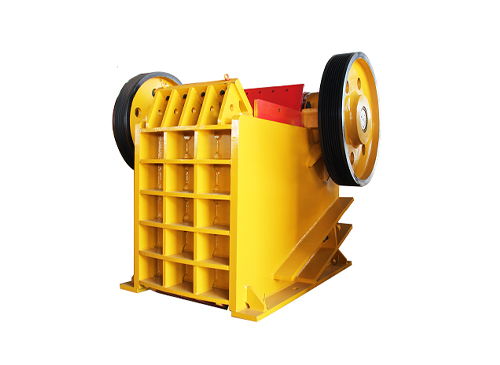 Mining PE Jaw Crusher Manufacturers, Custom SuppliersSanming Mining Equipment Manufacturing CO., LTD. is China PE Jaw Crusher Manufacturers and Custom Suppliers, offer PE Jaw Crusher for ore...View Product →, a secondary cone or HSI, and a VSI finisher for shaping and sand production.
Get the Right Crusher Solution for Your Aggregate Production Line
There is no honest answer to "which is better" without knowing your rock, your circuit, and your market. That is why SM Crushers (Shanghai Sanming) offers both machine types. Our range includes the VSI vertical shaft impact crusher for sand and shaping and the PF impact crusher series for primary and secondary duties, so the recommendation you receive follows your process, not a single-product catalog.
Our production is ISO 9001 certified, and our equipment ships to aggregate producers across Central Asia, the Middle East, South America, and Africa. Send us your material type, feed size distribution, target capacity, and product specifications. Our engineers will help you choose the right circuit and match a machine to each stage before you commit capital.