English
 русский
Content
- 1 What Is an Impact Crusher?
- 2 How Does an Impact Crusher Work?
- 3 Two Main Types: HSI vs. VSI Impact Crushers
- 4 What Materials Can an Impact Crusher Process?
- 5 Impact Crusher vs. Jaw Crusher vs. Cone Crusher: How to Choose?
- 6 How Does an Impact Crusher Fit Into a Complete Crushing Plant?
- 7 Key Considerations Before Buying an Impact Crusher
- 8 Conclusion
What Is an Impact Crusher?
An impact crusher is a machine that uses high-speed impact force to break down rocks, concrete, and other materials into smaller, more uniform pieces. Instead of squeezing the feed between two rigid surfaces, it strikes the material with rapidly rotating blow bars, hurls it against steel impact plates, and lets repeated collisions reduce every particle until it is small enough to pass through the discharge opening.
That single principle separates impact crushers from compression machines. A jaw crusher presses rock between two jaw plates, and a cone crusher squeezes material between a mantle and a concave bowl. Both use slowly applied pressure. An impact crusher delivers a sudden, high-energy blow that shatters rock along natural fracture lines.
Because the breaking force hits the material directly, impact crushers achieve some of the highest reduction ratios in the industry, commonly 12:1 to 15:1. A single pass can take run-of-quarry limestone from roughly 400 mm down to a 40 mm product, which is why many plants eliminate the jaw crusher on soft rock and recycled material.
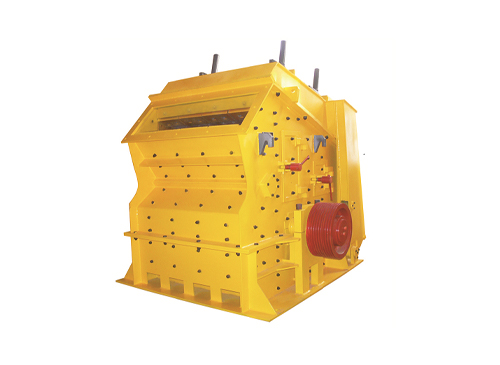
The same mechanism also produces cubical particles with few flat pieces. For a production-ready implementation, explore our PF impact crusher series and see how rotor speed and plate gap match different product curves.
How Does an Impact Crusher Work?
The crushing cycle inside an impact crusher follows the same sequence on every pass:
- Feed falls through the chute onto the rotor.
- The spinning rotor strikes it with blow bars.
- The blow hurls the material against the impact plates.
- The collision shatters the particles, which rebound toward the rotor.
- The cycle repeats until particles are small enough to pass through the rotor-to-plate gap and exit.
Two adjustments control product size. Higher rotor speed throws material harder and produces a finer product. Moving the impact plates closer forces material to stay in the chamber longer; moving them outward lets coarser material through.
Blow bars are the most heavily wearing component. A typical rotor carries three or four, made of high-chrome or manganese alloy steel, and they are flipped or replaced as the leading edge wears. On soft limestone they last for months; on abrasive granite, the wear rate climbs sharply and directly drives the cost per ton.
Two Main Types: HSI vs. VSI Impact Crushers
Impact crushers come in two mechanically different configurations: horizontal shaft impactors (HSI) and vertical shaft impactors (VSI). Both break rock by impact, but they serve different stages and produce different results.
Horizontal Shaft Impactor (HSI)
The HSI has a rotor that spins around a horizontal axis. Material enters from above, is struck by the blow bars, and is projected against the impact plates. It is the most common type, accepts large feed, and works as a primary crusher on soft rock or reclaimed concrete, or as a secondary crusher behind a jaw. It handles reinforced concrete with rebar, asphalt, gravel, and natural stone from soft limestone toward harder igneous rock. The output is cubical, with few fines, a major advantage for aggregate buyers.
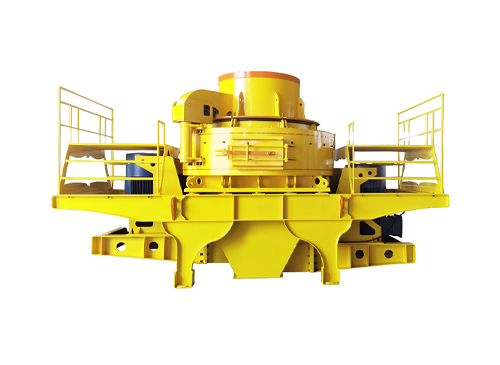
Vertical Shaft Impactor (VSI)
The VSI has a rotor that spins around a vertical axis, accelerating the feed and ejecting it at high speed against an anvil ring or a falling curtain of material. Rock-on-steel action tolerates wet or sticky feed; rock-on-rock action produces the best particle shape and the lowest metal wear, which is why it dominates manufactured sand production.
A VSI almost always runs as a tertiary crusher, taking feed of 2 inches or smaller. If a cone circuit produces flaky aggregate, a VSI reshapes it into cubical material. If the plant needs manufactured sand, it turns surplus crushed stone into a 0-5 mm fraction. For a specific implementation, check our VSI vertical shaft impact crusher for sand making.
The practical difference is simple:
- HSI: horizontal rotor, blow-bar impact, accepts large feed, primary or secondary role, high throughput, tolerates rebar and sticky material.
- VSI: vertical rotor, rock-on-rock or rock-on-steel action, requires small feed, tertiary role only, best for shaping and sand production.
What Materials Can an Impact Crusher Process?
Impact crushers handle a wide range of natural rock, ores, and recycled materials, but they are most economical when the feed is soft to medium-hard. The materials that appear most often in projects are:
- Soft to medium-hard natural rock: limestone, dolomite, sandstone, gypsum.
- Medium-hard igneous rock: granite, basalt, and gravel, with a higher wear cost.
- Ores: iron ore, copper ore, and gold ore in compatible hardness conditions.
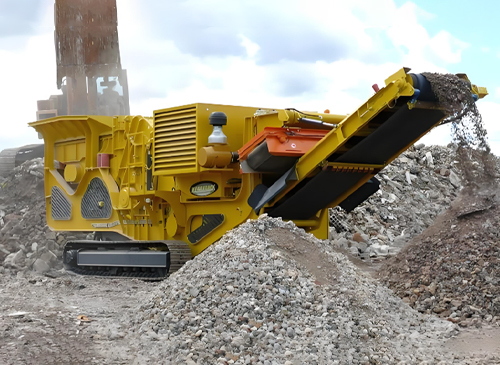
- Recycled materials: reinforced concrete, asphalt millings, brick, and construction and demolition debris.
- Other feed: cement clinker, slag, and selected industrial minerals.
The practical limit is abrasiveness, not hardness. The more abrasive the feed, the faster the blow bars and impact plates wear. Granite and basalt can be crushed, but the wear cost per ton may exceed a jaw-and-cone circuit, which is why most quarries reserve impact crushers for limestone and other carbonate rock.
Three application areas cover most projects: aggregate production, where impact crushers are standard in limestone quarries; mining, where they reduce softer ores in one step; and construction and demolition recycling, where the HSI is the default because it handles concrete with embedded rebar without clogging.
Impact Crusher vs. Jaw Crusher vs. Cone Crusher: How to Choose?
Each crusher family is optimized for a different part of the crushing process. The table below summarizes the practical differences.
| Comparison | Jaw Crusher | Cone Crusher | Impact Crusher |
|---|---|---|---|
| Crushing principle | Compression between two jaws | Compression between mantle and concave | High-speed impact |
| Typical stage | Primary | Secondary and tertiary | Primary to tertiary |
| Best feed | Hard, abrasive rock | Medium-hard to hard rock | Soft to medium, recycled |
| Reduction ratio | About 4-6:1 | About 4-8:1 | Up to 12-15:1 |
| Product shape | Flat and elongated | Slightly elongated | Cubical and well graded |
| Wear cost per ton | Low | Low to moderate | Higher, driven by blow bars |
| Rebar and sticky feed | Poor | Poor | Good, especially HSI |
A simple set of if-then rules covers most selection cases:
- If the feed is hard, abrasive rock such as granite or basalt, use a jaw for primary duty and a cone for secondary duty. You can compare our jaw crusher series when sizing the primary stage.
- If the feed is limestone, dolomite, concrete, or asphalt millings, an impact crusher is usually the most economical route because it combines high reduction with a cubical product.
- If a secondary cone produces flaky aggregate, add a VSI for shaping.
- If the project requires manufactured sand, run a VSI at the tertiary stage.
- If the project is a short-life recycling job, a single HSI with a screen deck may be the entire plant.
The economic logic always follows wear cost per ton. Newer alloy blow bars have widened the overlap between impact and compression crushing, so a feed analysis beats a rule of thumb.
How Does an Impact Crusher Fit Into a Complete Crushing Plant?
An impact crusher rarely operates alone. It works inside a chain that starts with a vibrating feeder and ends with product stockpiles, with screens and conveyors in between.
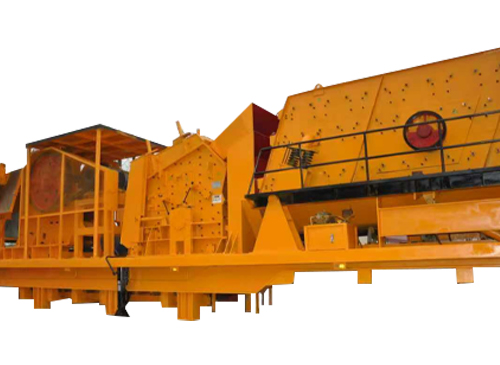
In a single-stage plant, the line is a vibrating feeder, a primary HSI, a vibrating screen, and a return conveyor. Oversize returns to the crusher, and undersize goes to product stockpiles. This setup removes the jaw crusher and is common for limestone operations in the 100-300 t/h range.
In a two-stage plant, a jaw crusher does primary reduction, the discharge is screened, oversize enters an HSI for secondary crushing, and the secondary products may feed a VSI for shaping or sand making. A sand washer can follow when the specification requires clean fines.
The impact crusher's flexibility is its main advantage in plant design. With feed below roughly 400 mm and soft material, it covers both primary and secondary duties. With hard, large feed, it steps into the secondary role behind a jaw. The surrounding equipment determines whether the crusher runs at rated capacity or spends half the day choked.
Key Considerations Before Buying an Impact Crusher
An impact crusher that matches the feed and plant context cuts cost and improves product quality. A mismatched machine burns through blow bars. The factors that matter in practice are:
- Feed characterization: hardness, abrasiveness, moisture, and rebar content. Every design decision follows from these numbers.
- Rotor design and blow bar configuration: number of blow bars, rotor diameter, and alloy choice determine throughput and wear life.
- Impact plate adjustment: hydraulic adjustment changes product size in minutes; shim adjustment is cheaper but slower.
- Capacity and power match: verify against your actual feed rate and product curve.
- Closed-circuit behavior: the crusher must accept recirculating oversize without surging or plugging.
- Spare parts availability: ask about stock levels and lead times before signing. A two-week wait for blow bars can idle the whole line, so confirm that genuine impact crusher wear parts are available.
- Delivery and installation: the manufacturer may quote an average delivery time of 20 days; confirm the timeline for your configuration.
- After-sales support: remote diagnostics, field service, and operator training affect how quickly breakdowns are resolved.
Work through the list in order. Feed characterization is the foundation, rotor design is the heart of the machine, and spare parts availability is the difference between a profitable investment and an expensive idle asset.
Conclusion
The answer to what does an impact crusher do is simple: it reduces rock and recycled material by high-speed impact until every particle reaches the required size. Because it uses kinetic energy rather than slow compression, it delivers some of the highest reduction ratios in the industry and a distinctly cubical product.
Use an HSI for primary or secondary crushing of soft-to-medium rock, concrete, and asphalt where cubical shape matters. Use a VSI for tertiary shaping or manufactured sand. Choose an impact crusher when the feed is not highly abrasive; choose a jaw-and-cone circuit when wear cost dominates.
Define your feed, define your product curve, then compare rotor configurations and spare parts lead times. If you know your material and want to start matching a machine to your numbers, the PF impact crusher series is a sensible reference point.