English
 русский
Ask a plant manager to name the most expensive mistake in a crushing circuit, and the answer is often the same: the wrong crusher type. Hammer crushers and impact crushers are easy to confuse. Both use impact energy to break rock, both are built around a high-speed rotor, and both can process hundreds of tons per hour. The similarities largely end there.
The two machines differ in rotor design, wear behavior, moisture tolerance, and finished product shape, and those differences translate directly into operating cost and product revenue. Choosing wrong means higher wear-part spending, more downtime, and a product that misses specification for years.
This guide walks through the hammer crusher vs impact crusher comparison across nine decisive dimensions, then gives you a five-step selection framework you can apply to your own feed material, moisture level, and production targets.
Content
- 1 What Are Hammer Crushers and Impact Crushers?
- 2 9 Key Differences Between Hammer Crusher and Impact Crusher
- 2.1 1. Crushing Principle and Rotor Structure
- 2.2 2. Applicable Material Hardness
- 2.3 3. Feed Size and Crushing Ratio
- 2.4 4. Product Grain Shape and Gradation
- 2.5 5. Output Capacity and Energy Consumption
- 2.6 6. Wear Parts and Maintenance Cost
- 2.7 7. Material Blockage and Moisture Handling
- 2.8 8. Output Size Adjustment Flexibility
- 2.9 9. Equipment Price and Overall Investment
- 3 How to Choose: A Step-by-Step Decision Guide
- 4 Where Do They Fit in a Complete Crushing Plant?
- 5 Final Thoughts: Match the Machine to Your Application
What Are Hammer Crushers and Impact Crushers?
A hammer crusher — also called a hammer mill crusher in some industries — uses a rotor fitted with swing hammer heads. As the rotor spins, centrifugal force throws the hammers outward. Feed entering the chamber is struck, hurled against breaker plates, and finally forced through a bottom grate. Only particles small enough to pass the grate openings leave the machine.
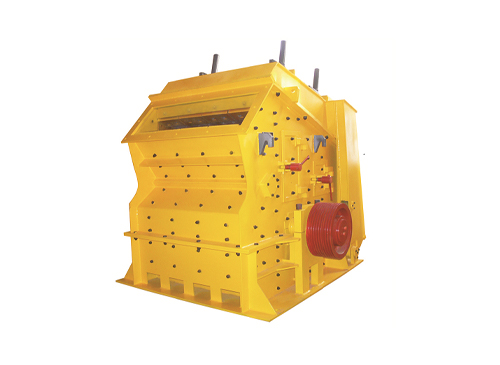
An impact crusher locks blow bars into the rotor with no swinging action. The rotor accelerates the bars to high tip speed, and each bar delivers the full kinetic energy of the rotor into the feed. The rock is thrown against adjustable impact plates, rebounds into the path of the next bar, and is struck repeatedly in several crushing chambers.
Both machines use impact as the primary breaking action, which distinguishes them from compression crushers such as jaw and cone crushers. The real engineering difference is how the energy is applied, and that difference drives every comparison that follows.
9 Key Differences Between Hammer Crusher and Impact Crusher
Brochures can make both machines look similar. The nine points below focus on the differences that actually change operating results. If your material points toward the impact route, studying the rotor and breaker-plate design of a PF impact crusher is a practical first step before comparing supplier quotes.
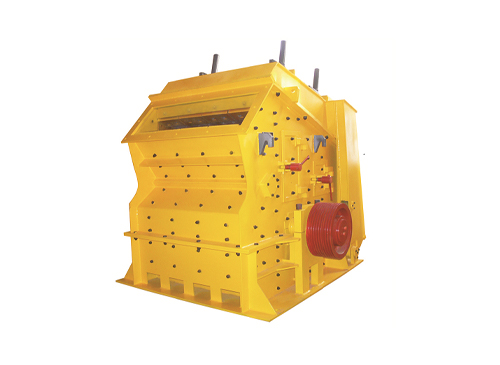 Mining PF Impact Crusher Manufacturers, Custom SuppliersSanming Mining Equipment Manufacturing CO., LTD. is China PF Impact Crusher Manufacturers and Suppliers, PF series impact crushers for mi...View Product →
1. Crushing Principle and Rotor Structure
Hammer crushers mount the hammer heads loosely so they swing outward as rotor speed builds. Each strike delivers a short, localized blow, and part of the impact energy is absorbed by the hammer swing itself. Impact crushers fix the blow bars rigidly to the rotor, so the full kinetic energy is transmitted into the rock. The rock is then thrown at high velocity against breaker plates, multiplying the breaking work. In practice, an impact crusher breaks tougher rock more efficiently because it converts rotor speed into repeated, high-force impacts instead of single hammer blows.
2. Applicable Material Hardness
Industry reference values are consistent. An impact crusher suits medium-hard rock with compressive strength up to roughly 350 MPa, covering granite, basalt, river pebble, and recycled concrete or asphalt. A hammer crusher works best on soft, brittle, mildly abrasive materials such as limestone, coal, gypsum, and dolomite, typically up to about 200 MPa. Choosing a hammer crusher for hard rock is the fastest way to burn through hammer heads and blow the maintenance budget. The reverse error — using an impact crusher for very soft material — is less damaging but still wastes capital.
3. Feed Size and Crushing Ratio
Large hammer crushers accept feed boulders up to about 1,800 mm and reduce them to finished product in one step, which is why they dominate single-stage limestone plants. Impact crushers normally accept feed up to about 800 mm and deliver a moderate reduction ratio, so they are usually installed after primary jaw crushers in a two- or three-stage circuit. The selection meaning is clear: a hammer crusher simplifies the flowsheet by removing the primary stage, while an impact crusher needs upstream coarse crushing but returns a more controllable product.
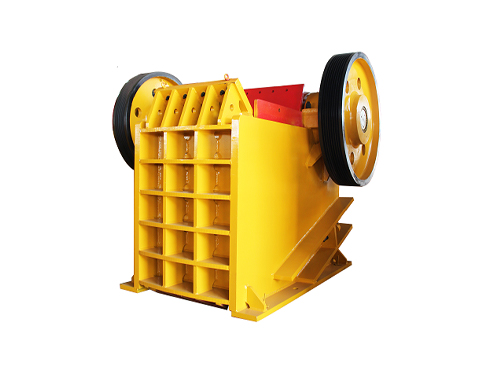 China Jaw Crusher Manufacturers, Mining Jaw Crusher FactorySanming Mining Equipment Manufacturing CO., LTD. is China Jaw Crusher Manufacturers and Factory, provides Wholesale Mining Jaw Crusher ap...View Product →
4. Product Grain Shape and Gradation
This is often the deciding factor for aggregate producers. Impact crushers produce a cubical product with angular faces and low flakiness because the rock breaks along natural fracture lines under repeated impact. Hammer crushers force material through the bottom grate, and the squeezing at the grate creates a higher percentage of flat and elongated particles. For concrete aggregate, asphalt aggregate, and railway ballast, particle shape is the main reason buyers choose impact crushing equipment even when its purchase price is higher.
5. Output Capacity and Energy Consumption
Heavy-duty hammer crushers can reach very high throughput because they reduce run-of-mine feed to final size in a single pass. Single-stage hammer crushing is commonly quoted as saving roughly 40 percent in processing cost compared with a multi-stage jaw-plus-cone arrangement, because conveyors, chutes, and intermediate bins are eliminated. Impact crushers are rarely the bottleneck in a balanced plant, but on hard rock they consume more energy per ton than a compression crusher. The rule: very high tonnage on soft rock favors the hammer crusher; moderate capacity on harder feed favors the impact crusher.
6. Wear Parts and Maintenance Cost
The clearest cost separation appears in the wear budget. Hammer crusher wear parts are mainly the hammer heads, cast in high-manganese steel, which wear on the striking face and are replaced in complete sets — dozens of pieces on a large machine. Blow bars on an impact crusher are also wear items, but they can be rotated or reversed to expose a fresh edge, significantly extending service life. Breaker plates and side liners are easier to manage than a full grate assembly. Compare the full picture: price of wear parts, replacement frequency, labor, downtime, and spare-part stock for one year.
7. Material Blockage and Moisture Handling
Moisture and clay content often decide crushing projects, especially in recycled aggregate and alluvial deposits. An impact crusher has multiple crushing chambers and a relatively large discharge opening, so it handles damp feed without frequent clogging. A hammer crusher relies on bottom screen bars to control product size, and those bars clog quickly when moisture climbs above roughly 10 percent. For wet or clayey feed, the impact crusher is the safer choice.
8. Output Size Adjustment Flexibility
Impact crushers offer several independent adjustments: rotor speed, settings on the primary and secondary impact plates, and the gap between the blow bars and the plates. Any of these shifts the product curve, so operators can fine-tune output without a prolonged stop. On a hammer crusher, the main way to change product size is replacing the grate with different apertures — a heavier job that normally requires a full shutdown. For operations that produce multiple aggregate fractions, the impact crusher is considerably more flexible.
9. Equipment Price and Overall Investment
Comparing only the invoice price is misleading. A small hammer crusher looks attractive at purchase, while a heavy-duty large hammer crusher can cost more than a comparable impact crusher. More importantly, the surrounding system changes the total project budget. A hammer crusher in single-stage duty removes the need for a primary crusher, extra conveyors, and intermediate storage. An impact crusher works as a secondary unit on a line that already includes a primary jaw crusher, raising upfront capital. Over several years, however, the impact crusher's better product quality and lower wear cost often compensate. Judge both options on full project cost over three to five years, not on the day-one invoice.
| Comparison Parameter | Hammer Crusher | Impact Crusher |
|---|---|---|
| Crushing principle | Swing hammers plus bottom grate crushing | Fixed blow bars plus multiple impact plates |
| Material hardness | Compressive strength up to about 200 MPa | Compressive strength up to about 350 MPa |
| Typical max feed size | Up to about 1,800 mm in large models | Usually up to about 800 mm |
| Product grain shape | Higher flakiness and elongated particles | Cubical shape, low flakiness |
| Moisture tolerance | Grate clogs above roughly 10 percent moisture | More tolerant of damp, sticky feed |
| Output adjustment | Replace grate with different aperture sizes | Adjust rotor speed and breaker-plate gap |
| Typical plant position | Single-stage crushing unit | Secondary stage after a jaw crusher |
| Main wear parts | Hammer heads, replaced in complete sets | Blow bars and wear liners, reversible |
| Investment logic | Simpler flowsheet, fewer machines | Higher system cost, better product quality |
How to Choose: A Step-by-Step Decision Guide
None of the differences above matters in isolation. Work through the five steps in order, and one machine will eliminate itself at each checkpoint.
- Confirm material compressive strength. If your feed regularly exceeds about 200 MPa, choose an impact crusher; a hammer crusher will wear out too quickly.
- Check moisture and clay content. Feed that exceeds roughly 10 percent moisture, or contains sticky fines, points to an impact crusher.
- Define product shape requirements. Cubical aggregate with low flakiness for concrete or asphalt demands an impact crusher. If shape is secondary and the rock is soft limestone, the single-stage simplicity of a hammer crusher wins.
- Calculate realistic throughput. Very high tonnage soft-rock plants favor the heavy hammer crusher; medium-capacity lines with variable feed benefit from an impact crusher as a secondary unit.
- Run a total-cost comparison. Include machine price, upstream crushing cost, wear parts per ton, power consumption, and downtime over several years.
If you work in aggregate production and want a deeper look at application conditions, our full guide on choosing an impact crusher for your aggregate covers feed quality, operating targets, and plant layout in more detail.
Where Do They Fit in a Complete Crushing Plant?
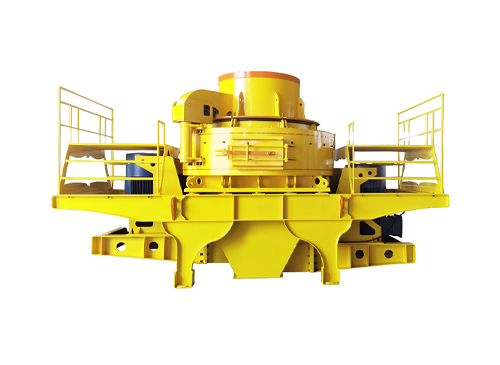
Your decision also depends on where the machine sits in the flowsheet. A hammer crusher usually works as a standalone single-stage unit: feed enters from a hopper or vibrating feeder, and the discharge goes directly to a screen. This layout is common in cement-grade limestone plants and coal preparation. An impact crusher normally operates as the secondary stage between a primary jaw crusher and a final screen. Depending on the target, the impact product can feed a VSI sand-making machine to produce manufactured sand, or pass directly to a vibrating screen for aggregate classification. The same logic applies in mobile plants, where impact crushers are common on tracked and wheeled chassis.
Shanghai Sanming supplies the complete chain of crusher equipment, from primary jaw crushers to cone crushers, impact crushers, sand makers, screens, feeders, and conveyors, so selection can be planned as a balanced system rather than a single machine.
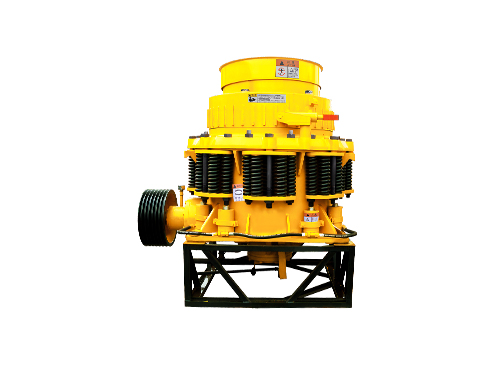 OEM Mining Crusher Equipment Manufacturers, SuppliersSanming Mining Equipment Manufacturing CO., LTD. is China Mining Crusher Equipment Manufacturers and Suppliers, offer OEM Mining Crusher ...View Product →
Final Thoughts: Match the Machine to Your Application
Neither machine is universally better. The hammer crusher wins where the material is soft, dry, and needs a simple single-stage solution. The impact crusher wins where hardness, moisture, or product shape demand a more controlled and wear-conscious process. When you set the hammer crusher vs impact crusher question against your own feed test data and product targets, the answer usually becomes clear. If you want a recommendation for your specific material, Shanghai Sanming's engineering team can walk through these factors with you and propose a configuration based on your actual feed size, abrasiveness, and production goals.