


 English
 русский
Ask any plant manager in the aggregate or mining business which machine controls final product quality, and the likely answer points to the screens rather than the crushers. Screening equipment separates bulk material into size fractions using a perforated surface: particles smaller than the openings pass through, while oversized material travels along the deck for discharge or further crushing. This simple function sits at the heart of every crushing circuit, governing product spec compliance and crusher loading. Read on to understand the main types of screening equipment, how they work, and how to choose the right one.
Content
What Is Screening Equipment and Why Does It Matter?
Screening equipment classifies feed material into two or more particle size fractions by passing it over one or more screening surfaces. The screen openings determine the cut point, and the vibrating or rotating motion of the deck ensures that every particle gets a chance to find an opening.
In mineral processing, screens perform three distinct duties:
- Pre-screening: removes fines and dirt ahead of the crusher, preventing wasted energy and premature wear.
- Check screening: protects final product quality by removing oversize material before stockpiling.
- Final screening: splits the material stream into multiple saleable product grades.
When screen performance deteriorates - through blinding, pegging, or worn media - crushers receive poorly graded feed, product falls out of specification, and downstream washing or sand-making stages become unstable. Because screens work in close partnership with vibrating feeders, crushers, and belt conveyors, selecting the correct screening equipment often decides whether a plant achieves its design throughput.
Main Types of Screening Equipment
Several machine families have been developed for different materials and duties. Vibrating screens dominate mining and aggregate plants; trommel screens, grizzly screens, disc screens, star screens, and banana screens serve more specialized roles.
Vibrating Screens
Vibrating screens are the workhorse of the mining and aggregate industry. A motor-driven vibrator attached to the screen box generates a continuous throwing motion: material bounces upward, lands further along the deck, and repeats the cycle. The lively bouncing separates the bed into layers, with fine particles migrating to the bottom and passing through the openings while coarse particles move toward the discharge end.
Two configurations cover most applications. Inclined vibrating screens operate at a 15 to 22 degree slope, using gravity to accelerate material travel; this yields high throughput with lower energy consumption, making them ideal for coarse and medium aggregate classification. Horizontal vibrating screens run at a low angle and rely entirely on vibration to convey material, delivering more precise separation, better handling of wet and sticky feed, and a low installation height for constrained sites.
Vibrating screens are further classified by stroke pattern. Circular-motion screens, such as the YK circular vibrating screen, use a single eccentric block or shaft for a simple, cost-effective design with low maintenance requirements - a common choice for medium and fine screening of aggregates and ores. Linear-motion screens use two counter-rotating exciters to produce a straight stroke, providing higher efficiency for dewatering, desliming, and fine classification. For most sand, gravel, and stone producers, an inclined circular-motion screen with multiple decks delivers the most balanced combination of capacity, reliability, and operating cost.
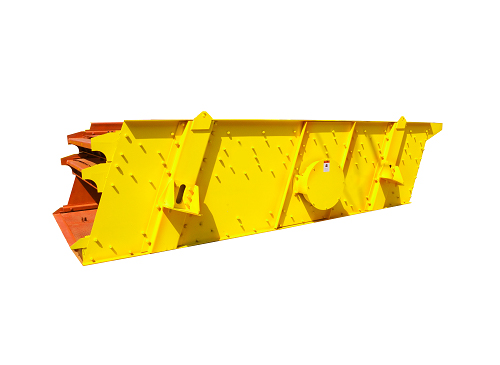 Custom YK Vibrating Screen Manufacturers, SuppliersSanming Mining Equipment Manufacturing CO., LTD. is China YK Vibrating Screen Manufacturers and Custom Suppliers, YK series circular vibr...View Product →
Trommel Screens
A trommel screen, sometimes called a rotary drum screen, consists of an inclined, rotating cylinder with perforated sidewalls. Material tumbles inside as the drum turns; fine particles drop through the holes and oversize exits from the open end. Trommels offer a low purchase price and high feed tolerance, but only about one-third of the screen surface is active at any moment, the machine has a large footprint, and wet, fibrous feed tends to blind the openings. These machines are at home screening municipal solid waste, compost, and clay-laden alluvial material. In hard-rock quarries and conventional aggregate plants, vibrating screens remain the standard for primary sizing work.
Other Common Screen Types
Several specialized machines fill defined niches within screening:
- Grizzly screens: parallel steel bars spaced at a set gap, mounted ahead of primary crushers to scalp oversize - typically above 100 mm. Vibrating grizzly feeders combine scalping with feeding in one unit.
- Disc screens: rotating discs that carry material forward while smaller particles fall through the gaps; a good fit for sticky, fibrous, or contaminated feed such as construction and demolition debris.
- Star screens: a disc-screen variant with star-shaped rotor elements, suited to high-moisture organic material and compost screening.
- Banana screens: multi-slope decks that start steep and flatten out, providing rapid bed thinning in the feed zone and longer residence time near discharge for very high throughput duties.
Each has its place, but none rivals the versatility and installed base of vibrating screens in mineral processing.
How Does a Vibrating Screen Work?
Knowing the internal anatomy of a vibrating screen helps with selection, commissioning, and daily troubleshooting. The core components are:
- Screen box: the welded steel housing that carries the decks and transmits vibratory motion.
- Vibrator: the exciter that generates the stroke. Eccentric block vibrators are simple and inexpensive, fitting light to medium duty screens; eccentric shaft vibrators produce a larger, more stable amplitude for heavy-duty, high-capacity installations.
- Spring supports: isolate the vibration from the surrounding structure while allowing the screen box to oscillate at its natural frequency.
- Screen media: woven wire cloth, polyurethane panels, rubber mats, or punched steel plates fixed to each deck.
- Drive system: an electric motor connected to the vibrator via a V-belt or direct coupling.
The separation process combines two physical effects. First, the vertical component of the stroke throws material upward while the horizontal component advances it along the deck, creating a stratifying bed in which fine particles settle to the bottom layer. Second, particles that contact the screen surface align with an opening and pass through, while oversize continues to the discharge end. Screening efficiency is governed by stroke amplitude, vibration frequency, deck angle, and the shape and size of the openings. When the feed is damp or contains clay, wet fines stick to the media and reduce open area, which is why some operations add spray bars or switch to anti-blinding media such as polyurethane or rubber.
How to Choose the Right Screening Equipment
No single screen fits every duty, which is why selection should follow a structured review of five factors.
- Material characteristics. Moisture, clay content, abrasiveness, and particle shape determine the screen type and media. Wet, sticky feed calls for horizontal motion, anti-blinding media, or spray bars. Highly abrasive ore demands polyurethane or rubber decks to keep replacement costs under control.
- Throughput requirement. The screen must handle the plant's full flow in tonnes per hour. Undersized units create bottlenecks; oversized units waste capital and energy. Match the rated feed rate per square meter of deck area to the plant design flow.
- Size cut points. Coarse scalping above 50 mm, medium classification from 5 to 50 mm, and fine grading below 5 mm each require different stroke patterns, deck angles, and media openings. Multi-deck screens allow several products from a single machine.
- Screen media choice. Woven wire mesh offers low cost and high open area for dry material. Polyurethane panels provide long wear life, reduced blinding, and noise damping. Rubber screens absorb impact in heavy-duty scalping applications. Most plants use different media on different decks.
- Installation and operating budget. Inclined screens need elevation for gravity flow; horizontal screens fit into low-profile plants. Compare purchase price, power draw, media replacement intervals, and scheduled downtime together, rather than the upfront cost alone.
| Media Type | Relative Cost | Wear Life | Best Suited For |
|---|---|---|---|
| Woven wire mesh | Low | Short to medium | Dry, non-abrasive aggregates |
| Polyurethane panel | Moderate to high | Long | Abrasive material, wet screening |
| Rubber mat | Moderate | Long | Heavy impact, coarse scalping |
After shortlisting machines, confirm the configuration with the manufacturer and, where possible, test a sample of the actual feed. Real plant material always varies from a brochure spec. For typical aggregate and mining duties, the YK circular vibrating screen is a dependable, low-maintenance baseline.
Screening Equipment in a Complete Crushing & Screening Plant
Screens do not work alone, and their role only becomes clear when seen as part of a full circuit. A common three-stage crushing plant with two screening stages shows the pattern:
- A vibrating grizzly feeder feeds run-of-mine aggregate to a jaw crusher, scalping natural fines before they reach the crushing chamber.
- Primary crusher discharge is screened to split the stream: undersize moves forward, and oversize is returned to the crusher for further reduction.
- The final screen divides the material into sand and graded aggregate products; oversize returns to the tertiary crusher, and belt conveyors carry each product to stockpile.
This closed-circuit design is only possible because the screen has the final word on every particle. Oversize cannot leave the plant until it meets specification, and crushers never receive excessive fines that waste power and add wear. The level of process control depends entirely on the screening equipment being sized and configured to coordinate with its neighbors.
That interplay is the reason many project owners prefer a single supplier for the full set of process machinery. Crushing equipment such as jaw, cone, and impact crushers must work with a screen of matching capacity, while belt conveyor systems tie every process stage together. When all machines are designed as one system, the plant runs steadily at the rated output.
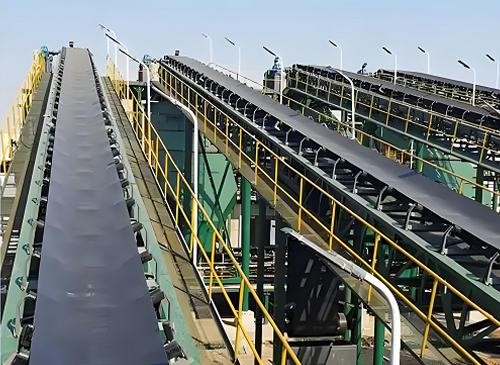 Belt Conveyor Manufacturers, Mining Belt Conveyor FactorySanming Mining Equipment Manufacturing CO., LTD. is China Belt Conveyor Manufacturers and Custom Factory, supply Mining Belt Conveyor fro...View Product →
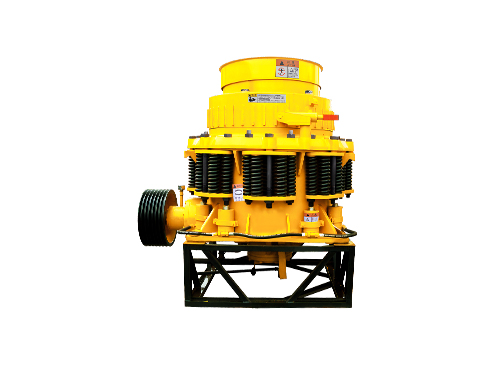 OEM Mining Crusher Equipment Manufacturers, SuppliersSanming Mining Equipment Manufacturing CO., LTD. is China Mining Crusher Equipment Manufacturers and Suppliers, offer OEM Mining Crusher ...View Product →
To summarize: screening equipment classifies material by size, and in mining and aggregate operations it controls crusher efficiency, product quality, and operating cost. The vibrating screen is the dominant technology for these industries, combining high capacity, reliable performance, and simple maintenance; trommel, grizzly, disc, star, and banana screens serve narrower niches. Choosing the right screen means evaluating material characteristics, throughput, cut points, media type, and total operating cost, then confirming the design with the manufacturer. If you are planning a new plant or upgrading an existing circuit, start with the screen type that carries most of the industry's tonnage - the vibrating screen - and build the rest of the line around it.


