English
 русский
Content
- 1 High-Performance Crushing Technology: The Core Mechanics of Impact Crushers
- 2 Horizontal vs. Deciding the Right Kinematics for Your Plant
- 3 Scale, Mobility, and Configurations in Modern Aggregate Production
- 4 Industrial Material Versatility: From Mining to Slag Recycling
- 5 Technical Specifications & Procurement Evaluation for Global Buyers
- 6 Technical FAQ: Operational Insights & Engineering Procurement center
- 6.1 Q: What is the primary difference in application between a horizontal impact crusher and a vertical impact crusher (VSI)?
- 6.2 Q: How do you select the correct blow bar metallurgy for an impact crusher machine processing recycled concrete vs. natural limestone?
- 6.3 Q: What are the distinct operational benefits of a mobile impact crusher compared to a portable impact crusher?
- 6.4 Q: How does a small impact crusher maintain cost-efficiency without compromising the final grain shape?
- 6.5 Q: What regular maintenance protocol prevents catastrophic failure in an impact hammer crusher?
- 7 References
High-Performance Crushing Technology: The Core Mechanics of Impact Crushers
Understanding the Impact Crusher Machine Principle
In modern mining machinery and manufactured sand production lines, the impact crusher machine has become the core equipment for crushing medium-hard and soft materials due to its unique high-energy kinetic energy conversion mechanism. Unlike traditional jaw crushers or cone crushers that rely on static compression to crush material, the impact crusher mainly utilizes the principles of high-speed impact and free shearing.
When material enters the crushing chamber, it is first violently struck by the blow bars on the high-speed rotating rotor. The material gains extremely high kinetic energy in an instant, generating huge impact stress internally, which causes it to fracture first along natural crystalline defects and weak planes. Subsequently, the crushed material is thrown at high velocity against the impact plates for a second impact crushing. Finally, the material is further refined through intense collisions between the impact plates and blow bars, as well as between the materials themselves, until it is smaller than the discharge opening clearance between the impact plates and the blow bars, and is discharged from the machine body under the action of gravity.
The physical core of this impact crushing mechanism lies in energy conversion efficiency. While compression crushing tends to produce excessive flaky and needle-like aggregates when processing hard materials, impact crushing utilizes instantaneous physical impact forces to stress the material in a free state, thereby yielding cubical finished products with excellent shape and uniform grain size.
The following is a technical parameter structure and selection comparison table for the core components of standard impact crushers:
| Core Components | Technical Parameters | Industrial Standards & Manufacturing | Impact on Performance |
|---|---|---|---|
| Rotor | Diameter: 1000 - 1600 mm Speed: 500 - 900 rpm |
Employs heavy-duty welded structure or integral cast steel process, verified by strict computer dynamic and static balance testing. | Determines the overall moment of inertia, processing capacity (t/h), and linear velocity of the equipment. |
| Blow Bars | Chromium content: 13% - 27% Hardness: HRC58 - 62 |
High-chromium cast iron, high-manganese steel, or composite bimetal materials, produced through vacuum expendable pattern casting and overall quenching. | Directly affects the wear cycle, downtime maintenance frequency, and adaptability to highly abrasive materials. |
| Impact Plates | Suspension type: Hydraulic/spring adjustment Liner hardness: >= HB450 |
Sawtooth or polygonal involute design, wear-resistant high-manganese steel liners. | Determines the secondary rebound angle of the material, reduction ratio, and output grain size control. |
The Evolution of the Modern Impact Stone Crusher
As international construction aggregate standards and concrete sand requirements become increasingly strict, the impact stone crusher has undergone significant technical evolution in material science and chamber design. Traditional impact crushers experienced rapid wear rates of blow bars and impact liners when facing highly abrasive materials, which directly limited their application in large-scale, continuous industrial production.
The core of modern impact crusher evolution is first reflected in the breakthrough of blow bar material science. Currently, mainstream export-oriented equipment generally adopts high-chromium alloys with trace elements such as molybdenum (Mo), vanadium (V), and titanium (Ti) added for modification treatment. While maintaining high hardness (>= HRC60) to resist material scratching and wear, the impact toughness is substantially increased, effectively preventing blow bars from fracturing when processing hard materials containing granite or quartz components.
Secondly, geometric optimization of the chamber structure (three-chamber crushing design) is widely applied in modern equipment. After passing through the first crushing chamber (coarse crushing) and the second crushing chamber (fine crushing), the material enters a dedicated shaping chamber (third impact chamber). Combined with a hydraulic adjusting system for the discharge opening, this design enables real-time and precise control over the finished material gradation curve.
This structural evolution directly brings the following standardized product technical advantages:
- Control over Cubical Product Yield: The proportion of needle-like and flaky aggregates can be stably controlled below 5% - 8%, which is far lower than the 15% threshold required for international high-standard bridge and road concrete.
- Optimization to Eliminate Internal Cracks: Due to the use of impact crushing, materials break along the weakest points under external vibration. The discharged finished aggregate has no stress concentration internally that leads to invisible micro-cracks, significantly improving the compressive and anti-permeability performance of later infrastructure projects.
- Standardized Interfaces and Modularization: The impact liners and side liners all adopt standardized, interchangeable modular designs fixed with a single specification of bolts, greatly shortening the routine spare parts maintenance cycle in overseas supply chains.
Horizontal vs. Deciding the Right Kinematics for Your Plant
Horizontal Impact Crusher (HSI): Maximizing Primary and Secondary Reduction
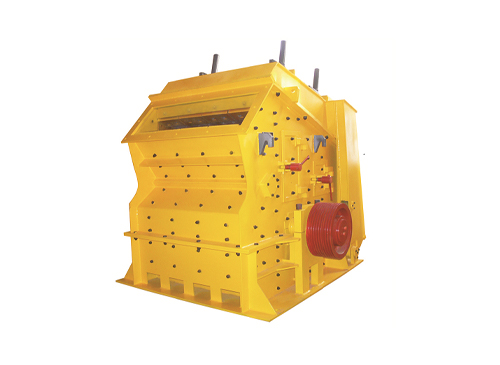
In the design of industrial crushing processes, the horizontal impact crusher (abbreviated as HSI) is a typical representative for handling large feed sizes and achieving high reduction ratios. Its main feature is that the rotor axis is arranged horizontally, and the material enters the crushing chamber along the tangential direction.
Mechanical Structure and Design Features for Reducing Bounce Rates
The chamber design of the HSI usually features a wide feed opening, allowing it to directly receive the discharge from coarse jaw crushers, or even serve directly as the first-stage coarse crushing in production lines for specific materials like limestone. The rotor relies on its own heavy-duty structure and the kinetic energy accumulated during high-speed rotation to forcefully split large chunks of material entering continuously. To reduce material clogging and material bounce-back in the production line (which corresponds logically to reducing downtime and technical failure rates mentioned on websites), a gravity-type impact curtain is configured above the feed opening.
Material Adaptability and Application Scope
Horizontal impact crushers are most suitable for processing soft and medium-hard materials with a Mohs hardness <= 5.
- Typical Ores: Limestone, Calcite, Gypsum.
- Industrial Solid Waste Recycling: Construction waste, demolished waste concrete blocks (Concrete recycling), asphalt pavement milling materials. Due to the open discharge area of the HSI, even if a small amount of construction rebar is mixed into the material, it can be smoothly stripped from the concrete under the blow of the bars without easily causing jams.
Vertical Impact Crusher (VSI): Precision Shaping and Fine Crushing
Different from the horizontal axis design, the vertical impact crusher (abbreviated as VSI) has its rotor axis perpendicular to the ground. The core function of the VSI is no longer to pursue a huge single reduction ratio, but to focus on the shaping of high-specification construction aggregates and manufactured sand (M-sand) production.
Kinematic Mechanisms: Rock-on-Rock and Rock-on-Anvil
The working principle of the VSI is mainly divided into two standardized configurations:
- Rock-on-Rock: Material enters the high-speed rotating rotor through a central feed tube, is accelerated to a linear velocity of 60 - 90 m/s and thrown out, colliding violently with the rock lining naturally accumulated around the discharge hopper. In this mode, the crushing of the material mainly occurs between "material and material," resulting in extremely low consumption of metal wear parts, making it highly suitable for processing highly abrasive materials such as quartz sand and basalt.
- Rock-on-Anvil: The outer ring of the rock lining is replaced with high-hardness anvils. The material directly impacts the metal anvils after being thrown out. Its crushing efficiency is increased by 15% - 20% compared with "rock-on-rock," but the consumption of wear parts increases accordingly, making it suitable for fine crushing of materials with medium hardness or lower and low abrasiveness.
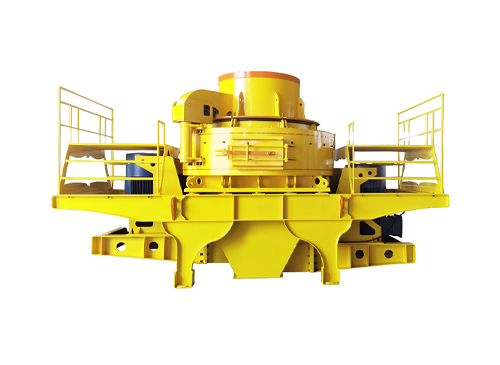
VSI Impact Crusher & Portable VSI Crusher Integration
In actual medium and large-scale sand and gravel aggregate plants, fixed vsi impact crusher systems and mobile/portable portable vsi crusher units present distinct supply chain and engineering configuration features.
In order to evaluate the technical selection of these two types of vertical axis equipment as well as the horizontal axis (HSI) more intuitively for industrial procurement, their core standardized parameters are listed in the comparison table below:
| Technical & Operational Metrics | Horizontal Impact Crusher (HSI) | Fixed VSI Impact Crusher | Portable VSI Crusher |
|---|---|---|---|
| Max Feed Size | 300 - 700 mm | 30 - 50 mm | 30 - 45 mm |
| Output Size Range | 0 - 40 mm (wide gradation) | 0 - 5 mm (high ratio of M-sand) | 0 - 5 mm (high-precision shaped sand) |
| Rotor Linear Velocity | 30 - 45 m/s | 60 - 90 m/s | 60 - 85 m/s |
| Reduction Ratio | Large (10:1 - 15:1) | Small (3:1 - 5:1) | Small (3:1 - 5:1) |
| Infrastructure & Deployment Requirements | Requires heavy concrete foundation, long-term fixed, stable steel structure. | Requires permanent steel structure platform and stable shock-absorbing foundation. | Integrated on a wheeled trailer or tracked chassis, comes with hydraulic supports, no on-site foundation pouring required. |
| Typical Industrial Scenarios | Secondary coarse/medium crushing in quarries, first/second stage material liberation in mining systems. | Large modern aggregate plants, high-grade concrete aggregate shaping centers. | Highway repair, remote mountain infrastructure, on-site temporary mobile M-sand processing. |
As shown by the parameter comparison above, the fixed vsi impact crusher carries large-scale, continuous and stable industrial capacity delivery, while the **portable vsi crusher** provides modern engineering contractors with extremely high on-site flexibility and working capital turnover efficiency by eliminating high cross-site material transportation costs.
Scale, Mobility, and Configurations in Modern Aggregate Production
Impact Hammer Crusher: High-Velocity Single-Stage Reduction
In specific industrial mineral processing and primary crushing circuits, the impact hammer crusher is often confused with standard HSIs, but the two have fundamental differences in rotor structure and crushing dynamics.
Structural Differences and Mechanical Principles
The blow bars of a standard impact crusher are rigidly fixed to the rotor, whereas the hammers of an impact hammer crusher are hinged to the rotor disc via pins, remaining in a freely suspended state. When the rotor rotates at high speed, the hammers open up under centrifugal force to strike the material entering the crushing chamber.
In addition, the lower part of the hammer crusher chamber is usually equipped with an adjustable grate bars structure. After being struck by the hammers, the material is further sheared and ground between the impact plates and the grate bars inside the machine, and only material smaller than the grate clearance can be discharged. This design gives it an extremely high single-stage reduction rate, enabling a single-stage crushing effect that replaces two stages of crushing.
Industrial Application Scenarios and Material Limitations
Since the hammers can swing backward when encountering uncrushable foreign objects (such as excavator teeth or iron blocks), this equipment has a strong ability to protect the main shaft of the rotor. Its most standard application scenarios include:
- Medium and low hardness brittle materials: Coal, Limestone, Phosphate, Shale.
- When the Mohs hardness of the material exceeds 4 and the silica content (silicon dioxide, SiO2) is >2%, the wear rate of the hammers will rise sharply, so it is not recommended for processing basalt or granite.
Permanent Small Impact Crusher Systems for Targeted Processing
Not all industrial mines require a processing capacity of hundreds of tons per hour. In regional small and medium-sized quarries, laboratory pilot lines, or tailings recovery systems in mineral processing plants, the small impact crusher provides extremely high capital expenditure (CAPEX) efficiency.
Small impact crushers are not simply scaled down in size during design; they need to optimize the rigidity of the casing while maintaining the rotor linear velocity (ensuring sufficient kinetic impact energy). Their core advantages lie in:
- Standardized Compact Footprint: The highly integrated machine body design facilitates installation in narrow indoor factories or on existing steel structure platforms.
- Low Power Drive Optimization: Matched with lower power electric motors, it significantly reduces energy consumption per ton of material (kWh/t) while ensuring the cubical grain shape of the finished aggregate.
On-Site Mobility: Mobile Impact Crusher & Portable Impact Crusher Fleet
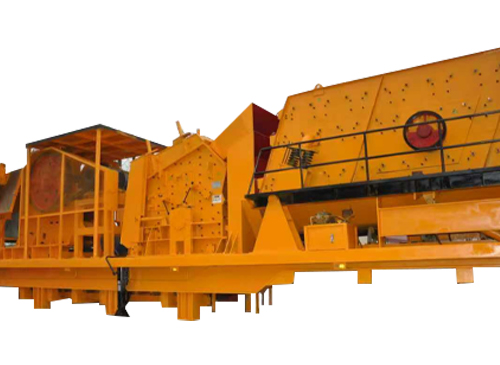
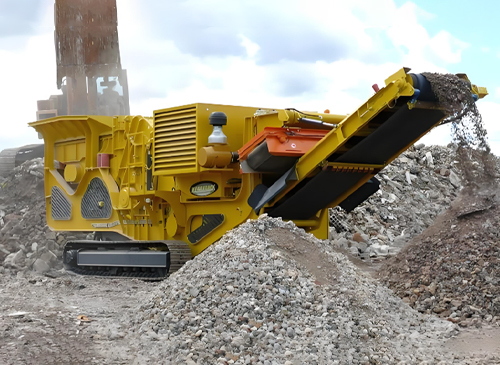
For modern large-scale infrastructure projects (such as transnational highways and railway construction) and urban demolition recycling, traditional fixed production lines face high round-trip material transport costs. Therefore, mobile fleets composed of the mobile impact crusher (tracked mobile impact crusher) and the portable impact crusher (wheeled portable impact crusher) have become the mainstream choice in the international market.
According to differences in chassis drive, travel methods, and application scenarios, the industrial technical parameters and application matrices of the two are compared and listed below:
| Engineering Metrics | Tracked Mobile Impact Crusher (Mobile Impact Crusher) | Wheeled Portable Impact Crusher (Portable Impact Crusher) |
|---|---|---|
| Chassis / Drive Type | Tracked chassis, driven by on-board diesel engine via hydraulic motors or full electric drive (dual oil-electric power). | Wheeled/Trailer chassis, needs to be towed by a semi-truck tractor head. |
| Terrain Adaptability | Extremely Strong. Can crawl and adjust position autonomously on muddy, steep mine slopes of <= 20 degrees. | Medium. Requires flat, compacted standard ground and relies on its own hydraulic outriggers to stabilize. |
| Logistics & Relocation Ease | No disassembly required, can directly walk onto a flatbed trailer for long-distance transport. | Complies with standard road transport regulations, can be directly towed on highways by a tractor after connection. |
| Setup Time | Shortest (< 2 hours). Features hydraulic folding hopper and conveyors, ready for production with one-key unfolding. | Relatively Short (approx. 4 - 8 hours). Requires fixing outriggers, adjusting levels, and anchoring. |
| Standard Capacity Range | 100 - 350 t/h | 150 - 500 t/h (can carry heavier screening integration) |
| Typical Industrial Scenarios | Crushing on the go directly at quarry blasting faces, narrow urban demolition waste sites, mines without external power supply. | Distributed aggregate processing along highway routes, multi-site contract projects for large government contractors across regions. |
As shown by the parameter matrix, the mobile impact crusher focuses on "zero-distance" on-site crushing under extreme terrains inside mines, while the portable impact crusher is more suitable for rapid deployment across different regions relying on standardized highway networks for large-scale engineering projects.
Industrial Material Versatility: From Mining to Slag Recycling
Impact Mill Crusher for Fine Powder and Specialized Industrial Outputs
In the two-stage or three-stage closed-circuit circulation systems for industrial powder making and deep processing of non-metallic minerals, the impact mill crusher extends crushing down to sub-millimeter or powder levels by significantly increasing the rotor linear velocity.
Different from standard coarse impact crushers, the internal chamber of the impact mill crusher is more compact, and the shearing clearance between the blow bars and the impact plates is usually controlled within <= 5 mm.
Technical Response to Abrasive Variations
In industrial production, evaluating the destructive power of materials on crusher wear parts is mainly based on Quartz Equivalent Content and Mohs Hardness.
- Highly Abrasive Industrial Solid Waste: For example, waste glass processing and metallurgical slag. These materials contain high concentrations of silicon dioxide (SiO2) or metallic hard particles.
- Technical Solution: Under such working conditions, the equipment must limit the rotor linear velocity to a lower range to slow down wear, and at the same time, high-chromium composite bimetallic liners must be installed on all critical areas subject to wear.
Physical Crushing Performance of Special Materials
Reclaimed Asphalt Pavement (RAP):Under conditions where materials tend to stick together when heated, impact crushing utilizes instantaneous impact forces to strip aggregates from the asphalt interface, avoiding the common clogging phenomenon in compression crushers caused by asphalt temperature rise under pressure.
Optimizing the Impact Stone Crusher for Strict Gradation Curves
When purchasing an impact stone crusher, the core technical demand for buyers is to keep the aggregate gradation curve absolutely stable throughout a continuous 24/7 supply chain to ensure compliance with downstream concrete mixing plant recipe requirements.
Linked Adjustment of Rotor Linear Velocity and Closed Side Setting (CSS)
The output grain size distribution of an impact crusher is not static, and plant engineers interfere precisely through two standardized mechanical parameters:
- Rotor Linear Velocity (v): As the rotor linear velocity increases, the kinetic energy applied to the material enhances, causing the material to fragment more thoroughly, and the proportion of fine particles (<= 5 mm) in the product rises significantly.
- Closed Side Setting (CSS): The minimum distance between the front end of the impact plate and the rotor blow bar rotation circle trajectory is adjusted via a hydraulic system. This distance directly determines the number of collision cycles the material undergoes inside the chamber.
The following table lists the impact of adjusting technical parameters on the final product gradation proportions under the same feed specification (taking 150 mm high-quality limestone as an example):
| Operational Config | Linear Velocity | Discharge Opening (CSS) | Proportions of <= 5 mm M-Sand | Proportions of 5 - 20 mm Aggregate | Proportions of 20 - 40 mm Coarse Aggregate | Target Industry |
|---|---|---|---|---|---|---|
| Option A: High-Energy Shaping Mode | 42 m/s | 15 mm | 35% - 40% | 50% - 55% | <= 5% | High-grade standard commercial concrete, dry-mix mortar stations. |
| Option B: Standard Aggregate Mode | 35 m/s | 25 mm | 15% - 20% | 60% - 65% | 15% - 20% | Continuous aggregate gradation for highway subgrades and pavements. |
| Option C: Coarse Crushing High-Capacity Mode | 28 m/s | 45 mm | <= 8% | 30% - 35% | 55% - 62% | Mass concrete for water conservancy dams, heavy retaining wall aggregates. |
Moisture Content Management and Anti-Clogging Technology
When open-pit quarries encounter rainy seasons, the feed is often mixed with wet and sticky mud (moisture content >5%). In a continuous, uninterrupted supply system, wet materials can easily adhere to the dead zones of the impact liners and gradually build up, leading to a reduction in the crushing chamber volume and motor current overload.
To ensure supply chain stability, modern heavy-duty impact crushers adopt the following standardized processes:
- Full Hydraulic Top-Opening Mechanism: Through an integrated hydraulic pump station, the overall casing can be opened within 10 minutes to quickly clean up adhered materials.
- Localized Heating or Special Scraper Design: Interchangeable special structures are designed at the back of the impact plates or at the feed chute, utilizing vibration or pneumatic impacts to break the surface tension of wet materials and prevent material bridging and clogging.
Technical Specifications & Procurement Evaluation for Global Buyers
Critical Engineering Parameters and Heavy Equipment Standards
In the international procurement of heavy-duty mineral processing and aggregate processing equipment, the core of technical bid evaluation lies in the mechanical matching of rotor specification, drive power, and actual processing capacity. Blindly pursuing large-scale single indicators often leads to a "large horse pulling a small cart" situation for the motor or fatigue damage to the rotor.
Industrial impact crushers are generally named with two-digit codes (such as 1315, 1520), which represent the diameter and width of the rotor, respectively. The specification of the rotor directly determines the linear momentum and single impact span of the equipment.
The following is the core engineering parameter matrix of mainstream heavy-duty industrial impact crushers globally (taking the standard HSI series as an example):
| Standard Model | Rotor Size D × W (mm) | Max Feed Size (mm) | Motor Power (kW) | Capacity Rate (t/h) | Total Weight (t) |
|---|---|---|---|---|---|
| HSI-1010 | Phi 1000 x 1050 | 350 | 55 - 75 | 50 - 90 | approx. 12.5 |
| HSI-1214 | Phi 1250 x 1400 | 400 | 132 - 160 | 130 - 180 | approx. 22.4 |
| HSI-1315 | Phi 1320 x 1500 | 500 | 185 - 220 | 160 - 250 | approx. 27.0 |
| HSI-1520 | Phi 1500 x 2000 | 700 | 315 - 400 | 300 - 550 | approx. 51.6 |
International Manufacturing and Safety Certification Standards
Heavy-duty equipment entering multinational supply chains must meet strict regulatory barriers in addition to parameter compliance:
- ISO 9001 Quality Management System: Ensures the overall process traceability from raw materials entering the factory (spectroscopic flaw detection) to final product assembly.
- CE Directive: Equipment must be equipped with a full set of mechanical interlocking safety devices (for example, the hydraulic lid opening system cannot start when the rotor has not fully stopped), and the electrical control cabinet must meet low voltage and electromagnetic compatibility (EMC) requirements.
Ensuring Supply Chain Stability and Wear Parts Lifecycle Cost Management
For contractors of global heavy mining projects, capital expenditures (CAPEX) represent only a small fraction of the total operational costs, while long-term maintenance downtime losses (OPEX) are the key factor determining project success. Therefore, evaluating the manufacturer's supply chain stability and spare parts processing technology is critical.
Evaluation of Factory Casting Capabilities and Precision Machining Processes
- Casting Capabilities: The machine frame, rotor disc, and blow bars of a heavy-duty impact crusher need to withstand continuous high-frequency impacts. Qualified manufacturers should possess independent vacuum expendable pattern casting lines or large electric arc furnace smelting capabilities to ensure that the castings are free of fatal defects such as internal blowholes and slag inclusions.
- CNC Precision Machining: The rotor bearing housings and blow bar installation slots must undergo one-time clamping and positioning processing on large CNC gantry milling machines. If the machining accuracy shows an axial deviation of >= 0.05 mm, the equipment will generate huge centripetal exciting forces during high-speed operation at 700 rpm, directly leading to fatigue burnout of the bearings within a few weeks.
Modular Design and Minimizing Downtime
To optimize the lifetime operational cost of heavy equipment in remote overseas mining areas, modern impact crushers have fully imported standardized modular designs:
- Wedge Locking System: Discards the old-fashioned direct bolt fixation method and adopts self-locking wedges. The centrifugal force generated when the rotor rotates makes the wedges clamp tighter and tighter, which not only eliminates the major safety hazard of blow bars flying out, but also shortens the turn-around or replacement time of a single set of blow bars from the traditional 8 hours to less than 2 hours.
- Interchangeable Side Liners: The internal wear-resistant liners of the whole machine adopt a single standardized size layout. When a localized area (such as the direct receiving zone) wears faster, operators can swap the liners with those in non-core wear zones, increasing the material utilization rate of all liners by more than 35%, significantly stabilizing the logistics and warehousing costs of overseas spare parts.
Technical FAQ: Operational Insights & Engineering Procurement center
Q: What is the primary difference in application between a horizontal impact crusher and a vertical impact crusher (VSI)?
A: The stages they occupy in the processing flow and their core engineering purposes are entirely different.
- Horizontal Impact Crusher (HSI): Belongs to linear kinetic energy coarse/medium crushing equipment. Its rotor is arranged horizontally, relying on the massive moment of inertia of the blow bars to directly crush large pieces of material. The feed size can usually reach 300 - 700 mm, and the reduction ratio can reach above 10:1. It is mainly used for first-stage or second-stage mineral liberation.
- Vertical Impact Crusher (VSI): Belongs to high linear velocity shaping/sand-making equipment. Its rotor is arranged vertically, and the feed size is strictly limited to below 50 mm. Material is thrown at high speeds (linear velocities up to 60 - 90 m/s) inside the VSI to achieve "rock-on-rock" or "rock-on-anvil" crushing. The core purpose is to eliminate internal stress in aggregates, shape needle-like and flaky materials into high-standard cubes, or produce manufactured sand (M-sand) of 0 - 5 mm on a large scale.
Q: How do you select the correct blow bar metallurgy for an impact crusher machine processing recycled concrete vs. natural limestone?
A: The selection of wear-resistant blow bars must strike a balance between hardness (Resist Abrasion) and toughness (Resist Impact):
- Processing Recycled Concrete: This type of material often contains high-toughness metals such as scrap rebar and iron nails (Tramp Iron). If high-chromium cast iron, which has extremely high hardness but high brittleness, is selected, it can easily break under impact when striking rebar. Therefore, modified high manganese steel or medium/low chromium alloy steel must be selected to utilize its characteristic of rapid work hardening on the surface under high impact.
- Processing Natural Limestone: Limestone itself is brittle with medium impact load, but the material often contains some abrasive silicon dioxide components. In this case, high-chromium cast iron (Cr13 - Cr27) should be preferentially selected to make its hardness reach HRC58 - 62, maximizing resistance to material cutting wear and extending the spare parts replacement cycle.
Q: What are the distinct operational benefits of a mobile impact crusher compared to a portable impact crusher?
A: The technical advantages of the two are mainly reflected in the relocation flexibility and on-site setup speed determined by their chassis structures:
- Mobile Impact Crusher (Tracked): Adopts a full tracked chassis and relies on an on-board diesel engine to drive hydraulic motors to achieve completely autonomous travel. Its engineering advantage lies in "crushing on the go," allowing it to walk directly to the blasting work face deep inside the quarry, or turn around flexibly in narrow urban demolition sites without the need for manual preparation of ground foundations, with setup times usually <2 hours.
- Portable Impact Crusher (Wheeled/Trailer Type): The chassis consists of standard axles and tires, requiring a semi-truck tractor head for highway towing. Its engineering advantage lies in extremely efficient cross-regional long-distance relocation, complying with standard road traffic regulations, enabling travel between different urban sections at higher speeds. Setup requires extending its own hydraulic outriggers to stabilize the vehicle body, making it suitable for distributed, phased highway or railway aggregate supply projects.
Q: How does a small impact crusher maintain cost-efficiency without compromising the final grain shape?
A: The ability of the small impact crusher to guarantee grain shape lies in the "equal linear velocity design principle."
Although the rotor diameter and width of small equipment are reduced, its drive system optimizes the pulley transmission ratio to increase the rotor speed (RPM), thereby ensuring that the linear velocity at the edge of the blow bars can be stably maintained within the industrial standard range of 30 - 38 m/s. According to the kinetic energy formula, the instantaneous impact stress received by the material is not weakened. Working with proportionally reduced three-chamber involute impact plates, the material still undergoes sufficient rebound and free stress crushing inside the chamber, thereby strictly controlling the proportion of needle-like and flaky aggregates within 8%. Because the machine body is compact and the total power is small, the energy consumption per ton and fixed asset depreciation costs during small-scale production are much lower than forced operation of large equipment.
Q: What regular maintenance protocol prevents catastrophic failure in an impact hammer crusher?
A: Because the hammers of a hammer impact crusher are in a hinged suspended state, routine maintenance must execute the following strict standardized procedures:
- Two-Way Symmetrical Wear Turning: When one side of the hammer reaches its wear limit (usually 1/2 of the original thickness), the hammer must be turned around in a timely manner to maintain the dynamic symmetry of the rotor operation.
- Strict Rotor Weight Matching: When replacing new hammers, the entire set of hammers must be precisely weighed and arranged in a cross-symmetrical manner. The total weight error between opposite sets of hammers must be <= 0.5 kg; otherwise, it will induce catastrophic dynamic unbalance, causing the main bearings to overheat, burn out, or even break the shaft within a few hours.
- Grate Clearance and Material Clogging Cleanup: After each shift shutdown, the wear condition of the bottom grate bars must be checked, and wet, sticky material accumulated at the discharge opening must be cleared by force to prevent the motor from burning out due to overload currents during secondary startup.
- Metal Foreign Object Monitoring: A strong magnetic separator must be configured at the upper end of the feed belt, and any uncrushable excavator teeth or oversized iron blocks are strictly prohibited from entering the crushing chamber to avoid severe chamber-smashing accidents under high-energy single-stage impact.
References
- Standard Test Method for Resistance to Degradation of Large-Size Coarse Aggregate by Abrasion and Impact in the Los Angeles Machine, ASTM C535.
- Size Reduction Equipment Mechanics and Modeling of Impact Crushers, International Journal of Mineral Processing, Vol. 142, pp. 45-56.
- Advanced Material Science in Heavy Duty Blow Bars Casting Quality Control Protocols, Journal of Materials Engineering and Performance, 2024.
- Kinematics Analysis of Vertical Shaft Impactors in Manufactured Sand (M-Sand) Production Lines, Minerals Engineering Research, Vol. 88, pp. 112-125.