English
 русский

Content
- 1 Cone Crusher Price Bands: What Buyers Actually Paid Last Year
- 2 The Five Numbers That Move a Cone Crusher Quote
- 3 Spring, Compound, Single-Cylinder, Multi-Cylinder: Price Against Payback
- 4 What a Cone Crusher Quotation Usually Leaves Out
- 5 Three-Year Ownership Cost for a 200 t/h Granite Line
- 6 How to Compare Two Cone Crusher Quotations Line by Line
- 7 Matching Price to Capacity: Three Real Buying Scenarios
- 8 Lead Time, Factory Checks, and Delivery Terms That Change the Final Number
- 9 Frequently Asked Questions About Cone Crusher Price
- 9.1 How much is a cone crusher for a small quarry?
- 9.2 Why do two quotes for the same capacity differ by 40%?
- 9.3 Is a hydraulic cone crusher worth the extra cost over a spring type?
- 9.4 What is included in the price of a new cone crusher?
- 9.5 How long does delivery take, and how much does shipping add?
- 9.6 What maintenance budget should be planned per year?
Cone Crusher Price Bands: What Buyers Actually Paid Last Year
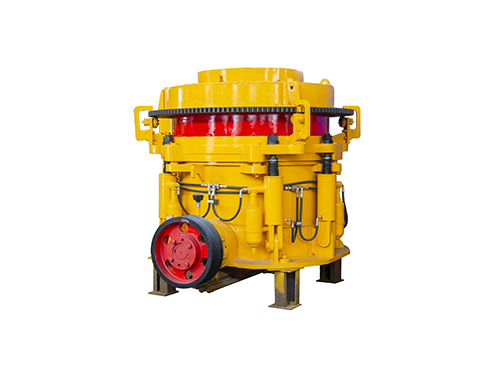
A 250 t/h multi-cylinder hydraulic cone crusher in standard configuration typically quotes between USD 165,000 and USD 240,000 FOB China. A spring cone crusher handling tertiary duty in the same plant quotes closer to USD 32,000. That five-fold gap explains why two buyers asking the same question online receive answers that differ by a hundred thousand dollars. Price is not a property of the machine name. It is a property of the duty, the cavity, the drive, and the wear package behind it.
| Crusher family | Typical capacity | Price band (USD, FOB) | Usual duty |
|---|---|---|---|
| Spring cone crusher, 900 to 1750 series | 20 to 180 t/h | 25,000 to 95,000 | Tertiary crushing, small quarries, sand plants |
| Compound cone crusher, S240 to S400 | 90 to 400 t/h | 45,000 to 160,000 | Secondary and tertiary crushing of medium-hard rock |
| Single-cylinder hydraulic cone crusher | 100 to 500 t/h | 75,000 to 280,000 | High-reduction secondary duty, manufactured sand |
| Multi-cylinder hydraulic cone crusher | 150 to 700 t/h | 110,000 to 420,000 | Hard rock, high-capacity secondary and tertiary |
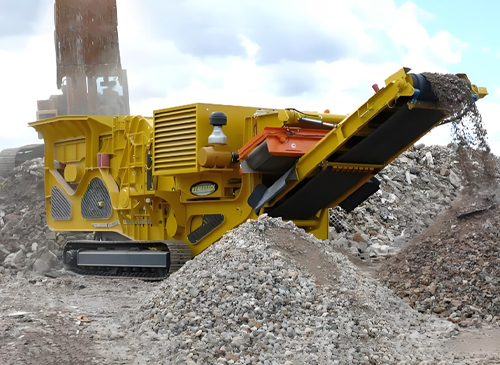
| Crawler-mounted cone crushing plant | 150 to 400 t/h | 320,000 to 900,000 | Quarry relocation, demolition, contract crushing |
Two rules of thumb keep these figures honest. First, price per tonne of hourly capacity falls as the machine grows: a 150 t/h unit works out near USD 900 per t/h of capacity, while a 500 t/h unit lands closer to USD 450 per t/h. Second, the hydraulic package is where the money concentrates. Moving from a spring frame to a multi-cylinder hydraulic frame at the same throughput adds 40% to 70% to the invoice, and most of that difference sits in the hydraulic station, the accumulator bank, and the control cabinet.
Ocean freight, insurance, and destination duties sit outside these bands. A 40-tonne machine shipped from Shanghai to Mombasa or Callao typically adds USD 6,000 to USD 14,000 in freight and port charges, and import duty ranges from zero to 20% depending on the destination's tariff schedule.
The Five Numbers That Move a Cone Crusher Quote
With one hour to compare three quotations, spend it on these five numbers. Everything else in the documents is secondary, and every one of them is negotiable before the purchase order is signed.
1. Throughput at a defined closed side setting
Capacity on a brochure page means nothing without the closed side setting (CSS) and the bulk density it was measured at. A 300 t/h figure quoted at 32 mm CSS on 1.6 t/m³ limestone becomes roughly 210 t/h at 45 mm CSS on the same rock, and lower again on granite. Ask for the capacity table with CSS rows and confirm that the eccentric throw matches the reduction ratio your circuit needs. A machine ordered with the wrong throw cannot be fixed by adjusting settings on site.
2. Maximum feed size and the reduction ratio it implies
A cone crusher receiving 300 mm rock and discharging at 25 mm is performing a 12:1 reduction and needs a large feed opening with a coarse cavity. The same frame ordered with a fine cavity costs the same but produces less. Cavity choice is free at order stage and expensive later, because changing cavities usually means new liners and sometimes a different bowl assembly.
3. Installed motor power
Power drives price more directly than any other specification. A 160 kW machine and a 315 kW machine can share a frame family, yet the larger motor, heavier shaft, bigger bearings, and reinforced hydraulics add USD 40,000 to USD 70,000. Under-powering to save money shows up later as poor particle shape, lower throughput, and higher cost per tonne.
4. Closed side setting range and adjustment method
Hydraulic adjustment with an integrated control panel adds roughly USD 8,000 to USD 18,000 over manual adjustment on the same frame. On a plant that changes product grade twice a week, that option pays back within a season. On a plant running one grade for years, it stays optional.
5. Wear material and liner weight
Standard manganese liners in Mn13Cr2 are normally included. Upgrading to Mn18Cr2 or a composite matrix adds 8% to 15% to the liner price and typically extends liner life by 30% to 60% in abrasive granite or basalt. On a 250 t/h hard-rock plant, the upgrade often pays for itself inside the first liner cycle. Liner weight per set also matters, because it sets the change-out crane capacity and the number of hours the plant stands still.
Where the budget goes on a complete 250 t/h cone crushing station
Read the chart before you start negotiating. A 5% discount on the crusher changes the project budget by 2.2%. Reshaping the steel structure or shortening the conveyor runs changes it by more. Buyers who argue only about the machine price usually leave the larger savings on the table.
Spring, Compound, Single-Cylinder, Multi-Cylinder: Price Against Payback
Four families cover almost every cone crushing duty, and each one wins on a different criterion. The comparison below is about money and maintenance, not about which machine is "better" in the abstract.
Spring cone crusher: the lowest entry ticket
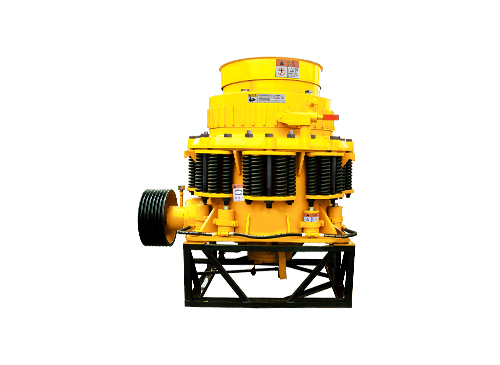
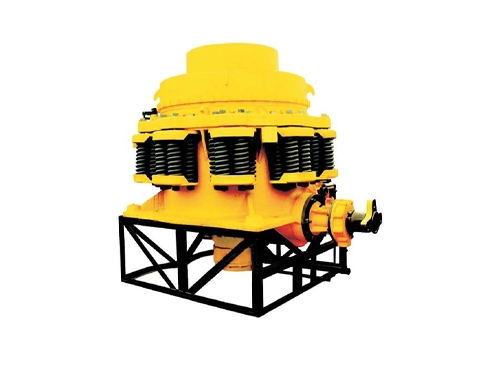
The spring frame uses a mechanical overload release, so tramp metal compresses the springs and the bowl lifts. There is no hydraulic station, no accumulator, and no control cabinet, which is exactly why a 1200-series unit lands near USD 38,000 while a comparable hydraulic machine starts near USD 75,000. Maintenance is straightforward and spare parts are cheap and widely available. The trade-off is adjustment: setting changes require the bowl to be rotated manually, and the machine offers less precise control over product shape in abrasive, high-reduction duty.
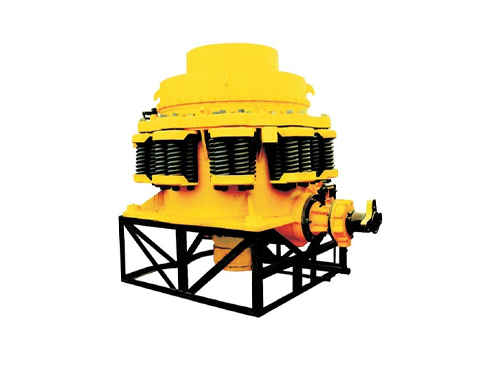 PYT Series Spring Cone CrusherPYT series spring cone crusher offers mechanical overload protection and simple maintenance for medium- to high-hardness ores, with manual setting adjustment and lower capital cost.View Product →
Compound cone crusher: middle ground with a mechanical release
The compound design keeps a spring-style overload system but adds a hydraulic cavity clearing function and a heavier frame. Quotations usually fall between USD 45,000 and USD 160,000 depending on size. It is a sensible choice where the rock is medium-hard, the plant runs one or two product grades, and the owner wants hydraulic clearing without paying for full hydraulic adjustment.
Single-cylinder hydraulic cone crusher: fewer parts, simpler hydraulics
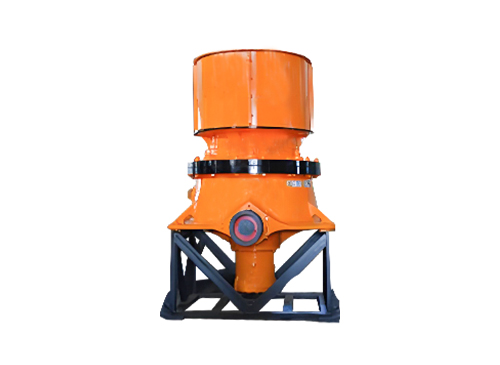
One hydraulic cylinder handles both adjustment and overload protection, so the hydraulic circuit is simpler than a multi-cylinder design and the component count is lower. That simplicity keeps the price roughly 15% to 25% below a multi-cylinder machine of similar throughput. The design also accepts a relatively large feed opening for its frame size, which suits secondary duty with a high reduction ratio and manufactured sand circuits that need consistent shape. The limitation appears in very hard, very abrasive rock, where the single-cylinder layout has less margin for extreme crushing force.
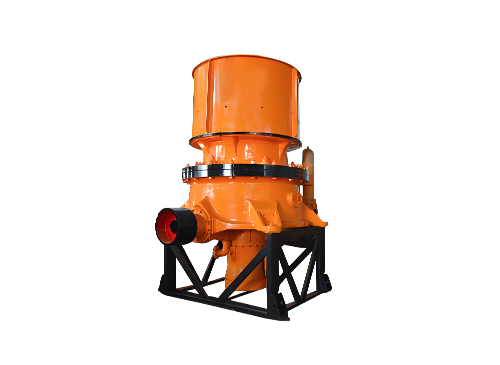 CS/CH Series Single-Cylinder Cone CrusherSingle-cylinder hydraulic cone crusher combines adjustment and overload protection in a simpler circuit, offering lower cost and large feed opening for aggregate and hard-stone duties.View Product →
Multi-cylinder hydraulic cone crusher: the hard-rock standard
Multiple hydraulic cylinders around the frame provide both clamping force and overload release, so the machine absorbs tramp metal and uncrushable material without a mechanical spring stack. The result is tighter setting control, better particle shape, and higher availability in hard-rock duty. This is the most expensive family, from USD 110,000 to USD 420,000, and it is also the one that most often justifies its price on a plant running 16 hours a day in granite or basalt. Over five years, the extra USD 60,000 to USD 90,000 over a single-cylinder unit is usually recovered through fewer liner changes, fewer stoppages, and a higher percentage of saleable product.
What a Cone Crusher Quotation Usually Leaves Out
The gap between the quoted price and the money actually spent is where most budget surprises appear. On a typical 250 t/h installation, the exclusions below add 25% to 45% to the equipment invoice, and buyers who have not priced them in often end up renegotiating with their own finance team mid-project.
- Foundation and civil works. A cone crusher needs a reinforced concrete block sized to its dynamic load, usually 8 to 20 cubic metres of concrete plus rebar. On prepared industrial land this costs USD 12,000 to USD 30,000.
- Steel structure, platforms, and stairs. Access platforms for liner changes, discharge chutes, and the support frame are rarely part of a machine-only quote.
- Electrical supply and cabling. Motor starting, protection, and the cable run from the substation are site scope in almost every contract.
- Liner set beyond the first. The first set ships with the machine. A second set is a working capital decision that many buyers forget until month three.
- Oil and consumables. Hydraulic oil, lubricating oil, and the first filter set can exceed USD 3,000 on a large frame.
- Installation supervision and commissioning. Engineer days, visas, flights, and accommodation are usually quoted separately, at USD 300 to USD 600 per engineer day plus travel.
- Operator training. Usually offered, but confirm whether it is delivered on site or online, and whether a second session after six months is included.
Ask every supplier to mark which lines are included and which are excluded, using the same format. Quotes are only comparable when exclusions are visible.
Three-Year Ownership Cost for a 200 t/h Granite Line
Purchase price is roughly half of what a cone crusher costs over its first three years of work. The table below uses a 200 t/h granite application running 3,000 hours a year, with a 250 kW multi-cylinder machine bought at USD 185,000 and liners replaced on condition monitoring.
| Cost line | Year 1 (USD) | Year 2 (USD) | Year 3 (USD) |
|---|---|---|---|
| Equipment purchase | 185,000 | 0 | 0 |
| Installation and commissioning | 22,000 | 0 | 0 |
| Liner sets and wear parts | 9,500 | 16,800 | 17,600 |
| Spare and repair parts | 2,400 | 5,200 | 6,100 |
| Electricity, 250 kW at 0.10 USD/kWh | 75,000 | 75,000 | 75,000 |
| Lubricants and filters | 3,200 | 3,400 | 3,600 |
| Maintenance labour | 8,000 | 9,000 | 9,500 |
| Total | 305,100 | 109,400 | 111,800 |
Two conclusions follow. Electricity is the largest recurring cost, not wear parts, which is why motor efficiency and the crusher's ability to run at a stable, optimum power draw matter more than a small discount on the invoice. And downtime costs more than any single line in the table: an unplanned stop on a plant producing 200 t/h of aggregate worth USD 12 per tonne destroys roughly USD 2,400 of output for every hour the line stands still. Liner availability and a documented change-out procedure are therefore financial issues, not housekeeping.
Keeping a full set of cone crusher spare parts on site, including a mantle, a bowl liner, and a set of filter elements, is the cheapest insurance a plant can buy.
How to Compare Two Cone Crusher Quotations Line by Line
Two quotes can show the same model number and still describe machines that differ by USD 50,000 in real content. The comparison points below catch almost every case.
| Quotation line | What an incomplete offer hides | What to request |
|---|---|---|
| Capacity statement | A throughput figure with no CSS and no rock type | Capacity table by CSS, with the assumed bulk density |
| Motor | Unbranded motor, unclear insulation class, no efficiency rating | Brand, power, voltage, and efficiency class in writing |
| Hydraulic station | Locally assembled components with no spares support | Component brand list and pressure test record |
| Control system | "PLC included" with no description | Panel drawing, sensor list, and operating language |
| Liner specification | "Manganese liner" with no grade or weight | Material grade, liner weight per set, and expected life |
| Warranty | 12 months on the frame only | Warranty scope, wear part exclusions, and claim process |
| Documentation | Operating manual in one language only | Manual, parts book, foundation drawing, and wiring diagram |
| Lead time | A date with no penalty and no shipping terms | Ex-works date, Incoterm, and loading port |
If you want to understand the machine before you argue about money, the working principle behind these numbers is explained in this guide on how a cone crusher works. Buyers who understand the crushing chamber, the eccentric throw, and the choke feed condition negotiate from a much stronger position than buyers who only compare tonnage figures.
Matching Price to Capacity: Three Real Buying Scenarios
Scenario 1
100 t/h quarry, one product grade
Budget USD 55,000 to USD 85,000 for a single-cylinder machine, plus USD 12,000 for foundations and structure. A spring cone crusher would save USD 25,000 at purchase but cost roughly 15% more per tonne over three years because of manual setting changes and slower liner replacement.
Scenario 2
250 t/h granite, two shifts
Budget USD 165,000 to USD 240,000 for a multi-cylinder frame, and insist on Mn18Cr2 liners from the first set. At this duty the hydraulic adjustment and the overload protection are not luxuries; they are the reason the plant reaches 6,000 hours a year without a major stop.
Scenario 3
Relocating contract crushing
Budget USD 320,000 to USD 650,000 for a crawler cone plant. The premium over a stationary frame buys mobility, not crushing power, so compare the track undercarriage rating, the discharge conveyor length, and the dust suppression package before comparing price.
A fourth scenario deserves a mention: plants that already own a jaw and a screen and only need a third stage. In that case the cheapest valid answer is usually a well-matched used or smaller new cone crusher, and the price conversation should shift to liner cost per tonne rather than purchase price.
Lead Time, Factory Checks, and Delivery Terms That Change the Final Number
Delivery terms move the landed cost more than most buyers expect, and they are also the easiest thing to verify before payment. Shanghai Sanming manufactures in Qidong, in the Shanghai Pudong industrial area, and welcomes buyers to inspect a machine under assembly before it is crated. The company has held ISO9001 certification for its quality system and reports an average delivery time of about 20 days for standard models, which matters on projects where the civil works are already finished and the plant is waiting.
Three checks are worth the trip or the video call. Ask to see the bowl and mantle seating surfaces before assembly, because a poorly machined seat causes liner cracking within weeks. Ask for the hydraulic pressure test record of the clamping cylinders. And ask which parts are sourced locally and which are imported, since that determines spares lead time two years from now, when the machine is out of warranty and the purchasing manager has changed.
Roughly 40% of the company's output is exported, mainly to Central Asia, the Middle East, South America, and Africa, and English and Russian language support is available. For a buyer comparing a USD 180,000 machine against a USD 240,000 machine from another region, the honest comparison is landed cost plus spares lead time plus the number of working days lost when a part fails. That total rarely matches the invoice ranking.
Frequently Asked Questions About Cone Crusher Price
How much is a cone crusher for a small quarry?
For a 50 t/h to 100 t/h secondary or tertiary duty, a spring or compound cone crusher typically costs USD 28,000 to USD 75,000 FOB China, with foundations, structure, and electrical work adding USD 10,000 to USD 20,000 on site. A single-cylinder hydraulic machine at the same capacity starts around USD 75,000.
Why do two quotes for the same capacity differ by 40%?
Almost always because of the motor, the hydraulic components, the liner grade, and the control system. A 200 t/h quote at USD 95,000 and one at USD 140,000 usually describe different motors, different hydraulic stations, and different documentation packages. Ask both suppliers for a component list before comparing the totals.
Is a hydraulic cone crusher worth the extra cost over a spring type?
On a plant running more than 2,500 hours a year in medium-hard or hard rock, yes. Hydraulic adjustment cuts setting-change time from hours to minutes, and the overload protection reduces the risk of a catastrophic failure from tramp metal. Below 1,500 hours a year in soft rock, a spring machine can be the more sensible purchase.
What is included in the price of a new cone crusher?
A standard offer includes the crusher body, one set of liners, the drive motor, the hydraulic station where applicable, a control cabinet, a foundation drawing, and one set of operating manuals. It rarely includes steel structure, cabling, oil, installation, commissioning, or a second liner set.
How long does delivery take, and how much does shipping add?
Standard models are usually ready in about 20 days from a Chinese factory, with custom cavities or special voltages adding two to four weeks. Sea freight for a 30 to 45 tonne machine typically runs USD 6,000 to USD 14,000 depending on destination port and whether the shipment is a full container or break bulk.
What maintenance budget should be planned per year?
Plan 4% to 8% of the purchase price per year for wear parts, spares, and labour. A 250 kW machine in abrasive rock sits near the top of that range; a smaller machine in limestone sits at the bottom. Electricity is separate and usually exceeds wear parts by a factor of four or five.