English
 русский

Stone crushing plant cost falls into a fairly predictable band once you know four numbers: the hourly output you need, the largest rock you will feed, the hardness of that rock, and the finished product sizes your buyers accept. A stationary plant producing 80–120 tonnes per hour from medium-hard limestone typically costs $110,000–$210,000 for the equipment package, and roughly 1.6 to 1.9 times that figure once foundations, steel structures, electrical installation, freight and commissioning are added. Below 50 tph, a compact jaw-plus-impact circuit can be delivered for $45,000–$75,000. Above 300 tph, the equipment value passes $550,000 and installed budgets frequently cross the $1 million line.
Those ranges are useful only if you know which variables move you from the bottom of a band to the top. The sections below break the budget into its real components, show what each decision costs, and explain where buyers most often under-budget by 15–30 percent before the first tonne is produced.
Content
- 1 What a Complete Plant Price Actually Covers
- 2 Typical Cost Ranges by Plant Capacity
- 3 Where the Money Goes Inside the Budget
- 4 Cost Factor 1: Throughput and the Number of Crushing Stages
- 5 Cost Factor 2: Feed Size and Rock Hardness
- 6 Cost Factor 3: Crusher Configuration and Chamber Choices
- 7 Cost Factor 4: Finished Product Shape and Sand Output
- 8 Cost Factor 5: Stationary or Mobile Configuration
- 9 Cost Factor 6: Site Conditions, Foundations and Power
- 10 Cost Factor 7: Automation, Dust Control and Electrical Scope
- 11 Cost Factor 8: Wear Parts and Cost per Tonne Over Five Years
- 12 Cost Factor 9: Freight, Installation, Commissioning and Duties
- 13 Budget Mistakes That Add 20 Percent Later
- 14 How to Compare Two Quotations Fairly
- 15 Cost per Tonne: A Worked Example
- 16 Ways to Reduce Capital Cost Without Buying Trouble
- 17 Where to Get a Costed Layout
- 18 Frequently Asked Questions
- 18.1 How much does a 100 tph stone crushing plant cost?
- 18.2 Why do two quotations for the same capacity differ so much?
- 18.3 Is a mobile crushing plant more expensive than a stationary one?
- 18.4 How long does delivery and installation take?
- 18.5 What is the biggest ongoing cost after purchase?
- 18.6 Can I start with a smaller plant and expand later?
- 18.7 What information do I need before requesting a quotation?
What a Complete Plant Price Actually Covers
A quotation that lists only a jaw crusher and a screen is not a plant quotation. A working production line needs material to arrive at the primary crusher at a steady rate, to move between stages, to be separated into saleable sizes, and to leave the site without dust clouds or stockpile segregation. When you compare suppliers, confirm that every item below is either priced or explicitly excluded.
- Vibrating feeder with grizzly section, plus a hopper sized for at least three tipper loads
- Primary crusher, normally a jaw crusher for run-of-mine rock
- Secondary and tertiary crushers, chosen by hardness and product shape
- Vibrating screens, one per size split, with the correct deck count
- Belt conveyors, including the transfer chutes and discharge stackers
- Steel structure, walkways, ladders and guard rails
- Motor control centre, cabling, start-up logic and safety interlocks
- Dust suppression, water spray or bag filters, depending on local rules
- First set of wear parts and a recommended spares holding
- Foundation drawings, erection supervision and commissioning
Where a supplier leaves conveyors or the control panel out of the price, the missing scope reappears later at a higher unit rate, because the buyer is then purchasing small quantities with no bargaining position. Ask for a scope matrix, not just a total.
Typical Cost Ranges by Plant Capacity
Capacity is the single strongest cost driver, but it is not linear. Doubling output does not double the price, because the number of machines grows more slowly than their size. A 200 tph plant does not use twice the equipment of a 100 tph plant; it uses larger models of the same machines, with disproportionately heavier frames, bearings and drives.
| 30–50 tph | Vibrating feeder, PE jaw crusher, PF impact crusher, two-deck screen, four conveyors | $45,000–$75,000 | $80,000–$130,000 | $1,500–$2,200 per tph |
|---|---|---|---|---|
| 80–120 tph | Grizzly feeder, jaw crusher, cone or impact crusher, two screens, seven conveyors, control panel | $110,000–$210,000 | $190,000–$360,000 | $1,400–$1,900 per tph |
| 150–250 tph | Feeder, jaw crusher, cone crusher, tertiary impact or VSI, three screens, closed circuit conveyors | $260,000–$480,000 | $430,000–$800,000 | $1,300–$1,700 per tph |
| 300–400 tph | Heavy feeder, large jaw, multi-cylinder cone, VSI, four screens, stackers, automation | $550,000–$900,000 | $900,000–$1,550,000 | $1,400–$1,900 per tph |
| 500 tph and above | Primary station, secondary and tertiary stations, screening towers, central control room | $1,100,000–$2,500,000 | $1,800,000–$4,000,000 | $1,600–$2,400 per tph |
Two patterns are worth noting. First, cost per tonne of hourly capacity is lowest in the 150–300 tph band, because that is where standard frame sizes fit most production targets. Second, the installed multiplier rises with capacity, since civil works, crane time and electrical infrastructure grow faster than the machinery price.
Where the Money Goes Inside the Budget
Crushing machines take the largest single share of a plant budget, but they rarely exceed 40 percent of a properly scoped project. The remainder sits in the equipment that keeps the crushers fed, separated and connected.
This distribution explains why a 12 percent saving on the crusher purchase price moves the total project by less than 4 percent, while a badly sized conveyor or an undersized screen can add weeks of rework. Buyers who focus negotiation energy only on the crusher price usually miss the larger cost pool sitting in steel, civils and logistics.
Cost Factor 1: Throughput and the Number of Crushing Stages
Every additional crushing stage adds a machine, a screen, conveyors and a structure level. A two-stage jaw-plus-impact circuit is adequate when the feed is already below 500 mm and the final product can be 0–40 mm. A three-stage jaw-cone-screen circuit becomes necessary when the feed reaches 700 mm and the customer needs 0–5, 5–10, 10–20 and 20–31.5 mm fractions with controlled flakiness.
In practice, moving from two stages to three raises equipment cost by 35–55 percent at the same nominal capacity, and raises installed cost by slightly more because the screening tower grows taller. The extra stage is often unavoidable, but it should be justified by product specification rather than habit. If your market accepts a 0–40 mm sub-base product, a three-stage circuit is money spent on sizes nobody is paying for.
Capacity also has a hidden dimension: peak versus average demand. A plant rated at 150 tph on a continuous basis may need a 200 tph design point if your buyers order in surges and trucks arrive in clusters. Sizing the primary crusher for the peak and the screens for the average is a common compromise that keeps capital cost down without starving the circuit.
Cost Factor 2: Feed Size and Rock Hardness
Hardness decides which crushing principle you can afford to run. Limestone and dolomite with a Bond work index around 10–12 kWh/t behave well in impact crushers, which deliver a cubical product at a low capital cost. Granite, basalt, river gravel and iron ore with a work index above 16 kWh/t destroy impact blow bars quickly, so the secondary stage shifts to a cone crusher, which costs more up front and far less per tonne over five years.
Feed size sets the primary crusher opening. A jaw crusher taking 700 mm lumps needs a heavier frame, a larger eccentric and a bigger drive than one taking 400 mm, and the price difference between those two models is commonly 40–70 percent. If blasting can be controlled to keep the run-of-mine top size at 500 mm, the saving on the primary machine alone can pay for a hydraulic breaker at the hopper.
Cost Factor 3: Crusher Configuration and Chamber Choices
Two quotations for a "150 tph cone crusher" can differ by 60 percent and both be honest. A spring cone crusher and a multi-cylinder hydraulic cone crusher of the same nominal capacity sit at different points on the price curve, and they behave differently in the plant.
- Spring cone: lowest purchase price, manual or semi-automatic setting, slower adjustment after wear, best suited to stable rock and steady duty
- Compound cone: mid-range price, good for medium-hard stone, simpler hydraulics and easier local maintenance
- Single-cylinder hydraulic: higher price, one hydraulic cylinder handling both setting and overload protection, good for abrasive rock
- Multi-cylinder hydraulic: highest price, fastest setting changes, best product shape and the lowest cost per tonne in hard abrasive rock at high utilisation
The economic question is not which machine is cheaper to buy, but which machine is cheaper per tonne across the life of the plant. At 200 tph and 2,500 operating hours a year in granite, the difference in liner consumption between a spring and a multi-cylinder unit can exceed the purchase price gap within 24 months.
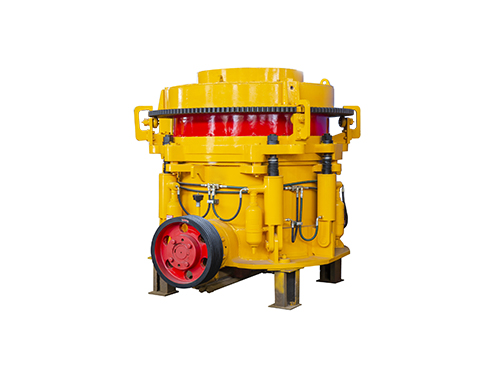 Multi-Cylinder Hydraulic Cone Crusher for Hard StoneReview HPT200–HPT500 models for hard-rock aggregate and mining duty, with all-hydraulic operation and cavity options from extra coarse to extra fine.View Product →
Cost Factor 4: Finished Product Shape and Sand Output
Aggregate buyers pay a premium for cubical particles and low flakiness. If your specification calls for a flakiness index under 15 percent, or if you intend to sell manufactured sand to concrete producers, a vertical shaft impact crusher usually enters the circuit as a tertiary or shaping stage. A VSI adds $35,000–$120,000 depending on model and drive power, plus a dedicated screen and arecirculating conveyor.
The payback is straightforward when sand is part of the product mix. Manufactured sand sells at a higher price per tonne than 20 mm aggregate in most markets, and a VSI fed with 10–20 mm screened stone can convert a low-value surplus fraction into a saleable product. Where the local market has no demand for sand, the same machine becomes an unnecessary capital item, which is why product mix analysis should precede equipment selection.
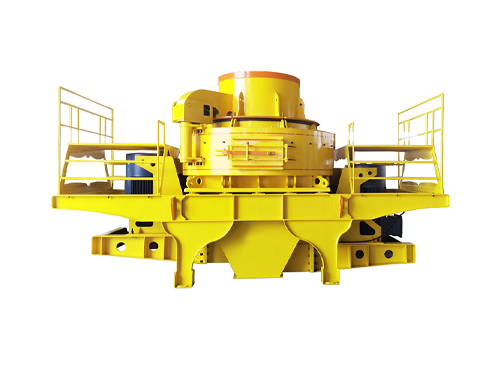 VSI Vertical Shaft Impact Crusher for Sand MakingView VSI8518–VSI1263 models for artificial sand and aggregate shaping, with dual motor drives and capacities around 100–550 t/h.View Product →
Cost Factor 5: Stationary or Mobile Configuration
Mobility changes the cost structure more than any other single decision. A stationary plant is cheaper per tonne of capacity because it does not carry its own chassis, and it can use ground-mounted structures instead of an integrated frame.
Stationary plant
Lower cost per tph, simpler maintenance access, longer service life, but requires civil works, permits for a fixed site and a long-term material reserve. Typical premium over mobile: none, it is the baseline.
Mobile plant
Wheel-mounted or crawler-mounted, 20–60 percent higher cost per tph, no foundations, fast relocation, ideal for contract crushing, road projects and demolition recycling where the material moves.
Contract crushing businesses often justify the premium within one season, because relocation cost for a stationary plant can exceed $80,000 once dismantling, transport, new foundations and re-erection are counted. A quarry with a 20-year reserve should not pay for mobility it will never use.
Cost Factor 6: Site Conditions, Foundations and Power
Site conditions are the most common source of budget overrun, because they are assessed last and priced worst. Four items deserve an early survey.
- Ground bearing capacity: soft ground under the primary station may require pile foundations, adding $25,000–$90,000 that no equipment supplier will include in a machine quotation
- Terrain slope: a stepped layout needs retaining walls and taller conveyor supports; a flat layout needs longer conveyors
- Power supply: a dedicated transformer and switchgear for a 400 kW plant can cost $30,000–$120,000 if the grid connection is distant
- Water and access: dust suppression needs a reliable water source, and 40-tonne trucks need a road that does not become a cost centre in the wet season
Ask for the foundation drawing before signing, and have a local civil contractor price it. The gap between a supplier's assumed concrete volume and the actual site requirement is where projects quietly lose 10 percent of budget.
Cost Factor 7: Automation, Dust Control and Electrical Scope
A basic plant runs with local starters and an operator at each station. A plant with a central control room, variable frequency drives on the feeders, interlock logic, belt scales and remote monitoring adds 8–15 percent to the equipment value and pays it back through consistent output and fewer blockages.
Dust control is regulation-driven and therefore non-negotiable in most jurisdictions. Water spray systems are inexpensive but use significant water; bag filters and enclosed transfer points cost more but suit urban sites and dry climates. Budget $8,000–$45,000 depending on the number of transfer points and the local emission limit. Electrical scope should be priced as a package, including cable trays, earthing and the motor control centre, because buying these items locally in small lots usually costs more than including them with the plant order.
Cost Factor 8: Wear Parts and Cost per Tonne Over Five Years
The purchase price is a one-time event; wear parts are a recurring one. In abrasive rock, jaw plates, cone liners, blow bars and screen mesh can consume $0.35–$1.20 per tonne of finished product. At 200 tph and 2,500 hours a year, that is $175,000–$600,000 over five years, which can dwarf the difference between two competing quotations.
Three specification details drive this number. Manganese content in jaw and cone liners, typically 14 percent versus 18 percent, changes wear life by 25–40 percent. The crusher's crushing chamber geometry determines how evenly the liners wear. And the feed distribution around the chamber, controlled by the feeder and the hopper design, decides whether you replace liners on schedule or three weeks early. When comparing suppliers, ask for the liner weight in kilograms and the recommended change interval in operating hours, then calculate the cost per tonne yourself.
Cost Factor 9: Freight, Installation, Commissioning and Duties
International projects carry logistics costs that domestic buyers never see. A 150 tph plant ships in 6–12 containers or on break-bulk for the larger frames. Ocean freight plus inland haulage typically adds 6–12 percent to the equipment value, and the spread widens with destination and season.
Installation is normally 8–15 percent of equipment value when a supplier's engineers supervise and a local crew does the mechanical work, and higher where the supplier provides the full erection team. Import duties, value added tax, port charges and customs clearance add another 5–25 percent depending on the destination country and the classification of individual machines. Confirm who is responsible for each item at the quotation stage; a price that excludes erection supervision, commissioning and operator training is not comparable with one that includes them.
Budget Mistakes That Add 20 Percent Later
Most overruns are predictable, and they repeat across projects in every region.
- Buying the crusher and discovering that the feeder cannot deliver a steady feed, so the plant runs at 70 percent of rated capacity
- Under-sizing the screen by one deck, forcing a second screening pass and an extra conveyor
- Ignoring the stockpile layout, which later requires radial stackers that were never budgeted
- Choosing a machine with no local spare parts availability, then paying air freight for a $400 bearing
- Assuming the supplier's foundation drawing matches the actual soil conditions
- Forgetting the cost of the first liner change, crane hire and downtime
- Buying on price alone from a trader with no manufacturing base behind the warranty
A useful discipline is to build the budget from the process flow rather than from a machine list. Draw the material path from hopper to stockpile, assign a tonnage and a size to every point, and price each item on the path. Missing items become visible immediately.
How to Compare Two Quotations Fairly
Suppliers structure quotations differently, so the total at the bottom is rarely comparable. Normalise the offers using the checklist below before you negotiate.
Scope and boundaries
Confirm what is included: feeder, all conveyors, steel structure, control panel, cables, wear parts, foundation drawings, erection supervision, commissioning and training. Mark every exclusion in writing.
Technical basis
Check the rated capacity at a stated bulk density and hardness, the maximum feed size, the product curves, and the installed power. A capacity figure without a material specification means very little.
Commercial terms
Compare delivery time, warranty period, spare parts pricing for the next three years, payment schedule and the currency of the price. A 20-day delivery promise is a commercial advantage only if the scope is complete.
Support after start-up
Ask how quickly wear parts ship, whether engineers are available for remote diagnosis, and what documentation is provided in your language. This determines the real cost of ownership.
Cost per Tonne: A Worked Example
Numbers become decisions when they are converted into cost per tonne. Take a 200 tph granite plant running 2,500 hours a year and producing 400,000 tonnes of finished aggregate.
- Equipment package: $420,000
- Civil works, steel and electrical installation: $260,000
- Freight, erection supervision and commissioning: $70,000
- Total capital: $750,000, or $1.88 per tonne over a 400,000-tonne annual output, spread across a five-year depreciation period
- Power at 1.6 kWh per tonne and $0.10 per kWh: $0.16 per tonne
- Wear parts and spares: $0.55 per tonne
- Labour, maintenance and consumables: $0.30 per tonne
The resulting operating cost sits close to $1.01 per tonne, with capital recovery adding roughly $0.38 per tonne at full utilisation. The plant's profitability depends far more on utilisation and product mix than on the last 5 percent of the machine price. Running the same plant at 60 percent utilisation pushes the capital component to $0.63 per tonne, which is why over-buying capacity is a more expensive mistake than paying a fair price for the right capacity.
Ways to Reduce Capital Cost Without Buying Trouble
There are legitimate savings and there are false economies. The legitimate ones share a characteristic: they reduce scope, not robustness.
- Phase the investment. Commission the primary and secondary stages first, sell aggregate, and add the tertiary shaping stage in year two from operating cash flow.
- Match the primary crusher to controlled blasting. A smaller feed opening costs less and improves the whole circuit.
- Use standard frame sizes. Custom frames add engineering time and delay spare parts availability.
- Buy conveyors and structures as a package with the plant, where unit rates are lower than small local orders.
- Keep the layout compact. Every extra metre of conveyor is steel, belt, idlers, power and maintenance.
- Choose a supplier with a manufacturing base and a spare parts line, so the first liner change does not involve international courier costs.
False economies include deleting the control panel, skipping the dust suppression system, or accepting a crusher with no overload protection to save 4 percent of its price. Each of these reappears as downtime, fines or repair cost within the first year.
Where to Get a Costed Layout
Shanghai Sanming Mining Equipment Manufacturing has been building crushing, screening, sand making and washing equipment since 2012, with a manufacturing base in Qidong and ISO 9001 certified production. The company's plant packages cover feeder, jaw crusher, cone or impact crusher, VSI sand maker, vibrating screens, conveyors and control systems, and roughly 40 percent of annual output ships to Central Asia, the Middle East, South America and Africa, where site conditions and power supply vary widely. Average delivery time is quoted at 20 days for standard configurations.
Because the equipment range runs from a single PE jaw crusher to a complete 500 tph production line, the most useful first step is a material test sheet: rock type, work index if known, maximum feed size, required product fractions and target hourly output. With those five inputs, a costed layout with itemised scope can be prepared instead of a single lump-sum figure. You can review the production line references to see how similar configurations are arranged, or read more about the manufacturing and delivery process.
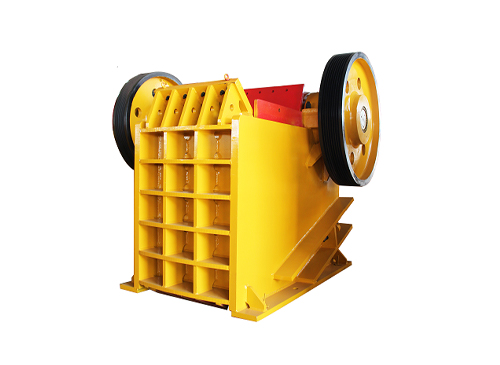 PE Jaw Crusher for Primary and Fine CrushingReview PE and PEX models covering 16–1000 t/h primary duty and 8–120 t/h fine reduction, with adjustable discharge and custom motor options.View Product →
Frequently Asked Questions
How much does a 100 tph stone crushing plant cost?
For a stationary two-stage plant crushing medium-hard limestone to 0–31.5 mm, the equipment package typically costs $110,000–$210,000. Add foundations, steel, electrical work, freight and commissioning at 1.6–1.9 times that figure, giving an installed budget of roughly $190,000–$360,000. Harder rock requiring a cone crusher instead of an impact crusher moves the total toward the upper end.
Why do two quotations for the same capacity differ so much?
Usually because the scope differs. One quotation may exclude conveyors, steel structure, the control panel or erection supervision. The other difference is machine grade: a spring cone and a multi-cylinder hydraulic cone of the same nominal capacity are different products with different wear economics. Normalise the scope before comparing totals.
Is a mobile crushing plant more expensive than a stationary one?
Yes, by 20–60 percent per tonne of hourly capacity. The premium buys the chassis, the hydraulic systems and the ability to relocate without new foundations. It is justified for contract crushing, road construction and demolition recycling, and rarely justified for a quarry with a long-term reserve.
How long does delivery and installation take?
Standard machine sets are commonly delivered in around 20 days from a confirmed order, with larger custom circuits taking longer. Sea freight adds 15–45 days depending on destination. Mechanical erection of a 150 tph plant typically takes three to five weeks with a competent local crew, followed by one to two weeks of commissioning and operator training.
What is the biggest ongoing cost after purchase?
Wear parts and power, in that order for abrasive rock. Liners, jaw plates and blow bars can cost $0.35–$1.20 per tonne, and electricity adds roughly $0.12–$0.20 per tonne at typical tariffs. Both figures are driven by the crushing circuit design, not by the purchase price, which is why circuit selection deserves more attention than price negotiation.
Can I start with a smaller plant and expand later?
Yes, and it is often the soundest financial decision. Design the layout and foundations for the final capacity, but buy the primary and secondary stages first. Leave space and structural capacity for the tertiary stage and the extra screens. Expanding a well-planned plant costs far less than relocating a plant that was built too small in the wrong place.
What information do I need before requesting a quotation?
Five items: rock type and hardness, maximum feed size, required finished fractions, target tonnes per hour, and site conditions including power supply and terrain. Suppliers who receive these details can quote a complete scope with realistic capacity figures. Without them, any price is an estimate with a wide margin.