English
 русский

Price movement in this size class is not random. Eight variables explain almost all of the spread between a USD 175,000 quotation and a USD 340,000 quotation for what looks like the same plant on paper.
Content
- 1 300 TPH Stone Crusher Price: The Numbers Before the Sales Talk
- 2 What Drives the Price of a 300 TPH Plant
- 3 Four 300 TPH Configurations and What Each One Costs
- 4 Fixed Plant Versus Mobile: Where the Price Gap Comes From
- 5 Cost Per Tonne: Where the Money Really Goes
- 6 Hidden Costs That Appear After the Signature
- 7 Reading a 300 TPH Quotation Line by Line
- 8 Lead Time, Shipping and Payment: The Price of Time
- 9 Wear Parts and the Five-Year Bill Nobody Quotes
- 10 How to Compare Two 300 TPH Quotes Fairly
- 11 Frequently Asked Questions on 300 TPH Crusher Pricing
- 11.1 Is 300 tph the input or the output figure?
- 11.2 Why do two quotes for the same specification differ by 40%?
- 11.3 How much does a 300 tph jaw crusher alone cost?
- 11.4 Does the price include installation and commissioning?
- 11.5 How much land and power does a 300 tph plant need?
- 11.6 Can the price be reduced without hurting the plant?
- 11.7 What is the realistic delivery time to a remote site?
- 11.8 Which spare parts should be ordered with the plant?
- 11.9 Is used equipment worth considering at this capacity?
- 12 What to Send for a Firm 300 TPH Price
300 TPH Stone Crusher Price: The Numbers Before the Sales Talk
A complete 300 tph stationary crushing plant - primary jaw crusher, secondary cone crusher, vibrating screen, grizzly feeder, discharge conveyors and the control cabinets that link them - normally sits between USD 180,000 and USD 320,000 in equipment value for a line built in China and quoted FOB. That is the number most buyers should carry into a first budget meeting.
The band is wide because "300 tph" is a capacity target, not a machine model. Feed size, rock hardness, required product grading and the amount of automation all move the figure. Add a VSI sand maker and a washing unit to produce concrete-grade manufactured sand and the equipment value climbs to USD 280,000 to USD 450,000. Move the same duty onto crawler chassis and the floor drops away entirely: a three-unit mobile arrangement rarely starts below USD 450,000 and can pass USD 900,000 once a stacker and a second screening unit are included.
| Configuration | Typical price band (USD) | Best fit | What changes the number |
|---|---|---|---|
| Jaw + cone + screen, stationary | 180,000 - 320,000 | Granite, basalt, river gravel, iron ore | Cone type (spring, single-cylinder, multi-cylinder), feed opening, screen deck count |
| Jaw + impact + screen, stationary | 150,000 - 260,000 | Limestone, dolomite, low-abrasion rock | Blow bar metallurgy, rotor size, apron design, product shape target |
| Jaw + cone + VSI + washer | 280,000 - 450,000 | Concrete sand, plastering sand, asphalt filler | Sand fineness modulus, silt tolerance, water availability |
| Mobile crawler or wheel-mounted, 2 to 3 units | 450,000 - 900,000 | Relocating quarry faces, demolition contracts, road projects | Chassis type, engine versus electric drive, number of units |
| Turnkey with steel structure and erection | Add 25% - 45% | Buyers without a local EPC partner | Steel tonnage, Foundation design, distance to site |
Two buyers asking the same question can therefore receive quotes that differ by a factor of two and both be honest. The rest of this page breaks down where the money actually goes, which items a quotation should itemise, and which costs appear only after the contract is signed.
What Drives the Price of a 300 TPH Plant
1. Rock hardness and abrasiveness. A plant crushing limestone at 300 tph can use an impact crusher. The same tonnage in granite with a Bond work index around 14 kWh/t needs a cone crusher with a heavier frame, a larger motor and manganese liners at a higher grade. The cone route commonly adds USD 35,000 to USD 70,000 to the equipment package.
2. Feed size and reduction ratio. A 500 mm top size can be handled by a mid-size jaw. A 900 mm top size from quarry blasting needs a wider feed opening, a heavier eccentric shaft and a bigger drive. Each jump in jaw model in the 300 tph class carries roughly USD 12,000 to USD 30,000.
3. Product specification. Producing 0-25 mm aggregate to a flakiness index below 15% is a different task from producing 0-40 mm sub-base. Tight cubicity, a low fines content or a sand fineness modulus of 2.6 to 2.9 forces a third crushing stage or a VSI, and that is where the largest single cost step appears.
4. Capacity headroom. A plant rated at exactly 300 tph at the design close side setting will run at 260 to 280 tph once wear, moisture and feed variation are considered. Buying 330 to 350 tph of installed capacity costs about 8% to 12% more and removes most of the shortfall risk.
5. Drive and control philosophy. Direct-on-line starters, soft starters or variable frequency drives with PLC interlocking and remote monitoring change the electrical package by USD 8,000 to USD 40,000. VFDs on the feeder and the secondary crusher pay back quickly when the plant must follow a variable market demand.
6. Structural steel and chute lining. Steel weight is one of the most underestimated lines. A 300 tph plant with proper walkways, guardrails, maintenance platforms and lined transfer chutes can carry 30 to 60 tonnes of structure. Cutting steel is the fastest way to shave a quotation, and the fastest way to inherit vibration problems.
7. Wear part metallurgy. Standard Mn18 jaw plates against Mn18 with chromium and molybdenum, or ceramic-insert blow bars, can shift the initial invoice by 3% to 7% while changing the wear cost per tonne by 20% to 40%. This is the single most common point of confusion between two competing offers.
8. Manufacturing origin and quality system. A Chinese-built 300 tph plant typically lands at 30% to 40% of an equivalent Western European package. That gap is real and it is not all labour cost: motor brands, bearing brands, hydraulic component brands and quality documentation are where the difference is visible.
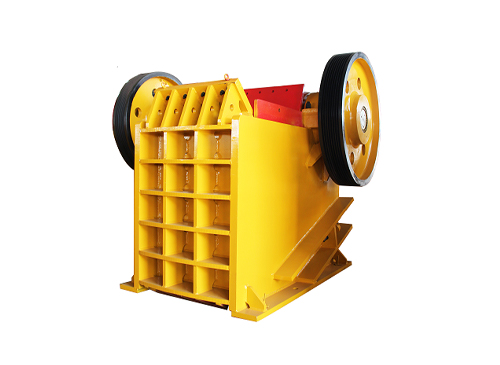
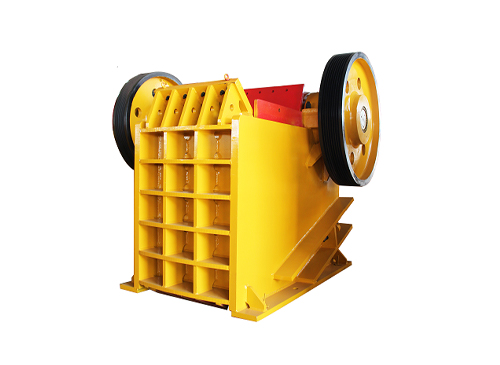 PE Series Jaw Crushers for Primary CrushingPrimary jaw crusher series with models up to 1500×1800 mm feed openings and 1000 t/h capacity; relevant when assessing Chinese-built plant value.View Product →
Four 300 TPH Configurations and What Each One Costs
Configuration A: Jaw plus multi-cylinder cone (the hard-rock default)
A 750 x 1060 jaw taking 630 mm feed, a multi-cylinder hydraulic cone at 250 mm feed opening, and a 3-deck 2,400 x 6,000 screen in closed circuit. Installed power is typically 250 to 320 kW. This is the layout that handles granite, basalt and river gravel for a decade without surprises. Equipment value: USD 200,000 to USD 300,000 depending on cone size and screen area.
Configuration B: Jaw plus impact (the limestone route)
Same primary jaw, but a PF-1214 or PF-1315 impact crusher as secondary. Capital cost is 15% to 25% lower than configuration A and the product shape is excellent in low-abrasion rock. The trade-off is wear cost: blow bars in abrasive material can run 300 to 600 hours, so the savings on the invoice are partly returned through the spare parts account.
Configuration C: Jaw, cone and VSI (the sand route)
Adding a VSI after the cone, plus a sand washer and a dewatering screen, takes the plant into manufactured sand territory. Budget USD 300,000 to USD 430,000. This configuration is priced as much by the sand specification as by the tonnage - a fineness modulus window of plus or minus 0.1 is far more expensive to guarantee than a 0-5 mm by-product.
Configuration D: Mobile or semi-mobile
A wheel-mounted jaw unit feeding a cone and screen combination, or a crawler jaw plus crawler cone, is quoted at USD 450,000 upward. The premium buys relocation speed and the absence of civil works; it does not buy lower cost per tonne. For a fixed quarry with a fifteen-year life, stationary equipment almost always wins on total cost.
Rule of thumb for early budgeting: take the equipment band above, add 12% for freight and insurance to a distant port, add 20% to 35% for foundations, steel and electrical installation, and hold 5% to 8% of the equipment value as an initial spare parts stock. That total is the number to present to a bank or a board.
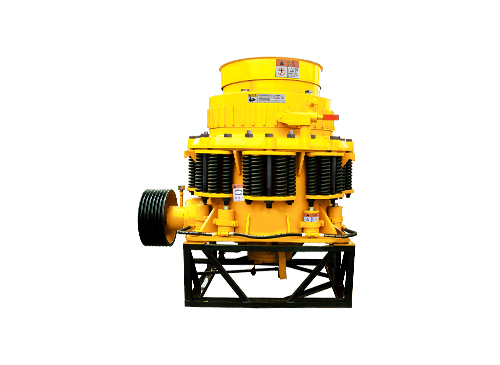
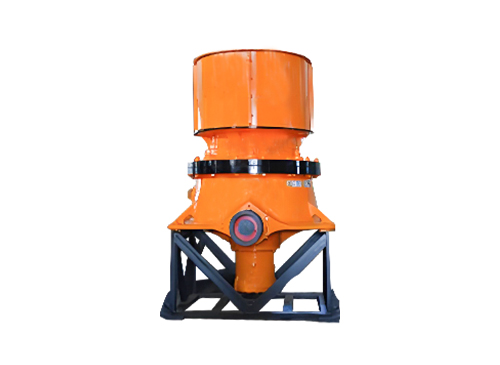
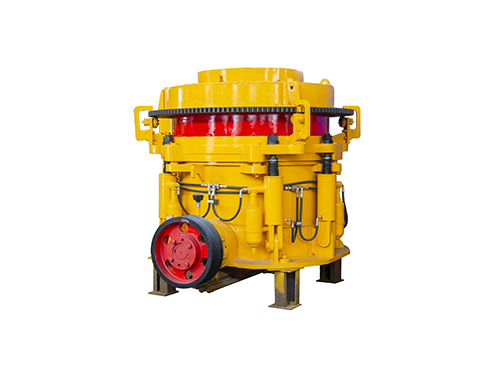
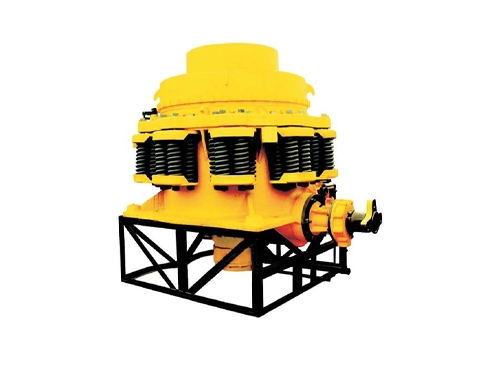
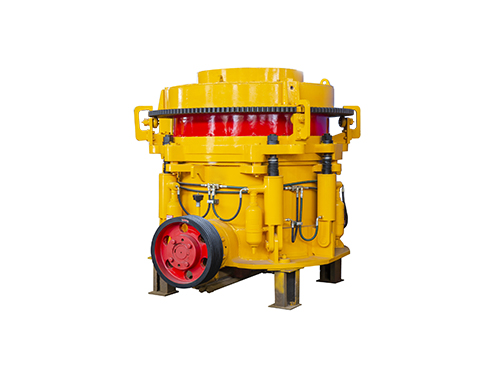 Multi-Cylinder Hydraulic Cone Crusher for Hard StoneStationary cone crusher with HPT200–HPT500 models and up to 790 t/h capacity; a core equipment cost to budget before mobile options.View Product →
Fixed Plant Versus Mobile: Where the Price Gap Comes From
Mobile equipment is not simply a stationary plant on wheels. The chassis, the axle rating, the travel dimensions and the on-board electrical system are engineered as a unit, and the engineering is a much larger share of the invoice than the crusher itself.
| Cost item | Stationary 300 tph | Mobile 300 tph (three units) |
|---|---|---|
| Equipment value | USD 180,000 - 320,000 | USD 450,000 - 900,000 |
| Foundations and civils | USD 40,000 - 120,000 | USD 5,000 - 20,000 |
| Erection and commissioning | 4 to 8 weeks | 1 to 2 weeks |
| Relocation cost per move | Full dismantling, weeks | Hours to two days |
| Installed power per tonne | Lower | 5% - 12% higher |
| Best use case | Fixed quarry, 10+ year reserve | Contract crushing, short reserves, road projects |
A buyer with a fifteen-year reserve and a stable market should not be persuaded into mobile equipment by the promise of flexibility. A buyer working a two-year road contract should not be persuaded into concrete foundations. This single decision moves more money than any negotiation over the crusher itself.
Cost Per Tonne: Where the Money Really Goes
The purchase invoice is roughly one third of what a 300 tph plant costs over five years. Buyers who fixate on the quotation often accept a design that raises the other two thirds.
Five-year ownership cost split, 300 tph granite plant, 300,000 tonnes per year
Equipment and erection
38%
Wear parts
26%
Electrical power
21%
Labour and operation
9%
Maintenance and downtime
6%
Translated into a per-tonne figure, a well-run 300 tph plant in granite produces aggregate at roughly USD 0.60 to USD 1.10 per tonne excluding quarrying, royalties and haulage. A poorly specified plant - undersized screen, single-deck scalping, no metal detector, cheaper manganese - can push the same rock to USD 1.40 or more, and the difference is invisible in the purchase contract.
Price index by manufacturing origin, same 300 tph jaw plus cone plus screen scope (China = 100)
China
100
India, Turkey
135
Eastern Europe
210
Western Europe
300
The index is a starting point, not a verdict. A Chinese package using Siemens motors, SKF bearings and a documented quality system closes part of the gap; a European package with a stripped-down scope can lose part of its advantage. Ask every supplier for the component brand list before comparing the bottom line.
Hidden Costs That Appear After the Signature
Most budget overruns on a 300 tph project come from items that were never in any supplier's scope. These are the recurring ones, with realistic ranges:
- Foundation and retaining walls. USD 40,000 to USD 120,000 for a stationary plant, driven by concrete volume and reinforcement rather than by the crushers.
- Site electrical. Transformer, main switchboard, cable trays and cabling from the grid connection to the control room: USD 15,000 to USD 60,000 depending on distance.
- Dust suppression and water. Spray systems, covers, and in dry climates a bag filter: USD 8,000 to USD 35,000.
- Weighbridge and laboratory. If the product is sold by weight and specified by grading, both are needed and neither comes from the crusher supplier.
- Initial spare parts stock. 5% to 8% of the equipment value. Skipping it is the most expensive saving available to a buyer.
- Erection labour and crane hire. Four to eight weeks of a erection crew plus lifting equipment, often locally sourced and rarely in the FOB quotation.
- Commissioning engineer costs. Flights, visa, accommodation, per-diem and daily fee for one to three engineers for two to four weeks.
- Operator training and handover. Budget one week of supervised production before the plant is handed to a local team.
None of these are unusual. What is unusual is finding a quotation that states clearly which of them are included. That clarity is worth more than a 3% discount.
Reading a 300 TPH Quotation Line by Line
A credible quotation for this size of plant is a document of three to eight pages. If it is one page and a total price, it cannot be compared with anything.
| Section | What to verify | Warning sign |
|---|---|---|
| Equipment schedule | Model, feed opening, motor kW, throughput at a stated close side setting, weight per unit | Throughput given as a range with no settings or rock type |
| Scope of supply | Explicit list of conveyors, chutes, steel structure, walkways, control cabinets, cables | "Auxiliary equipment as required" |
| Component brands | Motor, bearing, hydraulic, PLC and wear part material grades | Brands omitted entirely |
| Commercial terms | Incoterm, payment schedule, lead time, warranty duration and what it covers | Warranty that excludes wear parts without saying so |
| Documentation | General arrangement drawing, foundation load drawing, electrical diagram, manual language | Drawings "available after order" with no load data |
A useful test: ask each supplier for the foundation load drawing of the primary crusher before signing. A supplier who can produce it quickly has already engineered the machine. A supplier who cannot will produce it after the deposit, and by then the civil contractor is waiting.
Lead Time, Shipping and Payment: The Price of Time
For a standard stationary 300 tph package from a Chinese manufacturer, production lead time is usually 20 to 45 days after drawing approval, with mobile units at 45 to 90 days. The 20-day figure quoted by established factories refers to standard configurations with common components; every custom chute, special voltage or non-standard liner adds days.
Ocean freight for a 300 tph plant typically requires four to eight 40-foot containers or a break-bulk shipment for the larger frames. As an order of magnitude, container freight from Shanghai to Mombasa, Jebel Ali or Callao has moved between USD 2,500 and USD 7,500 per container in recent years, and the swing matters as much as the crusher discount on smaller scopes. Always ask whether the quote is FOB, CFR or CIF, because the difference is not cosmetic.
Payment structures in this industry are fairly standard: 30% deposit with the order, 70% before shipment against photographs and inspection documents, or a letter of credit at sight for larger packages. Buyers should insist on a pre-shipment inspection with a third party and on a packing list that matches the equipment schedule item by item. A missing 15 kW motor in a container is a two-month delay on site.
Wear Parts and the Five-Year Bill Nobody Quotes
Wear cost is where two machines with the same price tag separate. The figures below are realistic ranges for a 300 tph granite plant running 300,000 tonnes a year with good operator discipline.
| Wear item | Typical life | Annual sets | Annual cost (USD) |
|---|---|---|---|
| Jaw plates (Mn18Cr2) | 900 - 1,400 hours | 1.5 - 2 | 6,000 - 11,000 |
| Cone mantle and bowl liner | 1,000 - 1,600 hours | 1.3 - 1.8 | 14,000 - 26,000 |
| Screen media (polyurethane or woven) | 2,000 - 4,000 hours | 0.6 - 1 | 4,000 - 9,000 |
| Conveyor belt and lagging | 3 - 5 years | 0.3 | 2,500 - 6,000 |
| Chute and hopper liners | 1 - 2 years | 0.7 | 2,000 - 5,000 |
The practical conclusion is that a 5% higher equipment price spent on better manganese and a larger screen area often returns 15% to 25% of that amount every year. When two quotations are within a few percent, compare the wear part weight per set, not just the price per set. A heavier mantle with a higher manganese grade is cheaper per tonne of rock, even when it costs more per kilogram.
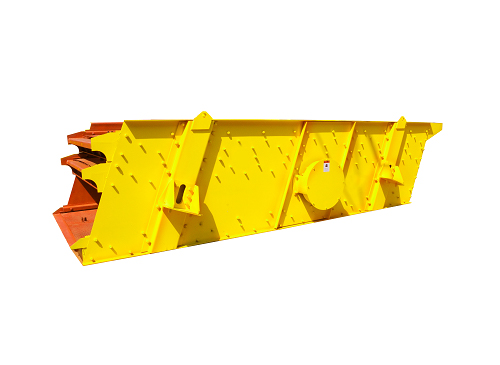 YK Series Circular Vibrating Screens for Aggregate ScreeningTwo- to four-deck screens with capacities to 650 t/h; compare screen area and wear-part weight when evaluating quarry quotations.View Product →
How to Compare Two 300 TPH Quotes Fairly
Strip both quotations back to a common scope before looking at the totals. A practical checklist:
- Normalise the capacity basis: both figures should be tonnes per hour at a stated close side setting and a stated rock type, not "up to" numbers.
- Confirm installed power, because a plant that needs 400 kW from a 250 kW budget will cost more than the invoice difference in the first year of operation.
- List every conveyor, chute, walkway and cabinet included, and price the missing items separately.
- Compare wear part weights and material grades rather than prices per set.
- Check the electrical component brands and whether the control philosophy is relay-based or PLC-based.
- Ask for the foundation load drawing and the general arrangement, then have a local engineer review both.
- Compare warranty terms clause by clause, especially the exclusion list.
- Compare spare parts availability commitments: lead time for a mantle shipped after the warranty ends matters more than the warranty itself.
Where the primary crusher is the largest single line item, the choice between a standard and a heavy-duty frame often decides whether the plant can accept quarry run rock at 900 mm or needs a pre-screening step. That engineering decision is worth more attention than the last 2% of price.
Frequently Asked Questions on 300 TPH Crusher Pricing
Is 300 tph the input or the output figure?
In a well-written quotation it is the output, measured at the crusher discharge under stated conditions. In a weak one it is the input, and output may be 20% to 30% lower. Always ask for the figure at a specific close side setting with a specific rock type, and treat any single number without those two conditions as marketing.
Why do two quotes for the same specification differ by 40%?
Almost always through four items: cone type (spring versus multi-cylinder hydraulic), steel weight in the structure, wear part metallurgy, and component brands. A fifth cause is scope: one quote includes conveyors and control cabinets, the other does not. Ask for a line-by-line scope comparison before assuming one supplier is overcharging.
How much does a 300 tph jaw crusher alone cost?
A primary jaw sized for 300 tph duty - typically a 750 x 1060 or 900 x 1200 model - is quoted at roughly USD 35,000 to USD 85,000 depending on feed opening, drive power and frame construction. This is only the first machine in a four to six unit plant, which is why the full package sits several times higher.
Does the price include installation and commissioning?
Usually not in an FOB quote. Installation supervision and commissioning are normally charged as a separate service: engineer day rate plus travel, accommodation and local transport. Budget two to four weeks on site for a stationary 300 tph line.
How much land and power does a 300 tph plant need?
A typical stationary layout occupies 1,500 to 3,000 square metres depending on stockpile strategy and truck circulation. Connected power is 350 to 500 kW for a jaw-cone-screen configuration, and 500 to 700 kW if a VSI and washing section are added.
Can the price be reduced without hurting the plant?
Yes, in three places: use impact instead of cone if the rock is low-abrasion, reduce automation to soft starters with a simple interlock, and buy a smaller steel package from a local fabricator using the supplier's drawings. Reducing screen area or wear part grade is a false economy.
What is the realistic delivery time to a remote site?
Allow 20 to 45 days of production, 7 to 14 days of inland transport and inspection, 25 to 45 days of ocean freight and 10 to 20 days of customs clearance and inland haulage. A four-month window from deposit to first rock is a realistic planning assumption.
Which spare parts should be ordered with the plant?
One complete set of jaw plates, one set of cone liners, one screen deck set, one conveyor belt spare, hydraulic filters, seals and a set of electrical fuses and contactors. That package typically equals 5% to 8% of the equipment value and prevents the most common three-week shutdown.
Is used equipment worth considering at this capacity?
Occasionally, but the inspection burden is heavy. A used 300 tph plant needs a frame crack inspection, a bearing clearance check, a hydraulic system pressure test and a review of the control system's obsolescence. The saving of 40% on capital is often matched by a 40% higher maintenance bill in the first two years.
What to Send for a Firm 300 TPH Price
Suppliers cannot price accurately without feed data, and vague enquiries produce vague numbers. Eight items shorten the process from weeks to days:
- Rock type with a laboratory work index or at least a description of abrasiveness.
- Maximum feed size in millimetres, and the percentage of oversize expected.
- Required products and their proportions, for example 0-5, 5-10, 10-20 and 20-25 mm.
- Target output in tonnes per hour, and whether that is a contractual guarantee.
- Site altitude, ambient temperature range and power supply voltage and frequency.
- Whether the plant is stationary, wheel-mounted or crawler-mounted, and whether relocation is planned.
- Available site area and any restriction on stockpile height or truck access.
- Preferred Incoterm and destination port.
With those eight points, a manufacturer can select the primary jaw crusher for hard rock, size the secondary unit and return a quotation that will survive contact with the site. Buyers who also want to understand the reduction principle behind the secondary machine can read how a cone crusher works before the technical meeting, which usually shortens the discussion considerably.
The realistic planning figure remains USD 180,000 to USD 320,000 for a stationary 300 tph plant, plus 30% to 45% for installation and site works, plus a spare parts reserve. Any quotation far below that band is either a smaller plant than described, a narrower scope than assumed, or a machine that will ask for the difference in its first year of operation.