English
 русский
Industry Insight & Equipment Guide
Content
- 1 Why Manufacturers and Contractors Are Turning to a mobile crusher plant for Flexible On-Site Material Processing
- 1.1 What Is Mobile Crushing Plant, Structurally Speaking
- 1.2 Core Configuration Types Within a Mobile Crushing Line
- 1.3 Chassis and Drive Comparison
- 1.4 Where a Mobile Crusher Is Used on Real Projects
- 1.5 Structural and Operational Advantages Worth Evaluating
- 1.6 Lifespan of a Mobile Crusher and What Actually Determines It
- 1.7 Common Mobile Crusher Problems and How Crews Address Them
- 1.8 Tire Mobile Crusher Plant: Built for Frequent Relocation
- 1.9 Matching Configuration to Site Conditions
Why Manufacturers and Contractors Are Turning to a mobile crusher plant for Flexible On-Site Material Processing
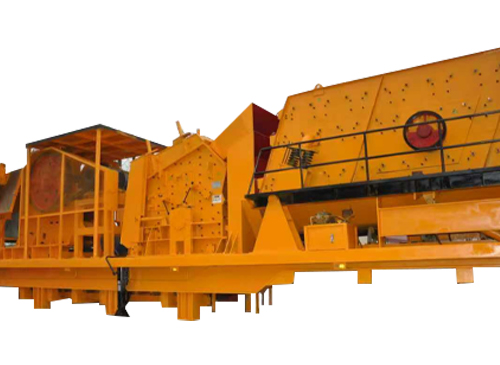
Material processing projects rarely happen in one fixed location for long. Demolition sites clear out, quarries shift working faces, and road projects move from one kilometer marker to the next. A mobile crushing plant is built around this reality — it brings crushing, feeding, and screening capability directly to wherever the material is, instead of forcing the material to travel to the equipment.
What Is Mobile Crushing Plant, Structurally Speaking
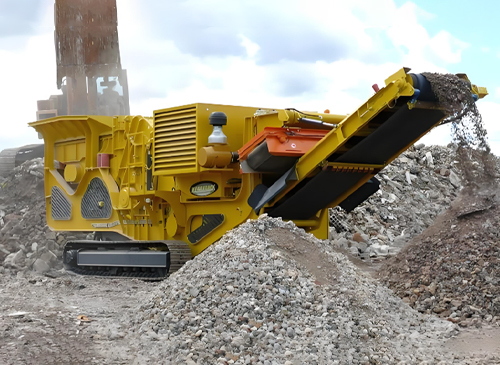
What is mobile crushing plant, in practical terms, comes down to one design decision: mounting the feeding, crushing, and conveying modules onto a single tracked or wheeled undercarriage rather than assembling them as separate fixed stations connected by static conveyors. This single decision changes almost everything about how a processing line is planned, deployed, and operated. Instead of civil foundation work, cabling trenches, and fixed conveyor bridges, the entire processing line arrives as one or two transportable units that can be positioned, leveled, and started up within a working shift.
The undercarriage itself is engineered to carry significant dynamic load while the crusher is operating at full capacity, which means the frame, axles, and track components are not simply adapted from general transport equipment — they are purpose-built to absorb crushing vibration and torque without loosening bolted connections or fatiguing structural welds over years of continuous duty cycles.
Core Configuration Types Within a Mobile Crushing Line
A complete mobile crusher plant is rarely a single machine. It is usually a combination of two or three units working together, each handling a different stage of size reduction. Understanding what each configuration contributes helps in specifying the right combination for a given feed material and target output.
Mobile Jaw Crushing Plant
A mobile jaw crushing plant is positioned first in the line and handles the largest, hardest incoming material. The compression-based crushing chamber tolerates high feed variability, including reinforced concrete fragments and mixed demolition debris, which makes it the standard first step for recycling and quarry primary breaking. Its relatively simple mechanical design also keeps daily inspection and wear-part replacement straightforward for site crews.
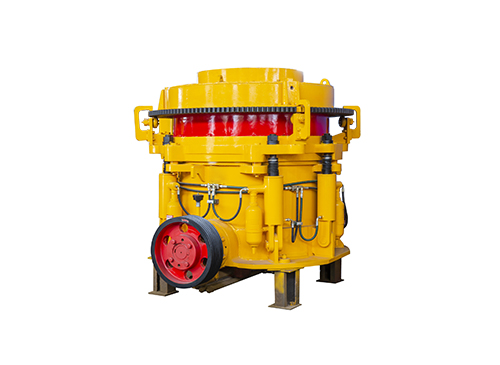
Mobile Cone Crusher Plant
Once material has passed through a primary jaw stage, a mobile cone crusher plant refines particle size further, producing a more uniform, cubical product shape that is preferred for concrete aggregate and asphalt mix production. Because the cone chamber crushes through compression between a rotating mantle and a stationary bowl liner, it is particularly effective on abrasive stone types where consistent gradation is a production requirement.
Mobile Crusher Screening Plant
A mobile crusher screening plant sits at the end of the line, separating crushed output into multiple graded fractions in a single pass. Multi-deck screen boxes allow a site to produce several saleable size ranges simultaneously — for example base course material, coarse aggregate, and fine aggregate — without routing product through a second separate screening station.
Chassis and Drive Comparison
Selecting between tracked and wheeled undercarriages affects how quickly a plant can be repositioned and what kind of ground conditions it can handle without additional site preparation.
| Chassis Type | Typical Ground Suitability | Relocation Speed On-Site | Best Fit Application |
| Tracked Undercarriage | Soft, uneven, or sloped terrain | Fast within the same site | Quarries, demolition sites, mine benches |
| Tire-Mounted Undercarriage | Compacted or paved surfaces | Fast between distant sites via road towing | Road projects, multi-site rental operations |
| Semi-Trailer Mounted | Requires prepared access road | Longest distance transport efficiency | Long-haul relocation between regional projects |
Where a Mobile Crusher Is Used on Real Projects
Mobile crusher used for questions almost always trace back to one shared challenge: moving raw material is expensive, and moving finished aggregate is even more expensive if the crushing point is far from where the material originates. Positioning the plant directly at the material source removes that cost layer entirely.
Demolition & Recycling
Concrete, brick, and masonry debris are processed directly at the demolition footprint, converting waste into usable base material without truck haulage to an external processing yard.
Quarry & Mining
Positioned near the extraction face, the plant reduces run-of-mine material into transportable sizes before it ever leaves the pit, cutting haul-truck cycle time.
Road & Infrastructure
Linear projects move the plant along the corridor as work progresses, producing base and sub-base material at each segment rather than trucking it in from a distant plant.
Urban Redevelopment
Confined city sites benefit from a compact footprint and lower noise/dust profile options, allowing on-site processing where truck access for haulage would otherwise be restricted.
Structural and Operational Advantages Worth Evaluating
Beyond the basic ability to relocate, several design details determine how much value a mobile crushing plant actually delivers across its working life.
Integrated Hydraulic Folding Conveyors
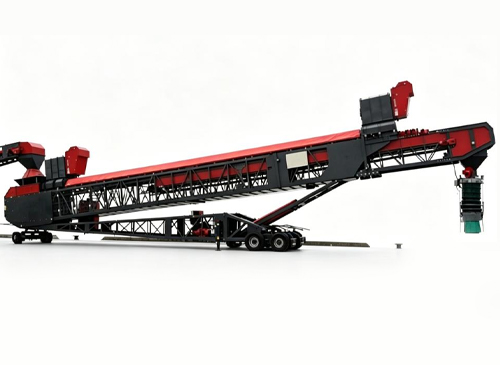
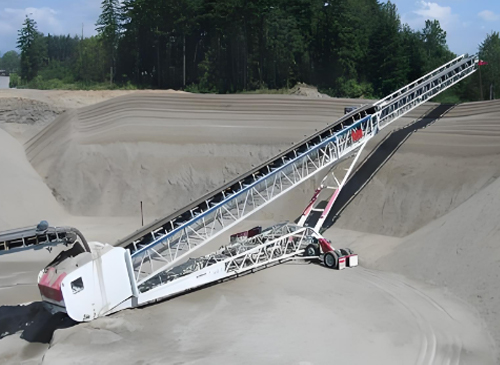
Discharge conveyors that fold hydraulically for transport reduce setup and teardown time at each new working position, often to well under an hour.
Remote and Semi-Automated Control
Centralized control panels allow one operator to monitor crushing chamber load, belt speed, and engine parameters, reducing the crew size needed to run a full line.
Overload Protection Systems
Hydraulic relief or spring-release systems in the crushing chamber allow uncrushable objects such as metal fragments to pass through without damaging the main frame or drive components.
Compact Transport Dimensions
Plants engineered to standard transport width and height reduce the permitting and escort requirements needed to move equipment between project sites.
Lifespan of a Mobile Crusher and What Actually Determines It
What is the lifespan of a mobile crusher is one of the most common specification questions raised before purchase, and the honest answer separates two different lifespans that should not be confused with each other.
The structural chassis, main frame, and drive housing are engineered for long-term structural service — typically well beyond a decade of active use when inspection and corrosion protection schedules are followed. Wear components inside the crushing chamber follow a completely different and much shorter cycle, since they are the parts making direct contact with abrasive material.
| Component | Function | Typical Replacement Interval |
| Jaw Plates | Direct compression crushing surface | Several hundred to over a thousand operating hours |
| Mantle & Bowl Liner | Cone chamber crushing surface | Varies with material abrasiveness and set gap |
| Impact Bars / Blow Bars | Impact-type secondary reduction | Shorter cycle than compression-type wear parts |
| Screen Mesh & Panels | Size separation surface | Depends on mesh aperture and material moisture content |
| Conveyor Belting | Material transport between stages | Long cycle if tracking and tension are maintained correctly |
Four factors influence how quickly this cycle turns over on any individual site: the abrasiveness and hardness of the feed material, how closely actual feed size matches the designed maximum feed size, how consistently lubrication intervals are followed, and whether the operating crew adjusts the closed-side setting correctly as wear accumulates rather than running the chamber past its optimal gap.
Visual inspection of belts, bolts, and lubrication points before startup.
Check wear-plate thickness and screen mesh tension.
Hydraulic fluid condition check and structural bolt torque verification.
Full undercarriage and drive-train inspection before high-demand periods.
Common Mobile Crusher Problems and How Crews Address Them
Common mobile crusher problems tend to repeat across sites because they trace back to a small set of root causes. Recognizing the pattern early keeps a minor adjustment from becoming unplanned downtime.
Chamber Blockage
Typical cause: oversized feed material or high moisture content causing material to pack rather than flow.
Field response: reduce feed rate, check grizzly bar spacing, and clear packed material before restarting under load.
Elevated Bearing Temperature
Typical cause: insufficient lubrication or a bearing nearing the end of its service interval.
Field response: confirm grease type and interval against the maintenance schedule, then inspect for early wear signs.
Conveyor Belt Drift
Typical cause: misaligned idlers or uneven belt tension.
Field response: re-square tracking rollers and re-tension the belt to manufacturer specification.
Hydraulic Pressure Fluctuation
Typical cause: contaminated fluid or a worn seal allowing internal leakage.
Field response: sample and replace hydraulic fluid, inspect seals during the next scheduled service window.
Tire Mobile Crusher Plant: Built for Frequent Relocation
Among the available chassis options, a tire-mounted configuration is often the preferred choice for operations that move between multiple job sites within the same region rather than staying on one large site for an extended period. The tire undercarriage is designed to be towed on standard roads, which shortens the gap between finishing one job and starting production on the next.
For contractors managing several smaller sites in parallel — road maintenance segments, scattered demolition lots, or short-term aggregate supply contracts — the reduced transport lead time of a tire-mounted plant directly translates into more billable production hours per month rather than more transport days.
Matching Configuration to Site Conditions
Specification decisions work best when they start from the material and the site rather than from the equipment catalog. Feed material hardness and abrasiveness determine whether a jaw stage alone is sufficient or whether a cone stage should be added for finer, more uniform output. Target output volume determines whether a single-stage unit meets demand or whether a two-unit combination running in tandem is required to hit daily tonnage targets. Ground conditions at the site — soft, sloped, paved, or confined — point toward tracked, tire-mounted, or trailer-mounted undercarriages respectively. Finally, how frequently the plant will relocate during the life of the project should weigh as heavily as raw processing capacity, since a high-output plant that takes half a day to reposition can lose more productive time over a month than a slightly smaller plant that resets in under an hour.
Reviewing these four factors together — material, output target, ground condition, and relocation frequency — gives a clearer basis for configuration selection than processing capacity figures alone, and it is the same sequence experienced site engineers use when planning where a mobile crusher plant fits into an active production schedule.