English
 русский

Mobility inside the site
Crawler plants win when the working face changes weekly. Wheeled plants win when the plant moves between prepared stations on a planned haul road.
Content
A crawler mobile crusher plant is the better base choice when your feed changes, your site is tight, and your operation moves every few months. A wheeled mobile crusher plant is usually the lower-risk choice when the plant stays on prepared ground, road transport is part of the plan, and you want faster relocation between nearby pits or construction sites. The undercarriage is not a cosmetic difference. It changes how you move the plant, how much site preparation you pay for, how quickly you restart production, and how much maintenance attention the chassis needs over five to eight years.
The practical answer is to match the undercarriage to the work cycle, not to the brochure. If the plant will crawl across broken rock, follow a quarry face, or work on a demolition site with no hard standing, tracks usually pay back through lower site preparation and better gradeability. If the plant will move by road between licensed yards, share a permit with a trailer fleet, and return to the same concrete pad each week, wheels are normally easier to justify. The table below gives the first-pass comparison that most quarry owners and project engineers need before they request a quotation.
| Decision factor | Crawler mobile crusher | Wheeled mobile crusher |
|---|---|---|
| Typical best use | Quarry faces, demolition sites, soft or uneven ground, frequent short moves inside one site. | Prepared yards, road-linked satellite pits, urban recycling sites, repeat relocations between nearby locations. |
| Site preparation | Lower requirement for hard standing; tracks spread load and handle moderate grades. | Higher requirement for compacted, level ground or concrete pads; outriggers and trailer stability matter. |
| Relocation between sites | Slower for long-distance moves; usually needs low-bed transport and dismantling checks. | Faster on-road transfer when permits, axle loads, and trailer configuration are planned. |
| Setup and restart | Often quicker on uneven ground because the plant can position itself close to the feed. | Fast on prepared ground, but ground bearing capacity and level tolerance must be verified. |
| Operating cost pattern | Higher undercarriage maintenance, but less haulage and site civil work in many quarries. | Lower undercarriage wear on clean pads, but more dependence on road transport and ground preparation. |
| Procurement risk | Track tension, final drive protection, and transport weight can be underestimated. | Axle load limits, tire protection, and braking performance on grades need early review. |
Use this table to eliminate the wrong undercarriage early. Do not use it to choose a model. A 250 t/h wheeled plant on soft ground is a different risk from a 250 t/h crawler plant on the same ground, even if both use the same jaw crusher and screen size. The chassis determines how the plant reaches the feed, how often you move it, and how much civil work you fund before the first tonne is crushed.
Site mobility is the first real differentiator. A crawler plant can track across a quarry bench, follow a retreating face, and work closer to the blast pile. That reduces rehandling and loader travel, which is often a larger cost than the crusher itself. A wheeled plant is faster once it is on a suitable road or pad, but it needs a route that a trailer and prime mover can use. If the route crosses soft clay, loose gravel, or a steep temporary ramp, the wheeled plant may need matting, compaction, or a different access plan before it can start.
Crawler plants win when the working face changes weekly. Wheeled plants win when the plant moves between prepared stations on a planned haul road.
Crawler setup is often dominated by positioning and conveyor alignment. Wheeled setup is dominated by ground bearing, outrigger checks, and trailer release.
A wheeled plant can require a wider, firmer, and better-drained route. That civil cost belongs in the comparison, not in a separate budget line.
The chart above is not a scorecard. It shows where the trade-offs usually sit. A crawler plant can still be expensive to move off site, and a wheeled plant can still work on unpaved ground if the ground is compacted and drained. The key is to measure the actual route, the actual slope, and the actual number of moves per year. A plant that moves twice a year should be judged differently from one that moves twice a week. That single number often changes the undercarriage decision more than the crusher chamber size.
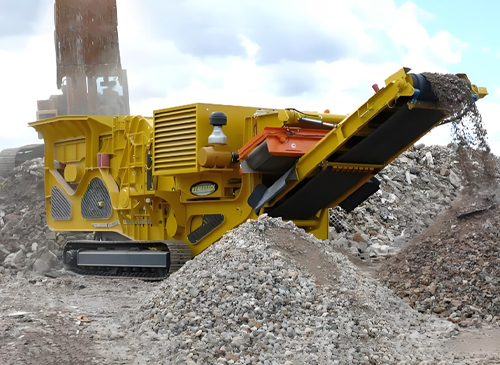
A crawler mobile crusher is built around continuous tracks, a heavy-duty undercarriage, and a hydraulic drive system that lets the plant position itself without a prime mover. In a quarry, that means the plant can work close to the face, reduce loader cycles, and follow the material as the bench advances. In construction waste recycling, it means the plant can enter a demolition zone, work on broken concrete and mixed rubble, and move away from the stockpile without waiting for a low-bed trailer. The value is not simply "off-road ability". The value is fewer rehandling steps and less dependence on a prepared road network.
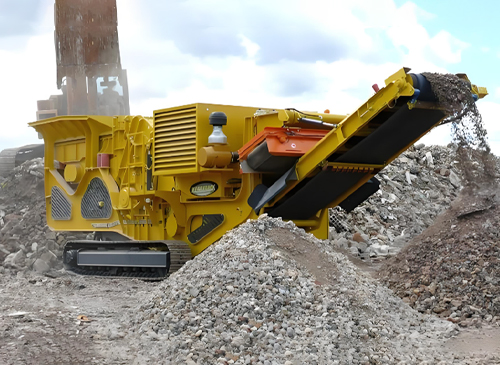 Crawler Mobile Crushing Plant for Quarry and RecyclingTrack-mounted plant integrates feeding, crushing and conveying for quarry faces and demolition waste, reducing rehandling while requiring undercarriage maintenance.View Product →
Track-mounted plants are not automatically better. They carry more undercarriage maintenance, and a careless operator can shorten track life by turning on abrasive rock or tracking with a badly loaded hopper. The procurement question is whether the site saves more in rehandling and preparation than it spends on undercarriage upkeep. For many quarry faces, the answer is yes. For a fixed yard with a concrete pad and a short move once a month, the answer may be no.
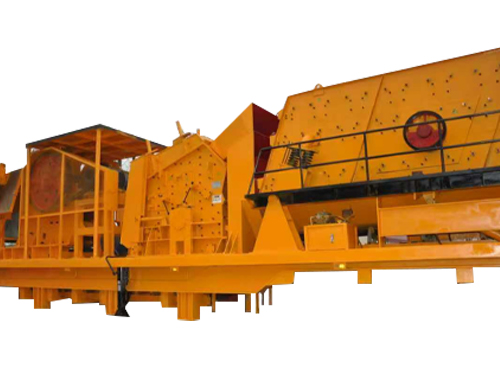
A wheeled mobile crusher plant uses a trailer-style chassis, tires, and often outriggers or hydraulic legs for stability during operation. It is designed around road transfer and rapid deployment on prepared ground. The biggest advantage is not that it crushes differently from a crawler plant. The advantage is that it can share the same transport route, permit system, and staging area as other wheeled equipment. For a contractor moving between satellite pits, a wheeled plant can reduce the fleet needed for relocation and shorten the time between the last tonne at one site and the first tonne at the next.
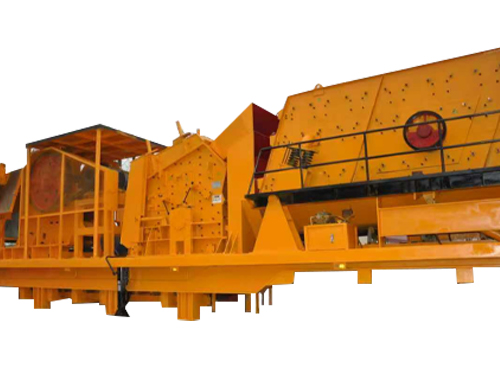 Custom Tire-Mounted Mobile Crushing Plant SeriesCustomizable wheel-mounted series from 30 to 300 tph combines primary, secondary and tertiary units for quarry, recycling and road projects with rapid relocation.View Product →
Wheeled plants are often the better commercial choice when the site is fixed but the location is not. A concrete recycling yard, a port stockpile, or a temporary aggregate depot can use a wheeled plant very effectively if the pad is engineered correctly. The risk appears when the pad is treated as a temporary detail. Soft ground under an outrigger, poor drainage at the trailer tires, or a steep access ramp can turn a fast setup into a recovery job. For that reason, wheeled plant selection should include a site visit or a geotechnical review, not only a quotation comparison.
The purchase price is the easiest number to compare and the least useful on its own. A crawler plant may cost more upfront because of the undercarriage, hydraulic drives, and heavier frame. A wheeled plant may cost less upfront but require more site civil work, more road permits, and more planning around axle loads. The correct comparison is total cost per tonne over the expected ownership period. That means capital cost, mobilization cost, site preparation, fuel or electricity, wear parts, undercarriage or tire replacement, downtime, and the cost of rehandling material when the plant cannot reach the feed.
| Cost item | Crawler plant | Wheeled plant |
|---|---|---|
| Capital cost | Usually higher due to track undercarriage and hydraulic drive. | Usually lower for the same crushing chamber, but options can close the gap. |
| Site preparation | Lower on uneven ground; still needs stable tracking paths and drainage. | Higher on soft ground; needs compacted pads, outrigger support, and road access. |
| Relocation cost | Higher for long moves; low-bed transport and dismantling time add up. | Lower for road-linked moves when permits and axle loads are planned. |
| Wear parts | Tracks, rollers, final drives, and undercarriage components need planned attention. | Tires, brakes, suspension, and outrigger components need planned attention. |
| Downtime risk | Track damage or final drive failure can stop the plant quickly. | Tire damage or unstable ground can stop setup and require recovery equipment. |
| Rehandling cost | Often lower because the plant can work closer to the feed. | Often higher if the plant must stay on a pad away from the feed. |
Use the site's own numbers. If the loader currently travels 120 m from the pile to the crusher, and a crawler plant can cut that to 60 m, the cycle time saving is real. If a wheeled plant can move between two yards in half a day while a crawler plant needs a low-bed and a full shift, that saving is also real. The mistake is to compare one plant's purchase price with another plant's mobilization cost and call it a comparison. Build a simple cost model with the same annual tonnage, the same labor rate, the same fuel price, and the same number of moves. The undercarriage decision usually becomes obvious once the assumptions are visible.
The undercarriage is only one layer of the decision. The crushing chamber and screen configuration must match the material. A crawler jaw plant is common in quarry primary crushing because it can follow the face and accept large feed. A wheeled cone plant is common in secondary and tertiary work where the feed is consistent and the plant can stay on a pad. An impact crusher may be preferred for construction waste or limestone where reduction ratio and product shape matter. A screen is not an accessory. It determines whether the plant produces one saleable product or a blended product that meets a specification.
| Feed and target | Likely primary choice | Likely secondary choice | Undercarriage note |
|---|---|---|---|
| Hard rock quarry, large feed, saleable aggregate | Jaw crusher | Cone crusher | Crawler primary is common when the face moves; wheeled secondary can work on a fixed pad. |
| Limestone, moderate abrasion, shaped product | Impact crusher | Screen | Wheeled plants are often used where the deposit is consistent and road-linked. |
| Construction waste, rebar, mixed rubble | Jaw or impact crusher | Magnet and screen | Crawler plants are common because debris sites rarely have prepared roads. |
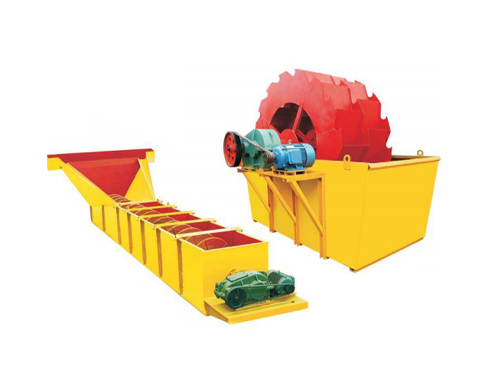
| Sand and gravel, high fines, multiple products | Jaw or impact crusher | Screen and sand washer | Wheeled plants can be efficient when the deposit is served by a fixed haul road. |
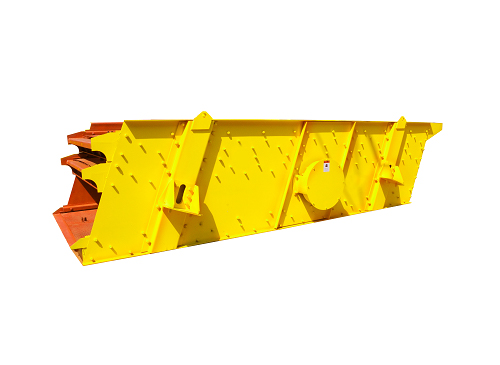 YK Circular Vibrating Screen for Aggregate ScreeningCircular-motion screen classifies coal, ore, sand and gravel across multiple decks, supporting product sizing in mining, building materials and processing lines.View Product →
Abrasive rock such as granite or basalt increases wear on every part of the plant. It also increases the value of keeping the crusher close to the feed, because every extra handling step adds wear and dust. A crawler plant that can work at the face may reduce truck or loader cycles enough to justify its undercarriage cost. In contrast, a uniform limestone feed with a well-planned pad may favor a wheeled plant because the material does not force frequent repositioning. The material does not choose the undercarriage by itself, but it shapes the work cycle that makes one undercarriage more sensible than the other.
Before a quotation is useful, the site layout must be checked against the plant envelope. The feed point, discharge stockpile, loader access, truck turning circle, and maintenance space all need to be marked on a plan. For a crawler plant, the plan should show the tracking route and the maximum grade. For a wheeled plant, the plan should show the trailer route, the outrigger footprint, and the pad bearing capacity. If the layout only shows the crusher outline, it is not a layout. It is a brochure cutout.
Check width, height, axle load, and dismantling time. A plant that fits the crusher chamber but not the low-bed is not transportable.
Confirm conveyor length and discharge height. The stockpile must be reachable by the loader without pushing material back into the plant.
Leave room for screen media changes, jaw plate replacement, and undercarriage inspection. Access is part of uptime.
Water must drain away from the pad. Dust suppression access should be planned before the plant is positioned.
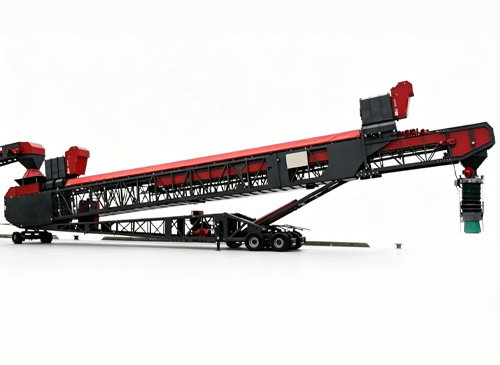
A production line layout review is often more valuable than a model comparison at this stage. It shows whether the mobile plant will work as a standalone unit or as part of a multi-stage process. If the plant is feeding a cone crusher and screen, the primary unit must be positioned so the discharge conveyor can transfer material without a second loader. If the plant is working a construction waste site, the layout must allow trucks to dump, turn, and leave without blocking the crusher. These are not details for the construction phase. They determine whether the chosen undercarriage can actually deliver the planned tonnage.
Acceptance should test the plant under the conditions it will actually face. A crawler plant should be tracked on a grade similar to the site, with the hopper loaded and the discharge conveyor running. A wheeled plant should be set up on a pad with the expected bearing capacity, with outriggers deployed and the trailer released. Both should be checked for access to wear parts, hydraulic leak points, emergency stops, and conveyor alignment. A plant that performs well in a flat test yard but cannot track on site or cannot set up on the actual pad is not accepted in any practical sense.
| Check | Why it matters | Pass condition |
|---|---|---|
| Track or tire condition | Reveals transport damage or incorrect tension and pressure. | No cuts, leaks, or uneven wear; documented settings. |
| Setup procedure | Confirms the plant can be leveled and locked safely. | Completed within the agreed time by the site crew. |
| Loaded run | Tests throughput, discharge, and dust control under load. | Rated output reached without abnormal vibration or spillage. |
| Maintenance access | Shows whether wear part replacement is practical. | Screen media and jaw plates can be reached with standard tools. |
| Emergency systems | Protects operators during blockage clearing and conveyor checks. | Stops, alarms, and isolation points function as specified. |
Procurement risk usually comes from missing assumptions, not from the crusher brand. A wheeled plant may be quoted without a pad design. A crawler plant may be quoted without a transport plan. A screen may be sized for the crusher but not for the product split. These gaps show up after the purchase order, when changes are expensive. A factory-backed support review should confirm the undercarriage choice, the transport envelope, the wear part list, and the commissioning plan before the plant is built. That is also the point to confirm the delivery schedule and the spare parts recommended for the first year of operation.
If the move is inside the same quarry and the plant must follow the face, a crawler mobile crusher is usually better. If the move is between nearby quarries on public roads, a wheeled mobile crusher can be faster and less dependent on low-bed transport. The decision should be based on the number of moves per year, the route, and the ground conditions at each stop.
Yes, but the ground must be compacted, drained, and stable enough for the trailer and outriggers. A wheeled plant is not limited to concrete pads. It is limited by bearing capacity and level tolerance. If the pad is soft or uneven, the plant may need matting, a geotextile layer, or a different setup position.
Usually it is more expensive for the same crushing chamber because the undercarriage and hydraulic drive add cost. The gap can narrow when the wheeled plant needs extra options for stability, tire protection, or road compliance. The better comparison is total cost per tonne over the ownership period, including site preparation and relocation.
It needs a route that the trailer can use and a pad that can support the outriggers and tires under load. In practice, that means a compacted, level surface with drainage away from the plant. The exact bearing capacity depends on the plant weight, the outrigger load, and the ground material. A geotechnical check is cheaper than recovering a plant that has settled.
Crawler plants are common in construction waste because the site often has broken concrete, mixed rubble, and limited hard standing. A crawler plant can move closer to the demolition area and work without a prepared road. A wheeled plant can still be used if the site has a dedicated pad and a reliable truck route, but the ground conditions must be controlled.
Ask for the transport dimensions and weight, the setup procedure, the pad or track route requirements, the recommended wear part list, the commissioning plan, and the warranty terms. For a wheeled plant, include axle loads and permit assumptions. For a crawler plant, include track shoe width and transport configuration. A quotation that lists only the crusher model is incomplete for a mobile plant.
In some cases, yes, but the chassis design changes the load path, the discharge height, and the service access. Do not assume that a jaw or cone chamber can be moved from one undercarriage to another without an engineering review. The undercarriage affects the plant envelope, the transport plan, and the maintenance layout, so it should be selected with the process, not after it.


+ 86 - 16650715921
+ 86 - 18817756097

+ 86 - 021-38682089

No.18 Jiangzhou Road, Qidong (Pudong Industrial Park), Nantong City, Jiangsu Province, China
Factory Area
Number Of Products