English
 русский
When a quarry operator in the middle of a plant expansion asks us which cone crusher to install, the first question we usually ask back is simple: what will the machine be doing — secondary or tertiary crushing? That question matters because every cone crusher falls into one of two families: the standard type and the short head type. Each one is designed for a different stage in the crushing circuit, and mixing them up can reduce throughput, increase recirculating load and drive up wear cost.
This guide explains these two types in practical language, then looks at spring and hydraulic versions so you can compare the real options before you finalize your equipment list.
Content
The Two Types of Cone Crushers: Standard and Short Head
The standard and short head cone crushers are not completely different machines. Both use the same basic crushing mechanism: a rotating mantle compresses rock against a concave bowl, breaking material between two wear surfaces. The deciding difference is the geometry of the chamber.
A standard cavity has a wide feed opening and a short parallel zone at the discharge end. A short head cavity is steeper, with a longer parallel zone that gives material more compression cycles before it leaves the crusher. That geometric change leads to very different operating windows.
- Standard machines accept larger feed and deliver a coarser product, typically in the 20–60 mm range.
- Short head machines handle finer feed and produce a tighter, more consistent product, typically 5–20 mm.
- For the same machine size, a standard type processes more tonnage; a short head type reaches a higher reduction ratio in the final stage.
- Feed size: 100–300 mm depending on model
- Product size: 20–60 mm
- Parallel zone: short
- Best for: secondary crushing
- Feed size: 40–75 mm
- Product size: 5–20 mm
- Parallel zone: long
- Best for: tertiary and fine crushing
| Feature | Standard | Short Head |
|---|---|---|
| Feed opening | Wide, accepts coarse feed | Narrow, requires pre-crushed feed |
| Typical feed size | 100–300 mm | 40–75 mm |
| Product size | 20–60 mm | 5–20 mm |
| Parallel zone | Short | Long |
| Reduction ratio | Moderate, up to about 8:1 | Higher, up to about 12:1 |
| Typical circuit position | Secondary stage | Tertiary / final stage |
The same crusher frame can often accept either cavity. Many product lines follow this design, so the decision between standard and short head is usually a question of liners, feed distributor and setup — not a completely different machine.
Where Each Type Belongs in a Crushing Circuit
In a conventional three-stage aggregate plant, the jaw crusher takes the raw quarry feed, the secondary crusher reduces it to a manageable size, and the tertiary crusher produces the final product. The standard cone is the natural choice for stage two; the short head cone is the right tool for stage three.
A typical three-stage plant: the standard cone handles the coarser second stage, while the short head cone produces the fine final product.
In the field, a closed circuit is common: the cone discharge goes to a screen, and the oversize is returned to the cone for another pass. A standard cone in a secondary closed circuit keeps the feed to the tertiary stage stable. A short head cone in a tertiary closed circuit compacts the final gradation.
- Use a standard type when the plant needs to take the full jaw crusher discharge and deliver a reduced product to screening or to a tertiary stage.
- Use a short head type when the feed is already small and the process must produce a fine, consistent product such as 0–5 mm or 5–10 mm aggregates.
Springs or Hydraulics: A Second Classification Layer
After you choose the cavity type, the next question is how the crusher handles overload and setting adjustment. In the cone crusher market, the two broad systems are spring-type machines and hydraulic-type machines. This decision affects operating cost, automation options and how quickly the crusher recovers after a jam.
Spring Cone Crusher
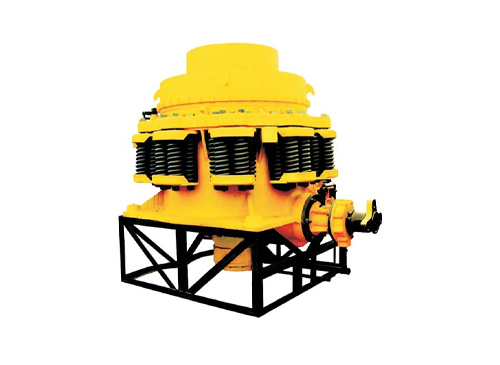
A spring cone crusher uses a ring of heavy springs to support the upper adjustment ring. If an uncrushable object enters the chamber, the ring lifts slightly and lets the object pass. After that, the springs return the machine to its working position. The discharge opening is normally adjusted by mechanical means. Spring-type machines are simple, dependable and economical for plants with stable feed and no need for frequent setting changes.
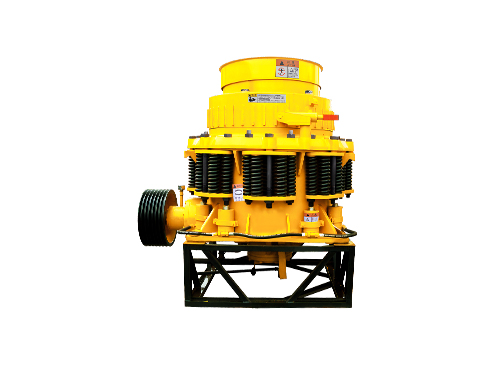
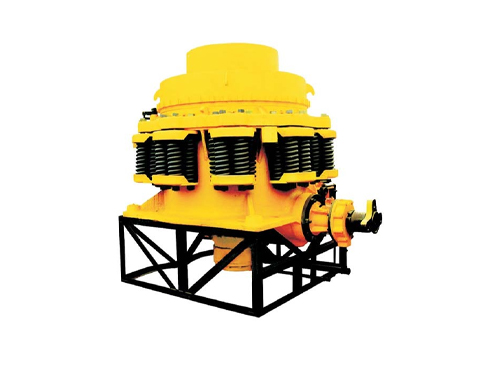 Spring Cone Crusher for Medium and High Hardness OresThis spring cone crusher uses a ring of heavy springs for overload protection and mechanical discharge adjustment. It suits stable plants that need dependable, economical crushing of medium and hard rocks with simple maintenance.View Product →
Single-Cylinder Hydraulic Cone Crusher
A single-cylinder hydraulic cone crusher supports the main shaft with a hydraulic cylinder. Changing the oil volume in this cylinder raises or lowers the shaft, which moves the mantle closer to or farther from the concave. This design gives fast setting adjustment, simple tapping of the mantle, and automatic overload protection through the hydraulic oil cushion. It suits operators who change their product specification within a day and want to make adjustments from a control panel instead of with a wrench.
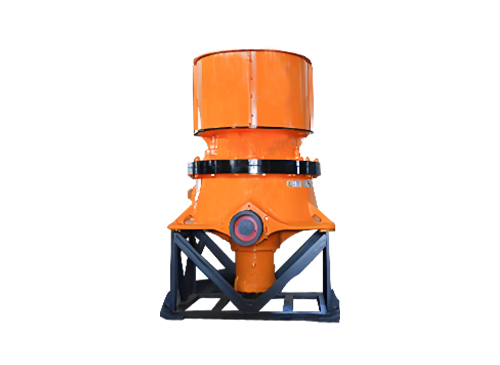
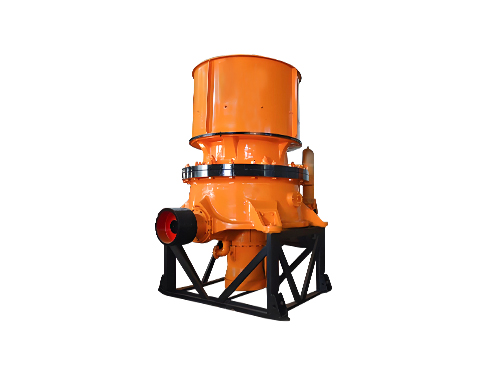 Single-Cylinder Hydraulic Cone Crusher with All-Hydraulic OperationThis crusher supports the main shaft with a hydraulic cylinder, enabling fast setting adjustment and automatic overload protection. It is designed for operators who change specifications within a day and prefer control-panel adjustments.View Product →
Multi-Cylinder Hydraulic Cone Crusher
A multi-cylinder hydraulic cone crusher places several cylinders around the adjustment ring. Each cylinder can act independently under irregular load, which provides a stronger yet more flexible support system. These machines typically include automatic tramp release, iron-clearing functions and optional automation to keep the crushing chamber full. For high-capacity plants where a jam stops a whole production line, the multi-cylinder design is a common preference.
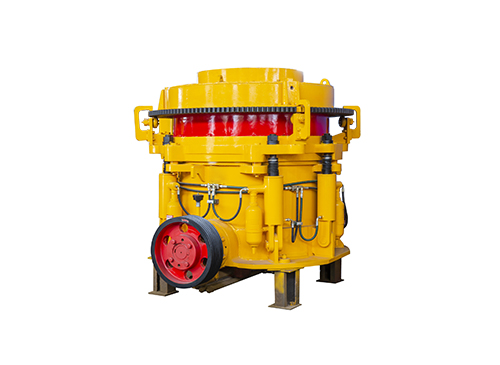
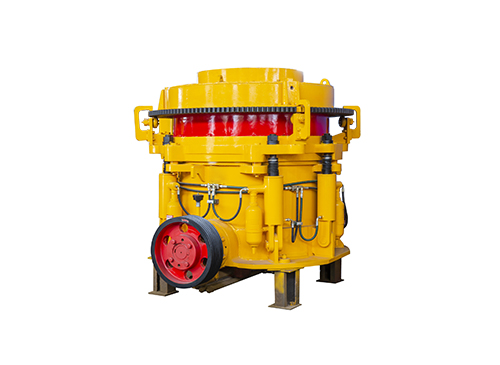 Multi-Cylinder Hydraulic Cone Crusher for High-Capacity PlantsThis multi-cylinder machine provides flexible support and automatic tramp release, helping prevent line stoppages in high-capacity plants. Its robust design suits hard stone crushing with optional automation for a full chamber.View Product →
| Comparison Point | Spring Type | Single-Cylinder Hydraulic | Multi-Cylinder Hydraulic |
|---|---|---|---|
| Overload protection | Mechanical springs absorb shock | Hydraulic oil cushion releases pressure | Multiple cylinders release independently |
| Discharge adjustment | Manual / mechanical | Hydraulic lift of main shaft | Hydraulic ring adjustment |
| Structure complexity | Lowest | Medium | Higher |
| Maintenance skill required | Basic | Moderate | Moderate to advanced |
| Automation compatibility | Limited | Good | Full range available |
| Best suited for | Stable feed, cost-sensitive plants | Plants that change products often | High-reliability and high-capacity plants |
How to Choose the Right Type for Your Project
Use the real conditions of your plant as the basis for selection, not a general rule from a brochure. The starting point is your feed size and the final product you need to deliver.
Your feed is in the 60–250 mm range, you need a 20–60 mm intermediate or final product, or you are building a second stage that receives jaw crusher discharge.
Your feed is already below 75 mm, you need a 5–20 mm product, or the machine will be the final crushing stage before the sand and aggregate screens.
- Measure the maximum feed size, including occasional slugs, not only the average. The chamber must handle the worst case.
- Define the target product: 0–5 mm, 5–10 mm, 10–20 mm fractions, or a mixed product with a specific gradation.
- Match the cavity to the stage: standard for secondary, short head for tertiary. When the stages are not clear, a site survey of the existing conveyor and screen sizes will help.
- Consider how often you change product specifications. Frequent changes push you toward a hydraulic machine with remote adjustment.
- Ask the factory for a recommendation based on your material. A test with an ore sample or aggregate sample gives more useful data than a table of theoretical parameters.
Buying Considerations: What a Manufacturer Wants You to Ask
From a manufacturer's side, we see the same avoidable issues in cone crusher procurement: wrong cavity for the feed, missing spare part planning, and under-sized conveyors after the crusher. Here are the questions that separate a smooth project from a difficult one.
- Check the availability of wear parts before you sign. Mantles, bowl liners and feed plates are regular consumables, not emergency purchases. The supplier should be able to ship replacement parts without a long wait.
- Confirm that your conveyors and screens can handle the discharge of the crusher, including the recirculating load. Many plants only look at the crusher, but the bottleneck is often downstream.
- Ask about the control interface. A hydraulic cone can be delivered with PLC control or with simple manual control, and the difference is significant for remote monitoring.
- Verify the installation footprint, weight and maintenance space. A machine that cannot be serviced safely on site will be a problem from day one.
Wear parts are the single largest operating cost of a cone crusher after energy. It is wise to confirm with the factory about genuine cone crusher spare parts before you finalize the order: manganese liners, bronze bushings, hydraulic seals and the feed distributor all need to be available for the exact cavity you select.
Shanghai Sanming has been building cone crushers for over 13 years and supplies crushing and screening packages to aggregate plants and mining sites around the world. Our engineering team can evaluate your standard or short head configuration from a material sample, and we welcome you to learn more about Shanghai Sanming to see our workshop, production line and past project cases.
Frequently Asked Questions
The two types of cone crushers — standard and short head — give you a practical starting point. Select the cavity geometry to match your crushing stage, then choose between spring and hydraulic systems based on the level of automation and maintenance your site can support. When the feed data and target product sizes are clear, equipment selection becomes a much calmer process.
If you are not sure whether your application needs a standard, short head, spring or hydraulic machine, send us your feed analysis and target product specification. Our cone crusher engineers will recommend a configuration that fits your plant layout, material type and budget.