English
 русский
Knowing the difference between a cone crusher and a gyratory crusher is not just a technical exercise; it directly affects your plant capacity, product quality, and long-term operating cost. The short answer is that a gyratory crusher is a primary crushing machine built for very large feed and extremely high throughput, while a cone crusher is a secondary or tertiary machine that produces finer, more consistent aggregate at higher speed. From that single distinction, every other difference follows naturally.
This guide compares both machines across chamber geometry, operating speed, capacity, product shape, installation demands, maintenance, and total cost, so you can evaluate them against the real conditions of your project.
Content
- 1 What Is a Gyratory Crusher?
- 2 What Is a Cone Crusher?
- 3 Key Differences Between a Cone Crusher and a Gyratory Crusher
- 4 Crushing Chamber and Working Principle Differences
- 5 Capacity, Product Shape, and Cost Considerations
- 6 How to Choose the Right Crusher for Your Project
- 7 Maintenance and Wear Parts: What to Expect
- 8 Frequently Asked Questions
- 9 Selecting the Machine That Matches Your Material
What Is a Gyratory Crusher?
A gyratory crusher is a large compression crusher that usually works as the primary unit at a mine or quarry. The crushing chamber is formed by a fixed concave bowl and a conical mantle suspended from a spider assembly. As the mantle gyrates eccentrically, the gap between the mantle and the concave opens and closes, crushing rock in a continuous, almost circular motion.
Gyratory crushers run at a relatively low speed, typically 100 to 200 RPM, because the feed material is very large and the crushing force must be transmitted through thick liners. They accept run-of-mine ore or quarry rock up to 1,500 mm and can process from 2,000 up to 10,000 tonnes per hour. For this reason, gyratory crushers are almost always installed on heavy reinforced concrete foundations in large mining operations, and they are rarely practical as mobile units.
- Primary crushing stage, run-of-mine feed
- Very high capacity per single unit
- Low speed, continuous crushing action
- Fixed installation with massive foundation
What Is a Cone Crusher?
A cone crusher uses the same basic compression principle, but it is designed for the secondary and tertiary stages. The mantle rotates at a higher speed, usually 300 to 800 RPM, and the crushing chamber has a longer parallel zone between the mantle and the bowl liner. Material is crushed repeatedly as it travels down this zone, creating finer and more cubical particles.
Cone crushers normally receive pre-crushed feed from 30 mm to 350 mm and produce products from about 5 mm up to 60 mm depending on the closed side setting. They can be supplied as stationary units, semi-mobile packages, or fully mobile tracked and wheeled plants, which makes them much more flexible than a gyratory crusher in aggregate plants, road construction, and construction waste recycling projects.
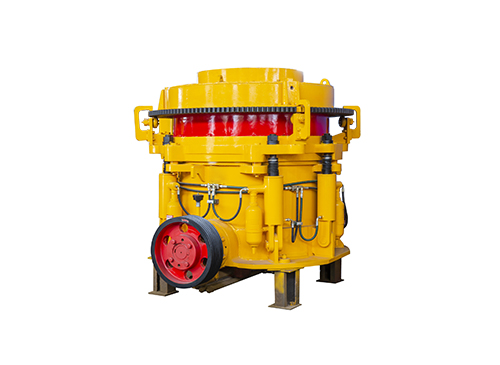
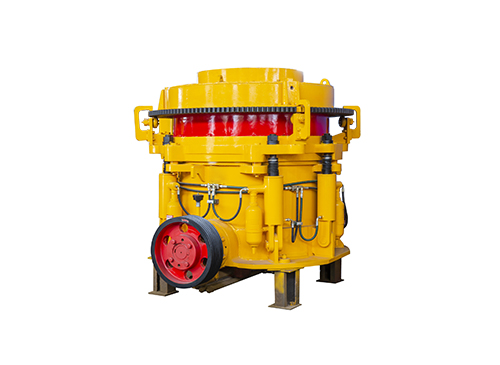 Multi-cylinder Hydraulic Cone Crusher for Hard StoneHighlighted after cone crusher flexibility is discussed, this model suits stationary or mobile plants with full hydraulic operation and high reduction efficiency for hard rock applications.View Product →
Key Differences Between a Cone Crusher and a Gyratory Crusher
Although both machines compress rock between a mantle and a concave, their different purposes show up in almost every design detail. The table below summarizes the most important comparisons for equipment selection.
| Comparison Item | Gyratory Crusher | Cone Crusher |
|---|---|---|
| Crushing stage | Primary | Secondary and tertiary |
| Typical feed size | Up to 1,500 mm | 30 to 350 mm |
| Eccentric speed | 100 to 200 RPM | 300 to 800 RPM |
| Capacity range | 2,000 to 10,000 t/h | 30 to 1,200 t/h per unit |
| Chamber profile | Steep, short parallel zone | Shallow, long parallel zone |
| Product shape | More elongated flakes | More cubical, better shape |
| Installation | Fixed, heavy foundation | Stationary or mobile |
| Capital investment | High | Lower for typical plant capacities |
| Maintenance pattern | Complex, planned shutdowns | Accessible wear parts |
Relative comparison by key parameters
Crushing Chamber and Working Principle Differences
Chamber geometry
In a gyratory crusher, the mantle is steep and the parallel zone between the mantle and the concave is short. Rock passes through relatively quickly, which is exactly what makes high throughput possible, but the product contains more elongated material. A cone crusher uses a more shallow mantle and a long parallel zone at the discharge end. Material is squeezed and re-squeezed as it moves down this zone, breaking along natural stress lines into more cubical particles. This design also produces a narrower product size distribution, which is valuable when grading limits are strict.
Speed and motion
The speed difference of 100 to 200 RPM for gyratory crushers versus 300 to 800 RPM for cone crushers changes the crushing mechanism in a practical way. A gyratory crusher delivers a very high crushing force per stroke at low speed, so it can handle huge blocks of hard rock, but the final product is relatively coarse. A cone crusher adds many more crushing strokes per minute, so the material experiences more breakage events as it passes down the chamber, resulting in finer output and better particle shape.
Capacity, Product Shape, and Cost Considerations
For operating teams, three practical criteria matter most when choosing between these machines: throughput capability, final product quality, and total cost of ownership.
Capacity
Gyratory crushers deliver the highest single-unit capacity on the market, which is why large mines use them at the primary stage. Cone crushers are available in a much wider range of sizes, from small 30 t/h units up to 1,200 t/h models, and can be matched to medium-sized aggregate plants without oversized investment.
Product shape
Aggregate specifications in road and concrete applications demand low flakiness and high cubicity. Cone crushers produce a better-shaped product because the long parallel zone gives more crushing strokes and a more even wear path. Gyratory crushers are less efficient in this regard, although they are normally not chosen for final shape anyway.
Ownership cost
Total ownership cost includes foundation, installation, power consumption, liner wear, maintenance, and downtime. Gyratory crushers have higher concrete requirements, heavier lifting needs, and larger spare parts. A cone crusher circuit is usually simpler and more economical in the medium capacity range. At very high throughputs, however, a gyratory crusher can reduce plant complexity and lower the cost per tonne.
How to Choose the Right Crusher for Your Project
Use your actual process data instead of a generic rule of thumb. Work through these five questions and the right choice usually becomes clear.
- What is the maximum feed size? If lumps are larger than 800 mm, a gyratory crusher or a large jaw crusher is required for the primary stage.
- What is the target throughput? Above 2,000 t/h, a gyratory crusher becomes the cost-effective primary option. Below that, a jaw crusher and cone crusher combination is easier to finance and operate.
- What product grading is required? If flakiness, cubicity, or a specific proportion of fine fractions matters, a cone crusher gives much better control.
- Is mobility required? Only cone crushers and jaw crushers are realistically available in mobile plant configurations. Gyratory crushers are permanent installations.
- What is the site infrastructure like? A gyratory crusher needs a deep concrete foundation and specialized erection equipment. For remote or temporary sites, a cone-based plant is more realistic.
For an aggregate quarry producing 200 to 1,000 t/h of cubical aggregate, a jaw crusher primary with a cone crusher secondary is a proven combination. For a large open-pit mine that only needs to reduce run-of-mine ore for downstream grinding, a gyratory crusher is difficult to beat. Contract crushing and construction waste recycling projects typically choose cone-based mobile plants because they can move between job sites.
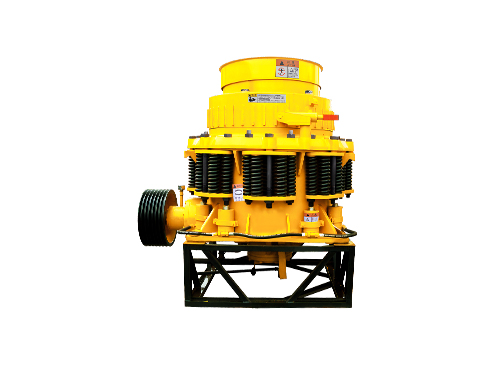 Compound Cone Crusher for Secondary and Tertiary CrushingPresented in the context of aggregate production and mine reduction, this crusher offers hydraulic discharge adjustment, cleaning chamber, and spring overload protection for hard ores.View Product →
Maintenance and Wear Parts: What to Expect
Wear parts dominate scheduled maintenance costs in both crusher types. The mantle and concaves are sacrificed to protect the more expensive machine components underneath them.
Gyratory liners are extremely large. Replacing them requires heavy cranes and usually stops the entire primary plant for several days. Because the gyratory crusher is often the only primary unit, mines schedule liner changes around long maintenance shutdowns. The main shaft and eccentric bearing assemblies are also more complex and must be inspected by experienced technicians.
Cone crushers are designed for easier liner access. Modern machines include hydraulic adjustment, tramp release, and clearing systems, so the closed side setting can be adjusted in minutes and the chamber can be cleared safely. Liner sets are smaller, so replacements can be handled with a standard plant crane and a trained maintenance crew.
When evaluating a cone crusher, check the manufacturer's spare parts availability for core components such as mantles, concaves, main shafts, and sealing systems. A stable spare parts supply for cone crusher wear parts keeps your plant running on schedule and protects your uptime.
Frequently Asked Questions
Can a cone crusher replace a gyratory crusher?
No, not at the primary stage. A cone crusher has a much smaller feed opening, so run-of-mine rock would simply bridge across the chamber. In some small mines, a large jaw crusher can replace a gyratory crusher at the primary stage, but the cone crusher is only a secondary or tertiary unit.
Which crusher produces better shaped aggregate?
The cone crusher. Its longer parallel zone and higher speed produce more crushing passes and a more cubical product with fewer elongated particles. This is important for concrete aggregate and asphalt specifications.
Which machine has lower operating cost?
For plants operating below roughly 2,000 t/h, a cone crusher is simpler to install, has lower electricity demand, and easier liner replacement, so the total operating cost is usually lower. At extremely high throughputs, the gyratory crusher can reduce the number of jaw crushers and conveyors in the primary section, lowering the overall system cost.
Are cone crushers available for mobile plants?
Yes. Both wheeled and tracked mobile cone crusher plants are available, making them a popular choice for contract crushing and construction waste recycling. Gyratory crushers are not realistically mobile.
What is the normal service life of crusher liners?
It depends on the abrasiveness of the rock, the closed side setting, and the feed gradation. In hard granite, liner life might be 200 to 500 operating hours; in soft limestone, it can exceed 2,000 hours. Always ask the manufacturer for expected liner life data based on your specific material.
Selecting the Machine That Matches Your Material
Choosing between a cone crusher and a gyratory crusher ultimately comes down to what your process asks for. If you are starting from run-of-mine rock with high hourly tonnage and the downstream process can accept a coarser product, a gyratory crusher is worth serious evaluation. If you need cubical aggregate, tighter gradation, or the ability to relocate your plant, a cone crusher is the practical answer.
At Shanghai Sanming, we have more than 13 years of manufacturing experience in crushing and screening equipment, and we have supplied cone crushers, jaw crushers, VSI crushers, and complete production lines to projects in dozens of countries. Send us your material characteristics and target output; we will suggest the right crusher type and model, with capacity and liner recommendations based on field experience.
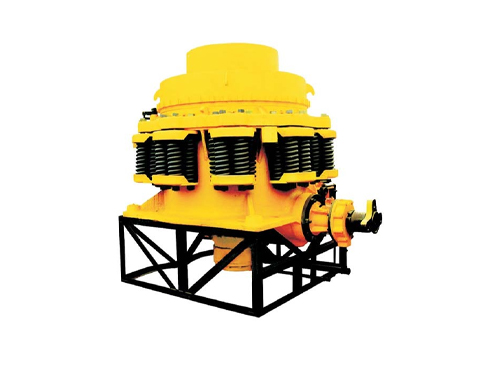 Spring Cone Crusher with Overload ProtectionFeatured as a widely used medium-to-high hardness crusher, it provides reliable operation, easy adjustment, and spring safety protection suitable for mining and construction.View Product →