English
 русский
When a crushing plant is being planned or upgraded, the cone crusher usually appears near the top of the equipment list. It works in the secondary, tertiary and sometimes quaternary stage, turning coarse rock into the consistent fractions that the rest of the plant depends on. But a "cone crusher" is not a single machine. It is a family of machines with different adjustment systems, different hydraulic layouts and very different operating costs. Choose the wrong type and you may face poor product shape, frequent downtime, or a bottleneck that limits the entire line. This guide explains the common cone crusher types, what makes each one different, and how to match them to your material and production targets.
Content
- 1 How Cone Crushers Work: One Principle, Several Designs
- 2 The Main Types of Cone Crushers
- 3 Cone Crusher Types at a Glance
- 4 Relative Throughput at the Same Crushing Stage
- 5 How to Choose the Right Cone Crusher Type
- 6 Replacement Spare Parts Keep a Cone Crusher Running
- 7 Frequently Asked Questions about Cone Crusher Types
- 8 Talk to a Manufacturer That Understands Cone Crushers
How Cone Crushers Work: One Principle, Several Designs
All cone crushers reduce rock by compression. The main shaft is driven by an eccentric bushing, so the mantle swings toward the concave on one side while opening on the opposite side. Rock entering the gap is squeezed between the two crushing surfaces and breaks along natural fractures. The same compression principle is used in gyratory crushers, but gyratory machines normally act as primary crushers, while the cone crushers discussed in this article operate at the secondary, tertiary and fine crushing stages.
Although the working principle is shared, the mechanical design is not. Several differences matter most in practice: how the discharge opening is adjusted, how uncrushable material is handled, how much hydraulic automation is available, and how the main shaft is supported. These differences define the four main cone crusher families produced by most crusher manufacturers.
The Main Types of Cone Crushers
Although brand names and model numbers vary, cone crushers fall into four broad families: spring, compound, single-cylinder hydraulic and multi-cylinder hydraulic. Each family has its own strengths and suits particular crushing stages and material conditions.
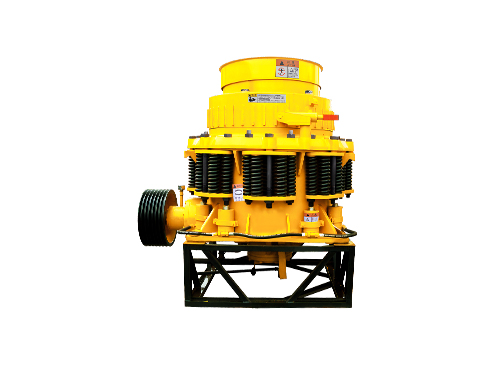
Spring Cone Crusher
The spring cone crusher is the most traditional design and is still widely used for medium and fine crushing of hard and moderately hard rock. A set of coil springs surrounds the upper frame. When an uncrushable object such as a piece of steel enters the chamber, the bowl lifts against the springs, lets the object pass through and then returns to its original position.
Discharge opening adjustment is less convenient than on hydraulic machines because the setting is changed by adjusting the supporting pads or rotating a threaded adjusting sleeve. The machine is simple and reliable, which keeps the purchase price low and makes it a common choice for stationary plants with stable feed conditions. The trade-off is that manual adjustment and chamber clearing take more time, so the spring type is a better fit when the plant does not need to change settings frequently.
- Simple mechanical structure and dependable operation
- Lower initial cost than hydraulic types
- Suitable for medium-hard rock and stable feed
- Overload protection provided by coil springs
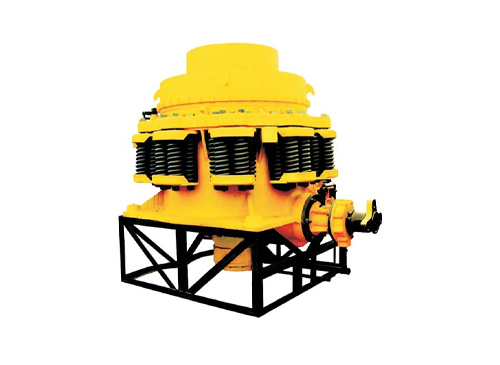
Compound Cone Crusher
The compound cone crusher combines a spring-protected frame with a hydraulic system for chamber cleaning. When the crushing cavity becomes blocked, hydraulic cylinders lift the adjustment ring, enlarge the discharge opening and allow the jammed material to fall out. This greatly reduces the downtime that would otherwise be spent on manual cleaning.
Compound machines are widely used in aggregate production for granite, basalt, diabase and similar abrasive rock. They offer a good crushing ratio, acceptable product shape and a practical level of hydraulic assistance without the full complexity of an automatic adjustment system. For quarries and fixed crushing plants that want a balance of price, throughput and serviceability, the compound cone crusher is often the first choice.
- Hydraulic chamber cleaning clears blockages quickly
- Well suited to abrasive aggregate rock
- Spring overload protection with hydraulic convenience
- Practical balance of cost and production capacity
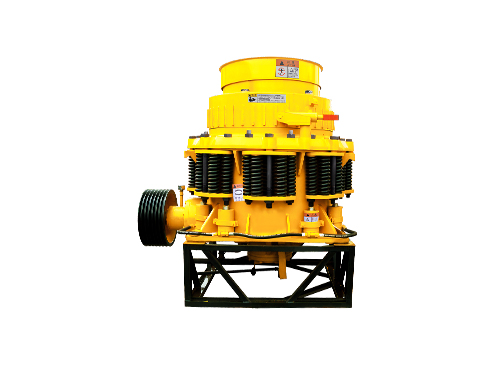 Compound Cone Crusher for Secondary and Tertiary CrushingThis crusher suits abrasive rock like granite and basalt, offering hydraulic discharge adjustment, chamber cleaning, and spring overload protection for dependable aggregate production.View Product →
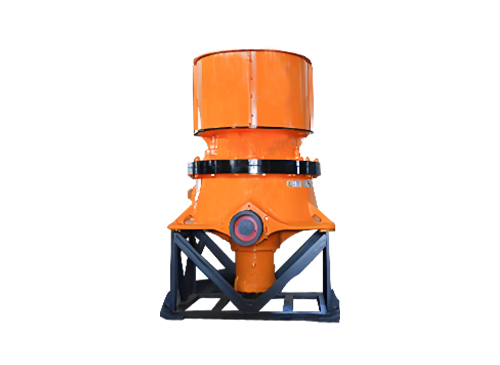
Single-Cylinder Hydraulic Cone Crusher
The single-cylinder hydraulic cone crusher reduces the mechanical layout by using one hydraulic cylinder to support the main shaft. The same cylinder adjusts the discharge opening and provides overload protection. Because the hydraulic system is integrated into one cylinder, the machine can clear the chamber or change the setting at the touch of a button, without dismantling any major component.
The structure is compact, which makes the single-cylinder type easier to maintain than multi-cylinder designs. It performs well in medium and fine crushing and is a good option when you want hydraulic convenience, automatic control and a relatively small footprint. When feed conditions are consistent, the single-cylinder machine delivers steady throughput with lower operating costs than a multi-cylinder crusher of similar capacity.
- One cylinder handles support, adjustment and overload release
- Compact structure with fewer wear-related components
- Convenient hydraulic adjustment and chamber clearing
- Suitable for medium and fine crushing duties
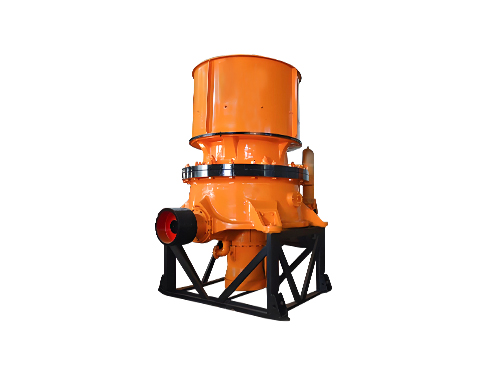 Single-Cylinder Hydraulic Cone Crusher with Compact DesignIts integrated hydraulic cylinder simplifies maintenance and allows button-controlled setting changes, making it a practical choice for medium and fine crushing with steady throughput.View Product →
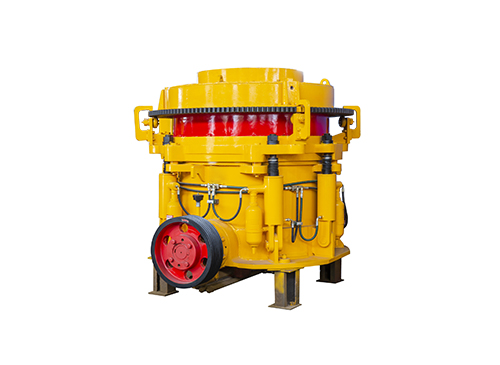
Multi-Cylinder Hydraulic Cone Crusher
The multi-cylinder hydraulic cone crusher is the most advanced and most productive type in the cone crusher family. Several hydraulic cylinders arranged around the frame push a large adjustment ring, while an accumulator provides overload protection. Because the setting is controlled through the ring, the discharge opening can be adjusted in very small increments, even while the crusher is running under load.
This design is used for the hardest ores, the highest throughput requirements and the most demanding product specifications in large-scale mining and premium aggregate operations. It produces a stable product shape, which is important when the material is used in high-performance concrete or asphalt. The purchase price is higher, but in long production runs the combination of higher output, better automation and lower wear per ton usually pays back quickly.
- Precise hydraulic adjustment in small increments
- Accumulator-based overload protection
- Highest throughput potential among the four types
- Best suited to hard rock and high-specification aggregate
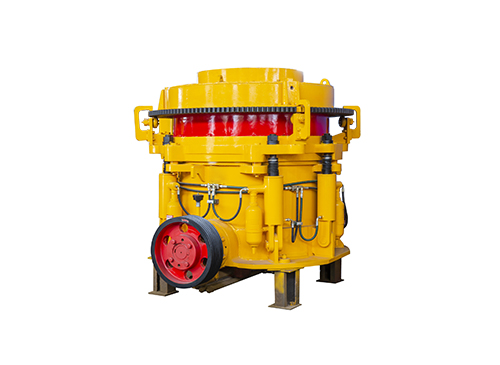 Multi-Cylinder Hydraulic Cone Crusher for High-Capacity DemandsBuilt for the hardest ores and large-scale operations, it provides precise setting adjustments under load and stable product shape, ideal for premium aggregate applications.View Product →
Cone Crusher Types at a Glance
Use the table below to compare the four main types side by side. The values shown are typical ranges for medium-duty crushing and will vary with the specific model, liner configuration and feed material.
| Type | Discharge Adjustment | Overload Protection | Main Applications | Relative Cost |
|---|---|---|---|---|
| Spring | Manual pads or threaded sleeve | Coil springs | Medium-hard rock, steady fixed plants | Lowest |
| Compound | Manual setting with hydraulic chamber cleaning | Springs plus hydraulic lift | Aggregate, abrasive rock | Moderate |
| Single-cylinder | Hydraulic cylinder below the main shaft | Hydraulic cylinder | Medium and fine crushing, compact plants | Higher |
| Multi-cylinder | Multiple cylinders, fine adjustment under load | Accumulator and cylinders | Hard rock, mining, high-specification aggregate | Highest |
Relative Throughput at the Same Crushing Stage
The chart below gives a visual indication of how the four types compare in production potential when installed at the same crushing stage. Actual output depends on stroke, eccentric speed, chamber profile and feed conditions.
These percentages are relative reference values for planning purposes, not guaranteed performance figures. Your actual result will depend on the specific model and the complete crushing circuit around it.
How to Choose the Right Cone Crusher Type
The right approach is to work through your material, your final products and the operating cost per ton before comparing machine prices. These are the main factors to check.
Start with Material Hardness and Abrasiveness
Hard and abrasive rock such as granite, basalt, quartzite and certain iron ores demands a crusher with a strong frame, reliable overload protection and thick manganese liners. For these materials, a multi-cylinder hydraulic cone crusher gives the most stable performance and the easiest protection against tramp iron. For limestone, dolomite and other medium-hard rock, a compound or spring cone crusher is often enough and costs considerably less.
Consider the Crushing Stage and the Required Product Shape
Secondary crushing takes larger feed and needs a wide chamber. Tertiary and quaternary crushing requires a fine chamber and precise control of the discharge setting to produce consistent fractions. If your contract specifies a low flakiness index or a cubic particle shape, a multi-cylinder machine generally performs better because its stroke and chamber geometry are designed for the fine range. A spring crusher can still meet the requirement, but it should be tested with your actual feed before you commit to a purchase.
Count the Operating Cost, Not Just the Purchase Price
A cheaper machine can become expensive if it idles during manual adjustments or wears its liners unevenly. Hydraulic types reduce the downtime caused by changing settings or clearing the chamber, and they protect the machine better from uncrushable objects. If your plant runs long hours or the material is abrasive, the higher purchase price of a hydraulic machine is often repaid through better availability and lower maintenance labor. If the plant runs seasonally and the team is comfortable with manual adjustment, the spring type remains a sensible investment.
Replacement Spare Parts Keep a Cone Crusher Running
A cone crusher is only as reliable as its wearing parts. The mantle, bowl liner, eccentric bushing, socket liner and thrust washers all experience continuous friction and high stress. When these parts wear beyond the allowed tolerance, capacity drops, product shape degrades and the crusher can be damaged if the main shaft begins to run out of true.
Using original spare parts keeps the manganese profile, dimensions and heat treatment consistent with the original machine. Non-standard parts may be cheaper on the first order, but they often reduce liner life or change the crushing curve. A practical rule is to compare liner life per ton of product, not the unit price of the liner.
For plants that run continuously, keeping a set of key wear parts in stock is essential. The worn set can be rebuilt while the spare set is in operation. The same applies to the bronze or copper bushes that protect the main shaft and eccentric assembly. If you are not sure which parts match your machine, you can check the cone crusher spare parts list and confirm the model and serial number with the manufacturer.
Frequently Asked Questions about Cone Crusher Types
What is the difference between a single-cylinder and a multi-cylinder cone crusher?
In a single-cylinder design, one hydraulic cylinder supports the main shaft and is responsible for both discharge adjustment and overload protection. In a multi-cylinder design, several cylinders arranged around the frame control the adjustment ring, while an accumulator provides protection against uncrushable material. Multi-cylinder crushers generally offer more precise adjustment, higher production capacity and better product shape, but they are more complex and more expensive to buy and maintain.
Which cone crusher type produces the best aggregate shape?
Multi-cylinder hydraulic cone crushers usually produce the most cubic product because their stroke, chamber design and fine-adjustment range are built for consistent compression in the final stage. The compound type also performs well when the correct chamber profile is selected. Whatever the machine type, a closed circuit and a correctly sized screen are just as important as the crusher model.
Can a spring cone crusher be replaced by a hydraulic one?
Yes, in most cases. The replacement is straightforward when the feed size and capacity are matched. A hydraulic crusher often needs a shorter foundation because the hydraulic cylinder takes up less vertical space than a spring-loaded adjusting ring. Before replacing one type with another, check the existing motor power, foundation bolts and the available height in the plant.
How often should cone crusher liners be replaced?
There is no universal interval because liner life depends on the abrasiveness of the feed, moisture content, crusher setting and the manganese alloy in the liner. The practical method is to measure the liner profile regularly, watch the motor amperage and product gradation, and replace the liner before it wears into the low-profile shape that reduces crushing efficiency and increases stress on the frame.
Talk to a Manufacturer That Understands Cone Crushers
Shanghai Sanming Mining Equipment Manufacturing has been designing and building cone crushers for more than 13 years. Our product range covers the four types described here: spring, compound, single-cylinder hydraulic and multi-cylinder hydraulic cone crushers. Every machine is produced under an ISO9001 quality system and can be adapted to your feed size, production volume and final product specification.
The average delivery time for our standard machines is about 20 days, but the real value of working with a manufacturer is the technical discussion before you order. We can recommend the correct chamber, the right motor power and a suitable spare parts inventory so that the machine runs smoothly from the first week. If you want to visit our production base in Qidong, near Shanghai, or compare several models side by side, you are welcome. The right cone crusher is the one that matches your rock, your output target and your long-term operating budget.
You can learn more about Sanming and our approach to mining equipment, or browse the cone crusher product pages for detailed specifications and configuration options.